Tag: filmmaking

  • Writer Cathryn Humphris of Mad Men, Under the Dome, and Supernatural, Speaks On The Realities of Working in TV

    Writer Cathryn Humphris of Mad Men, Under the Dome, and Supernatural, Speaks On The Realities of Working in TV

    I moved around a lot as a kid. First off, I started life all the way across the world in the little country of Bulgaria, before getting on a plane at the age of eight and heading to the big ol’ US of A. From there, I moved almost every year, spending brief periods in various towns and cities across New England as my parents bounced from job to job. At the time? Frankly, I hated it. I hated having to be reintroduced to a new area, having to make new friends, I hated all of it. But now, as I reflect on those years, I see just how valuable they were. How much I gained from every new experience, every new person I met.

    Television writers, for better or worse, often find themselves as the new kid in class. And Cathryn Humphris is no exception. Over the course of nearly a decade, she has worked on shows like Mad Men, V, Under the Dome, Mob Doctor, Elementary, Supernatural, and many more.

    Cathryn was kind enough to get on the phone with me and Adam, and spend some time talking about just what it’s like to be a working writer in today’s industry, and all of the positives and negatives that come with that.

    ———————————————————————————————————————————————

    VIKTOR HERRMANN: What I’d like to start off talking about first is your early days. The struggle years. Can you talk about the days before you could support yourself solely on writing. What was that like, and what was the transition like?
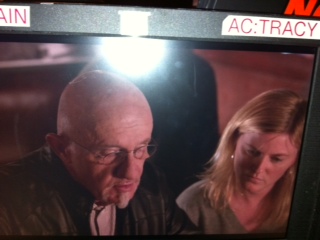
    Humphris 1

    CATHRYN HUMPHRIS: It was nice. It’s nice to be able to support yourself doing what you wanted to do. It took me about eight years. I came to Los Angeles right out of college. I was a Radio, Television, Film and Communications Major. I was lucky that I had some friends out here already who had paved the way for me and helped me find my first job. 

    There’s a lot of different routes to breaking in, and I went the assistant route. I got early jobs through friends and connections from my school—I went to Northwestern and they have a big alumni community out in Los Angeles. So I started just working low paying assistant jobs. 

    Originally I wasn’t sure if I wanted to write for movies or do something else, and I had a friend early on who said, “I think you should look at television, because I know you love writing, but I know you also want to be part of the overall process.” And also television is much more stable than just going from job to job in film.

    So, early on I got a job in television. Once and Again was the first TV show I worked on. I was a writer’s PA, which is kind of like the lowest position in the business. Literally getting lunches and coffees and running errands for people.

    I just kind of worked my way up through that. I worked for writers who had development deals, I worked for small development companies, I worked for a couple different shows, and just got as much experience as I could get, and also made as many connections as I could make. Which was another huge part of it.

    I know you interviewed Genny Hutchison a while back. Genny and I worked together a long, long time ago on X-Files. She worked for Vince Gilligan and John Shiban, and I worked for Gillian Anderson, and we got to know each other that way. And years, years later, when I was looking for another job, John Shiban was looking for an assistant, and Genny recommended me. And that’s part of how I got the job on Supernatural, which ultimately ended up being the show where I got my big break.

    Along with working different jobs, I was obviously writing on the side. The great thing about being a writers’ assistant is that you can actually be in the writers’ room. You’re seeing how the process works. You are getting to know the show better than almost anyone.

    You know the bosses, you know the dynamics, you know everything. Being in the writers’ room is great practice for learning what you’ll be doing as a TV writer and also for being able to try out your craft a little bit. 

    I had also done a program called the Warner Brothers Writing Program, which is a great program that helped people get their foot in the door. Sometimes you get staffed right out of that program. I didn’t get staffed right out of that program, but Eric Kripke [the Supernatural showrunner] certainly knew that I had done it, and people at Warner Brothers were supportive of me and pushing for me.

    Ultimately what ended up happening was in the first season of that show, John Shiban and I wrote a script together. John mentored me and shepherded me through the process, and everyone was very happy with the script. And then in the second season of that show, I came back again as a writers’ assistant, and by that point I had gotten an agent off of doing the Warner Brothers program. So, my agent was out trying to get me meetings, and John and other writers I had met were super, super supportive.

    I got a job offer on another show, and Supernatural basically was faced with the fact that they might lose me, and so literally overnight they made me an offer to go from being a writer’s assistant to a writer. And I ended up staying there for three years.

    VH: It’s pretty clear that you’ve had quite a varied resumé, which I think is indicative of a lot of TV writers. Could you talk about how hard it is to jump onto an existing show, and how you adapt to that show’s characters and writing style?

    CH: Yeah, that’s an interesting question. I think I have ended up jumping so many times that it’s kind of become secondhand nature for me. 

    I was on Supernatural for a total of four years, and so at that point, people would have known me as a genre writer. Which is funny, because I’m not someone who is particularly a big genre fan; I would consider myself more of a character writer. But there are genre shows that I love because they’re fancy packages for telling great character stories. 

    So, I’m always the person where, in my writers’ room, they’re talking Star Wars or Blade Runner, or the complicated mythology of some show, and I’m like, “What are you guys talking about again?” I just wasn’t into that world. But the great thing about having that background is that genre shows will always want to hire you.

    [But] when you’re a genre writer, particularly a woman who writes genre, you can get put in a box. And it’s great because they’ll offer you jobs on genre shows, but it can be harder for people to take you seriously outside of that world. 

    I had gotten the great piece of advice of, “Write a script that is the opposite of genre. That’s exactly what you want to do.” So, I wrote a very character driven script that my amazing agent ended up getting into Matt Weiner’s hands. I always say Mad Men was the easiest job I’ve ever gotten in my life. Matt read my script, Matt liked my script, he interviewed me and he hired me. It happened within a week or something.

    On Mad Men, the thing that was great about it was that because it’s a cable show and it’s only 13 episodes a year, we spent the first two or three months just getting to know each other, really talking about the characters and what you wanted to accomplish. There wasn’t a huge time pressure, [versus] network television [where] you start a job and six weeks later you’ve got to film an episode. 

    I think on Mad Men I just had a lot of time to ramp into the show. I watched all of the episodes from the first two seasons multiple times. Matt assigned a lot of reading, so I did a lot of reading, I watched a lot of movies of the time period, I spent a lot of time just getting to know my co-workers. 

    You just kind of ease into it that way. You’re spending eight to ten hours a day in a room with people just obsessively talking about the show, so you just kind of catch up. And then I guess going forward, I’ve jumped into a lot of second and third season shows, and I’ve never felt like it’s been that much of an issue for me. There’s something nice about already having a template already laid out. 

    I always go back to watching the episodes. Multiple times. And picking up on who the characters seem to be. I do this less now, but earlier in my career, before I would write a script, I would just obsessively read the other scripts. When I wrote my first Mad Men, I spent fifteen hours a day writing or reading the other scripts.

    ADAM GREENE: That’s a good transition to our next question: your habits. What would you say are some of the things that you do habitually to get you in the mood for writing? How do you overcome different writer’s block situations or difficult scenes to write?

    CH: This is a great question. I am totally a procrastinator as a writer. [laughs] So, television is great for me because you can’t procrastinate, you can’t have writer’s block for very long.

    I love being in the writers’ room. I love breaking story. I’m really social; I love working with other writers. I would be a terrible feature writer, sitting alone in a room writing. That’s kind of the part of the process that I like the least.

    For me, it all starts with the story and the structure. By the time I go off to write a script, I’m meticulous about making sure that I understand the story that I’m trying to tell. With character driven shows, with a show like Mad Men, the structure is a little less important because you’re really digging into the character work, but even then, if the structure doesn’t work, it’s going to be a lot harder to write. By the time I leave to go off and write a script, I want to understand what I’m writing. The work that should be left to be done is the character work.

    You’re always going to find stuff that doesn’t completely work, that you need to make adjustments to. I just make sure we do a really, really good break, that I understand what all of the characters’ motivations are, that I understand the story that I’m trying to tell. Anything that still needs to be fixed, I try to fix in the outline.

    In terms of pure habit, the thing about television—which is a blessing and a curse—is that you’re on a really tight timeframe. If you’re on a show like Mad Men, you might have two weeks to write a script. But a lot of the shows that I’m on, a week is a luxury.

    That was something I was nervous about early on in my career, and I used to take a full two weeks to write a script. And now, I’m on shows sometimes where, if I’m co-writing a script, we have two days to write it.

    I will always procrastinate as much as I can, and so sometimes that means I spend three days surfing the internet before I do much writing, and other times it means I spend thirty minutes surfing the internet. I procrastinate for as long as I can, and then I just dig in. I disappear into the world that I’m writing.

    I think for me the hardest thing is overcoming the fear of, “What if it’s not good this time?”

    AG: That’s a shared feeling for a lot of writers, I would think.

    CH: Yeah, I think so. And that’s been kind of a blessing of my career, of jumping around to so many shows. I’m definitely able to take it a lot less seriously than I used to take it. I’ve been on shows where by the time the show premieres, you wake up the next morning and you read the ratings and say, “Oh, well, this show is going to die soon.”

    That’s a horrible feeling, but I think it also helps you keep things in perspective. Which is that I’m exceptionally lucky to be doing the job that I do, and hopefully my career is going to be long and I’m going to work on a lot of different shows. Some of them are going to be easier than others and harder than others and more fun than others. That helps me now with the pressure.

    VH: That reminds me, we read an essay you wrote, “Why We Write.” In that, you talk a lot about the fear and dread that writing can cause in writers. Can you elaborate on that? Maybe talk about a time either career-wise or when you were working on a script where everything seemed to be going wrong? What kept you climbing back into the ring?

    CH: It’s funny thinking back to that essay, because when I wrote that, I had probably only been a TV writer for two years. The battle to get in was fresh. There were a lot of times as an assistant where I just felt like I’m never going to get my break, this is never going to happen for me. And I kind of just made the decision to keep going for as long as I felt the good outweighed the bad.

    This business can be really, really hard. There’s a lot of nastiness that happens. There’s a lot of times where you get close, and then it doesn’t work out. But I think I kept going for the same reason all young writers keep going.

    You feel like you have something to say. You feel like you’re pretty good at this, like it’s a lot more interesting of a job than most jobs that you could do. I’ve loved television and movies all of my life. The idea that I could be part of that was really, really fun.

    But the fear part was, for me, sitting down and facing that blank page. That’s when it’s all on you. It’s probably part of why I’m so meticulous about the story break, because the more that I can stack the odds in my favor, that’s a good thing.

    I think most of us feel like, “What if we fail this time?” I think that’s a huge fear for young writers. I think for some writers that’s probably the fear that drives them their entire life.

    It’s interesting, because now, having worked on so many different shows, there’s a lot less of that fear [for me]. There’s a lot more of, “You know what? I’m making television, and it’s awesome, and I wouldn’t trade this for any other job.” But it’s a television show, and some episodes are going to be better than other episodes.

    I hope most of my episodes are good, but I’ve written some crappy episodes of television. [laughs] Usually for things that are only partially in my control. There’s so many forces at work: the show that you’re working for, the boss that you’re working for, production realities, the studio and the network. There’s just so many different things.

    If you have two weeks, and a network and a studio and a boss that are fully supportive, you’re probably going to have a better script than if you have two days and a show that might not even make it to air because your ratings are so bad.

    I feel like more often than not, I’m able to be proud of what I do, but I keep it in context. One of my favorite experiences was being on the show Ringer, and that’s not a show that probably a lot of people saw or remember—it only lasted a season. I loved every second of that show, and I’m incredibly proud of the work I did on that. I’m incredibly proud of the work I did on Mob Doctor, even though that’s not a show that’s going to be remembered in history the way Mad Men is remembered, but I had a great experience on it.

    I just try now to enjoy the things you get to enjoy about [the business], and not take it quite so seriously as I think I did at the beginning.
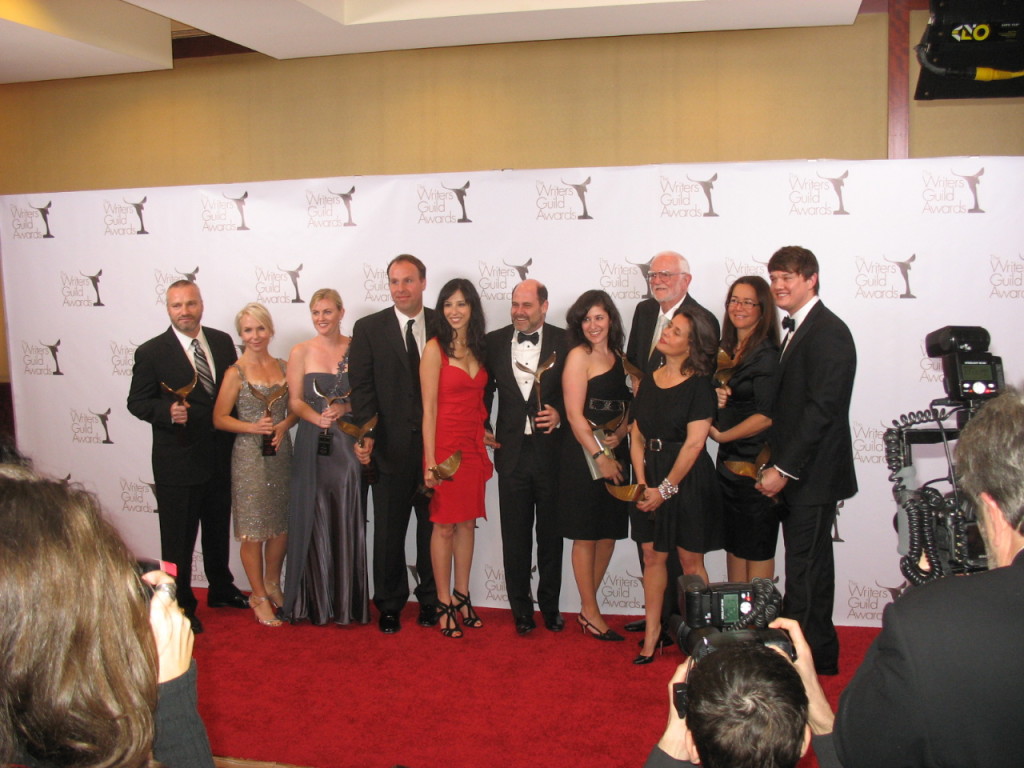
    Humphris 2 - awards

    AG: You worked on episodes 302 and 311 of Mad Men. Episode 311 especially was a pivotal episode. You have these strong female characters being able to voice their frustrations in Joan and in Betty, and Don being knocked down a peg and having to come to terms with who he really is. So, that’s a big episode. How did it come about that you were able to write for that episode, and what was it like working with Matthew Weiner?

    CH: I was really lucky. Matt is incredibly talented, and it was an incredible room filled with writing heroes of mine. I got to co-write episode 311 with Marti Noxon, who was a writing hero, and it was just a room filled with amazing writers; the majority being women, which is rare in Hollywood.

    It was an incredibly collaborative room. Matt gave you a ton of breathing room. He was wearing a lot of hats, and he was in and out of the room a lot, so you’d do a lot of the work collaboratively, breaking story with the other writers.

    One of the things I’ve always loved about Matt is that he was a very good showrunner in terms of being able to come in having twenty minutes to listen to a pitch, you’d pitch out what you came up with, and he was always clear on saying “I don’t like that, I don’t like that, I don’t like that, I like this—this is the heart of your story. Re-break it around this.”

    And I think that’s a gift from a showrunner, because you work for a lot of people that don’t have that clear vision, but also maybe other people [who do] that aren’t able to collaborate.

    Matt certainly has a reputation for doing a lot of on-the-page rewriting. He has a lot of ownership. But I have to say, at least my experience in the room was that he was very open to what other people brought to the table.

    I had a great experience on that show. I learned probably more—in the room, on set, and in the writing—than ever before.

    And the way it works with Matt, at least when I was there, is that he wouldn’t assign episodes ahead of time. A lot of shows, you know it’s your episode, and you take ownership of breaking that episode. But on Mad Men, we would just break all the episodes, and Matt would turn to you and say, “You’re writing this episode.”

    At the beginning of the season, for my first episode, I had two full weeks. And then he gave me a bunch of notes, and I did a second pass, and at that point he took it over and did a rewrite. As the season goes on, things get more crunched, and so for episode 311, that Marti and I wrote, I think we probably had four or five days to do it.

    I knew that episode was going to be a huge episode, but I had no idea that was going to be the one he assigned to me. I was quite grateful when I got assigned it, and I was thrilled to be writing with Marti. That was one of the greatest experiences of my career, to get to co-write an episode with Marti Noxon.

    I was a low level writer, and she was a showrunner. She was amazingly collaborative. She was so generous with me, she gave me amazing feedback. I just loved writing that episode, and I knew it was going to be a big episode. But I guess that’s another place where, even at that point in my career, I just don’t understand being too precious about that stuff. Any of the people on staff could have done a beautiful job writing that episode.

    If you’re coming into the TV business and you’re going to hold on to every word that you’ve written, this is not going to be a good business for you; you should probably think about writing a book instead. Your stuff is going to be gone over by your boss, by the studio, by your network, by your actors. There’s going to be a lot of changes.

    One of the things that I think Matt is good at is, we would go back into the room after we did a table read, and we’d go through the script. If there were lines that weren’t working, you would change them. That’s an important thing to learn. If a better line comes from your co-worker or from an actor suggesting something, you shouldn’t be afraid to be collaborative. This is a collaborative business we’re in.

    VH: What is your unwritten rule of screenwriting? Something that is perhaps ignored by a lot of teachers or by a lot of the so-called “guide books” on the craft, but is something you consider paramount to writing?

    CH: I guess, this is maybe less about writing in general but more about television writing, which is that perspective is huge. When we talk about these rules, or we talk about, “it has to be this way, it can’t be that way, this is good writing, this is bad writing.” Whoever you are working for or whoever is making the final decision is actually the person that’s in charge of deciding what they think is good or bad writing.

    Having gone back and forth between so many shows and so many showrunners, I will literally be on a show one day where a showrunner will say, “If you do X, I’m firing you, it’s the worst thing you could possibly do in your scripts,” and then you go to the next show and the showrunner says, “I LOVE it when people do X.”

    It took me a whole lot of years to understand that it’s all perspective. There are certain things that I personally think make for a good script or for good writing, and they can be totally opposite of what someone else thinks makes for a good script or good writing.

    There’s obviously honing your craft, and there’s obviously certain things that a lot of us can agree on that are better or worse to do. But I think anyone who watches the landscape of television, and the many varied things that are out there, in a certain sense, who’s to say what is wrong or right?

    AG: You’re working on Under the Dome. Where and when can people check that out?

    CH: It is going to be coming back to CBS for the third season this summer. We’re going to be on Thursday nights, which we’re very excited about. I believe it starts June 22nd with a two-hour premiere, and I’m writing episode 4 and then I’m slated to co-write the finale, so hopefully people will check that out this summer.

    ———————————————————————————————————————————————

    And we hope people check it out too! As with our previous interviews, I think there’s some invaluable advice and experience Cathryn shared with us in the above interview. Hopefully you will find it helpful. Ms. Humphris dropped some truth and science on us all, folks. So study up, and get writing, get filming, get creative.

    You can also check out her essay on the blog series Why We Write from Feb 5 2008—a time before she had the experience or resume she now enjoys.
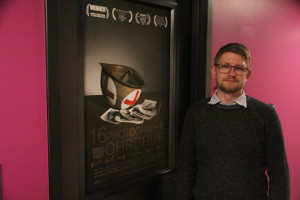
  • Filmmaker Matthew Nash Talks About His Work, Influences and Style

    Filmmaker Matthew Nash Talks About His Work, Influences and Style

    IMG_8242Hello again, friends and compatriots! We’re jumping right back into our conversation with the head of Lesley’s Film and Animation department, Matthew Nash. Apart from his academic duties, Matt is an accomplished, award-winning filmmaker, most well-known for his powerful documentary film entitled 16 Photographs at Ohrdruf.

    If you missed last week’s post, be sure to give it a look-see here!

    ———————————————————————————————————————————————-

    ADAM GREENE: How did you decide to become a filmmaker?

    MATTHEW NASH: Totally by accident. I’ve never been an artist who’s particularly wedded to a medium. It’s fine to be wedded to a medium, I’ve just found that for myself, I don’t like having to channel all of my ideas through a tool. I like to find the tool for my idea.

    My creative partner, Jason, and I, had done a lot of videos. Experimental, weirdo goofy stuff. And then, super long story super short, we decided to make a mock version of Ross McElwee’s Sherman’s March, that actually turned into a serious project.

    It was supposed to be a week-long gag, and we ended up doing it for two years. That’s a film that you should never watch. [laughs]

    But, I learned a lot. I had moved into that mindset. We did an experimental, semi-narrative piece where the concept was basically two people, who are nowhere, talking using just a microphone and a speaker. [Jason] and I, over the course of several months, recorded all of our phone conversations, transcribed them, edited them, and then turned that into a script.

    On its face, this could be a profoundly boring 15 minute short film. The solution that we came up with was that we wanted to take the production level to 11.

    We rented 18 foot cranes, 20 feet of dolly track, really good microphones, really good production team, the whole nine yards. It was that experience that got me hooked on production, on process.

    When [16 Photographs at] Ohrdruf fell into my lap, I didn’t even know what to do with it.

    7DA20202

    The backstory is that my grandfather died in 1991, and after he died, we found this packet of photos that he had taken at the liberation of a concentration camp called Ohrdruf.

    In 2008, when Barrack Obama was campaigning for the presidency, on the campaign trail, he says something like, “My uncle liberated Auschwitz.” And of course, big scandal, because America didn’t liberate Auschwitz, the Russians did.

    They found his uncle, and they interviewed him, and it turns out that he was at the Ohrdruf camp. So all of a sudden, I’ve got the uncle of the future president of the United States and my grandfather, and I can put them in the same place.

    I dug out the photos, and honest to God, I didn’t know what I was going to do. Having just done the project inspired by Ross McElwee, his very personal narrative process, I thought, “That might be my approach to this. As I try to figure out these pictures, I’ll just bring a camera along, and see what happens.”

    Initially it was just going to be some YouTube shorts, but a really close friend of mine is a high-end editor in New York, and he said, “I’ll edit this for you.” And my partner and producer in New York said, “I’ll produce this for you.” And he also wanted to do the soundtrack.

    Once everything came together, and I started doing the research into the photographs, it followed its own course. If you watch the film, it more or less is chronological to what I did.

    AG: How has your experience working on documentary filmmaking influenced your narrative filmmaking?

    MN: I think I’m still getting my feet under my knee as a narrative filmmaker. I really enjoyed the sci-fi film, but when I watch it now, there’s some stilted dialogue or, you know, I could have given more direction at a certain point, things like that. These are the things you learn.

    The big difference that I have found is that when you’re working in a doc mode, you lay out an outline, or sort of a trajectory that you want to take your viewer on. Then you set out to find people to interview, or find footage to meet the needs of each stage of the process. And as you find people, they tell you things that you hadn’t expected, so you’re constantly tweaking your script or your outline.

    7DA20189

    Whereas with narrative, the script is everything. You’ve made or broken your project before you’ve ever done a casting day. If you don’t have a good script, everything after that is wasted effort.

    There are areas where editing, acting, rewrites can save you, but if you’ve set yourself out on a bad course, you’re stuck on that.

    I have learned, as I look toward doing narrative work, to be much more upfront about flaws in scripts, whether they’re things I’m helping my friends on, or students are sending me, or my own scripts.

    One of the big lessons from last summer was just making sure that you are on the right track, that you really understand what you are doing. You know how it is on set, your camera guy has a great shot, or your lighting guy can’t light the space that you want, and you have to be adaptable and you have to be flexible.

    VIKTOR HERRMANN: Do you think your documentary background gives you an advantage in being flexible?

    MN: I hope so. My own self criticism of when we did the sci-fi film is, I think, [that] I was too flexible. I think the project really would have benefited from a director, me, taking a much harder line about some compromises that were made. I think we would have made a stronger project if we had taken the extra two minutes to move that light or to reposition that tripod or whatever it is.

    The thing that you can do with documentaries is you can go, “I’ll live with that.” I think the thing you can’t do with narrative is say, “I’ll live with that.”

    AG: What advice would you give to students or filmmakers in general that are wading into the corporate sphere? A lot of corporate places don’t have time to help write scripts with you. They might say, “Well, just bring your camera and start unfolding the story, you’ll figure it out.”

    MN: One of the things that I would advise people in that circumstance is to have your own script, air quotes here, ready to go. Have your default model firmly established. So if you’re hired in a corporate situation to do an on-the-fly thing, walk in the door knowing, “Here’s how I tell a story. It begins here, it goes here, it climbs to here, it falls to here, rises back up and ends.”

    If you’re going to have to work on-the-fly, how do you assess which elements in front of you meet the needs of basic storytelling 101?

    It takes skill, it takes practice, it takes an eye. It takes being able to recognize when the world is giving you the thing [that you’re looking for], and getting a camera on it.

    If you’re just pointing your camera at things because somebody gave you a paycheck, you’re not going to make a good product.

    One thing I say to my students is all of the thinking and understanding and planning and research and immersion into your medium, all of that happens before you ever take the lens cap off.

    If you haven’t done that work, if you don’t understand your medium or how you speak with it, you’re just making footage.

    AG: Why is video important as a teaching or marketing tool?

    7DA20117_modified

    MN: I think where we have gotten with our video tools is that it democratizes things. It makes it fast. It makes it accessible. When I was a student, if you wanted to make a film, the process was arduous. But today, I could grab a video camera, and tell a story really quickly.

    Nowadays folks who are working in video have to incorporate a vocabulary of cinema, of narrative. It doesn’t matter if you’re going into a corporate environment, an academic environment. You’re bringing to the tool all of its history and all of its vocabulary.

    Partially because we are so media saturated, I think people are bringing a lot of that stuff intuitively now.

    VH: Would you say there are benefits, even if you’re not pursuing film or video as a career, to having video skills?

    MN: Oh, I think so. It’s one of the major and rising vocabularies that we have. Your phone shoots video now. Your phone shoots photos too, but more and more as I scroll through Facebook, I notice: It’s video. And frankly, there’s a lot of bad video out there.

    One of the things that I know we’re going to face when we launch the digital filmmaking program, because we already face this in the photography program, is, “Oh, hey, I shot some cool pictures with my phone. I’m a photographer.”

    This is not to devalue our students; anywhere a student develops a love for photography is totally valuable. But the ease of use and the ease of access [has made it so] amateurs can very quickly think that they’re professionals.

    I think the same is going to hold true for filmmaking. “I shot a great short video on my phone.” Awesome! You know what? You can do professional quality work with your phone. But it has nothing to do with the phone. [laughs]

    It has to do with whether you can use a cinematic vocabulary.

    VH: Is there something that has influenced your filmmaking that perhaps doesn’t come from film, that perhaps would surprise people?

    MN: Sure. So many things. One of the things that I talk about with my students is that inspiration comes from everywhere. You can go to the library and get the art history books, but you might be sitting at home watching an episode of The Simpsons, and it just clicks.

    What goes in eventually comes out. I consume as much as I can get my hands on. I love 1950s horror comics. In fact, film students are all going to be required to read at least one volume of something from Tales from the Crypt, The Vault of Horror, Weird Science, the classic EC 1950-1955 Golden Age.

    I think filmmakers should fall in love with this stuff, because it’s formulaic storytelling 101. By the time you’ve read 5 or 6 Tales from the Crypt stories, you’re like, “Oh, this is just formula.”

    If you can take your brain to the next step, you can be like, “You know what? It’s a formula that I should probably learn.” If you go back to the 80s, HBO did what, 9 or 10 seasons of Tales from the Crypt episodes.

    These comics are the script, the formula that allows you to do a successful 9 or 10 season series. Every episode is standalone. Think about The Twilight Zone.

    It’s very formulaic. It begins in a certain way, it unfolds in a certain way, it reveals in a certain way, it climaxes in a certain way, it concludes in a certain way. Every time.

    7DA20121

    VH: And yet it’s still one of the greatest pieces of television ever.

    MN: Exactly. Because you know what you’re going to get. And even though it’s different actors, different characters, different stories, you know.

    And on one hand, it’s boring television watching. If you’re an educated viewer, you’re like, “Yawn.” But if you’re going to make this stuff? The thing I always tell my students is, “You can’t break the rules until you know the rules.”

    To a certain extent, these are our rules.

    AG: Can you talk about collaboration and the importance of developing good working relationships?

    MN: Sure. I have lots of friends doing cool stuff, but it’s not like I picked my friends because they were going to be film producers or anything. I met some these guys when I was 16. I always tell my students, “If you surround yourself with cool and interesting and motivated people, they’re going to grow up to be cool, interesting, motivated people who do cool stuff.”

    AG: I would say that applies to crews, too. I’d much rather work with somebody that I really click with, that I think is a really smart, reliable person, rather than just somebody who knows how to operate a camera really well. Because that first person will be able to learn how to use the camera really well with time. You can teach people, and you can teach skills, but it’s much harder to teach people skills.

    MN: Yeah! On my sci-fi film last summer, we were a small crew so everybody wore multiple hats. Our associate producer, Rob, was also our lighting guy. And he brought this guy that he had been working with and liked, and the guy just flaked. He worked for half the morning, checked his phone, was like, “Oh, I’m bored,” and left.

    This was a volunteer gig, whatever. But Rob cut him loose. This was his number one guy, and he dropped to the bottom of the list. Meanwhile, the boyfriend of somebody on my crew, his name was Joe, shows up, does an amazing job, and ends up getting hired.

    Rule number one is just don’t be a dick.

    AG: [laughs] That’s a great rule.

    VH: Just for life in general.

    MN: Yeah! It’s a people based business. You hire who you trust. I got offered a job in Hawaii a couple of years ago, and one of the things that absolutely terrified me was leaving behind this whole network of people that were beer-and-pizza friends, and I know if I called them up and was like, “Hey, I want to do a short film,” – I actually did this recently, I said, “Hey, Rob, I’m interesting in doing a short film,” and he said yes before I even told him the title or when it was or anything.

    Having that network of people who trust each other… that’s how it works.

    7DA20145

    ———————————————————————————————————————————————-

    16 Photographs at Ohdruf can be found on Hulu, Vimeo, or Amazon Prime. Be sure to check out Matt’s, http://www.mr-nash.com, to find out even more about the man and stay current on what he’s cooking up next.

  • Lesley University’s New Digital Filmmaking Program

    Lesley University’s New Digital Filmmaking Program

    Development RoomAs of writing this, I am just a little over a month shy of graduating from Lesley University. It has been a fantastic four years, and I’ve been fortunate enough to meet some wonderful peers and professors.
    My only complaint throughout was, “Geez, I wish there was more film stuff.” And wouldn’t you know it, right on the cusp of my graduation, Lesley announces that it’s starting a film program.

    Ain’t it always the way?

    Adam and I sat down with Matthew Nash, who is the head of Lesley’s Video and Animation Department. As of the Fall of 2015, the department will include the brand new Digital Filmmaking program. We spoke with Matt about what potential film students could expect.

    ————————————————————————————————————————————————-

    VIKTOR HERRMANN: Can you talk about the film program and what your plans are for that?

    MATTHEW NASH: The film program launches in the Fall of 2015. We’re aiming to have 15-20 students in our first Freshmen class; obviously if we get more, it’ll be better. But that’s our goal. We’re going to roll it out over four years.

    The four year program will have students doing filmmaking from day one. On average, they’ll take two to three film classes per semester. In the first year, Fall and Spring, their two core courses each semester are Concepts of Cinema, and Cinema Techniques. They’ll be working with an award winning filmmaker, who’s originally from Syria, a guy named Ziad Hamzeh. He’s a fantastic filmmaker.

    He’ll be doing Concepts, introducing them to how to tell stories; all of the thinking stuff that goes into making television commercials, or experimental media, or narrative media. The rules are the rules are the rules, right?

    And as he’s giving them assignments that push the way that they think about filmmaking, I’ll be meeting that with a technical course, giving them the skills and the techniques, whether it’s camera work, rigging, lighting, etc, to meet the assignments that he’s doing.

    We want, at every stage, to be feeding their brain and how they think, and then to back that with the skills to make it happen. The whole four year program is designed that way. It’s different from year to year, but we’re always backing ideas with skills.

    7DA20097

    In the Junior year, the goal is to put them into teams that will actually shoot a short film over the course of the year. So they’ll do pre-production and production in the fall, and production and post-production in the spring.

    It’s really important that our students get a chance to wear a lot of hats. Not everybody is the director, and you’re not the director all the time. So, if you can be a good sound-tech for somebody’s project, or a good gaffer, or a good production member on somebody’s team, you’re still valuable. We all came up through the ranks being a part of other people’s projects first.

    And then, Senior year is thesis year. We want our students to walk out the door with film festival winning, high-quality short films, whether they’re experimental or narrative. We want them to have a whole year to build up to something that showcases how awesome they are, and how awesome our program is. So that’s the goal.

    VH: That sounds fantastic.

    ADAM GREENE: It does, and it also raises some questions about some of the other well known film schools in the area. Is Lesley trying something different that those schools aren’t doing?

    MN: I think there are three things that will really set this program apart. One, all of our students, no matter what program they’re in, are required to do a professional internship. Getting into the industry you want to be in is hugely important to us.

    We’ve shot some great Hollywood films in Boston, but there’s a lot of independent film going on here, a lot of independent documentaries going on here. And not all of that stuff is permanently fixed in a building where you can go and knock on the door. We’re getting our ear to the ground so our students can get in on some of these things that might only exist for the length of a production.

    And at the same time, talking to guys like you, where there are great internship opportunities. That’s one thing that our program has always been really strong on: Internships. We are a professional school. We talk a lot about professional practice.

    Students are coming to us because they want to do this for their livelihood. You don’t spend four years and God knows how much money to then graduate and never do the thing.

    But at the same time, our educational background means that we’re not just making you a technician. We’re making you a full-rounded thinker.

    Studio

    Two, we’re launching a program in 2015. We’re not burdened by a past of how it was always done. We’re not anchored in any way to any history. We can look at the state of the market in 2015 and say, “These are the things that our students need to be successful.”

    Three, when I talk with potential students and their parents, one of the things that I talk about is the fact that we all consume huge amounts of media nowadays, and a lot of it is short form. The standard 22 minute television show, the standard 90 or 120 minute movie, those still exist, but Hulu, Netflix, Amazon… they’re changing the game.

    Our students will be graduating into a media market that is not locked into a lot of the standards that we have taken for granted for so long. We’re baking that right into the cake from day one, and thinking, “How do we get students making strong work that will survive?”

    Our first graduating class will be in 2019. So, what is a successful digital filmmaker in 2019 going to look like? There’s a lot of question marks around that, but you can trace some trends, and you can make some educated guesses.

    Obviously it would great to have students who go off to New York or Hollywood, but we also know that they can be successful doing the kind of stuff that Green Lens Media is doing. Corporate work, short form work, advertising, short web narrative.

    Every time you go to YouTube, you have to watch a commercial. Somebody got paid to make that 30 second ad that you don’t want to sit through! It’s maybe not the most glamorous side of the business, but these are all paying gigs that can support real professional creative practice.

    AG: I can definitely tell you, as someone who came from a bunch of film related programs… the one thing that would have made the most difference would be a background in business. How to communicate with clients. That is so huge, and it’s not even being talked about.

    7DA20099

    MN: That’s funny, you almost took the words right out of my mouth. Most of my friends in New York who are quote-unquote “film industry types,” they’re on the production-house side.

    They’re not running cameras or dealing with actors, they’re either dealing with budgets or managing production teams. They’re line producers, they’re production coordinators. They’re not talking about the glamour, hanging out with celebrities every day. They’re talking about booking flights and renting camera gear; which is just as much a part of the business as anything else.

    We’re sneaking some of that in through those Junior and Senior year classes, where students have to do pre-production, production and post. You can’t do pre-production, even on a student project, without making a budget. Without organizing your team. Without scheduling. Without planning.

    If you walk in and tell students, “Alright, this is a business planning class,” they’re all going to get up and walk out the door. But if you say, “This is pre-production for the movie you want to make,” then all of a sudden it’s like, “Yeah, okay, now a spreadsheet sounds interesting.” [laughs]

    A spreadsheet is a tool. Just like a camera or a tripod is a tool. So we’ll just have to get students to appreciate the spreadsheet when it’s appropriate, when it’s useful, and in its context.

    AG: That’s very valuable. Everybody thinks, “Oh, I’m going to be the next Peter Jackson, and not need to bother with that, I’m just going to focus on my art.” But the fact is that in order to build up enough capital to do those kind of projects, you have to work in the trenches, and you have to do some of these very basic business things. So, it’s good that Lesley’s working that in.

    MN: Yeah. Last summer we did a little short sci-fi film, and it was an all volunteer thing, lots of students, people doing it for the experience. And even that ended up running about $10,000 dollars when it was all said and done. Just for a couple weekends of shooting, pizzas and coffee, renting gear and hotel rooms. It adds up super fast.

    That’s one of the reasons that we’re not going to emphasize the feature [film] in this program, because it’s an undergraduate program, and because it’s prohibitively expensive to do a feature. Even a five or a ten minute short, on a student budget, could get prohibitively expensive.

    AG: It comes back to what you were saying before. The landscape is changing anyway. So why not embrace it? And say, “We’re going to focus on short form, and even corporate advertisement.”

    7DA20162

    MN: Yeah. So much of the basic stuff transfers over. A lot of nice cameras have been showing up, so a handful of students have been like, “You got a Blackmagic 4K? I want to shoot with that!” Great. First thing you have to do is buy 8 terabytes worth of hard drive space, so that we can work with this footage.

    And they’re like, “Wait. What? I’ve got to go buy four hundred dollars worth of hard drives before I can even consider starting this project?” That’s the kind of prohibitive thing that we’re talking about. You have to create infrastructure inside your college for boring stuff like data. For footage. People who look at it from the outside see it as sort of, “It’s easy, you just get a camera.”

    VH: Talking about changing landscapes, do you have any overarching visions for this film program five, ten years down the road?

    MN: I think where the program will really shine, will really have its character, is in our elective packages. At this point we’re at least a year away from really implementing those, but I threw up a Google Doc, and I asked some of the development team, the faculty, to make a list of everything they’d like to do in the electives.

    Things like green screening and compositing, which would be great with our animation classes, of course. A course entirely dedicated to music videos. Some really whacky ones. One professor pitched a low-budget DYI special effects class.

    Animation station

    VH: Not visual effects but special effects?

    MN: Yeah, like practical effects. Anybody who’s ever seen the making of Saving Private Ryan, you see Steven Spielberg talking about how they would put a little stick in the ground with some dirt on top of it, and if you stepped on it really hard, it made it look like a landmine exploding. Practical effects like that for student projects and lower budget projects, what a great thing to give our students.

    AG: Home Depot 101.

    MN: [laughs] Exactly. There are great things you can do with 3D animation, with game engines, and in post. But sometimes you just want the practical effect. Those are some of the areas where my brain is churning right now. I think when we start having real serious conversations about which elective we’re going to roll out first, frankly, it’s going to involve the students.

    Part of my pitch to potential incoming students for the fall is saying, “This is the wild west. You are pioneers. This is the Oregon Trail. Nobody has done this before. You will be the first. Which means you’ll have a huge amount of say in what we do.”

    The 2015-2016 group and the 2016-2017 group, those first two classes are probably going to influence this program more than I ever could.

    Unlike the folks who are maybe more in the fine arts, as a film student, you are immersed just as much in pop culture as you are in fine arts. There’s tons of film out there that’s cinema, you can go watch your Felini, or David Lynch’s early work, there’s experimental stuff. But most of our students are arriving at our door because they loved watching Gladiator and Transformers.

    It’s really interesting to hear their different motivations. I have robust e-mail lives with a lot of the folks who are looking at our program. Each one’s motivation is different. One guy just wants to do horror thrillers, another guy’s done all comedy pieces. A lot of them don’t know what they want yet, they’re just mimicking what they see and what they like. So it’s a program that’s going to have a really interesting relationship to the mainstream, which you don’t necessarily see in a fine arts program.

    welcome to lesley

    ————————————————————————————————————————————————-

    Sounds exciting, doesn’t it? By all accounts, Lesley intends to create not just talented filmmakers, but working, successful ones. Even though personally I won’t get to be a student in the program, its existence makes me both very excited and very happy.

    Tune in next week to the 2nd part of our conversation with Matthew Nash, which will delve into his personal experiences and influences (some of which you might be surprised to learn).

  • 8 Movies That Prove Digital Can Look (Practically) as Good as Film

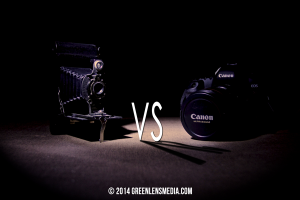
    Digital-vs-Film_v1.0Oh, this here, folks, is a fun one. Film vs. Digital is one of those debates that movie fans just cannot seem to stop having. If you’re not familiar with the difference, basically it boils down to this. Film means literally shooting footage on rolls of film (traditionally 35mm), and it’s the way movies have been shot for decades. It provides a beautiful, warm image that many consider to be cinema. But it also has its drawbacks.
    Digital, on the other hand, is usually more cost effective, allows you to shoot to your heart’s content, and, unlike film, isn’t vulnerable to physical damage. Unless you smash your camera with a hammer, I guess.

    For many, film’s inconveniences are plenty worth putting up with for the finished product. They swear that digital can never look as beautiful as film, or (if they’re of the more radical nature) that it’s ruining cinema all together. Personally, I happen to lean more on the film side of the argument. I think well shot film is stunning and I love the alive feeling it gives an image, with its grain and little imperfections.

    BUT. There are also plenty of movies shot on digital that I think look miles better than the majority of “film films” out there. In the hands of a talented cinematographer, digital filmmaking can look absolutely glorious—and achieve effects that film can’t.

    So, in the spirit of playing devil’s advocate, I decided to create a list (in no particular order) of movies shot on digital that do just that. If you’re a die hard fanatic of “film films” and think anything else is just a rip-off, hopefully this can make you see the enemy in a kinder light.

    Hugo – This really could be the start and end of the argument. If digital is good enough for Martin Scorsese, then it’s damn well good enough for you. Hugo looks like a storybook brought to life. Crisp, vivid and breathtaking. I haven’t gotten a chance to see it in 3D, and though I don’t usually like 3D, I have a feeling in this case, it might really add to the experience.

    Sin City – With Sin City, Robert Rodriguez managed to bring a comic book world to life like no one ever had, or has since. A perfect example of using digital filmmaking together with stellar visual effects to create a unique style that is unlike anything else out there.

    Gravity – If you didn’t get to experience this movie in theaters, then I’m sorry. As pretty much any review will tell you, Gravity is a visceral experience that ties the audience into the seat of a roller coaster and refuses to slow down. The beautiful imagery, combined with basically flawless CGI, creates a thrill ride that is one of the quickest 90 minutes I’ve ever had in a movie theater.

    Red State – Okay, so I know you’re thinking that all of the previous movies were special effects driven pictures which would of course work better with digital. Well, calm down, cowboy. Cause here’s Red State. Kevin Smith’s $4 million horror flick creeps up on you and forces your eyes wide open. The sharp, almost clinical look of the digital photography gives the movie an unsettling feel that resonates in the audience’s mind from first frame to last. To put it simply: film would have been too pretty for Red State.

    Collateral – Michael Mann can do amazing things with very little. It’d be hard to find a better example of that then Collateral . What’s essentially a basic, almost clichéd, noir story is made into a thrilling, personal narrative about people and the city of Los Angeles. Mann’s digital filmmaking gives the movie an extremely realistic, almost documentary-like look; a major reason why it works so well.

    The Girl With the Dragon Tattoo – I could have just easily put The Social Network or Zodiac here, but there’s something magical about The Girl With the Dragon Tattoo’s bleakness. From the pitch black apartments to the paper white Swedish snow, there’s intensity and suspense almost every frame. It’s hard to describe, but it’s immediately sensed while watching the movie. It’s an effect digital filmmaking helps achieve.

    Drive – Drive feels like a dream. A strange, violent dream with pulsating dance beats and lush, absorbing colors. It’s a testament to the power of visual storytelling, and the beautiful cinematography has a lot to do with that. When I found out that Drive was shot digitally, I was shocked. I couldn’t believe colors that deep, that rich, could be achieved with anything short of the highest quality film camera. Drive is proof that they can.

    Skyfall – Roger Deakins is one of the most talented people to ever hold a camera. That’s about all that needs to be said. Legendary filmmakers from the Coen brothers to Sam Mendes have called on him time and time again to give their movies that exquisite visual touch. Deakins’s work on Skyfall doesn’t reestablish, it only confirms his well deserved reputation as the master of the camera. Every single shot in the movie is a gorgeous painting, worthy of hanging in a museum. And you need look no further to find as compelling an argument for digital filmmaking.

  • The No-Brainer Business Venture and/or Education Decision

    This past weekend, on September 1st, 2013, Green Lens Media finally announced its newest service, The Filmmersive™ Workshop Series. This workshop series has been a year and a half in the making, and was much more demanding in its planning than was originally projected for multiple reasons. But we kept at it, because we knew as soon as we conceived of it, no matter how difficult it was to set up, we HAD to do it. It was just too perfect to not do it, as it fulfills multiple needs to multiple parties in a cost effective way. Through hard work and the will to succeed, we finally have it ready, and I am proud to officially proclaim our workshops are launched, public, and open for business – let the filming begin!

    Why is this such a big deal?

    Today, if you are a business, you want your product and service out there, circulating, known, because that leads to clients and customers. If you are a filmmaker or involved in video or marketing, you are looking for experience, for contacts, for resources, but really more than anything those are means to the end—you are looking for JOBS. If you are a writer, you want people to see your work, make connections, improve your storytelling skills, but more than anything, you want more and better JOBS. If you are an actor, you may want people to watch you onscreen, get your name out there, and meet people who can hook you up, but all of those things are to feed your ultimate goal, landing killer JOBS.

    I know this. Everyone knows this.

    But what is anyone DOING about it?

    As a filmmaker, I believe in video. I love making it, and I love telling a good story. As a business owner, I believe video can help a business in ways that almost all other forms of marketing fall short. Video presence is important, and will continue to increase as the years go on. And once everyone finally catches up and realizes video is important to attract attention, how will your video become more attractive than someone else’s?

    Film school is expensive, and a big decision. A fully customized video production is expensive, and also a big decision. Getting attention as a writer or actor is hard, because there are so many others out there, and so few really great jobs. I wanted GLM to solve these 3 problems faced by our community: 1) Attention, 2) Cost, and 3) Return On Investment (ROI). I believe our Filmmersive™ Workshops address these issues in a unique, smart way.

    I’m not advocating our workshops as a replacement for college degrees, program certificates, less expensive or free online training, or high-end custom productions, but as a supplement and booster for your career or business there is truly nothing like it. For some it may be just enough, while for others it will prove that only the surface has been scratched. From my perspective, it’s the kind of thing I wish had been available to me, both as a filmmaker AND a business, back when I was first starting out in the professional workplace.

    All the details can be found on the Training page of our website, so I won’t explain how it works in great detail other than this synopsis: the workshops are 5 days of intense filmmaking training for small 4-8 person groups given by experienced instructors. Workshop Attendees pay to learn filmmaking but also take part in actually executing a short video by the end of the week, start to finish, giving them a portfolio piece to showcase. In Narrative workshops we pay a modest fee to use a local writer’s 3-6 page fictitious script, which gives this writer heightened exposure. In Corporate workshops the Attendees do a 1-day shoot at a real company, each editing their own version of the video; the business gets to review all versions and decide at no obligation if they would like to purchase it for their website for a fraction of the normal cost.

    Basically, we structured our workshops to focus on the collaboration and the ROI for all involved. For Attendees, it’s a cost-effective, fun, and rewarding way to learn, and you wind up with a unique portfolio piece. For writers, actors, and sponsors, it’s a great opportunity for exposure with a limited commitment and with a quick turnaround final result. For businesses, it’s a risk free way to preview multiple videos about their business, since purchase costs are more affordable than highly customized projects and always no obligation to buy. For GLM, it’s a way to share our knowledge through training while continuing to operate in the field making productions. And for everybody, it is a great networking opportunity and an all around enjoyable and worthwhile experience.

    So what’s the catch?

    Honestly, I can’t think of one. This is the NO-BRAINER part of the whole concept – everyone benefits. Really, the only hesitation was in the idea of actually structuring the setup of the program, and then executing it. With all the variables involved it is a complex undertaking. As the host of the workshop, this responsibility falls on GLM’s shoulders, but I felt so strongly this model would strengthen the business and film community in Boston that it was worth every effort to see through. I would like to see new startups, particularly green / environmental ones (though we won’t be exclusive to them), benefit from this program, and begin to flourish and enhance our city. I would like to see Boston, which has already grown as a film town in the past decade, take this to a new, even higher level.

    The Filmmersive™ Workshops are not where your film education or video productions end, though it will be a good jumpstart. Every ingredient like this helps, and GLM will make its workshops one such ingredient of the overall recipe that promotes companies, individuals, and the film community. I hope you will check out what our program offers to see if it is right for you, but whatever you choose to do I hope you will continue to investigate how to get video on your site and / or learn the practices of filmmaking by whatever means make the most sense in your situation. 21st century communication is already headed in video’s direction, and riding the wave of the future should be one hell of a thrill, so let’s make it thrilling and catch the perfect wave.

  • 4 Quick Fixes: The DIY Filmmaker’s Cheat Sheet for a Quality Film on the Cheap

    Whoever said “time flies when you’re having fun” was absolutely right. And if you’re a filmmaker, you already know by now that having fun is part of your job.

    The best thing about creative work is that the sky’s the limit. If I wanted to, I could think up a world of gremlins and goblins and bring it to life. I could also make a hard-hitting documentary about world hunger. Or, if all of that doesn’t work out, I could set up a camera outside my lovely perch in Porter Square, leave it there all day, import my footage and still tell a story. (Hey, Andy Warhol did it…)

    All I need is my trusty DSLR, my lights, my sound kit, my tripod, my slate, my dolly…oh, wait, this is a problem.

    Or is it?

    It doesn’t have to be. Gone are the days of bombshell budgets and tedious technics. Times-are-a-changing and so is technology. Where once you had to worry about thousands of dollars and tons of extra baggage, you now only have to worry about the bare necessities. With a range of tools and technologies to our disposal, it’s becoming easier and easier to roll up your sleeves and start from scratch. Here’s how:

    Quick Fix #1: The Handheld Camcorder

    OK, OK. Before you scroll past this section altogether, let me remind you of a great moment from the pilot of Breaking Bad. You know, the one where Walter White leaves a video message for his wife and kid when he thought he was about to get caught. What’s interesting about that video message is that, even compared to the rest of the show’s already gritty visual style, the camcorder version was shockingly real. So if you’re on the run and you’re looking to capture the washed out realism of life pre-DSLR, this quick fix is for you.

    But if you’re going for a fancier feel, try…

    Quick Fix #2: The DIY Viewfinder

    Beautiful filmmaking is all about composition. And perfect composition is all about the little elements – aperture, ISO, white balance. But when you’re out and about, the sun can make it hard for you to get those elements just right, and a professional viewfinder will cost you a cool $100-$200 at the very least. But why shell out the cash when you have edit-room coffee runs and shiny new equipment to save up for? Believe it or not, you can make your own LCD viewfinder for under $20. And if you’ve got 5 minutes and an appreciation for dinosaurs, check out this video that shows you exactly how to do it:

    Make your own LCD viewfinder for your DSLR

    Now that you’ve got that viewfinder, you can focus on framing that perfect shot by getting all those little elements just right. But if you’re anything like me, that’s not enough. Getting everything right behind the camera is only a step towards making the magic happen in front of it. Which leads us to…

    Quick Fix #3: Get Creative With Lighting

    As a 5 foot nothing filmmaker without a bodybuilding certification, I was definitely not designed to haul around a light kit on long shoots. Paper lanterns and clamp lights are just two of the many options you have when it comes to quick, clean, low-maintenance light sources. Not only are these options totally affordable, they do just the trick if you’re lighting your subject outside or in a cramped space where you don’t have access to a lot of space or outlets. But if you do have some space and you’re looking for a conventional three-point lighting setup, here’s a video that will show you a low-cost way to achieve it:

    Make your own lights on less than $100

    A good lighting setup is really the cherry on top of the beautiful composition cake. But now that everything looks perfect, it has to feel perfect. And what better way to make it feel perfect than…

    Quick Fix #4: Create Movement with a DIY Dolly

    Think about it. What kind of world would this be if nothing never moved? A boring one. And what kind of film would you create if nothing ever moved? That’s right…a boring one. Camera movement is a foolproof way to inject your movie with feeling and dynamism, especially when used on what would normally be a static image. That said, the laborious task of carting around a full-size dolly is not something a small crew can afford to put up with. But that doesn’t mean your film can’t benefit from the wonders of movement. In fact, the solution for your static-shot problems can be easily found in none other than your local Home Depot. I’ll let YouTuber MediaUnlocked explain the details:

    Make your own DSLR slider dolly track

    And there you have it! With these four completely doable (and cheap!) fixes, you no longer have to let money or logistics stand in the way of telling your story. If you’re already imaginative with your storytelling, all you need to do is apply that great imagination to your technique.

  • The Power of Film Freedom

    I watched the 84th Academy Awards, like many professional and aspiring filmmakers did, only this time it seemed just a little more…unsure of itself. We had Billy Crystal up there reprising his host role having taken an 8-year hiatus. Though the intro was heartfelt, the jokes were cute, and it reminded me of how I’ve watched City Slickers II about 50 times with my grandfather chuckling the whole way through, it still was missing something.

    On the red carpet, which I was somehow forced to watch in my company, the commentators were as electrifying as ever: “What an outfit…Who are you wearing? Do I sound introspective and look as magnificent as you this year? Wait, before you go, I have one more shot for you. .” Like Crystal (don’t get me wrong, I will always love the guy), let me reiterate—the event was missing something. More than anything I heard the commentators talking about how classy, and old Hollywood it was this year, just like they claimed last year, the year before, and the year before. Hollywood seems to be fixated on retaining a time period when things made sense, and where the studios controlled everything from production to content, distribution to demographic. The movie industry is not about control anymore, it’s about fluidity, exposure and instant gratification. Whoever can get the most eyes on their product seems to be doing quite well for themselves.

    These are interesting times for filmmakers, independent or Hollywood, what with an evolving landscape changing every year for movies in the What, Where, Why, When, Who, How and How Much.

    What
    In Hollywood, the What is for the most part getting less intelligent and lazier. I swear, any day now we will get the prequel to Dumb and Dumbererer 5. We had some good movies this year, but were any of them really great movies? If it weren’t for the refreshing creation of The Artist (an homage to old Hollywood with some modern touch), I would say we’ve seen better years. The independent films I’m sure were great, but unless you go to festivals or subscribe to an independent on-demand channel, it is sometimes hard to find out about those films, much less see them.

    Where
    Movies out of Hollywood are being made more and more out of single locations, many able to claim that location as a post-production CGI house. The Where may be determined for tax reasons, logistics, convenience, but in the end the ultimate answer is money. Even though ticket prices are anywhere from $9 to $18 depending on how big the screen is and if the picture is in 3D, piracy has no doubt hit Hollywood hard, and the economy tanking hasn’t helped much either. Independent projects however are expanding outside their home base origins, with gear being less expensive and more portable than ever.

    Why
    Why Hollywood movies are being made (sorry if this is a shocker to anyone) is still about the money, as it always has been. You might have the best, most artistic, thought-provoking, culturally changing, life-altering script of all time, but if a producer can’t see it succeeding at the box office, good luck. That is perhaps the Oscars one redeeming quality. Out of all the junk the LA machine pumps out each year, it does make a few good artistic pieces worth recognition and worth seeing—movies that make us think. I wish there were more of them. Wait a minute, there are more of them! Only they aren’t Hollywood, they are independent, or even more so, they are really independent. Like the filmmakers going out themselves or with a small crew and uploading to Vimeo. Why are they doing it? Because they love it, because they care, and because they simply have to do it. They won’t feel complete unless they do it. Those are the movies you want to see.

    When
    Hollywood is making movies all the time, but not at the same volume or pace that the independent and online community is producing. Not even close. We have a democratizing revolution going on in the video industry now, where you can make a movie on an iPhone if you really want to. Whatever Hollywood movies come out that are worth seeing, you can usually expect them to release around fall or winter—right before the Oscars so it is hot and in folks’ minds. However, movies made on REDs, Alexas, and HDSLRs are being released all the time. There is no time like the present, and the sooner you can provide new content the happier your followers will be.

    Who
    Who is making movies is actually more of a question of who isn’t making movies? Hollywood of course makes movies, and filmmakers make movies, but it’s much broader than that. With a camera on every phone, the iPad, and HDSLRs, it is easier than ever to make a video, however short, low budget, or planned out. It is parents, business owners, students, doctors, salesmen, cooks—almost every industry there’s going to be someone who has zero training in videography, or even interest in filmmaking, and yet are still making films. It would be an interesting statistic to learn just how many people in the past year made at least one video clip, even if it was just a shot of their cat on their phone. Who is making good movies is another story.

    How
    The How I find the most exciting of all. Hollywood is making their films the same way they always have—big budgets, A list actors, huge crews, lavish locations, unparalleled cutting edge graphics, and the same formulaic scripts they’ve relied on for years with a couple diamonds in the rough. Independents are still looking for their moderate budgets, decent sized crews, and best locations possible for their scripts. But if you watch the content (particularly the short film content) coming in on sites like Vimeo, Blip.tv or occasionally YouTube once in a blue moon, you will find some incredible ratios of production value and resources to budget spent.

    How Much
    The trick is figuring out, in that last category of small online distribution, how to monetize it so you can both make a living and make more content, while not also selling your soul to the advertising devil. As of right now, I’m not certain how advertising dollars can’t be involved to make it work, though sites like Kickstarter and IndieGoGo may be on the right track. By crowdsourcing, and funding your projects with an audience that is already interested in your idea, it seems like everybody wins. I noticed the other day a project for a video game called Double Fine Adventure asking for $400,000. At the time of my writing this post they have secured 2.4 million dollars and have 5 days left. Wow. I think their success is not just due to what they are promising, but their attention to producing a professional looking video that allows fans a window into the behind the scenes, which helps sell their idea and convince people to donate. They decided to show (not just tell) what they doing, and it came back to them many fold.

    My point here is that the content you create matters. The story. With all the other noise out there online, in people’s ears and at the water coolers, you need some good content to help you stand out. This is true if you are trying to create the next LA Confidential, a corporate marketing video for your website, or an assembly of family home videos. You want it to not just inform, but entertain and engage. If you are thinking about budget, think about how much it might cost you later, when you’re forced to clean up a PR mess from a poorly produced video done in-house. If you’re thinking, “Well, only my family is going to see this,” consider your great great grandkids when they watch it. Wouldn’t it be ideal that they feel something, as opposed to just witness something? To achieve the emotional experience, to make it more than just the factual heritage connection, that takes some careful attention to timing and editorial decisions.

    The beautiful thing is, it’s true, anyone these days can make a movie. In fact, if you are outside the Hollywood machine, the filmmaking experience can actually be quite liberating creatively, since now you are the one in control. You may hear the followup, “Yes, but not everyone should make a movie / video.” If you love the process and ability to express yourself by making films, then I disagree with those pessimists; please make lots of movies to evolve your skills and your voice. Simply realize that when ready for a serious production, it can also be a very scary thing in the wrong hands, not just for you and the team but for your desired audience.

    What I am advocating is that after some experimentation and tests, once you get to a project you know matters to you, put some thought into how it will get accomplished the right way. Perhaps then we can look forward to increased interest in shows like the Vimeo Awards and Webby Awards, which stand to be much more in tune with viewers on an individual level. Everything is moving to the web whether we like it or not. I think the natural progression points to these more relatable, personalized shows thriving, while shows like the Academies focus on surviving. For non-filmmaker consumers, these new shows will only become more entertaining with age. From a filmmaker’s perspective, it is fun to watch these newer web-based award shows because the awards themselves seem so much more accessible and attainable. It still means you need to put care into your work; cats playing keyboards only gets you so far. Whether you are creating work for your friends and family, your peers and colleagues, or your customers and clients, think through your mission and make it cutting edge but still appropriately classy. And not swan dress classy; that is so 2001 old Hollywood.

    Focus of the Day:
    How do you make your content stand out?

    Film-tip: Learn the language. The more vocab you know on set, especially in the area that you are not a specialist in, the more you can communicate with the crew about what you want. It sounds simple and repetitious, but it really can take what should be a 4 hour shoot and make it an 8-10 hour shoot if you mess it up.

    Eco-tip: Help get support going for the coolest mode of transport out there yet. If you haven’t seen the Shweeb yet, you’re really missing out. Let’s get these into our cities and actually have fun getting to and from work.

  • Moving Forward: How to Do What You Love for a Long Time

    As a filmmaker, to say you will be on your feet quite a bit is somewhat of an under statement. Part of me liked the idea of a filmmaking career because it wouldn’t be just a fun, challenging, creative job that exposes you to lots of different industries, varieties of life and culture, but it would be an active one. You have to get out of your chair if you want to make a film. If your reply is “I’m an animator; like the click-click kind, not the claymation or green screen shoot kind,” why not go out and take some photos of textures? Making your own textures is painless and much more rewarding, but the contents on this site is essentially what I’m talking about. If your excuse is “I’m just an editor,” well, I’m an editor too, and there are plenty of organic ways to edit. Just ask Oscar-Winning Hollywood editor Walter Murch (Apocalypse Now, The English Patient) how he edits. (For those who are looking for some balance, have a ball, or a kneeling chair). If your excuse is, “I don’t want to exercise—it’s hard,” there’s nothing I can do for you. You need this guy to help you.

    Proper ergonomics and health is a concern for everyone, filmmaker or not. As I mentioned, you have to get up to make a film. I know I’ll have to lug a bag or two or three, sometimes make a few trips or bring extra people just to set up a shot. At the end of a day of production it’s a good workout, and workouts give you energy to keep going during the day. But how many days really are you in production? As the guy running Green Lens can testify, productions are actually a small percentage of each project. There might be many weeks of pre-production planning, phone calls, emails, and meetings before getting on set. And once off set, now you are headed for that editing bay—sigh…more sitting.

    I founded GLM as a very green conscious entity, pulling from my own beliefs on environmental issues, so the encouragement of physical activity also fits nicely in with our business model. I try to promote this by biking to places when possible, taking public transport, and walking, all in an effort to support the reality that movement is a key ingredient to living and feeling well. Unfortunately, this for many has become an inconvenient, undesirable reality (wow, that was close—almost said an inconvenient you-know-what. Go see the film if you haven’t by the way; 7 years later it’s still an important piece of political, environmental, and film history).

    Apparently, we—Americans—aren’t walking a lot anymore.

    In fact, we are so comfortable taking our cars, and avoiding old-fashioned legwork, that reporter Franz Strasser of BBC World News America decided to do a story on it. According to his article, it seems the good Samaritans of Raleigh, North Carolina have been taking matters out of City Hall’s hands and into their own, posting signs telling pedestrians how far it is to walk from place to place. Where no city official has taken action or filed a permitting charge against the movement, it would appear the city approves of the initiative.

    The more reasons we have to be active, the greener, healthier, and happier we stand to be. With barely any Boston snow to speak of this past year, I think I‘ve seen more joggers outside this winter than the past 4 winters combined, so why not take advantage of the weather and treat yourself to a warm February stroll to the insert-your-nearby-store-here? (The ecological significance of the weather, or lack thereof, surely warrants its own post; we’ll save that one for later).

    Currently, I don’t have Murch’s upright editing station setup. However, I do have a small swiveling laptop stand that sits up on my desk at times throughout the day to give my seated self a healthy dose of stand. The takeaway here is whatever your industry is, see if there is a way to work in more exercise into the daily routine, whether it means a new chair, periodically standing while working, taking the elevator more, or walking to offices to give messages rather than emailing. It doesn’t need to be strenuous; just enough to give our bodies what they need to live a long, satisfying life. Don’t wind up like the humans in WALL-E with tiny bones swimming around in their bodies…somewhere…

    Focus of the Day:
    What do you do to keep moving?

    Film-tip: It’s tax time. iPad / iPhone users, if you haven’t already, check out Mint.com. It is a secure accounting management site you can use for free (there are paid upgrades), and there are some great apps to go along with. Mint is created by Intuit, the same guys responsible for Quickbooks. Credit to ColinReidDesign.com for telling us about this one way back when.

    Eco-tip: You remember to bring your reusable bags to the supermarket, but how many times do you say “yes” to the “do you want your chicken wrapped in plastic” question? If you are wary of raw meats coming into contact with the apples for you and your little ones, consider designating one small reusable bag as “the raw meats” bag. One more step to getting off the plastic bag bandwagon.

  • The 9 Lives Rule For Humans

    Welcome to the first post of the new Green Lens Media blog. I’m going to kick off this blog by telling you our story.

    Why does Green Lens Media do what it does?

    I have always been drawn to activities that produce new emotions in people. As a young kid I put on puppet shows in the living room because it made the adults smile. In junior high I wrote plays for some History assignments because it brought what I thought could be old and dusty topics to life. In high school I made a lot of videos for fun and for class assignments because I loved to see people find humor, or sadness, or new meaning in an idea they hadn’t thought of before in the way I had. I captured the world on my trips, from high school through college and to today, because I want to share the experience with others, and see the reactions it stirs, which may be totally different than my own.

    Green Lens does what it does because when you affect someone at their core, emotional level, you have the ability to inspire new understandings, concepts, even purposes — those feelings make people feel confident, reflect, and grow. Let’s face it — it just feels plain good.

    Stories have a way of pulling in audiences, since we are naturally engineered to be curious and to enjoy learning about things we don’t know. This is especially true when we can relate in a variety of ways to the characters in stories; in some sense they can be extensions of ourselves in another world. Go to a party and find usually the big groups are congregating around the guy telling a good story. Storytelling, through spoken language, has been going on a very, very long time, dating back before the Epic of Gilgamesh, the Ancient Egyptians, the Neolithic period, all the way back to at least the Old Stone Age with its cave paintings. Did cave art come before or after oral storytelling? I don’t know, but I don’t think it matters for this discussion, because in either case, cave people heard stories by mouth (grunt?) or by looking at pictures others had drawn on walls with bloody bones. Basically, we are visual and auditory learning addicts.

    Nothing humanizes story more in the digital age than video, as you get your story told the exact way you want it told, over and over, and you use visuals and sound together to do it. I, and everybody here at Green Lens, affects people through this video medium. We are dreamers, and we make movies.

    What do we do specifically?

    We create high quality video production projects for clients and ourselves. We are also advocates for the environmental movement and industry, and promote good stewardship of the environment. We educate people through our films, as well as through our love for in-person filmmaking training, which is another aspect to our business. I will share more about these fronts in future posts, but I want to conclude this post by coming back around to the blog and the audiences it is written for.

    This blog is for storytellers, and those who strive through art to create positive progress in society and culture.
    This blog is for filmmakers who put hard effort into their films.
    This blog is for filmmakers who expect the best quality accessible (physically, financially) at the time for their film.
    This blog is for environmentalists, and those wanting to learn more about how we can live better.
    This blog is for the admins who run and build schools, the lifeblood of innovation in our society.
    This blog is for students: of filmmaking, writing, education, sustainable living, and without sounding too cliché, LIFE.

    My hope is in following this blog you will find facts, opinions, and great variety. I will do the best that a full time entrepreneur/film producer/editor/trainer can do to keep it fresh and frequent as well as keep my sanity. I am always one for collaboration and constructive criticism, so if you think I’m wrong about something or agree, or have a better tool or way to do something, please speak up! I only know what I know, not what I don’t, but I attend many tech, film, and business meetups for a reason — we are all still learning, all the time. We all are discovering each other’s stories. I have learned a great deal out in the real world post-college, and I anticipate that remaining a permanent condition of my being. If humanity were a cat, curiosity would not kill it; curiosity gives us something new, and new things are what living is all about.

    Focus of the day:
    Why do you do what you do?

    Eco-tip:
    CFL light bulbs are an important part of our energy solution in the home, but they do contain a small amount of mercury. Make sure to dispose of broken ones responsibly, same as you should do with batteries. Don’t be like this fellow: http://www.youtube.com/watch?v=jnm6AmaUzvs

    Film-tip: When purchasing SD, CF, or other types of media cards for tapeless cameras, invest in good brands, high speed rates (30 MB/s), and high class gradings (at least Class 5, 6 is better). A few dollars more for a reliable production is a safer and better shoot.