Category: Green Lens Media

  • Green Lens Media Produces Videos for ELM’s 2020 Commonwealth Environmental Leadership Awards

    Green Lens Media Produces Videos for ELM’s 2020 Commonwealth Environmental Leadership Awards

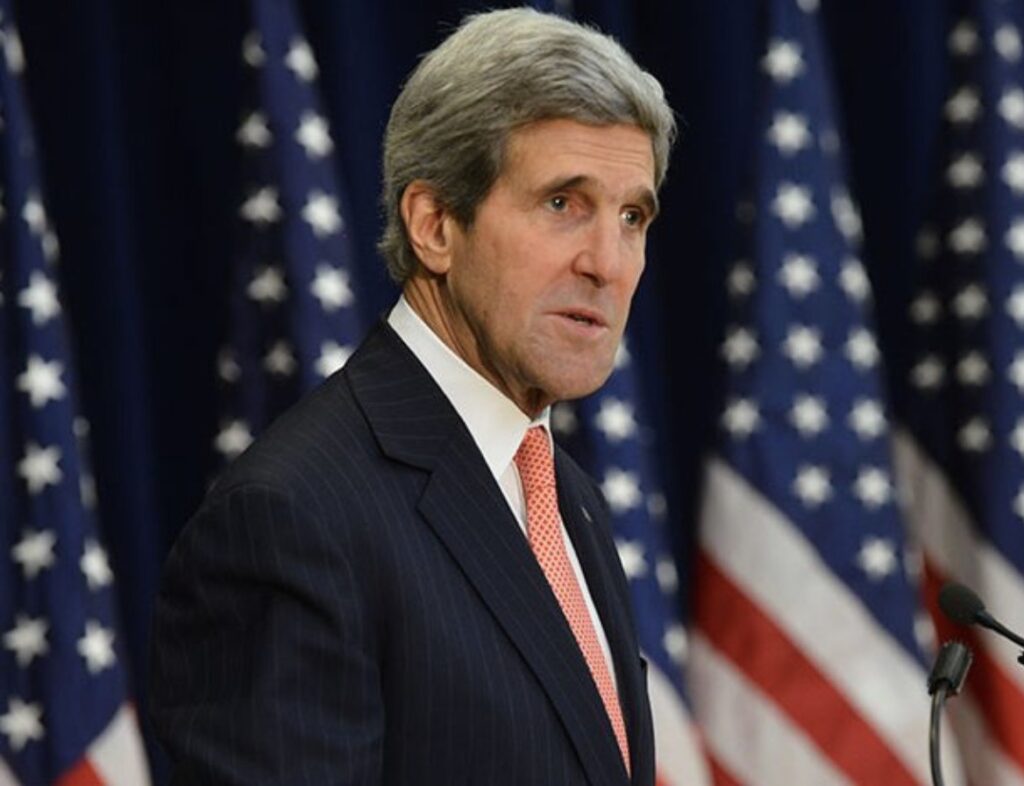
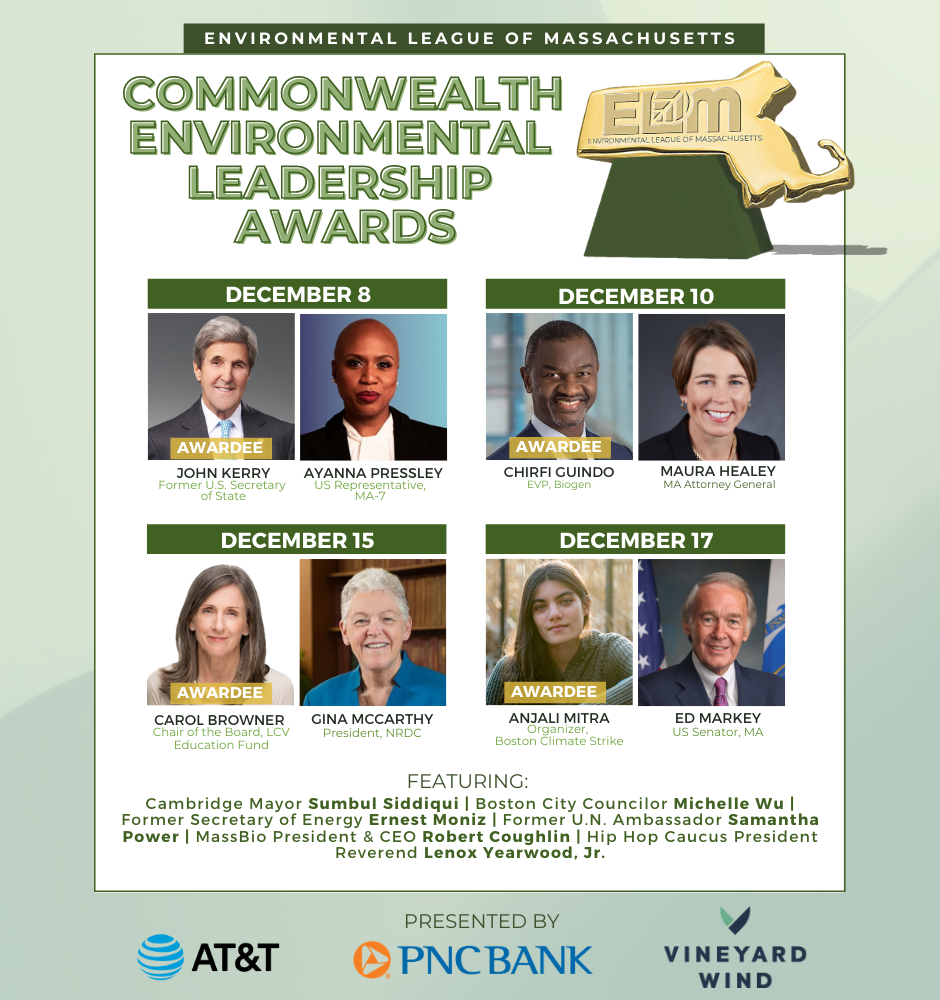
    The Environmental League of Massachusetts (ELM) signed Green Lens Media onboard to create videos for their 2020 Commonwealth Environmental Leadership Awards. This year’s awards go to Secretary John Kerry (Dec. 8), Biogen (Dec. 10), the League of Conservation Voters (Dec. 15), and the organizers of the Boston Climate Strike (Dec. 17).

    You can read more about the upcoming CELA event below, and register for all four presentations (free) here: http://bit.ly/CELAS2020

    But first, some history about our projects with this terrific organization…

    Our history with ELM…

    GLM was proud to first begin working with ELM in 2017 during their efforts to increase public awareness and support for funding state park projects. As a company founded on the mission of providing top shelf video production services to green and eco-conscious organizations, businesses, institutions and advocates, ELM is exactly the type of client for which we aspire to fill our production schedules.

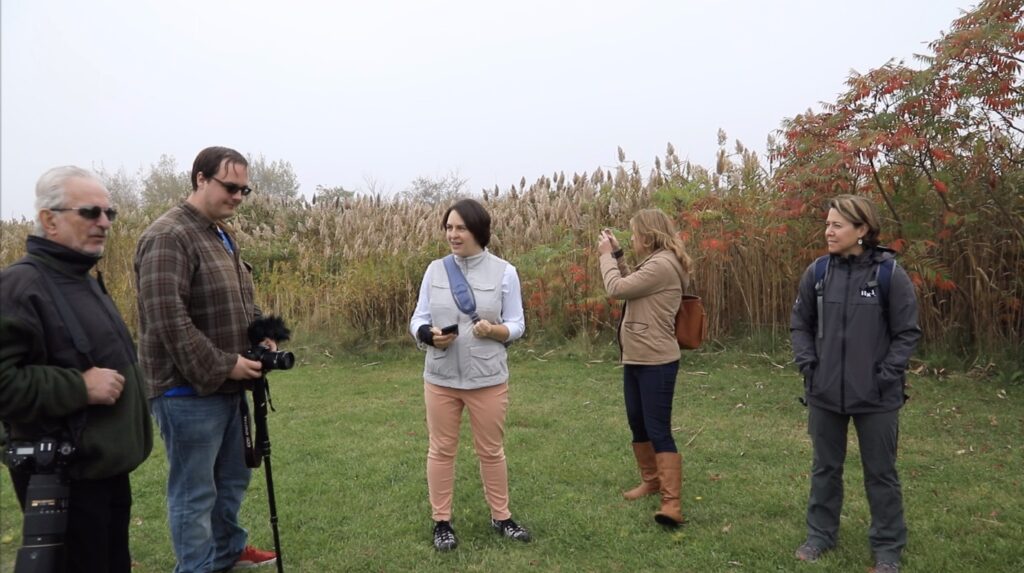
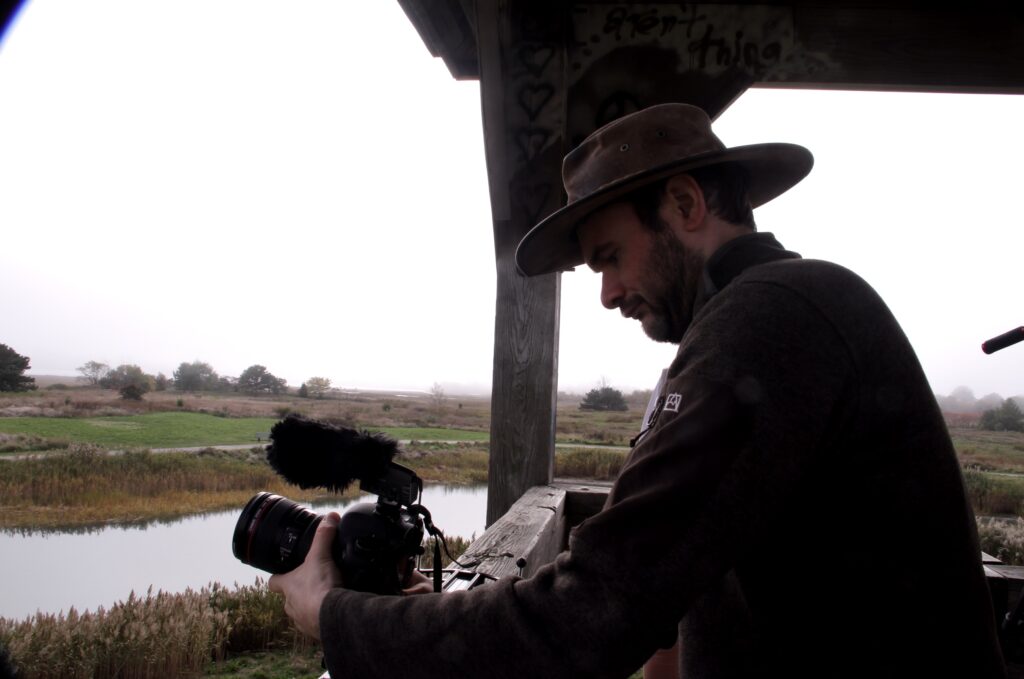
    Green Lens Media founder Adam Greene captures a foggy scene at Belle Isle Marsh Reservation in Boston, MA.
    GLM Script Supervisor and Camera Assistant Viktor Herrmann discusses shoot agenda with ELM’s Legislative Director Erica Mattison and the rest of the on-camera talent.

    Our film shoots for that first project took us to the hidden gem of Belle Isle Marsh right near Logan Airport, which the Executive Office of Energy and Environmental Affairs refers to as a Reservation that “includes the last remnant within Boston of the salt marshes that were once prevalent along the Massachusetts Bay shoreline.” If you haven’t been, put it on your list–it’s an incredible to have in the backyard of Boston. You can check out that production here: 

    ELM also had GLM produce in that campaign a video drawing awareness to the importance of Lobby Day(s), since potential environmental policies are more likely to get attention and become law and real projects the more the public is in favor of those measures. Our Lobby Day video can be viewed here:

    Events: From In-Person to Online

    Since this year’s CELA event is occurring during the pandemic we’ve all been dealing with, ELM was faced with the same predicament many organizations and businesses have been challenged with: how do you create a completely online experience for a normally in-person event? 

    The process of creating such a presentation began with ELM sending GLM photos, zoom interviews they conducted, some graphic layers they’d been using in their marketing and wanted either animated or replicated for brand consistency, and a foundational outline for suggested spoken content that would help drive the narrative. After using that as a guide and putting our own filmmaker-touch on the editing, we then supplemented this with video media of several variations.

    First and foremost, we turned to the archival media from our previous project with ELM 3 years prior. By working with us again, ELM was able to tap the benefits of all the production work done with GLM before, using previously unseen footage, recycling a project with no new cost implication, allowing us to move faster in editing due to our prior organization and familiarity with the footage, and the added benefit of it being customized content for ELM in the first place.

    Next, we turned to select other environmental clientele we felt may have footage in their archives befitting of the project, and after gaining their blessing we were able to showcase some of those clips as well throughout the storytelling.

    We then turned to the GLM archive. We’ve accumulated hundreds of hours of original and personal projects over the years. We combed through our library, picking out moments that could work well for the CELA videos, with the added benefit of not needing to obtain any further releases. Lastly, we looked to round out some of the more global and “climate change in-the-flesh” moments from world events and the news by sourcing from licensable clip vendors. We always turn to this last in order to keep videos as fresh and original as possible. 

    We are greatly looking forward to the Commonwealth Environmental Leadership Awards being shown over the next 2 weeks on Tuesdays and Thursdays, and do hope you can check out the event, whether your looking for information on who’s doing what on climate change in our communities, the state of environmental goals and policy in MA and America, or you’d simply like to see what does one approach to adapting an in-person event to a virtual experience look like. These local leaders are inspiring, and we hope it contributes to even more attention to the most important issue of our time. When it comes to the video work, our philosophy on this is the same regarding any video content shown online—it should be as engaging and entertaining as possible, should feel authentic and memorable, should be designed as much as possible for a specific audience, and should touch viewers on an emotional level.

    Keep up the great work ELM!

    ELM’s Original Post

    ELM has written on their site the following about Tuesday’s Awardee, Secretary John Kerry:

    Secretary John Kerry has dedicated his life to public service. He served the Commonwealth in a number of roles – as District Attorney for Middlesex County, Lieutenant Governor of Massachusetts, U.S. Senator for Massachusetts, and U.S. Secretary of State. Throughout his tenure, he tackled issues like combating acid rain as Lieutenant Governor, bringing attention to the warming planet to the U.N. as a Senator, and working with foreign governments to spearhead numerous efforts to combat climate change as Secretary of State. Notably, Secretary Kerry was a key architect of the Paris Climate Accord, signing the historic agreement to reduce carbon emissions in 2016.

    In 2019, Secretary Kerry launched World War Zero, a coalition of unlikely allies joining a global mobilization against the climate crisis. This group includes scientists, CEOs, military leaders, activists, artists, entertainers, political leaders from both sides of the aisle, business and industry leaders, and many more want to tackle this crisis. The coalition focuses on public education and community engagement to activate climate action at the massive and urgent scale necessary to win this war. Bringing together influencers like celebrities and politicians will help this message reach a broad, global audience. Messengers will make connections between climate change and the economy, jobs, and national security.

    ELM is pleased to award Secretary John Kerry a Commonwealth Environmental Leadership Award in recognition of his exemplary work in our community.

    For original post, please visit: https://www.environmentalleague.org/event/cela-2020/

  • Writer Cathryn Humphris of Mad Men, Under the Dome, and Supernatural, Speaks On The Realities of Working in TV

    Writer Cathryn Humphris of Mad Men, Under the Dome, and Supernatural, Speaks On The Realities of Working in TV

    I moved around a lot as a kid. First off, I started life all the way across the world in the little country of Bulgaria, before getting on a plane at the age of eight and heading to the big ol’ US of A. From there, I moved almost every year, spending brief periods in various towns and cities across New England as my parents bounced from job to job. At the time? Frankly, I hated it. I hated having to be reintroduced to a new area, having to make new friends, I hated all of it. But now, as I reflect on those years, I see just how valuable they were. How much I gained from every new experience, every new person I met.

    Television writers, for better or worse, often find themselves as the new kid in class. And Cathryn Humphris is no exception. Over the course of nearly a decade, she has worked on shows like Mad Men, V, Under the Dome, Mob Doctor, Elementary, Supernatural, and many more.

    Cathryn was kind enough to get on the phone with me and Adam, and spend some time talking about just what it’s like to be a working writer in today’s industry, and all of the positives and negatives that come with that.

    ———————————————————————————————————————————————

    VIKTOR HERRMANN: What I’d like to start off talking about first is your early days. The struggle years. Can you talk about the days before you could support yourself solely on writing. What was that like, and what was the transition like?
    Humphris 1

    CATHRYN HUMPHRIS: It was nice. It’s nice to be able to support yourself doing what you wanted to do. It took me about eight years. I came to Los Angeles right out of college. I was a Radio, Television, Film and Communications Major. I was lucky that I had some friends out here already who had paved the way for me and helped me find my first job. 

    There’s a lot of different routes to breaking in, and I went the assistant route. I got early jobs through friends and connections from my school—I went to Northwestern and they have a big alumni community out in Los Angeles. So I started just working low paying assistant jobs. 

    Originally I wasn’t sure if I wanted to write for movies or do something else, and I had a friend early on who said, “I think you should look at television, because I know you love writing, but I know you also want to be part of the overall process.” And also television is much more stable than just going from job to job in film.

    So, early on I got a job in television. Once and Again was the first TV show I worked on. I was a writer’s PA, which is kind of like the lowest position in the business. Literally getting lunches and coffees and running errands for people.

    I just kind of worked my way up through that. I worked for writers who had development deals, I worked for small development companies, I worked for a couple different shows, and just got as much experience as I could get, and also made as many connections as I could make. Which was another huge part of it.

    I know you interviewed Genny Hutchison a while back. Genny and I worked together a long, long time ago on X-Files. She worked for Vince Gilligan and John Shiban, and I worked for Gillian Anderson, and we got to know each other that way. And years, years later, when I was looking for another job, John Shiban was looking for an assistant, and Genny recommended me. And that’s part of how I got the job on Supernatural, which ultimately ended up being the show where I got my big break.

    Along with working different jobs, I was obviously writing on the side. The great thing about being a writers’ assistant is that you can actually be in the writers’ room. You’re seeing how the process works. You are getting to know the show better than almost anyone.

    You know the bosses, you know the dynamics, you know everything. Being in the writers’ room is great practice for learning what you’ll be doing as a TV writer and also for being able to try out your craft a little bit. 

    I had also done a program called the Warner Brothers Writing Program, which is a great program that helped people get their foot in the door. Sometimes you get staffed right out of that program. I didn’t get staffed right out of that program, but Eric Kripke [the Supernatural showrunner] certainly knew that I had done it, and people at Warner Brothers were supportive of me and pushing for me.

    Ultimately what ended up happening was in the first season of that show, John Shiban and I wrote a script together. John mentored me and shepherded me through the process, and everyone was very happy with the script. And then in the second season of that show, I came back again as a writers’ assistant, and by that point I had gotten an agent off of doing the Warner Brothers program. So, my agent was out trying to get me meetings, and John and other writers I had met were super, super supportive.

    I got a job offer on another show, and Supernatural basically was faced with the fact that they might lose me, and so literally overnight they made me an offer to go from being a writer’s assistant to a writer. And I ended up staying there for three years.

    VH: It’s pretty clear that you’ve had quite a varied resumé, which I think is indicative of a lot of TV writers. Could you talk about how hard it is to jump onto an existing show, and how you adapt to that show’s characters and writing style?

    CH: Yeah, that’s an interesting question. I think I have ended up jumping so many times that it’s kind of become secondhand nature for me. 

    I was on Supernatural for a total of four years, and so at that point, people would have known me as a genre writer. Which is funny, because I’m not someone who is particularly a big genre fan; I would consider myself more of a character writer. But there are genre shows that I love because they’re fancy packages for telling great character stories. 

    So, I’m always the person where, in my writers’ room, they’re talking Star Wars or Blade Runner, or the complicated mythology of some show, and I’m like, “What are you guys talking about again?” I just wasn’t into that world. But the great thing about having that background is that genre shows will always want to hire you.

    [But] when you’re a genre writer, particularly a woman who writes genre, you can get put in a box. And it’s great because they’ll offer you jobs on genre shows, but it can be harder for people to take you seriously outside of that world. 

    I had gotten the great piece of advice of, “Write a script that is the opposite of genre. That’s exactly what you want to do.” So, I wrote a very character driven script that my amazing agent ended up getting into Matt Weiner’s hands. I always say Mad Men was the easiest job I’ve ever gotten in my life. Matt read my script, Matt liked my script, he interviewed me and he hired me. It happened within a week or something.

    On Mad Men, the thing that was great about it was that because it’s a cable show and it’s only 13 episodes a year, we spent the first two or three months just getting to know each other, really talking about the characters and what you wanted to accomplish. There wasn’t a huge time pressure, [versus] network television [where] you start a job and six weeks later you’ve got to film an episode. 

    I think on Mad Men I just had a lot of time to ramp into the show. I watched all of the episodes from the first two seasons multiple times. Matt assigned a lot of reading, so I did a lot of reading, I watched a lot of movies of the time period, I spent a lot of time just getting to know my co-workers. 

    You just kind of ease into it that way. You’re spending eight to ten hours a day in a room with people just obsessively talking about the show, so you just kind of catch up. And then I guess going forward, I’ve jumped into a lot of second and third season shows, and I’ve never felt like it’s been that much of an issue for me. There’s something nice about already having a template already laid out. 

    I always go back to watching the episodes. Multiple times. And picking up on who the characters seem to be. I do this less now, but earlier in my career, before I would write a script, I would just obsessively read the other scripts. When I wrote my first Mad Men, I spent fifteen hours a day writing or reading the other scripts.

    ADAM GREENE: That’s a good transition to our next question: your habits. What would you say are some of the things that you do habitually to get you in the mood for writing? How do you overcome different writer’s block situations or difficult scenes to write?

    CH: This is a great question. I am totally a procrastinator as a writer. [laughs] So, television is great for me because you can’t procrastinate, you can’t have writer’s block for very long.

    I love being in the writers’ room. I love breaking story. I’m really social; I love working with other writers. I would be a terrible feature writer, sitting alone in a room writing. That’s kind of the part of the process that I like the least.

    For me, it all starts with the story and the structure. By the time I go off to write a script, I’m meticulous about making sure that I understand the story that I’m trying to tell. With character driven shows, with a show like Mad Men, the structure is a little less important because you’re really digging into the character work, but even then, if the structure doesn’t work, it’s going to be a lot harder to write. By the time I leave to go off and write a script, I want to understand what I’m writing. The work that should be left to be done is the character work.

    You’re always going to find stuff that doesn’t completely work, that you need to make adjustments to. I just make sure we do a really, really good break, that I understand what all of the characters’ motivations are, that I understand the story that I’m trying to tell. Anything that still needs to be fixed, I try to fix in the outline.

    In terms of pure habit, the thing about television—which is a blessing and a curse—is that you’re on a really tight timeframe. If you’re on a show like Mad Men, you might have two weeks to write a script. But a lot of the shows that I’m on, a week is a luxury.

    That was something I was nervous about early on in my career, and I used to take a full two weeks to write a script. And now, I’m on shows sometimes where, if I’m co-writing a script, we have two days to write it.

    I will always procrastinate as much as I can, and so sometimes that means I spend three days surfing the internet before I do much writing, and other times it means I spend thirty minutes surfing the internet. I procrastinate for as long as I can, and then I just dig in. I disappear into the world that I’m writing.

    I think for me the hardest thing is overcoming the fear of, “What if it’s not good this time?”

    AG: That’s a shared feeling for a lot of writers, I would think.

    CH: Yeah, I think so. And that’s been kind of a blessing of my career, of jumping around to so many shows. I’m definitely able to take it a lot less seriously than I used to take it. I’ve been on shows where by the time the show premieres, you wake up the next morning and you read the ratings and say, “Oh, well, this show is going to die soon.”

    That’s a horrible feeling, but I think it also helps you keep things in perspective. Which is that I’m exceptionally lucky to be doing the job that I do, and hopefully my career is going to be long and I’m going to work on a lot of different shows. Some of them are going to be easier than others and harder than others and more fun than others. That helps me now with the pressure.

    VH: That reminds me, we read an essay you wrote, “Why We Write.” In that, you talk a lot about the fear and dread that writing can cause in writers. Can you elaborate on that? Maybe talk about a time either career-wise or when you were working on a script where everything seemed to be going wrong? What kept you climbing back into the ring?

    CH: It’s funny thinking back to that essay, because when I wrote that, I had probably only been a TV writer for two years. The battle to get in was fresh. There were a lot of times as an assistant where I just felt like I’m never going to get my break, this is never going to happen for me. And I kind of just made the decision to keep going for as long as I felt the good outweighed the bad.

    This business can be really, really hard. There’s a lot of nastiness that happens. There’s a lot of times where you get close, and then it doesn’t work out. But I think I kept going for the same reason all young writers keep going.

    You feel like you have something to say. You feel like you’re pretty good at this, like it’s a lot more interesting of a job than most jobs that you could do. I’ve loved television and movies all of my life. The idea that I could be part of that was really, really fun.

    But the fear part was, for me, sitting down and facing that blank page. That’s when it’s all on you. It’s probably part of why I’m so meticulous about the story break, because the more that I can stack the odds in my favor, that’s a good thing.

    I think most of us feel like, “What if we fail this time?” I think that’s a huge fear for young writers. I think for some writers that’s probably the fear that drives them their entire life.

    It’s interesting, because now, having worked on so many different shows, there’s a lot less of that fear [for me]. There’s a lot more of, “You know what? I’m making television, and it’s awesome, and I wouldn’t trade this for any other job.” But it’s a television show, and some episodes are going to be better than other episodes.

    I hope most of my episodes are good, but I’ve written some crappy episodes of television. [laughs] Usually for things that are only partially in my control. There’s so many forces at work: the show that you’re working for, the boss that you’re working for, production realities, the studio and the network. There’s just so many different things.

    If you have two weeks, and a network and a studio and a boss that are fully supportive, you’re probably going to have a better script than if you have two days and a show that might not even make it to air because your ratings are so bad.

    I feel like more often than not, I’m able to be proud of what I do, but I keep it in context. One of my favorite experiences was being on the show Ringer, and that’s not a show that probably a lot of people saw or remember—it only lasted a season. I loved every second of that show, and I’m incredibly proud of the work I did on that. I’m incredibly proud of the work I did on Mob Doctor, even though that’s not a show that’s going to be remembered in history the way Mad Men is remembered, but I had a great experience on it.

    I just try now to enjoy the things you get to enjoy about [the business], and not take it quite so seriously as I think I did at the beginning.
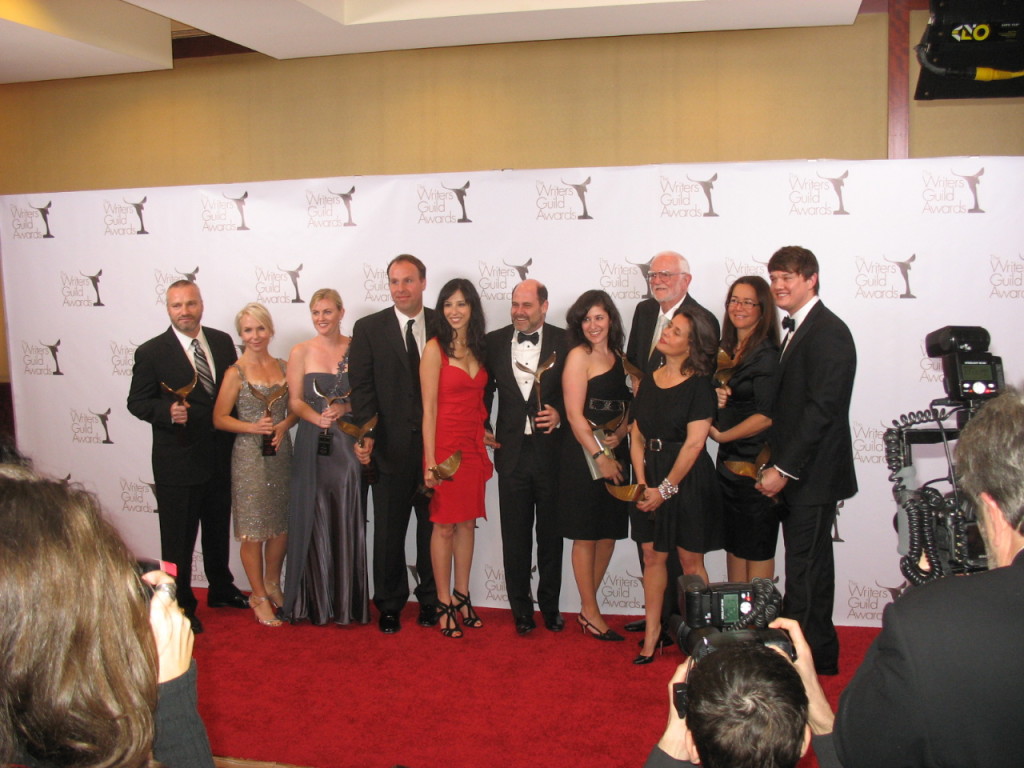
    Humphris 2 - awards

    AG: You worked on episodes 302 and 311 of Mad Men. Episode 311 especially was a pivotal episode. You have these strong female characters being able to voice their frustrations in Joan and in Betty, and Don being knocked down a peg and having to come to terms with who he really is. So, that’s a big episode. How did it come about that you were able to write for that episode, and what was it like working with Matthew Weiner?

    CH: I was really lucky. Matt is incredibly talented, and it was an incredible room filled with writing heroes of mine. I got to co-write episode 311 with Marti Noxon, who was a writing hero, and it was just a room filled with amazing writers; the majority being women, which is rare in Hollywood.

    It was an incredibly collaborative room. Matt gave you a ton of breathing room. He was wearing a lot of hats, and he was in and out of the room a lot, so you’d do a lot of the work collaboratively, breaking story with the other writers.

    One of the things I’ve always loved about Matt is that he was a very good showrunner in terms of being able to come in having twenty minutes to listen to a pitch, you’d pitch out what you came up with, and he was always clear on saying “I don’t like that, I don’t like that, I don’t like that, I like this—this is the heart of your story. Re-break it around this.”

    And I think that’s a gift from a showrunner, because you work for a lot of people that don’t have that clear vision, but also maybe other people [who do] that aren’t able to collaborate.

    Matt certainly has a reputation for doing a lot of on-the-page rewriting. He has a lot of ownership. But I have to say, at least my experience in the room was that he was very open to what other people brought to the table.

    I had a great experience on that show. I learned probably more—in the room, on set, and in the writing—than ever before.

    And the way it works with Matt, at least when I was there, is that he wouldn’t assign episodes ahead of time. A lot of shows, you know it’s your episode, and you take ownership of breaking that episode. But on Mad Men, we would just break all the episodes, and Matt would turn to you and say, “You’re writing this episode.”

    At the beginning of the season, for my first episode, I had two full weeks. And then he gave me a bunch of notes, and I did a second pass, and at that point he took it over and did a rewrite. As the season goes on, things get more crunched, and so for episode 311, that Marti and I wrote, I think we probably had four or five days to do it.

    I knew that episode was going to be a huge episode, but I had no idea that was going to be the one he assigned to me. I was quite grateful when I got assigned it, and I was thrilled to be writing with Marti. That was one of the greatest experiences of my career, to get to co-write an episode with Marti Noxon.

    I was a low level writer, and she was a showrunner. She was amazingly collaborative. She was so generous with me, she gave me amazing feedback. I just loved writing that episode, and I knew it was going to be a big episode. But I guess that’s another place where, even at that point in my career, I just don’t understand being too precious about that stuff. Any of the people on staff could have done a beautiful job writing that episode.

    If you’re coming into the TV business and you’re going to hold on to every word that you’ve written, this is not going to be a good business for you; you should probably think about writing a book instead. Your stuff is going to be gone over by your boss, by the studio, by your network, by your actors. There’s going to be a lot of changes.

    One of the things that I think Matt is good at is, we would go back into the room after we did a table read, and we’d go through the script. If there were lines that weren’t working, you would change them. That’s an important thing to learn. If a better line comes from your co-worker or from an actor suggesting something, you shouldn’t be afraid to be collaborative. This is a collaborative business we’re in.

    VH: What is your unwritten rule of screenwriting? Something that is perhaps ignored by a lot of teachers or by a lot of the so-called “guide books” on the craft, but is something you consider paramount to writing?

    CH: I guess, this is maybe less about writing in general but more about television writing, which is that perspective is huge. When we talk about these rules, or we talk about, “it has to be this way, it can’t be that way, this is good writing, this is bad writing.” Whoever you are working for or whoever is making the final decision is actually the person that’s in charge of deciding what they think is good or bad writing.

    Having gone back and forth between so many shows and so many showrunners, I will literally be on a show one day where a showrunner will say, “If you do X, I’m firing you, it’s the worst thing you could possibly do in your scripts,” and then you go to the next show and the showrunner says, “I LOVE it when people do X.”

    It took me a whole lot of years to understand that it’s all perspective. There are certain things that I personally think make for a good script or for good writing, and they can be totally opposite of what someone else thinks makes for a good script or good writing.

    There’s obviously honing your craft, and there’s obviously certain things that a lot of us can agree on that are better or worse to do. But I think anyone who watches the landscape of television, and the many varied things that are out there, in a certain sense, who’s to say what is wrong or right?

    AG: You’re working on Under the Dome. Where and when can people check that out?

    CH: It is going to be coming back to CBS for the third season this summer. We’re going to be on Thursday nights, which we’re very excited about. I believe it starts June 22nd with a two-hour premiere, and I’m writing episode 4 and then I’m slated to co-write the finale, so hopefully people will check that out this summer.

    ———————————————————————————————————————————————

    And we hope people check it out too! As with our previous interviews, I think there’s some invaluable advice and experience Cathryn shared with us in the above interview. Hopefully you will find it helpful. Ms. Humphris dropped some truth and science on us all, folks. So study up, and get writing, get filming, get creative.

    You can also check out her essay on the blog series Why We Write from Feb 5 2008—a time before she had the experience or resume she now enjoys.
  • The No-Brainer Business Venture and/or Education Decision

    This past weekend, on September 1st, 2013, Green Lens Media finally announced its newest service, The Filmmersive™ Workshop Series. This workshop series has been a year and a half in the making, and was much more demanding in its planning than was originally projected for multiple reasons. But we kept at it, because we knew as soon as we conceived of it, no matter how difficult it was to set up, we HAD to do it. It was just too perfect to not do it, as it fulfills multiple needs to multiple parties in a cost effective way. Through hard work and the will to succeed, we finally have it ready, and I am proud to officially proclaim our workshops are launched, public, and open for business – let the filming begin!

    Why is this such a big deal?

    Today, if you are a business, you want your product and service out there, circulating, known, because that leads to clients and customers. If you are a filmmaker or involved in video or marketing, you are looking for experience, for contacts, for resources, but really more than anything those are means to the end—you are looking for JOBS. If you are a writer, you want people to see your work, make connections, improve your storytelling skills, but more than anything, you want more and better JOBS. If you are an actor, you may want people to watch you onscreen, get your name out there, and meet people who can hook you up, but all of those things are to feed your ultimate goal, landing killer JOBS.

    I know this. Everyone knows this.

    But what is anyone DOING about it?

    As a filmmaker, I believe in video. I love making it, and I love telling a good story. As a business owner, I believe video can help a business in ways that almost all other forms of marketing fall short. Video presence is important, and will continue to increase as the years go on. And once everyone finally catches up and realizes video is important to attract attention, how will your video become more attractive than someone else’s?

    Film school is expensive, and a big decision. A fully customized video production is expensive, and also a big decision. Getting attention as a writer or actor is hard, because there are so many others out there, and so few really great jobs. I wanted GLM to solve these 3 problems faced by our community: 1) Attention, 2) Cost, and 3) Return On Investment (ROI). I believe our Filmmersive™ Workshops address these issues in a unique, smart way.

    I’m not advocating our workshops as a replacement for college degrees, program certificates, less expensive or free online training, or high-end custom productions, but as a supplement and booster for your career or business there is truly nothing like it. For some it may be just enough, while for others it will prove that only the surface has been scratched. From my perspective, it’s the kind of thing I wish had been available to me, both as a filmmaker AND a business, back when I was first starting out in the professional workplace.

    All the details can be found on the Training page of our website, so I won’t explain how it works in great detail other than this synopsis: the workshops are 5 days of intense filmmaking training for small 4-8 person groups given by experienced instructors. Workshop Attendees pay to learn filmmaking but also take part in actually executing a short video by the end of the week, start to finish, giving them a portfolio piece to showcase. In Narrative workshops we pay a modest fee to use a local writer’s 3-6 page fictitious script, which gives this writer heightened exposure. In Corporate workshops the Attendees do a 1-day shoot at a real company, each editing their own version of the video; the business gets to review all versions and decide at no obligation if they would like to purchase it for their website for a fraction of the normal cost.

    Basically, we structured our workshops to focus on the collaboration and the ROI for all involved. For Attendees, it’s a cost-effective, fun, and rewarding way to learn, and you wind up with a unique portfolio piece. For writers, actors, and sponsors, it’s a great opportunity for exposure with a limited commitment and with a quick turnaround final result. For businesses, it’s a risk free way to preview multiple videos about their business, since purchase costs are more affordable than highly customized projects and always no obligation to buy. For GLM, it’s a way to share our knowledge through training while continuing to operate in the field making productions. And for everybody, it is a great networking opportunity and an all around enjoyable and worthwhile experience.

    So what’s the catch?

    Honestly, I can’t think of one. This is the NO-BRAINER part of the whole concept – everyone benefits. Really, the only hesitation was in the idea of actually structuring the setup of the program, and then executing it. With all the variables involved it is a complex undertaking. As the host of the workshop, this responsibility falls on GLM’s shoulders, but I felt so strongly this model would strengthen the business and film community in Boston that it was worth every effort to see through. I would like to see new startups, particularly green / environmental ones (though we won’t be exclusive to them), benefit from this program, and begin to flourish and enhance our city. I would like to see Boston, which has already grown as a film town in the past decade, take this to a new, even higher level.

    The Filmmersive™ Workshops are not where your film education or video productions end, though it will be a good jumpstart. Every ingredient like this helps, and GLM will make its workshops one such ingredient of the overall recipe that promotes companies, individuals, and the film community. I hope you will check out what our program offers to see if it is right for you, but whatever you choose to do I hope you will continue to investigate how to get video on your site and / or learn the practices of filmmaking by whatever means make the most sense in your situation. 21st century communication is already headed in video’s direction, and riding the wave of the future should be one hell of a thrill, so let’s make it thrilling and catch the perfect wave.

  • Lean, Mean, Green Machine: Support the Cause for Tesla Motors

    As much as possible, I use public transport to get around.

    But the thing about Massachusetts is that, a lot of the time, there just aren’t enough trains and buses that go where I want to go. And that’s when I just have to bite the bullet, hail a taxi or get in a car to get somewhere. But it’s hard to enjoy the ride when all I can think about is the criminal waste of energy I’m participating in, not to mention the air pollution. Given a choice, I’d rather deal with the sweaty armpits and rambunctious Sox fans on the T than the looming prospect of a depleted ozone layer or energy scarcity.

    Enter Tesla Motors.

    In 2010, we worked with Renew America Roadtrip and its Tesla Roadster at the Northeast Sustainable Energy Association (NESEA) BuildingEnergy conference. We spoke with Michael Craner, co-founder of Renew America Roadtrip, about the ways in which the electrically powered Tesla Roadster helps people save energy, cut costs and enjoy a guilt-free ride. Not only does a Tesla car afford its driver the opportunity to save the environment and a large amount of money, it’s sleek, sporty design makes it a good-looking car worth bragging about.

    Amazed? We were too. Check out our video below:

    This is a great effort, and it will obviously make a difference for the environment.

    So what’s the catch?

    A new technology as well-researched and effective as Tesla’s stands as a threat to the outdated auto dealership model currently in place in most of the United States.

    According to Tesla’s website, they have a few galleries scattered across the United States but none of these galleries are authorized to initiate a sales transaction unless the customer goes through a substantial pile of paperwork and contacts their California office for sales and delivery.

    It seems unfair that the red tape and political buzz surrounding Tesla’s sales should restrict access to clean transportation for environmentally conscious consumers all over the country. There are in fact thousands of EV charging stations all over the country, and MSNBC predicts millions by 2020. A few of such charge stops recently sprouted up in our neighborhood of Porter Square in the parking lot by the Porter T Station. Basically, there’s no reason to allow an obsolete auto sales model to be an impediment in the path to a cleaner, greener America.

    There’s no reason to be stuck in the past when technology is rushing towards the future.

    You can change the status quo, and you can change it as soon as Friday. All you have to do is add your name to this petition. Deadline is Friday, June 5th, 2013, and 100,000 signatures are needed. Help us reach the tipping point—it’s so close!

  • 4 Quick Fixes: The DIY Filmmaker’s Cheat Sheet for a Quality Film on the Cheap

    Whoever said “time flies when you’re having fun” was absolutely right. And if you’re a filmmaker, you already know by now that having fun is part of your job.

    The best thing about creative work is that the sky’s the limit. If I wanted to, I could think up a world of gremlins and goblins and bring it to life. I could also make a hard-hitting documentary about world hunger. Or, if all of that doesn’t work out, I could set up a camera outside my lovely perch in Porter Square, leave it there all day, import my footage and still tell a story. (Hey, Andy Warhol did it…)

    All I need is my trusty DSLR, my lights, my sound kit, my tripod, my slate, my dolly…oh, wait, this is a problem.

    Or is it?

    It doesn’t have to be. Gone are the days of bombshell budgets and tedious technics. Times-are-a-changing and so is technology. Where once you had to worry about thousands of dollars and tons of extra baggage, you now only have to worry about the bare necessities. With a range of tools and technologies to our disposal, it’s becoming easier and easier to roll up your sleeves and start from scratch. Here’s how:

    Quick Fix #1: The Handheld Camcorder

    OK, OK. Before you scroll past this section altogether, let me remind you of a great moment from the pilot of Breaking Bad. You know, the one where Walter White leaves a video message for his wife and kid when he thought he was about to get caught. What’s interesting about that video message is that, even compared to the rest of the show’s already gritty visual style, the camcorder version was shockingly real. So if you’re on the run and you’re looking to capture the washed out realism of life pre-DSLR, this quick fix is for you.

    But if you’re going for a fancier feel, try…

    Quick Fix #2: The DIY Viewfinder

    Beautiful filmmaking is all about composition. And perfect composition is all about the little elements – aperture, ISO, white balance. But when you’re out and about, the sun can make it hard for you to get those elements just right, and a professional viewfinder will cost you a cool $100-$200 at the very least. But why shell out the cash when you have edit-room coffee runs and shiny new equipment to save up for? Believe it or not, you can make your own LCD viewfinder for under $20. And if you’ve got 5 minutes and an appreciation for dinosaurs, check out this video that shows you exactly how to do it:

    Make your own LCD viewfinder for your DSLR

    Now that you’ve got that viewfinder, you can focus on framing that perfect shot by getting all those little elements just right. But if you’re anything like me, that’s not enough. Getting everything right behind the camera is only a step towards making the magic happen in front of it. Which leads us to…

    Quick Fix #3: Get Creative With Lighting

    As a 5 foot nothing filmmaker without a bodybuilding certification, I was definitely not designed to haul around a light kit on long shoots. Paper lanterns and clamp lights are just two of the many options you have when it comes to quick, clean, low-maintenance light sources. Not only are these options totally affordable, they do just the trick if you’re lighting your subject outside or in a cramped space where you don’t have access to a lot of space or outlets. But if you do have some space and you’re looking for a conventional three-point lighting setup, here’s a video that will show you a low-cost way to achieve it:

    Make your own lights on less than $100

    A good lighting setup is really the cherry on top of the beautiful composition cake. But now that everything looks perfect, it has to feel perfect. And what better way to make it feel perfect than…

    Quick Fix #4: Create Movement with a DIY Dolly

    Think about it. What kind of world would this be if nothing never moved? A boring one. And what kind of film would you create if nothing ever moved? That’s right…a boring one. Camera movement is a foolproof way to inject your movie with feeling and dynamism, especially when used on what would normally be a static image. That said, the laborious task of carting around a full-size dolly is not something a small crew can afford to put up with. But that doesn’t mean your film can’t benefit from the wonders of movement. In fact, the solution for your static-shot problems can be easily found in none other than your local Home Depot. I’ll let YouTuber MediaUnlocked explain the details:

    Make your own DSLR slider dolly track

    And there you have it! With these four completely doable (and cheap!) fixes, you no longer have to let money or logistics stand in the way of telling your story. If you’re already imaginative with your storytelling, all you need to do is apply that great imagination to your technique.

  • Moving Forward: How to Do What You Love for a Long Time

    As a filmmaker, to say you will be on your feet quite a bit is somewhat of an under statement. Part of me liked the idea of a filmmaking career because it wouldn’t be just a fun, challenging, creative job that exposes you to lots of different industries, varieties of life and culture, but it would be an active one. You have to get out of your chair if you want to make a film. If your reply is “I’m an animator; like the click-click kind, not the claymation or green screen shoot kind,” why not go out and take some photos of textures? Making your own textures is painless and much more rewarding, but the contents on this site is essentially what I’m talking about. If your excuse is “I’m just an editor,” well, I’m an editor too, and there are plenty of organic ways to edit. Just ask Oscar-Winning Hollywood editor Walter Murch (Apocalypse Now, The English Patient) how he edits. (For those who are looking for some balance, have a ball, or a kneeling chair). If your excuse is, “I don’t want to exercise—it’s hard,” there’s nothing I can do for you. You need this guy to help you.

    Proper ergonomics and health is a concern for everyone, filmmaker or not. As I mentioned, you have to get up to make a film. I know I’ll have to lug a bag or two or three, sometimes make a few trips or bring extra people just to set up a shot. At the end of a day of production it’s a good workout, and workouts give you energy to keep going during the day. But how many days really are you in production? As the guy running Green Lens can testify, productions are actually a small percentage of each project. There might be many weeks of pre-production planning, phone calls, emails, and meetings before getting on set. And once off set, now you are headed for that editing bay—sigh…more sitting.

    I founded GLM as a very green conscious entity, pulling from my own beliefs on environmental issues, so the encouragement of physical activity also fits nicely in with our business model. I try to promote this by biking to places when possible, taking public transport, and walking, all in an effort to support the reality that movement is a key ingredient to living and feeling well. Unfortunately, this for many has become an inconvenient, undesirable reality (wow, that was close—almost said an inconvenient you-know-what. Go see the film if you haven’t by the way; 7 years later it’s still an important piece of political, environmental, and film history).

    Apparently, we—Americans—aren’t walking a lot anymore.

    In fact, we are so comfortable taking our cars, and avoiding old-fashioned legwork, that reporter Franz Strasser of BBC World News America decided to do a story on it. According to his article, it seems the good Samaritans of Raleigh, North Carolina have been taking matters out of City Hall’s hands and into their own, posting signs telling pedestrians how far it is to walk from place to place. Where no city official has taken action or filed a permitting charge against the movement, it would appear the city approves of the initiative.

    The more reasons we have to be active, the greener, healthier, and happier we stand to be. With barely any Boston snow to speak of this past year, I think I‘ve seen more joggers outside this winter than the past 4 winters combined, so why not take advantage of the weather and treat yourself to a warm February stroll to the insert-your-nearby-store-here? (The ecological significance of the weather, or lack thereof, surely warrants its own post; we’ll save that one for later).

    Currently, I don’t have Murch’s upright editing station setup. However, I do have a small swiveling laptop stand that sits up on my desk at times throughout the day to give my seated self a healthy dose of stand. The takeaway here is whatever your industry is, see if there is a way to work in more exercise into the daily routine, whether it means a new chair, periodically standing while working, taking the elevator more, or walking to offices to give messages rather than emailing. It doesn’t need to be strenuous; just enough to give our bodies what they need to live a long, satisfying life. Don’t wind up like the humans in WALL-E with tiny bones swimming around in their bodies…somewhere…

    Focus of the Day:
    What do you do to keep moving?

    Film-tip: It’s tax time. iPad / iPhone users, if you haven’t already, check out Mint.com. It is a secure accounting management site you can use for free (there are paid upgrades), and there are some great apps to go along with. Mint is created by Intuit, the same guys responsible for Quickbooks. Credit to ColinReidDesign.com for telling us about this one way back when.

    Eco-tip: You remember to bring your reusable bags to the supermarket, but how many times do you say “yes” to the “do you want your chicken wrapped in plastic” question? If you are wary of raw meats coming into contact with the apples for you and your little ones, consider designating one small reusable bag as “the raw meats” bag. One more step to getting off the plastic bag bandwagon.

  • The Right Stuff: Combating the Unavoidable, Uncontrollable Human Factor

    No matter what career you choose, you are bound to wind up working with some folks that are a pleasure to deal with, that will challenge you in constructive ways, and will be future contacts for you down the road. Likewise, you are equally bound to work with someone or several people that you can’t wait to be done with. Without experiencing both it is tough to really appreciate the value of great teammates versus terrible ones; in the end both are valuable in their own ways. A terrible experience with someone truly educates you for the future in terms of what you are looking for and what are you not. It teaches you to recognize warning bells and anticipate dicey situations.

    Recently we had a terrific out-of-state shoot for a client that had been months in the making. In reflecting back on the intensive 3-day schedule we successfully carried out, I know that the positive outcome was only possible as a result of those I was working with. To emphasize just how critical it is to work with the right people, I would like to contrast our positive experience on this shoot with a totally separate, hypothetical story:

    Suppose that a young independent contractor still in her college years offers her services to a company. This company is promising, growing strong, and would look great on a resumé. The people working there appear extremely friendly, inviting, and seem to carry good attitudes. The job requires talent the contractor has, and would be a fun assignment on the whole. The independent contractor is tickled — what a fantastic place to work! The gig is a good one in terms of location, timing, and pay, and the only condition outstanding is that she needs to afford to stay in the area. She asks for flexibility on the pay schedule and for a signed guarantee her advanced payment is coming; she is assured that won’t be a problem, and she is made part of the team.

    Weeks pass, and many projects later, the situation is still the same—no payments, no signed contract. Why is this taking so long? Didn’t they understand her terms upfront? Why did they seem so off-put being reminded yesterday? These are the questions the contractor is wondering, despite her solid work completed and utilized with nothing so far to show for it. She may be young, but she is trying to do everything correctly and the way it should be done in the real world. This is frustrating and feels unprofessional.

    So our independent contractor comes in one day to find the manager alone in the office, hands her an invoice, and asks about the still unsigned contract. All of a sudden the world explodes, as the manager goes on a tirade: you’re a money-grubber, a poor teammate, and you’re stressing everyone out, the manager screams.

    Now we have crossed a line. The independent contractor does not raise her voice, calmly responds when she feels she needs to offer a defense, and for the most part simply lets the manager vent. As this is clearly the last time the contractor has any interest in spending one more minute in the office, she begins packing everything she owns, intending to not return, all the while hearing a barrage of complaints. Though the manager’s rant lasts 45 minutes, it echoes much longer than that for our contractor, perhaps for years.

    First of all, it makes her question whether what she was asking for was unreasonable. Her friends and colleagues said no way, the company was just taking advantage of her youth and inexperience, but she still is unsure. Secondly, it makes her wonder: even if it was wrong of the company to not honor her terms, should she have just put up with it to get the good reference, and maybe earn some good contacts or prospects as a result of her sacrificing her principles and intuition? Furthermore, she grows worried a false reputation of her could begin circulating if she isn’t careful. In her industry, bad word of mouth can be a deathblow. She chooses to not advertise her relationship with the company on her website, resumé, or in conversation, not trusting it couldn’t come back to bite her.

    Years later she found out the promising company she had worked for so fondly at first, then lost all touch with because of an unfortunate encounter, was in extreme debt and going under. Looking back, her more seasoned self reassessed her past predicament and she concluded she had done exactly what she should have. While it was less than it could have been, she didn’t feel the experience was wasted time since it taught her so much about how to recognize great teammates from difficult ones.

    This brings me to my ultimate point in this post, which is working with the right people. You need to work with the right people. Just because a job comes with lots of glamour, or contacts, looks good on a resumé, is good pay, or is a lot of fun, the experience is bound to be fraught with stress and negativity if it is a place where people are the problem. We have to interact with people all day: employees, managers, teammates, and clients. The more people that fight us, the less work gets done, and the more ulcers form.

    Pretend there is an offer on the table for you, where you feel the connection, experience, or money is just too good to pass up, even considering known warning signs about individuals. Clearly no one can stop you, but it is important to know what your definite goals are, and if it’s people who put your goals at risk it truly deserves a second thought. You can control yourself; you cannot control other people—they are a variable in your plans, sometimes unwilling to hear your side or to change, so you want to trust them. Perhaps at the least a poor experience will become one of those “hard lessons learned.” I personally don’t seek discouraging experiences out for the sake of having them, but when they do happen I make sure to get something out of it, even if it is just some good knowledge about what mistakes to avoid in the future, and how to prevent them.

    Coming back to Green Lens’s recent out-of-state production, it was a pleasure working on set with the assembled crew. Not only were all crew members insanely accommodating and understandable when situations evolved into new circumstances, but there was only positivity throughout the production, and during all of our travel to and from. Even on a complicated production everyone was punctual, egoless, and helpful in whatever way was appropriate, even when asked to do things outside their job description. The client was equally helpful, and made our lives easier by exercising the advice of the great Jerry Maguire, and “helping us help them.” These are more than just the characteristics of good filmmakers and clients—they are good people.

    When I am undertaking a project, film or otherwise, the practice I follow is to hire or deal with those that hold the qualities above. The best part is that you can find those people anywhere, sometimes in the least likely places, and with a little coaching or training you can get them to become invaluable pieces of a larger whole. These are much better folks to work with than the guy who is a skilled, talented jerk. I’ve found when I create a better experience for everyone involved, we wind up with a better product. What’s fantastic is when you can find positive-minded folks like I’m describing, who are also extremely talented at what they do. Such was my luck on this shoot, and it will make me think of them for future gigs again and again and again.

    Focus of the day:
    How do you address the “human” factor?

    Film-tip:
    Color is very, very important, and often overlooked by first-time filmmakers. Take the time to color correct; it makes a world of difference. Though not for beginners, one of the best tools out there, DaVinci Resolve, is actually available for free in a lite version.

    Eco-tip:
    We can now light places inexpensively and sustainably for remote, third world neighborhoods. Check out the amazing Solar Light bottle–maybe it could help you light that spot in the garage loft you’ve never been able to see before.

  • Pitching Yourself: Top 10 Email Intro Gotchas For Interns, Staff, Crew, and Talent

    The GLM inbox is always buzzing. It recently struck me how stark the differences are in emails by authors pitching themselves as a service, intern, full-time employee, talent or freelancer. Among the good ones there are emails that are too lengthy, bare, misspelled, or plain boring. My focus below is directed to interns, though many of the concepts also apply to potential staff, crew, and talent we may work with as well, so stay with me.

    Green Lens has been fortunate to have some great interns. Every one contributed in meaningful, professional ways, though it is funny to think—we did not find them. Green Lens does not currently seek interns, as our schedules typically prevent such campaigns. However, our not looking for interns doesn’t mean we don’t bring them onboard. They find us, simply asking about any opportunities. I love to diminish daily incoming email, but I support inquiries like this. It shows initiative. Go-getters write cold emails. Let me rephrase: go-getters write good cold emails.

    To be clear, these are the items that matter to us, realized through actual poor emails received, with the overall point being this:

    Your pitch needs to sell YOU – your education, skills, experiences, and projects are great assets of you, but WHO you are is the critical pitching point.

    YOU.

    Here is my personal top ten list of things that I find less than compelling when trying to make a first virtual impression (yes, whether in person, by phone, email, or homing pigeon, first impressions really do matter):

    1. Sloppy email: Grammar, spelling, and appropriate tone are all important. Everyone is entitled to a typo here or there (I’m certainly no saint), but if the general pattern is one in which it seems the writer is winging it, or worse not caring enough to proofread and fix mistakes, then why would the recipient think you would conduct yourself any differently in your daily routine?

    2. Email length: You do want to get the info out, but you also want to respect people’s time. When emailing a company, keep in mind it takes time to sift and sort through just daily necessities, so if the extra communications are either not descriptive enough or too demanding, then it is likely your questions will go unanswered as it is extra, nonessential work. When in doubt, go short, but not so short you leave out your personality and sincere interest.

    3. Cover letter absence: If the email body is really short, having a good cover letter makes up for it. It’s fine to treat the email body as the cover letter, but the best solution is to have the body give a fast summary of who you are and what you want, and then attach a more detailed cover letter. PDFs are ideal.

    4. Generic cover letter: Managers are most interested in candidates that make a unique and relatable case. A vaguely written cover letter that can literally go anywhere is nothing special to take note of, and it’s likely the email will not be taken seriously. A graphic designer’s letter tailored for a web design company that focuses on the medical field might not be the same letter to send to our video company that serves green, corporate, and academic organizations, even if the skills would be the same. As a hirer, I want to read why you looked at our company, why you are the right person to be working with us, and why we are the best match for you. Letter starting with “Dear Film Company” are the kiss of death, since the request gets lopped in with so many others like it.

    5. Resume missing: In my opinion, a resume does not have to be as pretty as the career office told you (certainly don’t go by that for all jobs you approach; I’m speaking from our perspective). For our purposes, all a resume is is a communication of past and current history and qualifications. Make it look as pretty as you want, but more important is the information in it. If you are proud of the work I say include it, even if it feels long, but if you choose to customize it for the company you are sending to, make sure the items listed are, again, relatable. Things I look for on resumes are versatility. Imagine saying of a candidate, “oh, she wasn’t just a camera operator on 3 different projects, she was also VP of the debate club, and knows how to ice sculpt.” That’s unique, and what attracts me to a potential teammate is not just a focus, it’s a diversity of talent.

    6. Portfolio missing: More important than the resume is the example. Any work in the can that can be shown online should be, and should serve as samples of your craft, artistry, and record. If you have any work that is viewable online, whether it is a video, article, photo gallery, blog, website—please send those links! Even if you were unhappy with it, show us, then tell us what you learned from making it, why you were disappointed, and what you would do differently next time. If you don’t have any work done yet (hence why you want the internship), tell us about other projects you have worked on. In all these cases knowing what capacity you were involved is key.

    7. Contact information missing: Clearly we have your email, but believe it or not sometimes we might want to call. Imagine, having to speak! Including a phone number seems like a common sense item to include, but some incoming mail still surprises us. A phone call is also a serious opportunity to let your personality and passions light up, so take advantage.

    8. Lack of Follow-up (you): If we reply to your email and you do not, either for a long time or at all, that will not sit well with us. If I email a potential client and they respond with a question, this relationship matters a lot to me, so I send my response out as soon as possible. We would expect internship inquiry responses to be handled the same way.

    9. Lack of Follow-up (us): As I mentioned, we get a lot of mail, some of it pressing that must be taken care of immediately. If we don’t respond to an email it is not because we don’t like its sender; it just means we are particularly busy at that moment in time. And in some cases, though we would normally respond after the decks are cleared, it is possible for emails to get lost in the chaos. If working with us means that much to you and we haven’t responded, please shoot another email. We try to not let this happen, but when it does it provides the candidate with a good opportunity to demonstrate their persistence and continued interest in working with us, and that means a lot.

    10. Lack of Honesty or Care: You need to care. Care about yourself. Care about the image you are virtually projecting of yourself in the manner, content, and tone that you write. Care about the person/company you are writing to, and do all of this with honesty. People work best with others they can totally trust, and it’s easier every day to spot the difference between the guy who says all the right things because he really believes them, and the guy who says all the right things because he thinks that’s what the other person wants to hear. Along with honesty to the hirer also comes being honest with yourself. Ask, “Is this really the internship/job I want and can do?” If your gut says no, and you take it on because you have nothing else, you not only set it up to be a waste of time for you and the company, but you rob someone else of their chance to have it be their opportunity.

    The biggest takeaway here is the caring. It needs to just ooze off the screen. If you fail to convince that you care about what you are doing, or describe why you are specifically writing us, one could assume you are just doing the shotgun approach to see who you hit. It’s risky to think you/we will be a good catch if you’re fishing for any and everything that swims.

    Lastly, whether you ace the email intro or botch it, in the end these introductions are all talk. Actions are the true test of time. Action and conduct show how well a person will fit at a company, not talk. Those who think just name-dropping, a huge resume, and a suave persona is enough to sustain them in this business inevitably learn they’re in a permanent state of go fish.

    Focus of the week:
    What’s your logline for you?

    Eco-tip:
    If you will be idling for more than 1 minute, shut off the car. More gas is used in that minute than is used in the motor starting up, so save a little fuel, money, noise and air.

    Film-tip:
    If you need to transfer an FCP7 project to FCPX, try 7toX. Read our post on it here.

  • The 9 Lives Rule For Humans

    Welcome to the first post of the new Green Lens Media blog. I’m going to kick off this blog by telling you our story.

    Why does Green Lens Media do what it does?

    I have always been drawn to activities that produce new emotions in people. As a young kid I put on puppet shows in the living room because it made the adults smile. In junior high I wrote plays for some History assignments because it brought what I thought could be old and dusty topics to life. In high school I made a lot of videos for fun and for class assignments because I loved to see people find humor, or sadness, or new meaning in an idea they hadn’t thought of before in the way I had. I captured the world on my trips, from high school through college and to today, because I want to share the experience with others, and see the reactions it stirs, which may be totally different than my own.

    Green Lens does what it does because when you affect someone at their core, emotional level, you have the ability to inspire new understandings, concepts, even purposes — those feelings make people feel confident, reflect, and grow. Let’s face it — it just feels plain good.

    Stories have a way of pulling in audiences, since we are naturally engineered to be curious and to enjoy learning about things we don’t know. This is especially true when we can relate in a variety of ways to the characters in stories; in some sense they can be extensions of ourselves in another world. Go to a party and find usually the big groups are congregating around the guy telling a good story. Storytelling, through spoken language, has been going on a very, very long time, dating back before the Epic of Gilgamesh, the Ancient Egyptians, the Neolithic period, all the way back to at least the Old Stone Age with its cave paintings. Did cave art come before or after oral storytelling? I don’t know, but I don’t think it matters for this discussion, because in either case, cave people heard stories by mouth (grunt?) or by looking at pictures others had drawn on walls with bloody bones. Basically, we are visual and auditory learning addicts.

    Nothing humanizes story more in the digital age than video, as you get your story told the exact way you want it told, over and over, and you use visuals and sound together to do it. I, and everybody here at Green Lens, affects people through this video medium. We are dreamers, and we make movies.

    What do we do specifically?

    We create high quality video production projects for clients and ourselves. We are also advocates for the environmental movement and industry, and promote good stewardship of the environment. We educate people through our films, as well as through our love for in-person filmmaking training, which is another aspect to our business. I will share more about these fronts in future posts, but I want to conclude this post by coming back around to the blog and the audiences it is written for.

    This blog is for storytellers, and those who strive through art to create positive progress in society and culture.
    This blog is for filmmakers who put hard effort into their films.
    This blog is for filmmakers who expect the best quality accessible (physically, financially) at the time for their film.
    This blog is for environmentalists, and those wanting to learn more about how we can live better.
    This blog is for the admins who run and build schools, the lifeblood of innovation in our society.
    This blog is for students: of filmmaking, writing, education, sustainable living, and without sounding too cliché, LIFE.

    My hope is in following this blog you will find facts, opinions, and great variety. I will do the best that a full time entrepreneur/film producer/editor/trainer can do to keep it fresh and frequent as well as keep my sanity. I am always one for collaboration and constructive criticism, so if you think I’m wrong about something or agree, or have a better tool or way to do something, please speak up! I only know what I know, not what I don’t, but I attend many tech, film, and business meetups for a reason — we are all still learning, all the time. We all are discovering each other’s stories. I have learned a great deal out in the real world post-college, and I anticipate that remaining a permanent condition of my being. If humanity were a cat, curiosity would not kill it; curiosity gives us something new, and new things are what living is all about.

    Focus of the day:
    Why do you do what you do?

    Eco-tip:
    CFL light bulbs are an important part of our energy solution in the home, but they do contain a small amount of mercury. Make sure to dispose of broken ones responsibly, same as you should do with batteries. Don’t be like this fellow: http://www.youtube.com/watch?v=jnm6AmaUzvs

    Film-tip: When purchasing SD, CF, or other types of media cards for tapeless cameras, invest in good brands, high speed rates (30 MB/s), and high class gradings (at least Class 5, 6 is better). A few dollars more for a reliable production is a safer and better shoot.