Category: Business

  • Filmmaker Matthew Nash Talks About His Work, Influences and Style

    Filmmaker Matthew Nash Talks About His Work, Influences and Style

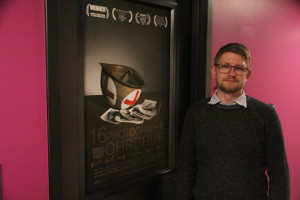
    IMG_8242Hello again, friends and compatriots! We’re jumping right back into our conversation with the head of Lesley’s Film and Animation department, Matthew Nash. Apart from his academic duties, Matt is an accomplished, award-winning filmmaker, most well-known for his powerful documentary film entitled 16 Photographs at Ohrdruf.

    If you missed last week’s post, be sure to give it a look-see here!

    ———————————————————————————————————————————————-

    ADAM GREENE: How did you decide to become a filmmaker?

    MATTHEW NASH: Totally by accident. I’ve never been an artist who’s particularly wedded to a medium. It’s fine to be wedded to a medium, I’ve just found that for myself, I don’t like having to channel all of my ideas through a tool. I like to find the tool for my idea.

    My creative partner, Jason, and I, had done a lot of videos. Experimental, weirdo goofy stuff. And then, super long story super short, we decided to make a mock version of Ross McElwee’s Sherman’s March, that actually turned into a serious project.

    It was supposed to be a week-long gag, and we ended up doing it for two years. That’s a film that you should never watch. [laughs]

    But, I learned a lot. I had moved into that mindset. We did an experimental, semi-narrative piece where the concept was basically two people, who are nowhere, talking using just a microphone and a speaker. [Jason] and I, over the course of several months, recorded all of our phone conversations, transcribed them, edited them, and then turned that into a script.

    On its face, this could be a profoundly boring 15 minute short film. The solution that we came up with was that we wanted to take the production level to 11.

    We rented 18 foot cranes, 20 feet of dolly track, really good microphones, really good production team, the whole nine yards. It was that experience that got me hooked on production, on process.

    When [16 Photographs at] Ohrdruf fell into my lap, I didn’t even know what to do with it.
    7DA20202

    The backstory is that my grandfather died in 1991, and after he died, we found this packet of photos that he had taken at the liberation of a concentration camp called Ohrdruf.

    In 2008, when Barrack Obama was campaigning for the presidency, on the campaign trail, he says something like, “My uncle liberated Auschwitz.” And of course, big scandal, because America didn’t liberate Auschwitz, the Russians did.

    They found his uncle, and they interviewed him, and it turns out that he was at the Ohrdruf camp. So all of a sudden, I’ve got the uncle of the future president of the United States and my grandfather, and I can put them in the same place.

    I dug out the photos, and honest to God, I didn’t know what I was going to do. Having just done the project inspired by Ross McElwee, his very personal narrative process, I thought, “That might be my approach to this. As I try to figure out these pictures, I’ll just bring a camera along, and see what happens.”

    Initially it was just going to be some YouTube shorts, but a really close friend of mine is a high-end editor in New York, and he said, “I’ll edit this for you.” And my partner and producer in New York said, “I’ll produce this for you.” And he also wanted to do the soundtrack.

    Once everything came together, and I started doing the research into the photographs, it followed its own course. If you watch the film, it more or less is chronological to what I did.

    AG: How has your experience working on documentary filmmaking influenced your narrative filmmaking?

    MN: I think I’m still getting my feet under my knee as a narrative filmmaker. I really enjoyed the sci-fi film, but when I watch it now, there’s some stilted dialogue or, you know, I could have given more direction at a certain point, things like that. These are the things you learn.

    The big difference that I have found is that when you’re working in a doc mode, you lay out an outline, or sort of a trajectory that you want to take your viewer on. Then you set out to find people to interview, or find footage to meet the needs of each stage of the process. And as you find people, they tell you things that you hadn’t expected, so you’re constantly tweaking your script or your outline.
    7DA20189

    Whereas with narrative, the script is everything. You’ve made or broken your project before you’ve ever done a casting day. If you don’t have a good script, everything after that is wasted effort.

    There are areas where editing, acting, rewrites can save you, but if you’ve set yourself out on a bad course, you’re stuck on that.

    I have learned, as I look toward doing narrative work, to be much more upfront about flaws in scripts, whether they’re things I’m helping my friends on, or students are sending me, or my own scripts.

    One of the big lessons from last summer was just making sure that you are on the right track, that you really understand what you are doing. You know how it is on set, your camera guy has a great shot, or your lighting guy can’t light the space that you want, and you have to be adaptable and you have to be flexible.

    VIKTOR HERRMANN: Do you think your documentary background gives you an advantage in being flexible?

    MN: I hope so. My own self criticism of when we did the sci-fi film is, I think, [that] I was too flexible. I think the project really would have benefited from a director, me, taking a much harder line about some compromises that were made. I think we would have made a stronger project if we had taken the extra two minutes to move that light or to reposition that tripod or whatever it is.

    The thing that you can do with documentaries is you can go, “I’ll live with that.” I think the thing you can’t do with narrative is say, “I’ll live with that.”

    AG: What advice would you give to students or filmmakers in general that are wading into the corporate sphere? A lot of corporate places don’t have time to help write scripts with you. They might say, “Well, just bring your camera and start unfolding the story, you’ll figure it out.”

    MN: One of the things that I would advise people in that circumstance is to have your own script, air quotes here, ready to go. Have your default model firmly established. So if you’re hired in a corporate situation to do an on-the-fly thing, walk in the door knowing, “Here’s how I tell a story. It begins here, it goes here, it climbs to here, it falls to here, rises back up and ends.”

    If you’re going to have to work on-the-fly, how do you assess which elements in front of you meet the needs of basic storytelling 101?

    It takes skill, it takes practice, it takes an eye. It takes being able to recognize when the world is giving you the thing [that you’re looking for], and getting a camera on it.

    If you’re just pointing your camera at things because somebody gave you a paycheck, you’re not going to make a good product.

    One thing I say to my students is all of the thinking and understanding and planning and research and immersion into your medium, all of that happens before you ever take the lens cap off.

    If you haven’t done that work, if you don’t understand your medium or how you speak with it, you’re just making footage.

    AG: Why is video important as a teaching or marketing tool?
    7DA20117_modified

    MN: I think where we have gotten with our video tools is that it democratizes things. It makes it fast. It makes it accessible. When I was a student, if you wanted to make a film, the process was arduous. But today, I could grab a video camera, and tell a story really quickly.

    Nowadays folks who are working in video have to incorporate a vocabulary of cinema, of narrative. It doesn’t matter if you’re going into a corporate environment, an academic environment. You’re bringing to the tool all of its history and all of its vocabulary.

    Partially because we are so media saturated, I think people are bringing a lot of that stuff intuitively now.

    VH: Would you say there are benefits, even if you’re not pursuing film or video as a career, to having video skills?

    MN: Oh, I think so. It’s one of the major and rising vocabularies that we have. Your phone shoots video now. Your phone shoots photos too, but more and more as I scroll through Facebook, I notice: It’s video. And frankly, there’s a lot of bad video out there.

    One of the things that I know we’re going to face when we launch the digital filmmaking program, because we already face this in the photography program, is, “Oh, hey, I shot some cool pictures with my phone. I’m a photographer.”

    This is not to devalue our students; anywhere a student develops a love for photography is totally valuable. But the ease of use and the ease of access [has made it so] amateurs can very quickly think that they’re professionals.

    I think the same is going to hold true for filmmaking. “I shot a great short video on my phone.” Awesome! You know what? You can do professional quality work with your phone. But it has nothing to do with the phone. [laughs]

    It has to do with whether you can use a cinematic vocabulary.

    VH: Is there something that has influenced your filmmaking that perhaps doesn’t come from film, that perhaps would surprise people?

    MN: Sure. So many things. One of the things that I talk about with my students is that inspiration comes from everywhere. You can go to the library and get the art history books, but you might be sitting at home watching an episode of The Simpsons, and it just clicks.

    What goes in eventually comes out. I consume as much as I can get my hands on. I love 1950s horror comics. In fact, film students are all going to be required to read at least one volume of something from Tales from the Crypt, The Vault of Horror, Weird Science, the classic EC 1950-1955 Golden Age.

    I think filmmakers should fall in love with this stuff, because it’s formulaic storytelling 101. By the time you’ve read 5 or 6 Tales from the Crypt stories, you’re like, “Oh, this is just formula.”

    If you can take your brain to the next step, you can be like, “You know what? It’s a formula that I should probably learn.” If you go back to the 80s, HBO did what, 9 or 10 seasons of Tales from the Crypt episodes.

    These comics are the script, the formula that allows you to do a successful 9 or 10 season series. Every episode is standalone. Think about The Twilight Zone.

    It’s very formulaic. It begins in a certain way, it unfolds in a certain way, it reveals in a certain way, it climaxes in a certain way, it concludes in a certain way. Every time.
    7DA20121

    VH: And yet it’s still one of the greatest pieces of television ever.

    MN: Exactly. Because you know what you’re going to get. And even though it’s different actors, different characters, different stories, you know.

    And on one hand, it’s boring television watching. If you’re an educated viewer, you’re like, “Yawn.” But if you’re going to make this stuff? The thing I always tell my students is, “You can’t break the rules until you know the rules.”

    To a certain extent, these are our rules.

    AG: Can you talk about collaboration and the importance of developing good working relationships?

    MN: Sure. I have lots of friends doing cool stuff, but it’s not like I picked my friends because they were going to be film producers or anything. I met some these guys when I was 16. I always tell my students, “If you surround yourself with cool and interesting and motivated people, they’re going to grow up to be cool, interesting, motivated people who do cool stuff.”

    AG: I would say that applies to crews, too. I’d much rather work with somebody that I really click with, that I think is a really smart, reliable person, rather than just somebody who knows how to operate a camera really well. Because that first person will be able to learn how to use the camera really well with time. You can teach people, and you can teach skills, but it’s much harder to teach people skills.

    MN: Yeah! On my sci-fi film last summer, we were a small crew so everybody wore multiple hats. Our associate producer, Rob, was also our lighting guy. And he brought this guy that he had been working with and liked, and the guy just flaked. He worked for half the morning, checked his phone, was like, “Oh, I’m bored,” and left.

    This was a volunteer gig, whatever. But Rob cut him loose. This was his number one guy, and he dropped to the bottom of the list. Meanwhile, the boyfriend of somebody on my crew, his name was Joe, shows up, does an amazing job, and ends up getting hired.

    Rule number one is just don’t be a dick.

    AG: [laughs] That’s a great rule.

    VH: Just for life in general.

    MN: Yeah! It’s a people based business. You hire who you trust. I got offered a job in Hawaii a couple of years ago, and one of the things that absolutely terrified me was leaving behind this whole network of people that were beer-and-pizza friends, and I know if I called them up and was like, “Hey, I want to do a short film,” – I actually did this recently, I said, “Hey, Rob, I’m interesting in doing a short film,” and he said yes before I even told him the title or when it was or anything.

    Having that network of people who trust each other… that’s how it works.
    7DA20145

    ———————————————————————————————————————————————-

    16 Photographs at Ohdruf can be found on Hulu, Vimeo, or Amazon Prime. Be sure to check out Matt’s, http://www.mr-nash.com, to find out even more about the man and stay current on what he’s cooking up next.
  • Lesley University’s New Digital Filmmaking Program

    Lesley University’s New Digital Filmmaking Program

    Development RoomAs of writing this, I am just a little over a month shy of graduating from Lesley University. It has been a fantastic four years, and I’ve been fortunate enough to meet some wonderful peers and professors.
    My only complaint throughout was, “Geez, I wish there was more film stuff.” And wouldn’t you know it, right on the cusp of my graduation, Lesley announces that it’s starting a film program.

    Ain’t it always the way?

    Adam and I sat down with Matthew Nash, who is the head of Lesley’s Video and Animation Department. As of the Fall of 2015, the department will include the brand new Digital Filmmaking program. We spoke with Matt about what potential film students could expect.

    ————————————————————————————————————————————————-

    VIKTOR HERRMANN: Can you talk about the film program and what your plans are for that?

    MATTHEW NASH: The film program launches in the Fall of 2015. We’re aiming to have 15-20 students in our first Freshmen class; obviously if we get more, it’ll be better. But that’s our goal. We’re going to roll it out over four years.

    The four year program will have students doing filmmaking from day one. On average, they’ll take two to three film classes per semester. In the first year, Fall and Spring, their two core courses each semester are Concepts of Cinema, and Cinema Techniques. They’ll be working with an award winning filmmaker, who’s originally from Syria, a guy named Ziad Hamzeh. He’s a fantastic filmmaker.

    He’ll be doing Concepts, introducing them to how to tell stories; all of the thinking stuff that goes into making television commercials, or experimental media, or narrative media. The rules are the rules are the rules, right?

    And as he’s giving them assignments that push the way that they think about filmmaking, I’ll be meeting that with a technical course, giving them the skills and the techniques, whether it’s camera work, rigging, lighting, etc, to meet the assignments that he’s doing.

    We want, at every stage, to be feeding their brain and how they think, and then to back that with the skills to make it happen. The whole four year program is designed that way. It’s different from year to year, but we’re always backing ideas with skills.

    7DA20097

    In the Junior year, the goal is to put them into teams that will actually shoot a short film over the course of the year. So they’ll do pre-production and production in the fall, and production and post-production in the spring.

    It’s really important that our students get a chance to wear a lot of hats. Not everybody is the director, and you’re not the director all the time. So, if you can be a good sound-tech for somebody’s project, or a good gaffer, or a good production member on somebody’s team, you’re still valuable. We all came up through the ranks being a part of other people’s projects first.

    And then, Senior year is thesis year. We want our students to walk out the door with film festival winning, high-quality short films, whether they’re experimental or narrative. We want them to have a whole year to build up to something that showcases how awesome they are, and how awesome our program is. So that’s the goal.

    VH: That sounds fantastic.

    ADAM GREENE: It does, and it also raises some questions about some of the other well known film schools in the area. Is Lesley trying something different that those schools aren’t doing?

    MN: I think there are three things that will really set this program apart. One, all of our students, no matter what program they’re in, are required to do a professional internship. Getting into the industry you want to be in is hugely important to us.

    We’ve shot some great Hollywood films in Boston, but there’s a lot of independent film going on here, a lot of independent documentaries going on here. And not all of that stuff is permanently fixed in a building where you can go and knock on the door. We’re getting our ear to the ground so our students can get in on some of these things that might only exist for the length of a production.

    And at the same time, talking to guys like you, where there are great internship opportunities. That’s one thing that our program has always been really strong on: Internships. We are a professional school. We talk a lot about professional practice.

    Students are coming to us because they want to do this for their livelihood. You don’t spend four years and God knows how much money to then graduate and never do the thing.

    But at the same time, our educational background means that we’re not just making you a technician. We’re making you a full-rounded thinker.

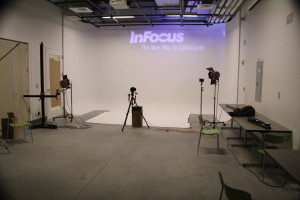
    Studio

    Two, we’re launching a program in 2015. We’re not burdened by a past of how it was always done. We’re not anchored in any way to any history. We can look at the state of the market in 2015 and say, “These are the things that our students need to be successful.”

    Three, when I talk with potential students and their parents, one of the things that I talk about is the fact that we all consume huge amounts of media nowadays, and a lot of it is short form. The standard 22 minute television show, the standard 90 or 120 minute movie, those still exist, but Hulu, Netflix, Amazon… they’re changing the game.

    Our students will be graduating into a media market that is not locked into a lot of the standards that we have taken for granted for so long. We’re baking that right into the cake from day one, and thinking, “How do we get students making strong work that will survive?”

    Our first graduating class will be in 2019. So, what is a successful digital filmmaker in 2019 going to look like? There’s a lot of question marks around that, but you can trace some trends, and you can make some educated guesses.

    Obviously it would great to have students who go off to New York or Hollywood, but we also know that they can be successful doing the kind of stuff that Green Lens Media is doing. Corporate work, short form work, advertising, short web narrative.

    Every time you go to YouTube, you have to watch a commercial. Somebody got paid to make that 30 second ad that you don’t want to sit through! It’s maybe not the most glamorous side of the business, but these are all paying gigs that can support real professional creative practice.

    AG: I can definitely tell you, as someone who came from a bunch of film related programs… the one thing that would have made the most difference would be a background in business. How to communicate with clients. That is so huge, and it’s not even being talked about.

    7DA20099

    MN: That’s funny, you almost took the words right out of my mouth. Most of my friends in New York who are quote-unquote “film industry types,” they’re on the production-house side.

    They’re not running cameras or dealing with actors, they’re either dealing with budgets or managing production teams. They’re line producers, they’re production coordinators. They’re not talking about the glamour, hanging out with celebrities every day. They’re talking about booking flights and renting camera gear; which is just as much a part of the business as anything else.

    We’re sneaking some of that in through those Junior and Senior year classes, where students have to do pre-production, production and post. You can’t do pre-production, even on a student project, without making a budget. Without organizing your team. Without scheduling. Without planning.

    If you walk in and tell students, “Alright, this is a business planning class,” they’re all going to get up and walk out the door. But if you say, “This is pre-production for the movie you want to make,” then all of a sudden it’s like, “Yeah, okay, now a spreadsheet sounds interesting.” [laughs]

    A spreadsheet is a tool. Just like a camera or a tripod is a tool. So we’ll just have to get students to appreciate the spreadsheet when it’s appropriate, when it’s useful, and in its context.

    AG: That’s very valuable. Everybody thinks, “Oh, I’m going to be the next Peter Jackson, and not need to bother with that, I’m just going to focus on my art.” But the fact is that in order to build up enough capital to do those kind of projects, you have to work in the trenches, and you have to do some of these very basic business things. So, it’s good that Lesley’s working that in.

    MN: Yeah. Last summer we did a little short sci-fi film, and it was an all volunteer thing, lots of students, people doing it for the experience. And even that ended up running about $10,000 dollars when it was all said and done. Just for a couple weekends of shooting, pizzas and coffee, renting gear and hotel rooms. It adds up super fast.

    That’s one of the reasons that we’re not going to emphasize the feature [film] in this program, because it’s an undergraduate program, and because it’s prohibitively expensive to do a feature. Even a five or a ten minute short, on a student budget, could get prohibitively expensive.

    AG: It comes back to what you were saying before. The landscape is changing anyway. So why not embrace it? And say, “We’re going to focus on short form, and even corporate advertisement.”

    7DA20162

    MN: Yeah. So much of the basic stuff transfers over. A lot of nice cameras have been showing up, so a handful of students have been like, “You got a Blackmagic 4K? I want to shoot with that!” Great. First thing you have to do is buy 8 terabytes worth of hard drive space, so that we can work with this footage.

    And they’re like, “Wait. What? I’ve got to go buy four hundred dollars worth of hard drives before I can even consider starting this project?” That’s the kind of prohibitive thing that we’re talking about. You have to create infrastructure inside your college for boring stuff like data. For footage. People who look at it from the outside see it as sort of, “It’s easy, you just get a camera.”

    VH: Talking about changing landscapes, do you have any overarching visions for this film program five, ten years down the road?

    MN: I think where the program will really shine, will really have its character, is in our elective packages. At this point we’re at least a year away from really implementing those, but I threw up a Google Doc, and I asked some of the development team, the faculty, to make a list of everything they’d like to do in the electives.

    Things like green screening and compositing, which would be great with our animation classes, of course. A course entirely dedicated to music videos. Some really whacky ones. One professor pitched a low-budget DYI special effects class.

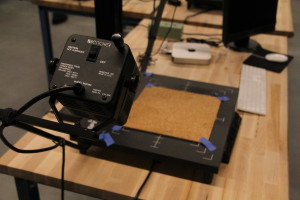
    Animation station

    VH: Not visual effects but special effects?

    MN: Yeah, like practical effects. Anybody who’s ever seen the making of Saving Private Ryan, you see Steven Spielberg talking about how they would put a little stick in the ground with some dirt on top of it, and if you stepped on it really hard, it made it look like a landmine exploding. Practical effects like that for student projects and lower budget projects, what a great thing to give our students.

    AG: Home Depot 101.

    MN: [laughs] Exactly. There are great things you can do with 3D animation, with game engines, and in post. But sometimes you just want the practical effect. Those are some of the areas where my brain is churning right now. I think when we start having real serious conversations about which elective we’re going to roll out first, frankly, it’s going to involve the students.

    Part of my pitch to potential incoming students for the fall is saying, “This is the wild west. You are pioneers. This is the Oregon Trail. Nobody has done this before. You will be the first. Which means you’ll have a huge amount of say in what we do.”

    The 2015-2016 group and the 2016-2017 group, those first two classes are probably going to influence this program more than I ever could.

    Unlike the folks who are maybe more in the fine arts, as a film student, you are immersed just as much in pop culture as you are in fine arts. There’s tons of film out there that’s cinema, you can go watch your Felini, or David Lynch’s early work, there’s experimental stuff. But most of our students are arriving at our door because they loved watching Gladiator and Transformers.

    It’s really interesting to hear their different motivations. I have robust e-mail lives with a lot of the folks who are looking at our program. Each one’s motivation is different. One guy just wants to do horror thrillers, another guy’s done all comedy pieces. A lot of them don’t know what they want yet, they’re just mimicking what they see and what they like. So it’s a program that’s going to have a really interesting relationship to the mainstream, which you don’t necessarily see in a fine arts program.

    welcome to lesley

    ————————————————————————————————————————————————-

    Sounds exciting, doesn’t it? By all accounts, Lesley intends to create not just talented filmmakers, but working, successful ones. Even though personally I won’t get to be a student in the program, its existence makes me both very excited and very happy.

    Tune in next week to the 2nd part of our conversation with Matthew Nash, which will delve into his personal experiences and influences (some of which you might be surprised to learn).

  • Culture, Cheeseburgers, and Sustainable Fashion: Combating Our Disposable Mentality

    Osmium FashionWe live in a time of constant upgrades. That brand new smartphone? Replaced by the latest model in a matter of months. That top-of-the-line gaming rig? Obsolete by the end of the year. That hip new fashion trend? Only hip until the newest “latest and greatest” trend takes over. We buy things, use them until they break or go out of style, then we replace them, and the whole cycle begins again. To Mark Paigen of Osmium Apparel, this disposable mentality is not the answer.

    On one of the first truly beautiful days of the year, we sat down with Paigen to discuss his life, his company, and just why buying the same disposable products everyone else is buying is hurting us not only as consumers, but as a culture.

    “Increasingly,” Paigen said, “fashion and our preferences have become global. The same H&M store you see in Boston, you’ll see in Hong Kong and Berlin and Paris, and they’ll be selling the same styles across the continents.”

    To him, this homogony of fashion accomplishes little more than taking away what makes cultures unique. “When I go to Italy, I don’t want to eat a hamburger. I want to eat great Italian food. And I think the same should be true of style, and the things we buy. They should reflect our local culture, our communities. That’s what Osmium is about. Buy things that will last a long time; that will become your favorites and won’t be obsolete in six months.”

    Of course, even the highest quality items will eventually break, and Paigen acknowledges that. “I love fixing things,” he said, “I have a ski-jacket that I’ve had for a dozen years, the draw string blew out on it and I got it fixed. I really like that mentality of buying really good stuff, taking really good care of it, repairing it when it breaks.”

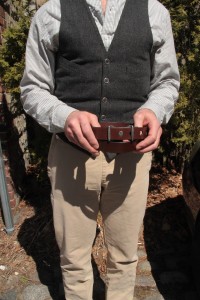
    Not just content with fixing things, Paigen also has a drive towards creating, which undoubtedly stems from his love of nature. We talked about his time as an organic farmer, the “Long Distance Running and Bread Baking” class he took in college, and other experiences which left us with the distinct impression that this is a man who loves being outside, loves working with his hands, and loves to take a unique approach to his work. He couldn’t help a sly smile as he told us about the history of Osmium’s distinct Mobius belt.

    “I had the idea [for the belt], the concept, and I sketched it out, went to a product development firm, and they gave me a price of $18,000 to prototype the buckle. So, I went to Home Depot, I bought a piece of aluminum, and some threaded parts, got my drill out and I prototyped one-half of this buckle. I tried the concept, and the concept worked.”

    Though perhaps what intrigued us most about Paigen was not his creative approach to problem solving nor his love for nature. Rather, it was his sincerity. When it came to his own shortcomings, Paigen was perfectly candid.

    “I consider myself an environmentalist, but I don’t do everything I could possibly do. I could ride my bike to work every day. I don’t. I could have bought a car with better mileage, but I needed more room. I’m painfully aware of all the choices I have made that are not perfect.”

    Just as with repairing items instead of replacing them, Paigen is a man who practices what he preaches. “When I look at someone else and they seem perhaps less perfect [in their care for the environment] than I am, it’s easy to judge. But who am I to judge? All of us could do better, and there has to be a way to reach out to people in a non-judgmental way.” One such way Osmium is giving back is through its membership in 1% For The Planet, a pledge which gives 1% of sales to deserving environmental organizations.

    The point is, like the clothing he designs, Mark Paigen is a distinct man with a distinct view. His and Osmium’s mission is to bring the local focus back to fashion. Green Lens feels in sync with Mark on his perspectives and his intentions; plus, we genuinely liked his style, too. And even if his products aren’t right for you, his philosophy is certainly something we can all strive to implement a little more.

    You can learn more about Mark and Osmium’s Made in the USA clothing line at his website, www.osmium.com.

  • Harold Ramis Shares Some Words of Wisdom About Film’s Future

    Mr. Stay Puft lives again during the 25th Anniversary screening of Ghostbusters at the 2009 Nantucket Film Festival
    Mr. Stay Puft lives again during the 25th Anniversary screening of Ghostbusters at the 2009 Nantucket Film Festival
    What a blow. By now you’ve probably heard Harold Ramis, the force behind such movies as Caddyshack, Ghostbusters, Groundhog Day, and Analyze This, has passed at the age of 69. In honor of his legacy, I thought I would skip the circumstances of his death and the array of films he gave us, which you undoubtedly already know by now, and instead tell you an inspirational story of my brief interaction with him at the Nantucket Film Festival in 2009.

    The highlight of the festival that year had to have been Ramis himself, who was in attendance for three main reasons: to receive the Screenwriter’s Tribute, to premiere his new film Year One, and to celebrate the 25th anniversary of Ghostbusters. As someone who grew up with Ghostbusters, was completely transfixed by the multilayered themes and messages of one of my all time favorites Groundhog Day, and depended on Analyze This for more than one DVD date night, it was a particularly meaningful few days for me.

    First of all, I was tasked to be on the team blowing up the actual 25 foot Stay Puft Marshmallow Man that was used to market Ghostbusters when it premiered in 1984. Come on—does it get any cooler than that? This float dominated the skies, and stared out at the Atlantic from Siasconset’s Casino theater on the south side of the island. Getting Mr. Stay Puft to cooperate was a challenge, but somehow the group was able to cross the streams and get him into his new 2009 role as Mr. Stay Put. As guests arrived for a special screening of a brand new 35mm print of the film, he greeted them to their awe and delight.

    I met Ramis during the screening of Year One, while I was in the front entryway waiting for the film to end. With everyone seated in the theater watching the movie, Ramis stepped out some point near the middle to have some time to himself. Year One turned out to be not one his better movies (4.9 on IMDB, a 14% on Rotten Tomatoes), so perhaps the typical “director in the back gauging the audience reaction” wasn’t necessary in his mind. Factor in how many times he must have seen the film while editing, and perhaps it’s easy to understand why he would be stepping out. Whatever the reason, Ramis chose a wooden bench by the ticket booth, and got involved with some game or texting activity on his phone—I can’t recall which, though if I had to guess I’d say some kind of game.

    After a few minutes of this he took a brief nap, but must have had some internal clock wake him about 10 minutes before the end of the film. As he looked around, no phone in hand, I thought “if I’m ever going to talk to him this would be the chance,” so I did.

    It’s amazing how cool and collected you can head into a conversation with someone of his stature, and then completely out of character get all tongue twisted once you started speaking. That was me, but fortunately I found my steady voice before we got to a level of embarrassment. He smiled as I sputtered, knowing we both knew he was being very gracious to let me occupy some of his time, something no doubt countless fans and filmmakers had done before. I think he was amused not by the fact that I was trying to tell him how much I respected his work, but more by the direction I took our talk, which he seemed surprisingly engaged by.

    After the pleasantries and unnecessary gushing, I finally got to what I thought would be the most relevant and purposeful discussion I could come up with on the spot. I asked him if he thought film as we knew it would survive. Did he feel the access digital video gave filmmakers, with its ease, price, and increasing quality, would implode the professional market, and ultimately for those reasons overcome “Hollywood” looking content? Would the storytelling suffer? Would the good stuff be able to compete with quality gear getting so cheap, and the potential noisy flood of bad content springing up online more every day? And more so, would there even be a career in film by the time I “made it,” if that time ever came?

    He thought for a moment, and after reflecting on this told me that while the technology had changed in the past few decades, the core of filmmaking, the very root of motion pictures, was in capturing and telling a good story. “We can’t stop the way society is changing this profession,” he said, “so while it may become harder to get your work in front of large audiences, or into traditional theaters, or to get your film backed by a big studio so you can make the big bucks, in the end whoever can adapt and embrace the circumstances best will come out okay. If you love making films, just keep making films.”

    He asked me what I had done to advance my career, so I told him about starting Green Lens Media, and about making my first feature in high school years ago under a SAG student contract. He reiterated that while film as a format and industry would change, there would always be room for new stories and new filmmakers, who yes, could make careers of it if they worked hard enough for it. It was a sobering thing to hear that the industry I’d been pursuing for nearly a decade at the time was, according to this Hollywood insider, bound to be different, but also refreshing that he was so optimistic about its future considering.

    I was fortunate to get to hear this insight from Ramis, and it stuck with me despite the many other speaking events I saw him at throughout the festival. Most people wanted answers to things like “what was it like working with Bill Murray,” and “what’s the funniest thing that happened behind the scenes on such-and-such movie?” It’s sometimes easy to forget while starstruck that these are just people after all; people who, of course, are talented, but are also hard-working and even a little lucky. They might be able to point to a particular instance where they were in the right place at the right time to catch some opportune “break,” but isn’t that just something that would have happened eventually another way anyway, if not that way? In other words, if you work hard enough, if you “just keep making films,” eventually that lucky break will find you.

    Thanks, Harold, for all of your comedic genius for the time you were here. Thank you for your reassurances about the film business, and for believing in film’s future, as murky as it seems sometimes. I’d like to think that when we see an Egon hard at work inventing something, or a Dr. Sobel trying to figure out how to not die this time, or a Phil Connors making humor when there was none despite a desperate situation, there is in each instance an inevitable and eventual hope that evolves at some moment into something we have been looking forward to. It’s a great message, one that I and other filmmakers are inspired to see and be reminded of. You will be greatly missed, and I wish you all the best on your journey as I continue down mine, and continue making films.

    On a side note, if you ever care to haunt GLM (especially our scriptwriting software), that would be just fine; I promise you would be given Slimer status (the endeared, free-to-roam friend Slimer, not streamed-into-the-Trap Slimer).

    All the best,
    Adam

    Leave a comment! What are some of your favorite Harold Ramis movie moments, and what is your opinion on the future of the film industry?

  • The No-Brainer Business Venture and/or Education Decision

    This past weekend, on September 1st, 2013, Green Lens Media finally announced its newest service, The Filmmersive™ Workshop Series. This workshop series has been a year and a half in the making, and was much more demanding in its planning than was originally projected for multiple reasons. But we kept at it, because we knew as soon as we conceived of it, no matter how difficult it was to set up, we HAD to do it. It was just too perfect to not do it, as it fulfills multiple needs to multiple parties in a cost effective way. Through hard work and the will to succeed, we finally have it ready, and I am proud to officially proclaim our workshops are launched, public, and open for business – let the filming begin!

    Why is this such a big deal?

    Today, if you are a business, you want your product and service out there, circulating, known, because that leads to clients and customers. If you are a filmmaker or involved in video or marketing, you are looking for experience, for contacts, for resources, but really more than anything those are means to the end—you are looking for JOBS. If you are a writer, you want people to see your work, make connections, improve your storytelling skills, but more than anything, you want more and better JOBS. If you are an actor, you may want people to watch you onscreen, get your name out there, and meet people who can hook you up, but all of those things are to feed your ultimate goal, landing killer JOBS.

    I know this. Everyone knows this.

    But what is anyone DOING about it?

    As a filmmaker, I believe in video. I love making it, and I love telling a good story. As a business owner, I believe video can help a business in ways that almost all other forms of marketing fall short. Video presence is important, and will continue to increase as the years go on. And once everyone finally catches up and realizes video is important to attract attention, how will your video become more attractive than someone else’s?

    Film school is expensive, and a big decision. A fully customized video production is expensive, and also a big decision. Getting attention as a writer or actor is hard, because there are so many others out there, and so few really great jobs. I wanted GLM to solve these 3 problems faced by our community: 1) Attention, 2) Cost, and 3) Return On Investment (ROI). I believe our Filmmersive™ Workshops address these issues in a unique, smart way.

    I’m not advocating our workshops as a replacement for college degrees, program certificates, less expensive or free online training, or high-end custom productions, but as a supplement and booster for your career or business there is truly nothing like it. For some it may be just enough, while for others it will prove that only the surface has been scratched. From my perspective, it’s the kind of thing I wish had been available to me, both as a filmmaker AND a business, back when I was first starting out in the professional workplace.

    All the details can be found on the Training page of our website, so I won’t explain how it works in great detail other than this synopsis: the workshops are 5 days of intense filmmaking training for small 4-8 person groups given by experienced instructors. Workshop Attendees pay to learn filmmaking but also take part in actually executing a short video by the end of the week, start to finish, giving them a portfolio piece to showcase. In Narrative workshops we pay a modest fee to use a local writer’s 3-6 page fictitious script, which gives this writer heightened exposure. In Corporate workshops the Attendees do a 1-day shoot at a real company, each editing their own version of the video; the business gets to review all versions and decide at no obligation if they would like to purchase it for their website for a fraction of the normal cost.

    Basically, we structured our workshops to focus on the collaboration and the ROI for all involved. For Attendees, it’s a cost-effective, fun, and rewarding way to learn, and you wind up with a unique portfolio piece. For writers, actors, and sponsors, it’s a great opportunity for exposure with a limited commitment and with a quick turnaround final result. For businesses, it’s a risk free way to preview multiple videos about their business, since purchase costs are more affordable than highly customized projects and always no obligation to buy. For GLM, it’s a way to share our knowledge through training while continuing to operate in the field making productions. And for everybody, it is a great networking opportunity and an all around enjoyable and worthwhile experience.

    So what’s the catch?

    Honestly, I can’t think of one. This is the NO-BRAINER part of the whole concept – everyone benefits. Really, the only hesitation was in the idea of actually structuring the setup of the program, and then executing it. With all the variables involved it is a complex undertaking. As the host of the workshop, this responsibility falls on GLM’s shoulders, but I felt so strongly this model would strengthen the business and film community in Boston that it was worth every effort to see through. I would like to see new startups, particularly green / environmental ones (though we won’t be exclusive to them), benefit from this program, and begin to flourish and enhance our city. I would like to see Boston, which has already grown as a film town in the past decade, take this to a new, even higher level.

    The Filmmersive™ Workshops are not where your film education or video productions end, though it will be a good jumpstart. Every ingredient like this helps, and GLM will make its workshops one such ingredient of the overall recipe that promotes companies, individuals, and the film community. I hope you will check out what our program offers to see if it is right for you, but whatever you choose to do I hope you will continue to investigate how to get video on your site and / or learn the practices of filmmaking by whatever means make the most sense in your situation. 21st century communication is already headed in video’s direction, and riding the wave of the future should be one hell of a thrill, so let’s make it thrilling and catch the perfect wave.

  • Cambridge Naturals: Local Eco Advise and Health Products

    Recently, we came across Cambridge Naturals in the Porter Square Shopping Center. Their mission, store, and service caught our eye and we thought we would share some of their story.

    We sat down with one of the owners, Michael Kanter, who discussed Cambridge Naturals’ role in the community.

    What is Cambridge Naturals’ mission?

    “While we are not a pharmacy,” answered Kanter, “our mission is to help people find solutions for their health issues. But our mission goes well beyond that. It includes trying to build a better society, and trying to promote locally owned independent businesses—to help be part of building a strong local economy.”

    Michael emphasized, “It’s about the relationships, not the initial sale. We want to provide the community with solutions.” In order to supply those solutions, Michael says that they spend a lot of time carefully researching their products, so that their customers get exactly what they need and so the community can thrive from it as well. “We research the brands really carefully both in natural medicines and supplements and in body care. We try and find products that are organic and fair trade. We try and find products that are made locally, or include some local ingredients.”

    Curious about the growth of the company, we asked Michael what the future was for Cambridge Naturals.

    “Our goal is to continue to thrive as a locally owned and independent business in Cambridge. We’ve almost tripled our business since we moved to our current location six and a half years ago. What we have in the works is to keep seeking out more products that are not available elsewhere and yet can help people enhance their lives.”

    So, here’s GLM’s take: If you are interested in natural health and want to support the Cambridge community, Cambridge Naturals is a solid recommendation. They supply everything from vitamins and herbs to groceries, books, body care, and even yoga and meditation items, many of which are made or grown locally. If you are in the area, stop in for a visit with the Cambridge Naturals team.

    Cambridge Naturals can be found at 23 White St, Cambridge, MA 02140, calling (617) 492-4452, or at www.cambridgenaturals.com

  • Cambridge Naturals: Local Eco Advice and Health Products

    Recently, we came across Cambridge Naturals in the Porter Square Shopping Center. Their mission, store, and service caught our eye and we thought we would share some of their story.

    We sat down with one of the owners, Michael Kanter, who discussed Cambridge Naturals’ role in the community.

    What is Cambridge Naturals’ mission?

    “While we are not a pharmacy,” answered Kanter, “our mission is to help people find solutions for their health issues. But our mission goes well beyond that. It includes trying to build a better society, and trying to promote locally owned independent businesses—to help be part of building a strong local economy.”

    Michael emphasized, “It’s about the relationships, not the initial sale. We want to provide the community with solutions.” In order to supply those solutions, Michael says that they spend a lot of time carefully researching their products, so that their customers get exactly what they need and so the community can thrive from it as well. “We research the brands really carefully both in natural medicines and supplements and in body care. We try and find products that are organic and fair trade. We try and find products that are made locally, or include some local ingredients.”

    Curious about the growth of the company, we asked Michael what the future was for Cambridge Naturals.

    “Our goal is to continue to thrive as a locally owned and independent business in Cambridge. We’ve almost tripled our business since we moved to our current location six and a half years ago. What we have in the works is to keep seeking out more products that are not available elsewhere and yet can help people enhance their lives.”

    So, here’s GLM’s take: If you are interested in natural health and want to support the Cambridge community, Cambridge Naturals is a solid recommendation. They supply everything from vitamins and herbs to groceries, books, body care, and even yoga and meditation items, many of which are made or grown locally. If you are in the area, stop in for a visit with the Cambridge Naturals team.

    Cambridge Naturals can be found at 23 White St, Cambridge, MA 02140, calling (617) 492-4452, or at www.cambridgenaturals.com

  • Moving Forward: How to Do What You Love for a Long Time

    As a filmmaker, to say you will be on your feet quite a bit is somewhat of an under statement. Part of me liked the idea of a filmmaking career because it wouldn’t be just a fun, challenging, creative job that exposes you to lots of different industries, varieties of life and culture, but it would be an active one. You have to get out of your chair if you want to make a film. If your reply is “I’m an animator; like the click-click kind, not the claymation or green screen shoot kind,” why not go out and take some photos of textures? Making your own textures is painless and much more rewarding, but the contents on this site is essentially what I’m talking about. If your excuse is “I’m just an editor,” well, I’m an editor too, and there are plenty of organic ways to edit. Just ask Oscar-Winning Hollywood editor Walter Murch (Apocalypse Now, The English Patient) how he edits. (For those who are looking for some balance, have a ball, or a kneeling chair). If your excuse is, “I don’t want to exercise—it’s hard,” there’s nothing I can do for you. You need this guy to help you.

    Proper ergonomics and health is a concern for everyone, filmmaker or not. As I mentioned, you have to get up to make a film. I know I’ll have to lug a bag or two or three, sometimes make a few trips or bring extra people just to set up a shot. At the end of a day of production it’s a good workout, and workouts give you energy to keep going during the day. But how many days really are you in production? As the guy running Green Lens can testify, productions are actually a small percentage of each project. There might be many weeks of pre-production planning, phone calls, emails, and meetings before getting on set. And once off set, now you are headed for that editing bay—sigh…more sitting.

    I founded GLM as a very green conscious entity, pulling from my own beliefs on environmental issues, so the encouragement of physical activity also fits nicely in with our business model. I try to promote this by biking to places when possible, taking public transport, and walking, all in an effort to support the reality that movement is a key ingredient to living and feeling well. Unfortunately, this for many has become an inconvenient, undesirable reality (wow, that was close—almost said an inconvenient you-know-what. Go see the film if you haven’t by the way; 7 years later it’s still an important piece of political, environmental, and film history).

    Apparently, we—Americans—aren’t walking a lot anymore.

    In fact, we are so comfortable taking our cars, and avoiding old-fashioned legwork, that reporter Franz Strasser of BBC World News America decided to do a story on it. According to his article, it seems the good Samaritans of Raleigh, North Carolina have been taking matters out of City Hall’s hands and into their own, posting signs telling pedestrians how far it is to walk from place to place. Where no city official has taken action or filed a permitting charge against the movement, it would appear the city approves of the initiative.

    The more reasons we have to be active, the greener, healthier, and happier we stand to be. With barely any Boston snow to speak of this past year, I think I‘ve seen more joggers outside this winter than the past 4 winters combined, so why not take advantage of the weather and treat yourself to a warm February stroll to the insert-your-nearby-store-here? (The ecological significance of the weather, or lack thereof, surely warrants its own post; we’ll save that one for later).

    Currently, I don’t have Murch’s upright editing station setup. However, I do have a small swiveling laptop stand that sits up on my desk at times throughout the day to give my seated self a healthy dose of stand. The takeaway here is whatever your industry is, see if there is a way to work in more exercise into the daily routine, whether it means a new chair, periodically standing while working, taking the elevator more, or walking to offices to give messages rather than emailing. It doesn’t need to be strenuous; just enough to give our bodies what they need to live a long, satisfying life. Don’t wind up like the humans in WALL-E with tiny bones swimming around in their bodies…somewhere…

    Focus of the Day:
    What do you do to keep moving?

    Film-tip: It’s tax time. iPad / iPhone users, if you haven’t already, check out Mint.com. It is a secure accounting management site you can use for free (there are paid upgrades), and there are some great apps to go along with. Mint is created by Intuit, the same guys responsible for Quickbooks. Credit to ColinReidDesign.com for telling us about this one way back when.

    Eco-tip: You remember to bring your reusable bags to the supermarket, but how many times do you say “yes” to the “do you want your chicken wrapped in plastic” question? If you are wary of raw meats coming into contact with the apples for you and your little ones, consider designating one small reusable bag as “the raw meats” bag. One more step to getting off the plastic bag bandwagon.

  • The Right Stuff: Combating the Unavoidable, Uncontrollable Human Factor

    No matter what career you choose, you are bound to wind up working with some folks that are a pleasure to deal with, that will challenge you in constructive ways, and will be future contacts for you down the road. Likewise, you are equally bound to work with someone or several people that you can’t wait to be done with. Without experiencing both it is tough to really appreciate the value of great teammates versus terrible ones; in the end both are valuable in their own ways. A terrible experience with someone truly educates you for the future in terms of what you are looking for and what are you not. It teaches you to recognize warning bells and anticipate dicey situations.

    Recently we had a terrific out-of-state shoot for a client that had been months in the making. In reflecting back on the intensive 3-day schedule we successfully carried out, I know that the positive outcome was only possible as a result of those I was working with. To emphasize just how critical it is to work with the right people, I would like to contrast our positive experience on this shoot with a totally separate, hypothetical story:

    Suppose that a young independent contractor still in her college years offers her services to a company. This company is promising, growing strong, and would look great on a resumé. The people working there appear extremely friendly, inviting, and seem to carry good attitudes. The job requires talent the contractor has, and would be a fun assignment on the whole. The independent contractor is tickled — what a fantastic place to work! The gig is a good one in terms of location, timing, and pay, and the only condition outstanding is that she needs to afford to stay in the area. She asks for flexibility on the pay schedule and for a signed guarantee her advanced payment is coming; she is assured that won’t be a problem, and she is made part of the team.

    Weeks pass, and many projects later, the situation is still the same—no payments, no signed contract. Why is this taking so long? Didn’t they understand her terms upfront? Why did they seem so off-put being reminded yesterday? These are the questions the contractor is wondering, despite her solid work completed and utilized with nothing so far to show for it. She may be young, but she is trying to do everything correctly and the way it should be done in the real world. This is frustrating and feels unprofessional.

    So our independent contractor comes in one day to find the manager alone in the office, hands her an invoice, and asks about the still unsigned contract. All of a sudden the world explodes, as the manager goes on a tirade: you’re a money-grubber, a poor teammate, and you’re stressing everyone out, the manager screams.

    Now we have crossed a line. The independent contractor does not raise her voice, calmly responds when she feels she needs to offer a defense, and for the most part simply lets the manager vent. As this is clearly the last time the contractor has any interest in spending one more minute in the office, she begins packing everything she owns, intending to not return, all the while hearing a barrage of complaints. Though the manager’s rant lasts 45 minutes, it echoes much longer than that for our contractor, perhaps for years.

    First of all, it makes her question whether what she was asking for was unreasonable. Her friends and colleagues said no way, the company was just taking advantage of her youth and inexperience, but she still is unsure. Secondly, it makes her wonder: even if it was wrong of the company to not honor her terms, should she have just put up with it to get the good reference, and maybe earn some good contacts or prospects as a result of her sacrificing her principles and intuition? Furthermore, she grows worried a false reputation of her could begin circulating if she isn’t careful. In her industry, bad word of mouth can be a deathblow. She chooses to not advertise her relationship with the company on her website, resumé, or in conversation, not trusting it couldn’t come back to bite her.

    Years later she found out the promising company she had worked for so fondly at first, then lost all touch with because of an unfortunate encounter, was in extreme debt and going under. Looking back, her more seasoned self reassessed her past predicament and she concluded she had done exactly what she should have. While it was less than it could have been, she didn’t feel the experience was wasted time since it taught her so much about how to recognize great teammates from difficult ones.

    This brings me to my ultimate point in this post, which is working with the right people. You need to work with the right people. Just because a job comes with lots of glamour, or contacts, looks good on a resumé, is good pay, or is a lot of fun, the experience is bound to be fraught with stress and negativity if it is a place where people are the problem. We have to interact with people all day: employees, managers, teammates, and clients. The more people that fight us, the less work gets done, and the more ulcers form.

    Pretend there is an offer on the table for you, where you feel the connection, experience, or money is just too good to pass up, even considering known warning signs about individuals. Clearly no one can stop you, but it is important to know what your definite goals are, and if it’s people who put your goals at risk it truly deserves a second thought. You can control yourself; you cannot control other people—they are a variable in your plans, sometimes unwilling to hear your side or to change, so you want to trust them. Perhaps at the least a poor experience will become one of those “hard lessons learned.” I personally don’t seek discouraging experiences out for the sake of having them, but when they do happen I make sure to get something out of it, even if it is just some good knowledge about what mistakes to avoid in the future, and how to prevent them.

    Coming back to Green Lens’s recent out-of-state production, it was a pleasure working on set with the assembled crew. Not only were all crew members insanely accommodating and understandable when situations evolved into new circumstances, but there was only positivity throughout the production, and during all of our travel to and from. Even on a complicated production everyone was punctual, egoless, and helpful in whatever way was appropriate, even when asked to do things outside their job description. The client was equally helpful, and made our lives easier by exercising the advice of the great Jerry Maguire, and “helping us help them.” These are more than just the characteristics of good filmmakers and clients—they are good people.

    When I am undertaking a project, film or otherwise, the practice I follow is to hire or deal with those that hold the qualities above. The best part is that you can find those people anywhere, sometimes in the least likely places, and with a little coaching or training you can get them to become invaluable pieces of a larger whole. These are much better folks to work with than the guy who is a skilled, talented jerk. I’ve found when I create a better experience for everyone involved, we wind up with a better product. What’s fantastic is when you can find positive-minded folks like I’m describing, who are also extremely talented at what they do. Such was my luck on this shoot, and it will make me think of them for future gigs again and again and again.

    Focus of the day:
    How do you address the “human” factor?

    Film-tip:
    Color is very, very important, and often overlooked by first-time filmmakers. Take the time to color correct; it makes a world of difference. Though not for beginners, one of the best tools out there, DaVinci Resolve, is actually available for free in a lite version.

    Eco-tip:
    We can now light places inexpensively and sustainably for remote, third world neighborhoods. Check out the amazing Solar Light bottle–maybe it could help you light that spot in the garage loft you’ve never been able to see before.

  • Pitching Yourself: Top 10 Email Intro Gotchas For Interns, Staff, Crew, and Talent

    The GLM inbox is always buzzing. It recently struck me how stark the differences are in emails by authors pitching themselves as a service, intern, full-time employee, talent or freelancer. Among the good ones there are emails that are too lengthy, bare, misspelled, or plain boring. My focus below is directed to interns, though many of the concepts also apply to potential staff, crew, and talent we may work with as well, so stay with me.

    Green Lens has been fortunate to have some great interns. Every one contributed in meaningful, professional ways, though it is funny to think—we did not find them. Green Lens does not currently seek interns, as our schedules typically prevent such campaigns. However, our not looking for interns doesn’t mean we don’t bring them onboard. They find us, simply asking about any opportunities. I love to diminish daily incoming email, but I support inquiries like this. It shows initiative. Go-getters write cold emails. Let me rephrase: go-getters write good cold emails.

    To be clear, these are the items that matter to us, realized through actual poor emails received, with the overall point being this:

    Your pitch needs to sell YOU – your education, skills, experiences, and projects are great assets of you, but WHO you are is the critical pitching point.

    YOU.

    Here is my personal top ten list of things that I find less than compelling when trying to make a first virtual impression (yes, whether in person, by phone, email, or homing pigeon, first impressions really do matter):

    1. Sloppy email: Grammar, spelling, and appropriate tone are all important. Everyone is entitled to a typo here or there (I’m certainly no saint), but if the general pattern is one in which it seems the writer is winging it, or worse not caring enough to proofread and fix mistakes, then why would the recipient think you would conduct yourself any differently in your daily routine?

    2. Email length: You do want to get the info out, but you also want to respect people’s time. When emailing a company, keep in mind it takes time to sift and sort through just daily necessities, so if the extra communications are either not descriptive enough or too demanding, then it is likely your questions will go unanswered as it is extra, nonessential work. When in doubt, go short, but not so short you leave out your personality and sincere interest.

    3. Cover letter absence: If the email body is really short, having a good cover letter makes up for it. It’s fine to treat the email body as the cover letter, but the best solution is to have the body give a fast summary of who you are and what you want, and then attach a more detailed cover letter. PDFs are ideal.

    4. Generic cover letter: Managers are most interested in candidates that make a unique and relatable case. A vaguely written cover letter that can literally go anywhere is nothing special to take note of, and it’s likely the email will not be taken seriously. A graphic designer’s letter tailored for a web design company that focuses on the medical field might not be the same letter to send to our video company that serves green, corporate, and academic organizations, even if the skills would be the same. As a hirer, I want to read why you looked at our company, why you are the right person to be working with us, and why we are the best match for you. Letter starting with “Dear Film Company” are the kiss of death, since the request gets lopped in with so many others like it.

    5. Resume missing: In my opinion, a resume does not have to be as pretty as the career office told you (certainly don’t go by that for all jobs you approach; I’m speaking from our perspective). For our purposes, all a resume is is a communication of past and current history and qualifications. Make it look as pretty as you want, but more important is the information in it. If you are proud of the work I say include it, even if it feels long, but if you choose to customize it for the company you are sending to, make sure the items listed are, again, relatable. Things I look for on resumes are versatility. Imagine saying of a candidate, “oh, she wasn’t just a camera operator on 3 different projects, she was also VP of the debate club, and knows how to ice sculpt.” That’s unique, and what attracts me to a potential teammate is not just a focus, it’s a diversity of talent.

    6. Portfolio missing: More important than the resume is the example. Any work in the can that can be shown online should be, and should serve as samples of your craft, artistry, and record. If you have any work that is viewable online, whether it is a video, article, photo gallery, blog, website—please send those links! Even if you were unhappy with it, show us, then tell us what you learned from making it, why you were disappointed, and what you would do differently next time. If you don’t have any work done yet (hence why you want the internship), tell us about other projects you have worked on. In all these cases knowing what capacity you were involved is key.

    7. Contact information missing: Clearly we have your email, but believe it or not sometimes we might want to call. Imagine, having to speak! Including a phone number seems like a common sense item to include, but some incoming mail still surprises us. A phone call is also a serious opportunity to let your personality and passions light up, so take advantage.

    8. Lack of Follow-up (you): If we reply to your email and you do not, either for a long time or at all, that will not sit well with us. If I email a potential client and they respond with a question, this relationship matters a lot to me, so I send my response out as soon as possible. We would expect internship inquiry responses to be handled the same way.

    9. Lack of Follow-up (us): As I mentioned, we get a lot of mail, some of it pressing that must be taken care of immediately. If we don’t respond to an email it is not because we don’t like its sender; it just means we are particularly busy at that moment in time. And in some cases, though we would normally respond after the decks are cleared, it is possible for emails to get lost in the chaos. If working with us means that much to you and we haven’t responded, please shoot another email. We try to not let this happen, but when it does it provides the candidate with a good opportunity to demonstrate their persistence and continued interest in working with us, and that means a lot.

    10. Lack of Honesty or Care: You need to care. Care about yourself. Care about the image you are virtually projecting of yourself in the manner, content, and tone that you write. Care about the person/company you are writing to, and do all of this with honesty. People work best with others they can totally trust, and it’s easier every day to spot the difference between the guy who says all the right things because he really believes them, and the guy who says all the right things because he thinks that’s what the other person wants to hear. Along with honesty to the hirer also comes being honest with yourself. Ask, “Is this really the internship/job I want and can do?” If your gut says no, and you take it on because you have nothing else, you not only set it up to be a waste of time for you and the company, but you rob someone else of their chance to have it be their opportunity.

    The biggest takeaway here is the caring. It needs to just ooze off the screen. If you fail to convince that you care about what you are doing, or describe why you are specifically writing us, one could assume you are just doing the shotgun approach to see who you hit. It’s risky to think you/we will be a good catch if you’re fishing for any and everything that swims.

    Lastly, whether you ace the email intro or botch it, in the end these introductions are all talk. Actions are the true test of time. Action and conduct show how well a person will fit at a company, not talk. Those who think just name-dropping, a huge resume, and a suave persona is enough to sustain them in this business inevitably learn they’re in a permanent state of go fish.

    Focus of the week:
    What’s your logline for you?

    Eco-tip:
    If you will be idling for more than 1 minute, shut off the car. More gas is used in that minute than is used in the motor starting up, so save a little fuel, money, noise and air.

    Film-tip:
    If you need to transfer an FCP7 project to FCPX, try 7toX. Read our post on it here.