Blog

  • Books are Books, Movies are Movies, and Now the Twain Shall Meet

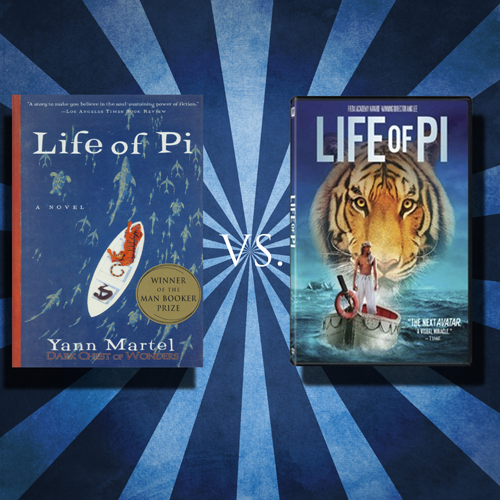
    Life of Pi vs. Life of Pi
    Life of Pi Book vs. Film Adaptation

    I know what you’re thinking. Ho-hum, another books vs. movies debate. But don’t stop reading yet! This is not a debate. I love books. And I live movies (no, that’s not a typo.) And I’m tired of people pitting the two against each other.

    Think about it. Both books and movies demand a significant amount of effort in bringing them to life. Both are mentally stimulating and emotionally engaging. I was only ten years old when I read Life of Pi. In case you haven’t heard of Life of Pi yet, it’s a story about a teenage boy who loses his family, loses his home and finds himself stranded at sea with only a ravenous tiger for company. But when I tried explaining the story with my best friend at the time, she scoffed and said “I can’t even imagine that.”

    But that’s exactly the point.

    So many of the world’s stories are about worlds and times that most people consider to be beyond the realm of human imagination. Books deemed “unfilmable” by book and movie lovers alike. The Hobbit. Harry Potter. Game of Thrones. The magic realism that characterizes Pi’s story – and Harry’s, and Frodo’s, and Tony Stark’s – sets them apart from stories closer to home. But it is the “unfilmable” and “unimaginable” nature of these stories that make them the stories most worthy of being imagined. Brought to life.

    And what better way to do that than through film?

    Book lovers insist that the movie can never be the same as the book, but does it have to be the same? If the movie was meant to be the same as the book, it wouldn’t be a movie. For me, the point of a movie adaptation is to re-imagine the story of the book without overwhelming it. I grew up with Harry Potter, and reading Life of Pi changed my life forever. And the film versions of those books didn’t match up with the little movies I’d already made in my had while reading them.

    But this little film I already made in my head while reading the book Life of Pi is one of those rare examples of a movie whose 3D visuals don’t overwhelm its storytelling but enhance it. It’s about that flawless balance between world and visual, capturing the complexities of a character’s world and the the viewer’s mental world.

    That said, even if the screenplay is amazing and the visuals are flawless, much of the audience’s decision about whether or not they like the film relies on their own emotions. Their own story. Having read the books for all the adaptations I’ve watched, I never walked into a movie thinking it would make me feel anything new. But each and every time, it did. And that’s what makes me believe in film as the book’s friend rather than its enemy. It’s the only medium that has the power to take an existing experience, reshape it and make it visceral in the way no other medium can.

  • Lean, Mean, Green Machine: Support the Cause for Tesla Motors

    As much as possible, I use public transport to get around.

    But the thing about Massachusetts is that, a lot of the time, there just aren’t enough trains and buses that go where I want to go. And that’s when I just have to bite the bullet, hail a taxi or get in a car to get somewhere. But it’s hard to enjoy the ride when all I can think about is the criminal waste of energy I’m participating in, not to mention the air pollution. Given a choice, I’d rather deal with the sweaty armpits and rambunctious Sox fans on the T than the looming prospect of a depleted ozone layer or energy scarcity.

    Enter Tesla Motors.

    In 2010, we worked with Renew America Roadtrip and its Tesla Roadster at the Northeast Sustainable Energy Association (NESEA) BuildingEnergy conference. We spoke with Michael Craner, co-founder of Renew America Roadtrip, about the ways in which the electrically powered Tesla Roadster helps people save energy, cut costs and enjoy a guilt-free ride. Not only does a Tesla car afford its driver the opportunity to save the environment and a large amount of money, it’s sleek, sporty design makes it a good-looking car worth bragging about.

    Amazed? We were too. Check out our video below:

    This is a great effort, and it will obviously make a difference for the environment.

    So what’s the catch?

    A new technology as well-researched and effective as Tesla’s stands as a threat to the outdated auto dealership model currently in place in most of the United States.

    According to Tesla’s website, they have a few galleries scattered across the United States but none of these galleries are authorized to initiate a sales transaction unless the customer goes through a substantial pile of paperwork and contacts their California office for sales and delivery.

    It seems unfair that the red tape and political buzz surrounding Tesla’s sales should restrict access to clean transportation for environmentally conscious consumers all over the country. There are in fact thousands of EV charging stations all over the country, and MSNBC predicts millions by 2020. A few of such charge stops recently sprouted up in our neighborhood of Porter Square in the parking lot by the Porter T Station. Basically, there’s no reason to allow an obsolete auto sales model to be an impediment in the path to a cleaner, greener America.

    There’s no reason to be stuck in the past when technology is rushing towards the future.

    You can change the status quo, and you can change it as soon as Friday. All you have to do is add your name to this petition. Deadline is Friday, June 5th, 2013, and 100,000 signatures are needed. Help us reach the tipping point—it’s so close!

  • Coalition of the Willing: Inspired Work, Inspiring Work

    I have a complicated relationship with film.

    For the most part, I love it. I love that it can inspire, empower and liberate people. As a medium, it is limitless – it can tell stories previously untold, tap emotions previously untapped and explore parts of the world previously unexplored.

    But here’s my problem: commercial film rarely ever does.

    Yes, Ryan Gosling is stunning. And so is Emma Stone. Alright, I get it.

    But why are we making a movie about it? That part, I don’t get.

    With all the fandoms, poster boys, Jennifer, and plotless excuses for movies popping up everywhere, I can’t help but feel disillusioned by film. But every once in a while, a movie comes along to remind me that Ryan Gosling and Emma Stone haven’t completely taken over. On one of my many afternoons spent idly browsing Vimeo for inspiration, I stumbled upon a film by Knife Party that reinstated my faith in the wonders of the medium.

    Coalition of the Willing, is, as the title suggests, the collective brainchild of a brilliant coalition. The film addresses an issue burning with actuality (pun intended!) – the issue of global warming. And yet…there are no pie charts, bar graphs or visuals of receding ice caps viewed from outer space.

    That’s the beautiful thing about this film. It succeeds not despite but because of the lack of statistics and infographics in its storytelling. Because when you really think about it, global warming isn’t an issue that’s as far away and distant as the statistics and satellite images often used to represent it.

    It’s personal. It’s a choice.

    Throughout the film, the visuals follow man and mankind. Our evolution, our changing times, our history, our politics, our sociology. Visually, it is absolutely stunning. I felt myself being increasingly drawn into the world of the film – our world – and it wasn’t difficult to understand why the movie walked away with the Best Short Award at the 2012 San Francisco Green Film Festival.

    The stunning animation and smooth flow of the film transports the viewer back in time, employing the memorable image of a ’50s businessman turning into a hippie to chronicle the radical individualism of the ’60s. As the colours get brighter and the backdrops increasingly complex, the individualism fades into consumerism and the whole movement eventually culminates in a lack of regard for the world around us. The status quo.

    Although humanity took a turn for the worse, the film isn’t pessimistic about it. Not in the least. There is a palpable vibrance in its visuals, a quirky hopefulness in its scoring and an awareness of the power of individual efforts. It connects the past with the present, muses about the many changes that humanity has undergone, and, above all, provides hope for the future. Its look, feel and message work together to do what film fundamentally ought to do: awaken and stimulate the minds absorbing it. The film brings the concept of coalition to life and itself stands a testament to the wonders achievable through creative minds coming together.

  • 4 Quick Fixes: The DIY Filmmaker’s Cheat Sheet for a Quality Film on the Cheap

    Whoever said “time flies when you’re having fun” was absolutely right. And if you’re a filmmaker, you already know by now that having fun is part of your job.

    The best thing about creative work is that the sky’s the limit. If I wanted to, I could think up a world of gremlins and goblins and bring it to life. I could also make a hard-hitting documentary about world hunger. Or, if all of that doesn’t work out, I could set up a camera outside my lovely perch in Porter Square, leave it there all day, import my footage and still tell a story. (Hey, Andy Warhol did it…)

    All I need is my trusty DSLR, my lights, my sound kit, my tripod, my slate, my dolly…oh, wait, this is a problem.

    Or is it?

    It doesn’t have to be. Gone are the days of bombshell budgets and tedious technics. Times-are-a-changing and so is technology. Where once you had to worry about thousands of dollars and tons of extra baggage, you now only have to worry about the bare necessities. With a range of tools and technologies to our disposal, it’s becoming easier and easier to roll up your sleeves and start from scratch. Here’s how:

    Quick Fix #1: The Handheld Camcorder

    OK, OK. Before you scroll past this section altogether, let me remind you of a great moment from the pilot of Breaking Bad. You know, the one where Walter White leaves a video message for his wife and kid when he thought he was about to get caught. What’s interesting about that video message is that, even compared to the rest of the show’s already gritty visual style, the camcorder version was shockingly real. So if you’re on the run and you’re looking to capture the washed out realism of life pre-DSLR, this quick fix is for you.

    But if you’re going for a fancier feel, try…

    Quick Fix #2: The DIY Viewfinder

    Beautiful filmmaking is all about composition. And perfect composition is all about the little elements – aperture, ISO, white balance. But when you’re out and about, the sun can make it hard for you to get those elements just right, and a professional viewfinder will cost you a cool $100-$200 at the very least. But why shell out the cash when you have edit-room coffee runs and shiny new equipment to save up for? Believe it or not, you can make your own LCD viewfinder for under $20. And if you’ve got 5 minutes and an appreciation for dinosaurs, check out this video that shows you exactly how to do it:

    Make your own LCD viewfinder for your DSLR

    Now that you’ve got that viewfinder, you can focus on framing that perfect shot by getting all those little elements just right. But if you’re anything like me, that’s not enough. Getting everything right behind the camera is only a step towards making the magic happen in front of it. Which leads us to…

    Quick Fix #3: Get Creative With Lighting

    As a 5 foot nothing filmmaker without a bodybuilding certification, I was definitely not designed to haul around a light kit on long shoots. Paper lanterns and clamp lights are just two of the many options you have when it comes to quick, clean, low-maintenance light sources. Not only are these options totally affordable, they do just the trick if you’re lighting your subject outside or in a cramped space where you don’t have access to a lot of space or outlets. But if you do have some space and you’re looking for a conventional three-point lighting setup, here’s a video that will show you a low-cost way to achieve it:

    Make your own lights on less than $100

    A good lighting setup is really the cherry on top of the beautiful composition cake. But now that everything looks perfect, it has to feel perfect. And what better way to make it feel perfect than…

    Quick Fix #4: Create Movement with a DIY Dolly

    Think about it. What kind of world would this be if nothing never moved? A boring one. And what kind of film would you create if nothing ever moved? That’s right…a boring one. Camera movement is a foolproof way to inject your movie with feeling and dynamism, especially when used on what would normally be a static image. That said, the laborious task of carting around a full-size dolly is not something a small crew can afford to put up with. But that doesn’t mean your film can’t benefit from the wonders of movement. In fact, the solution for your static-shot problems can be easily found in none other than your local Home Depot. I’ll let YouTuber MediaUnlocked explain the details:

    Make your own DSLR slider dolly track

    And there you have it! With these four completely doable (and cheap!) fixes, you no longer have to let money or logistics stand in the way of telling your story. If you’re already imaginative with your storytelling, all you need to do is apply that great imagination to your technique.

  • One Small Step for Man, One Giant Leap for Mankind: Boston Walk for Hunger

    If you look at an early map of the world, you’ll see a sphere. In that sphere is land – two large chunks of it – and water. If you look at a map of the world today, you’ll still see land and water. But they don’t exist within a sphere, nor do they exist in big large chunks. They’re divided. The creators of these divisions divided the large chunks of land into all kinds of odd shapes, colour coded them by money, population, economic power. Even the vast expanse of blue within which they all float is divided – this ocean, that plate, this channel.

    With these divisions so deeply ingrained within our cognitive understanding of the world, it is sometimes difficult to remember that these lines that divide up the world aren’t much more than what they appear to be: ink on paper. The interesting part about this ink on paper is that the ink was probably made in a completely different place than the paper; and the cartographer using the ink and paper sits on a wooden chair made in another chunk of land altogether. What the ink, paper and wood ultimately represent, then, is the people of the world whose needs brought them into existence: people, who, despite the divisions that separate them, partook in the shared experience of living on this planet and subsisting on its resources.

    Because the world gradually became bigger and more divided than it once was, it became easy for people to lose sight of the bigger picture. While words like “pollution,” “climate change” and “fossil fuels” began to pop up in the world’s vocabulary, they were written off as far-fetched, too conceptual to truly materialize. When they did begin to materialize, the first instinct was to worry. After all, the world is so much bigger than the people who consume its resources.

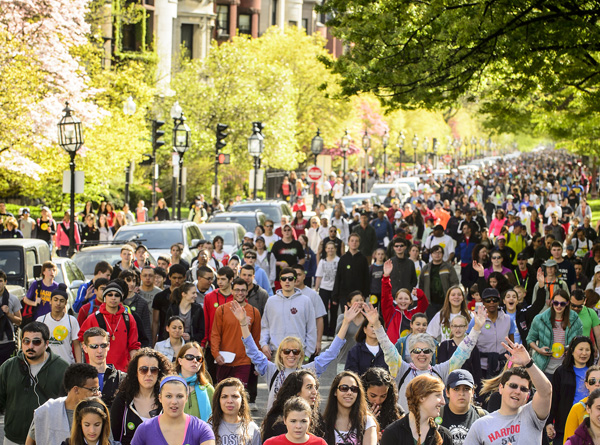
    The good thing about all this worrying, though, is that it has given rise to awareness. There is a desire to change things, and the citizens of the world are beginning to take things into their own hands. In the coffee shop down the road, a teenager is doing her part by getting her morning coffee in a reusable mug. On the other side of the world, someone is picking up an abandoned newspaper from a London Underground train and putting it in a recycling bin. Somewhere else in the world, a mother is picking up a candy wrapper from the sidewalk and admonishing her little boy for failing to throw it in a trash can. And this past Sunday, thousands of volunteers walked for Project Bread’s Walk for Hunger, raising thousands of dollars towards hunger in Massachusetts.

    According to Project Bread’s website, this annual walk has made ending hunger in Massachusetts a goal within reach. The simple gesture of walking has, year after year, had far-reaching consequences for schools and communities in Massachusetts. And if walking can spread the message and make a difference, so can the reusable mug, the recycle bin, the moralizing mom. Big change is ultimately a culmination of little steps towards it. Little steps that dare to shake the conviction that the world can’t be saved, or is too divided to be saved. The reason little gestures translate to big change is because the magnitude of the gesture transcends the action itself. All it takes is the simple recognition of the power that we have to bring about change, the ability to recall that first simple image of the world – as one big mass of land, with resources to be shared and maintained by all its citizens.

  • Cambridge Naturals: Local Eco Advice and Health Products

    Recently, we came across Cambridge Naturals in the Porter Square Shopping Center. Their mission, store, and service caught our eye and we thought we would share some of their story.

    We sat down with one of the owners, Michael Kanter, who discussed Cambridge Naturals’ role in the community.

    What is Cambridge Naturals’ mission?

    “While we are not a pharmacy,” answered Kanter, “our mission is to help people find solutions for their health issues. But our mission goes well beyond that. It includes trying to build a better society, and trying to promote locally owned independent businesses—to help be part of building a strong local economy.”

    Michael emphasized, “It’s about the relationships, not the initial sale. We want to provide the community with solutions.” In order to supply those solutions, Michael says that they spend a lot of time carefully researching their products, so that their customers get exactly what they need and so the community can thrive from it as well. “We research the brands really carefully both in natural medicines and supplements and in body care. We try and find products that are organic and fair trade. We try and find products that are made locally, or include some local ingredients.”

    Curious about the growth of the company, we asked Michael what the future was for Cambridge Naturals.

    “Our goal is to continue to thrive as a locally owned and independent business in Cambridge. We’ve almost tripled our business since we moved to our current location six and a half years ago. What we have in the works is to keep seeking out more products that are not available elsewhere and yet can help people enhance their lives.”

    So, here’s GLM’s take: If you are interested in natural health and want to support the Cambridge community, Cambridge Naturals is a solid recommendation. They supply everything from vitamins and herbs to groceries, books, body care, and even yoga and meditation items, many of which are made or grown locally. If you are in the area, stop in for a visit with the Cambridge Naturals team.

    Cambridge Naturals can be found at 23 White St, Cambridge, MA 02140, calling (617) 492-4452, or at www.cambridgenaturals.com

  • Cambridge Naturals: Local Eco Advise and Health Products

    Recently, we came across Cambridge Naturals in the Porter Square Shopping Center. Their mission, store, and service caught our eye and we thought we would share some of their story.

    We sat down with one of the owners, Michael Kanter, who discussed Cambridge Naturals’ role in the community.

    What is Cambridge Naturals’ mission?

    “While we are not a pharmacy,” answered Kanter, “our mission is to help people find solutions for their health issues. But our mission goes well beyond that. It includes trying to build a better society, and trying to promote locally owned independent businesses—to help be part of building a strong local economy.”

    Michael emphasized, “It’s about the relationships, not the initial sale. We want to provide the community with solutions.” In order to supply those solutions, Michael says that they spend a lot of time carefully researching their products, so that their customers get exactly what they need and so the community can thrive from it as well. “We research the brands really carefully both in natural medicines and supplements and in body care. We try and find products that are organic and fair trade. We try and find products that are made locally, or include some local ingredients.”

    Curious about the growth of the company, we asked Michael what the future was for Cambridge Naturals.

    “Our goal is to continue to thrive as a locally owned and independent business in Cambridge. We’ve almost tripled our business since we moved to our current location six and a half years ago. What we have in the works is to keep seeking out more products that are not available elsewhere and yet can help people enhance their lives.”

    So, here’s GLM’s take: If you are interested in natural health and want to support the Cambridge community, Cambridge Naturals is a solid recommendation. They supply everything from vitamins and herbs to groceries, books, body care, and even yoga and meditation items, many of which are made or grown locally. If you are in the area, stop in for a visit with the Cambridge Naturals team.

    Cambridge Naturals can be found at 23 White St, Cambridge, MA 02140, calling (617) 492-4452, or at www.cambridgenaturals.com

  • The Hobbit: An Expected Review

    When I was a little kid, my father collected me, my little brother and sister, and a huge silver Casio tape-playing boom box, and set us all down around the fireplace. He turned the overhead light out and an orange glow from the fire cast itself onto the carpet, illuminating the tape deck.

    “What we’re about to listen to is a very special story,” he said. “I read this story a long time ago, and I enjoyed it so much I want to share it with you kids. If it gets too scary we’ll turn it off.” We all looked at each other and he hit the play button.

    Listening to The Hobbit in the dark around this light is one of my favorite memories. The recording was produced by The Mind’s Eye, and was a full production, complete with multiple talented voices, an extensive sound effects library, and an impressively orchestrated score. The recording originally aired in 1979 on NPR Radio, and it had finally made its way to three children listening by a hearth, the dog asleep in the corner.

    I loved this story, specifically this telling of it, so much so that in middle school I stole it out of my father’s closet and would play each tape to put me to sleep, every night. When the series ended I just started the 6 hour adventure from the beginning again. This continued for an embarrassingly long time, to the point that even today I can anticipate most lines and recite many of them. You must understand: for some reason, maybe the fact of how my journey with Bilbo started in our family room, I was a little obsessed with Tolkien and his world of Middle-Earth

    In 2000, I went to a movie. I don’t remember what movie–it doesn’t matter. What mattered was the trailer. It was a teaser, and it opened with a New Zealand hill top covered in dry grass, black rock, and mountains in the background. Epically adventurous music began, and up over the hill came a tall bearded man in a pointed grey hat and cloak carrying a wooden staff. At this point I was too excited to sit still, because I thought, oh wow, the next thing to come over the hill is going to be 13 dwarves and a hobbit and I’m going to go nuts. When the pointy eared elf walk over next I thought, that dwarf looks unusually high. Then came a character who could ONLY be a dwarf, followed by some obvious hobbits, and then some other tall people I couldn’t place. If you can’t tell, I had not read Lord of the Rings, but I knew of it. Though I was looking forward to the film no doubt, I was crushed it wasn’t The Hobbit.

    Fast forward through movies of Fellowship and Two Towers, and I’m a true LOTR fan. When the release day for Return of the King arrived I thought it was the end of the age of Middle-Earth, a three year movie-viewing journey. I waited in line with other enthusiast friends opening day and took it in, taking a mental picture in my mind. It was a special day, a great day, and a sad day all at once. It was worth the wait, heck, the wait enhanced it, but knowing it was over was tough to stomach.

    After its successes, we learned Hobbit was being talked about, and that was a giddy feeling. Then I caught wind of Peter Jackson’s awful relationship with New Line Cinema, and how it might jeopardize him directing, which sounded sacrilegious and a big blow to a well-defined series. Then there was the notion it might not have the same actors, or even be done at all. Years went by with nothing but rumors and hope (whispers of a nameless fear?). When it was evident Jackson was back on board, and when casting finally started, and when filming actually began, each stage brought this feeling of relief. I was there, and now would go back again.

    Only this time I would go back to an unknown sight. 48 frames per second. Twice the frames for double the clarity. You see, 3D is an issue for some. Fortunately I don’t get 3D sick, but I do heavily notice, with the fields being arranged the way they need to be for stereoscopic filmmaking, the picture taking a big hit in crispness and brightness. It is the nature of the beast, and the price for 3D. Jackson announced his belief that 48fps would be a better way to view the film. With this high frame rate (look for “HFR” in the marquee at the theater) we were going to break from that ever traditional and cinematic 24fps we’ve come to know, love, and get used to. The reaction from Comic-Con couldn’t be more deafening. I read in the news the crowd was nervous, hyper, then outraged at the clip they were shown, and how it looked more like a soap opera on TV than a throwback to the Shire.

    Whatever. At least they’re making it, I thought.

    I tried to avoid the screenshots, the behind-the-scenes clips online, and the eventually released trailers, but I failed miserably and was unable to help myself. All the while knowing this story I have waited 9, no 12, no 22 years for, was going to be told in a revolutionary new format. Pioneering new territory is thrilling, and as a filmmaker, I am always grateful to ride the wave of the new, scary as it may be. With the release of digital video, then DSLRs, then FCPX, the end of manufactured film cameras and the slow decay of celluloid overall, I’ve been privy to some fascinating, industry-changing events. I must be honest, though: as we got closer and closer to December 14th, I legitimately became nervous about this new frame rate, and worried it would spoil something near and dear. All I had to go on was that its Peter Jackson we’re talking about. Middle-Earth is his baby after J.R.R., and I just need to trust he wants to do the film justice.

    This evening, I again found myself in a line for another adventure. Joined by my brother Sam, who picked up tickets the day before, we arrive an hour early to already find a line of 50 people. When we got through we had to wait in another line outside the theater doors. When finally we were loosed, we found some seats in the exact middle, and settled in immovably.

    This was indeed the experience I wanted. The HFR version is different, and will look slightly strange to those not expecting it, but it truly does fade away. I plan on seeing it again in the other formats to compare, but as far as content I couldn’t be happier. I won’t spoil anything for those who haven’t seen it or who don’t know the story (what are you waiting for?), but take it from a very critical filmmaker and an even more critical fan that this movie is definitely worth seeing.

    My advice is to know what version you are walking into. There are a least 5 different versions: IMAX 3D, RealD 3D (RealD is a different 3D technology than IMAX), RealD 3D HFR (48fps), IMAX 3D HFR (48fps), and 2D Digital. For the most familiar cinematic look, your best bet is probably the 2D digital, but I want to verify this before committing to that claim.

    I’ve heard multiple complaints about too much CGI, but we all saw that coming. Personally, I too prefer great robotics and puppetry done right (Jurassic Park anyone?), but to get here at all was an elating experience in itself. I give the movie an A, mostly because I felt the Goblin King needed some major advice and reconsideration in the 3D modeling department, but moreover because I don’t think anything can really top what’s in the mind.

    It is absolutely a must-see this winter, though, and I hope you enjoy An Unexpected Journey as much as I did. It has rekindled the same magic I felt at the beginning of the LOTR run, where you had to wait a whole year before you could continue the quest, but the pay off was practically tactile. That feeling that I thought was a one-time occurrence is now present again, and it is this weird sensation of reliving the greatness of the LOTR span, but with a new, unseen yet equally epic set of films. And while it brought me back to all these memories, it mostly put me right back where I started, right next to that fire so many years ago. It was warm, and invited me right in.

  • The Power of Film Freedom

    I watched the 84th Academy Awards, like many professional and aspiring filmmakers did, only this time it seemed just a little more…unsure of itself. We had Billy Crystal up there reprising his host role having taken an 8-year hiatus. Though the intro was heartfelt, the jokes were cute, and it reminded me of how I’ve watched City Slickers II about 50 times with my grandfather chuckling the whole way through, it still was missing something.

    On the red carpet, which I was somehow forced to watch in my company, the commentators were as electrifying as ever: “What an outfit…Who are you wearing? Do I sound introspective and look as magnificent as you this year? Wait, before you go, I have one more shot for you. .” Like Crystal (don’t get me wrong, I will always love the guy), let me reiterate—the event was missing something. More than anything I heard the commentators talking about how classy, and old Hollywood it was this year, just like they claimed last year, the year before, and the year before. Hollywood seems to be fixated on retaining a time period when things made sense, and where the studios controlled everything from production to content, distribution to demographic. The movie industry is not about control anymore, it’s about fluidity, exposure and instant gratification. Whoever can get the most eyes on their product seems to be doing quite well for themselves.

    These are interesting times for filmmakers, independent or Hollywood, what with an evolving landscape changing every year for movies in the What, Where, Why, When, Who, How and How Much.

    What
    In Hollywood, the What is for the most part getting less intelligent and lazier. I swear, any day now we will get the prequel to Dumb and Dumbererer 5. We had some good movies this year, but were any of them really great movies? If it weren’t for the refreshing creation of The Artist (an homage to old Hollywood with some modern touch), I would say we’ve seen better years. The independent films I’m sure were great, but unless you go to festivals or subscribe to an independent on-demand channel, it is sometimes hard to find out about those films, much less see them.

    Where
    Movies out of Hollywood are being made more and more out of single locations, many able to claim that location as a post-production CGI house. The Where may be determined for tax reasons, logistics, convenience, but in the end the ultimate answer is money. Even though ticket prices are anywhere from $9 to $18 depending on how big the screen is and if the picture is in 3D, piracy has no doubt hit Hollywood hard, and the economy tanking hasn’t helped much either. Independent projects however are expanding outside their home base origins, with gear being less expensive and more portable than ever.

    Why
    Why Hollywood movies are being made (sorry if this is a shocker to anyone) is still about the money, as it always has been. You might have the best, most artistic, thought-provoking, culturally changing, life-altering script of all time, but if a producer can’t see it succeeding at the box office, good luck. That is perhaps the Oscars one redeeming quality. Out of all the junk the LA machine pumps out each year, it does make a few good artistic pieces worth recognition and worth seeing—movies that make us think. I wish there were more of them. Wait a minute, there are more of them! Only they aren’t Hollywood, they are independent, or even more so, they are really independent. Like the filmmakers going out themselves or with a small crew and uploading to Vimeo. Why are they doing it? Because they love it, because they care, and because they simply have to do it. They won’t feel complete unless they do it. Those are the movies you want to see.

    When
    Hollywood is making movies all the time, but not at the same volume or pace that the independent and online community is producing. Not even close. We have a democratizing revolution going on in the video industry now, where you can make a movie on an iPhone if you really want to. Whatever Hollywood movies come out that are worth seeing, you can usually expect them to release around fall or winter—right before the Oscars so it is hot and in folks’ minds. However, movies made on REDs, Alexas, and HDSLRs are being released all the time. There is no time like the present, and the sooner you can provide new content the happier your followers will be.

    Who
    Who is making movies is actually more of a question of who isn’t making movies? Hollywood of course makes movies, and filmmakers make movies, but it’s much broader than that. With a camera on every phone, the iPad, and HDSLRs, it is easier than ever to make a video, however short, low budget, or planned out. It is parents, business owners, students, doctors, salesmen, cooks—almost every industry there’s going to be someone who has zero training in videography, or even interest in filmmaking, and yet are still making films. It would be an interesting statistic to learn just how many people in the past year made at least one video clip, even if it was just a shot of their cat on their phone. Who is making good movies is another story.

    How
    The How I find the most exciting of all. Hollywood is making their films the same way they always have—big budgets, A list actors, huge crews, lavish locations, unparalleled cutting edge graphics, and the same formulaic scripts they’ve relied on for years with a couple diamonds in the rough. Independents are still looking for their moderate budgets, decent sized crews, and best locations possible for their scripts. But if you watch the content (particularly the short film content) coming in on sites like Vimeo, Blip.tv or occasionally YouTube once in a blue moon, you will find some incredible ratios of production value and resources to budget spent.

    How Much
    The trick is figuring out, in that last category of small online distribution, how to monetize it so you can both make a living and make more content, while not also selling your soul to the advertising devil. As of right now, I’m not certain how advertising dollars can’t be involved to make it work, though sites like Kickstarter and IndieGoGo may be on the right track. By crowdsourcing, and funding your projects with an audience that is already interested in your idea, it seems like everybody wins. I noticed the other day a project for a video game called Double Fine Adventure asking for $400,000. At the time of my writing this post they have secured 2.4 million dollars and have 5 days left. Wow. I think their success is not just due to what they are promising, but their attention to producing a professional looking video that allows fans a window into the behind the scenes, which helps sell their idea and convince people to donate. They decided to show (not just tell) what they doing, and it came back to them many fold.

    My point here is that the content you create matters. The story. With all the other noise out there online, in people’s ears and at the water coolers, you need some good content to help you stand out. This is true if you are trying to create the next LA Confidential, a corporate marketing video for your website, or an assembly of family home videos. You want it to not just inform, but entertain and engage. If you are thinking about budget, think about how much it might cost you later, when you’re forced to clean up a PR mess from a poorly produced video done in-house. If you’re thinking, “Well, only my family is going to see this,” consider your great great grandkids when they watch it. Wouldn’t it be ideal that they feel something, as opposed to just witness something? To achieve the emotional experience, to make it more than just the factual heritage connection, that takes some careful attention to timing and editorial decisions.

    The beautiful thing is, it’s true, anyone these days can make a movie. In fact, if you are outside the Hollywood machine, the filmmaking experience can actually be quite liberating creatively, since now you are the one in control. You may hear the followup, “Yes, but not everyone should make a movie / video.” If you love the process and ability to express yourself by making films, then I disagree with those pessimists; please make lots of movies to evolve your skills and your voice. Simply realize that when ready for a serious production, it can also be a very scary thing in the wrong hands, not just for you and the team but for your desired audience.

    What I am advocating is that after some experimentation and tests, once you get to a project you know matters to you, put some thought into how it will get accomplished the right way. Perhaps then we can look forward to increased interest in shows like the Vimeo Awards and Webby Awards, which stand to be much more in tune with viewers on an individual level. Everything is moving to the web whether we like it or not. I think the natural progression points to these more relatable, personalized shows thriving, while shows like the Academies focus on surviving. For non-filmmaker consumers, these new shows will only become more entertaining with age. From a filmmaker’s perspective, it is fun to watch these newer web-based award shows because the awards themselves seem so much more accessible and attainable. It still means you need to put care into your work; cats playing keyboards only gets you so far. Whether you are creating work for your friends and family, your peers and colleagues, or your customers and clients, think through your mission and make it cutting edge but still appropriately classy. And not swan dress classy; that is so 2001 old Hollywood.

    Focus of the Day:
    How do you make your content stand out?

    Film-tip: Learn the language. The more vocab you know on set, especially in the area that you are not a specialist in, the more you can communicate with the crew about what you want. It sounds simple and repetitious, but it really can take what should be a 4 hour shoot and make it an 8-10 hour shoot if you mess it up.

    Eco-tip: Help get support going for the coolest mode of transport out there yet. If you haven’t seen the Shweeb yet, you’re really missing out. Let’s get these into our cities and actually have fun getting to and from work.
  • Moving Forward: How to Do What You Love for a Long Time

    As a filmmaker, to say you will be on your feet quite a bit is somewhat of an under statement. Part of me liked the idea of a filmmaking career because it wouldn’t be just a fun, challenging, creative job that exposes you to lots of different industries, varieties of life and culture, but it would be an active one. You have to get out of your chair if you want to make a film. If your reply is “I’m an animator; like the click-click kind, not the claymation or green screen shoot kind,” why not go out and take some photos of textures? Making your own textures is painless and much more rewarding, but the contents on this site is essentially what I’m talking about. If your excuse is “I’m just an editor,” well, I’m an editor too, and there are plenty of organic ways to edit. Just ask Oscar-Winning Hollywood editor Walter Murch (Apocalypse Now, The English Patient) how he edits. (For those who are looking for some balance, have a ball, or a kneeling chair). If your excuse is, “I don’t want to exercise—it’s hard,” there’s nothing I can do for you. You need this guy to help you.

    Proper ergonomics and health is a concern for everyone, filmmaker or not. As I mentioned, you have to get up to make a film. I know I’ll have to lug a bag or two or three, sometimes make a few trips or bring extra people just to set up a shot. At the end of a day of production it’s a good workout, and workouts give you energy to keep going during the day. But how many days really are you in production? As the guy running Green Lens can testify, productions are actually a small percentage of each project. There might be many weeks of pre-production planning, phone calls, emails, and meetings before getting on set. And once off set, now you are headed for that editing bay—sigh…more sitting.

    I founded GLM as a very green conscious entity, pulling from my own beliefs on environmental issues, so the encouragement of physical activity also fits nicely in with our business model. I try to promote this by biking to places when possible, taking public transport, and walking, all in an effort to support the reality that movement is a key ingredient to living and feeling well. Unfortunately, this for many has become an inconvenient, undesirable reality (wow, that was close—almost said an inconvenient you-know-what. Go see the film if you haven’t by the way; 7 years later it’s still an important piece of political, environmental, and film history).

    Apparently, we—Americans—aren’t walking a lot anymore.

    In fact, we are so comfortable taking our cars, and avoiding old-fashioned legwork, that reporter Franz Strasser of BBC World News America decided to do a story on it. According to his article, it seems the good Samaritans of Raleigh, North Carolina have been taking matters out of City Hall’s hands and into their own, posting signs telling pedestrians how far it is to walk from place to place. Where no city official has taken action or filed a permitting charge against the movement, it would appear the city approves of the initiative.

    The more reasons we have to be active, the greener, healthier, and happier we stand to be. With barely any Boston snow to speak of this past year, I think I‘ve seen more joggers outside this winter than the past 4 winters combined, so why not take advantage of the weather and treat yourself to a warm February stroll to the insert-your-nearby-store-here? (The ecological significance of the weather, or lack thereof, surely warrants its own post; we’ll save that one for later).

    Currently, I don’t have Murch’s upright editing station setup. However, I do have a small swiveling laptop stand that sits up on my desk at times throughout the day to give my seated self a healthy dose of stand. The takeaway here is whatever your industry is, see if there is a way to work in more exercise into the daily routine, whether it means a new chair, periodically standing while working, taking the elevator more, or walking to offices to give messages rather than emailing. It doesn’t need to be strenuous; just enough to give our bodies what they need to live a long, satisfying life. Don’t wind up like the humans in WALL-E with tiny bones swimming around in their bodies…somewhere…

    Focus of the Day:
    What do you do to keep moving?

    Film-tip: It’s tax time. iPad / iPhone users, if you haven’t already, check out Mint.com. It is a secure accounting management site you can use for free (there are paid upgrades), and there are some great apps to go along with. Mint is created by Intuit, the same guys responsible for Quickbooks. Credit to ColinReidDesign.com for telling us about this one way back when.

    Eco-tip: You remember to bring your reusable bags to the supermarket, but how many times do you say “yes” to the “do you want your chicken wrapped in plastic” question? If you are wary of raw meats coming into contact with the apples for you and your little ones, consider designating one small reusable bag as “the raw meats” bag. One more step to getting off the plastic bag bandwagon.