Author: Adam Nathaniel Greene

  • Green Lens Media Produces Videos for ELM’s 2020 Commonwealth Environmental Leadership Awards

    Green Lens Media Produces Videos for ELM’s 2020 Commonwealth Environmental Leadership Awards

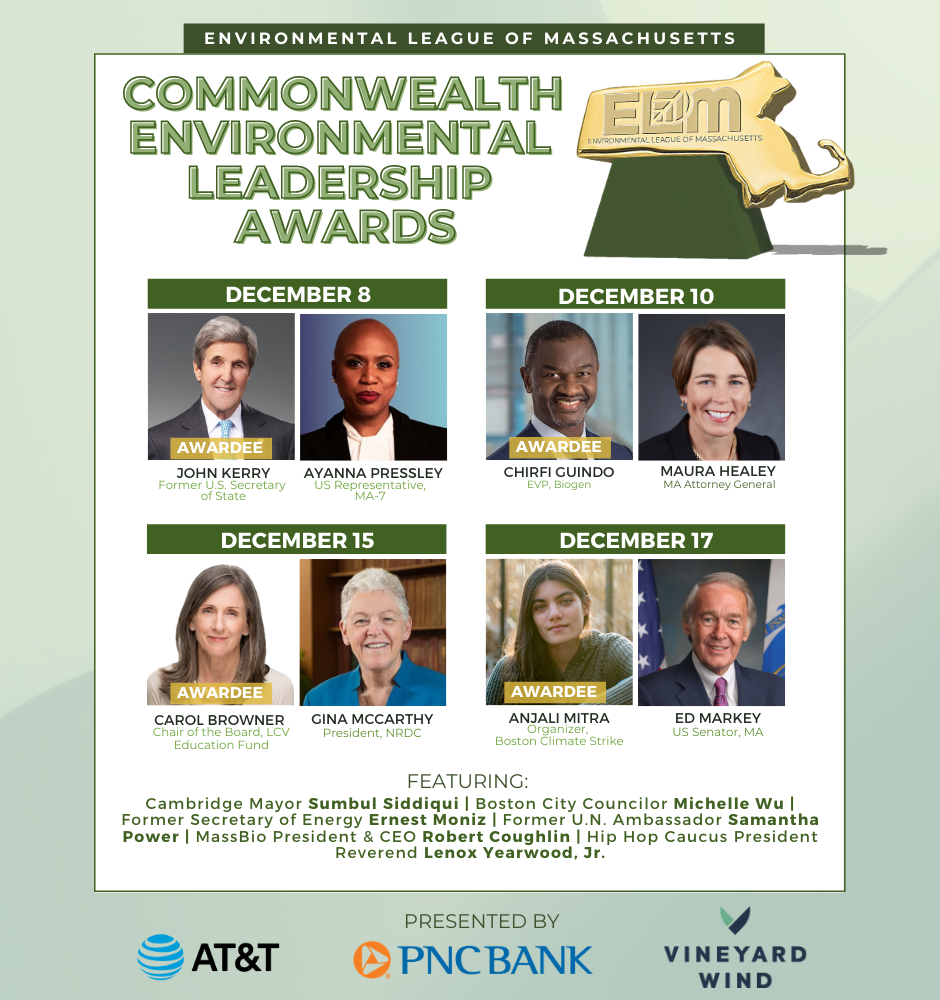
    The Environmental League of Massachusetts (ELM) signed Green Lens Media onboard to create videos for their 2020 Commonwealth Environmental Leadership Awards. This year’s awards go to Secretary John Kerry (Dec. 8), Biogen (Dec. 10), the League of Conservation Voters (Dec. 15), and the organizers of the Boston Climate Strike (Dec. 17).

    You can read more about the upcoming CELA event below, and register for all four presentations (free) here: http://bit.ly/CELAS2020
    But first, some history about our projects with this terrific organization…

    Our history with ELM…

    GLM was proud to first begin working with ELM in 2017 during their efforts to increase public awareness and support for funding state park projects. As a company founded on the mission of providing top shelf video production services to green and eco-conscious organizations, businesses, institutions and advocates, ELM is exactly the type of client for which we aspire to fill our production schedules.
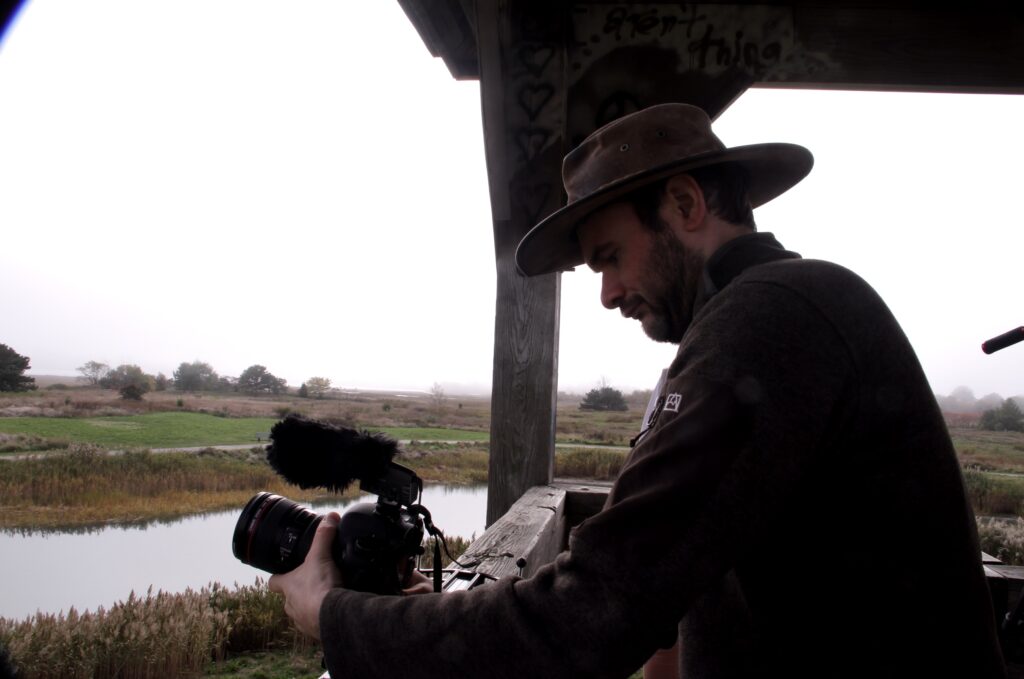
    Green Lens Media founder Adam Greene captures a foggy scene at Belle Isle Marsh Reservation in Boston, MA.
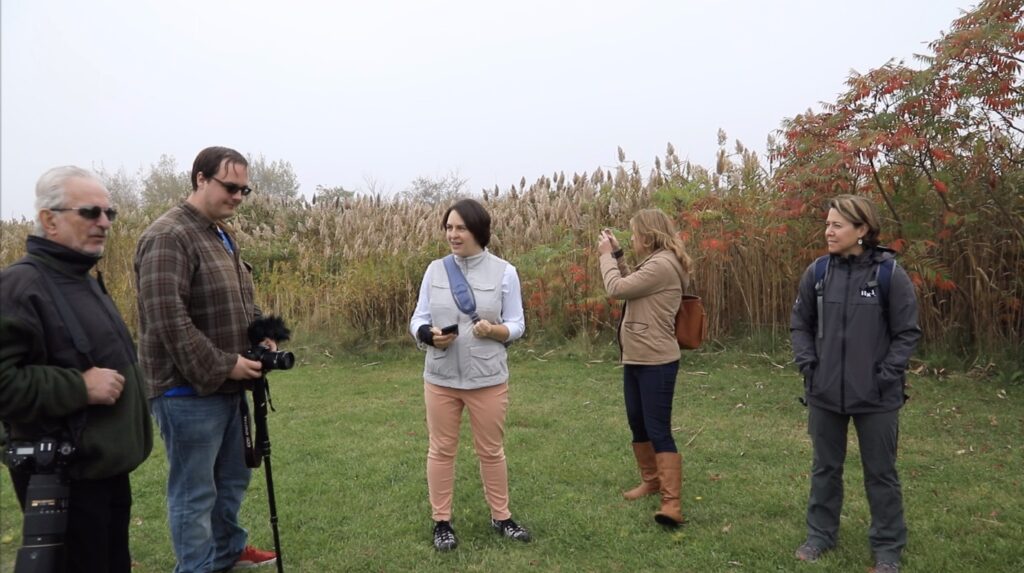
    GLM Script Supervisor and Camera Assistant Viktor Herrmann discusses shoot agenda with ELM’s Legislative Director Erica Mattison and the rest of the on-camera talent.

    Our film shoots for that first project took us to the hidden gem of Belle Isle Marsh right near Logan Airport, which the Executive Office of Energy and Environmental Affairs refers to as a Reservation that “includes the last remnant within Boston of the salt marshes that were once prevalent along the Massachusetts Bay shoreline.” If you haven’t been, put it on your list–it’s an incredible to have in the backyard of Boston. You can check out that production here: 

    ELM also had GLM produce in that campaign a video drawing awareness to the importance of Lobby Day(s), since potential environmental policies are more likely to get attention and become law and real projects the more the public is in favor of those measures. Our Lobby Day video can be viewed here:

    Events: From In-Person to Online

    Since this year’s CELA event is occurring during the pandemic we’ve all been dealing with, ELM was faced with the same predicament many organizations and businesses have been challenged with: how do you create a completely online experience for a normally in-person event? 

    The process of creating such a presentation began with ELM sending GLM photos, zoom interviews they conducted, some graphic layers they’d been using in their marketing and wanted either animated or replicated for brand consistency, and a foundational outline for suggested spoken content that would help drive the narrative. After using that as a guide and putting our own filmmaker-touch on the editing, we then supplemented this with video media of several variations.

    First and foremost, we turned to the archival media from our previous project with ELM 3 years prior. By working with us again, ELM was able to tap the benefits of all the production work done with GLM before, using previously unseen footage, recycling a project with no new cost implication, allowing us to move faster in editing due to our prior organization and familiarity with the footage, and the added benefit of it being customized content for ELM in the first place.

    Next, we turned to select other environmental clientele we felt may have footage in their archives befitting of the project, and after gaining their blessing we were able to showcase some of those clips as well throughout the storytelling.

    We then turned to the GLM archive. We’ve accumulated hundreds of hours of original and personal projects over the years. We combed through our library, picking out moments that could work well for the CELA videos, with the added benefit of not needing to obtain any further releases. Lastly, we looked to round out some of the more global and “climate change in-the-flesh” moments from world events and the news by sourcing from licensable clip vendors. We always turn to this last in order to keep videos as fresh and original as possible. 

    We are greatly looking forward to the Commonwealth Environmental Leadership Awards being shown over the next 2 weeks on Tuesdays and Thursdays, and do hope you can check out the event, whether your looking for information on who’s doing what on climate change in our communities, the state of environmental goals and policy in MA and America, or you’d simply like to see what does one approach to adapting an in-person event to a virtual experience look like. These local leaders are inspiring, and we hope it contributes to even more attention to the most important issue of our time. When it comes to the video work, our philosophy on this is the same regarding any video content shown online—it should be as engaging and entertaining as possible, should feel authentic and memorable, should be designed as much as possible for a specific audience, and should touch viewers on an emotional level.

    Keep up the great work ELM!

    ELM’s Original Post

    ELM has written on their site the following about Tuesday’s Awardee, Secretary John Kerry:
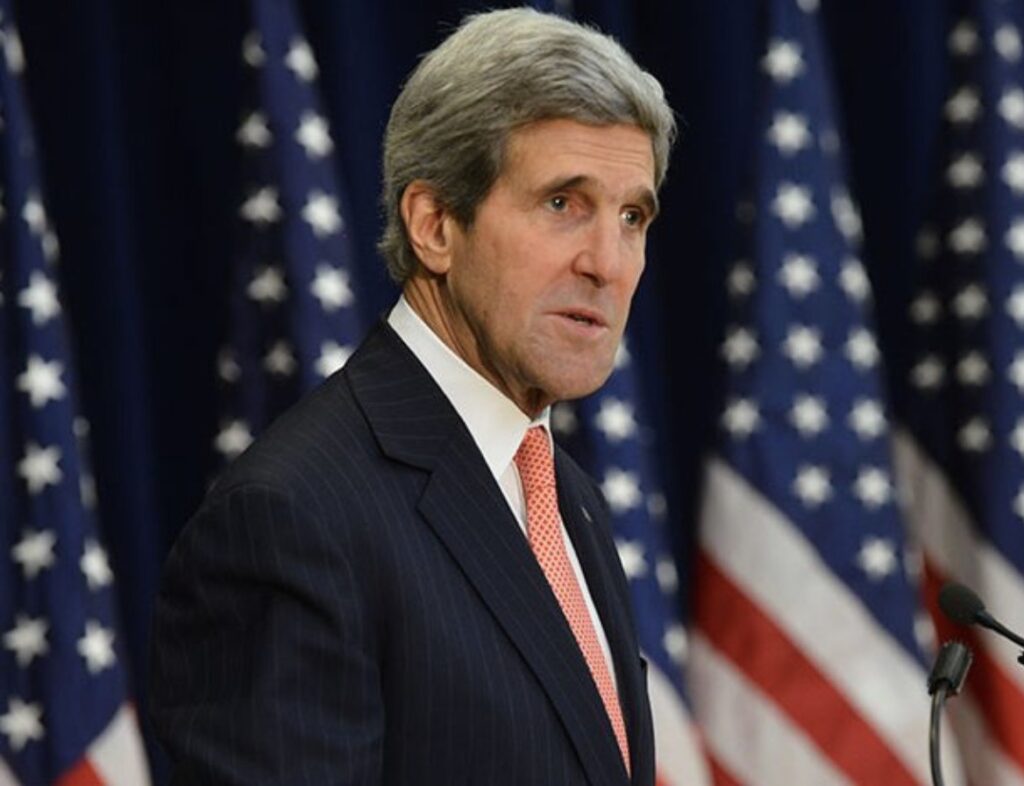
    Secretary John Kerry has dedicated his life to public service. He served the Commonwealth in a number of roles – as District Attorney for Middlesex County, Lieutenant Governor of Massachusetts, U.S. Senator for Massachusetts, and U.S. Secretary of State. Throughout his tenure, he tackled issues like combating acid rain as Lieutenant Governor, bringing attention to the warming planet to the U.N. as a Senator, and working with foreign governments to spearhead numerous efforts to combat climate change as Secretary of State. Notably, Secretary Kerry was a key architect of the Paris Climate Accord, signing the historic agreement to reduce carbon emissions in 2016.

    In 2019, Secretary Kerry launched World War Zero, a coalition of unlikely allies joining a global mobilization against the climate crisis. This group includes scientists, CEOs, military leaders, activists, artists, entertainers, political leaders from both sides of the aisle, business and industry leaders, and many more want to tackle this crisis. The coalition focuses on public education and community engagement to activate climate action at the massive and urgent scale necessary to win this war. Bringing together influencers like celebrities and politicians will help this message reach a broad, global audience. Messengers will make connections between climate change and the economy, jobs, and national security.

    ELM is pleased to award Secretary John Kerry a Commonwealth Environmental Leadership Award in recognition of his exemplary work in our community.

    For original post, please visit: https://www.environmentalleague.org/event/cela-2020/
  • Harold Ramis Shares Some Words of Wisdom About Film’s Future

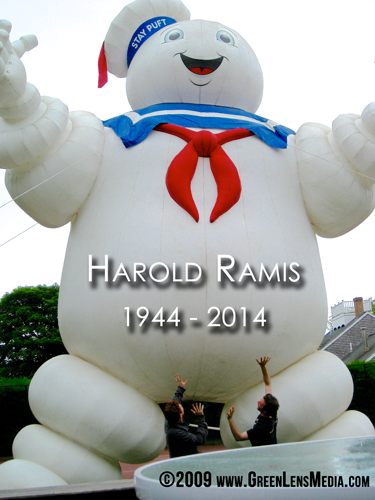
    Mr. Stay Puft lives again during the 25th Anniversary screening of Ghostbusters at the 2009 Nantucket Film Festival
    Mr. Stay Puft lives again during the 25th Anniversary screening of Ghostbusters at the 2009 Nantucket Film Festival
    What a blow. By now you’ve probably heard Harold Ramis, the force behind such movies as Caddyshack, Ghostbusters, Groundhog Day, and Analyze This, has passed at the age of 69. In honor of his legacy, I thought I would skip the circumstances of his death and the array of films he gave us, which you undoubtedly already know by now, and instead tell you an inspirational story of my brief interaction with him at the Nantucket Film Festival in 2009.

    The highlight of the festival that year had to have been Ramis himself, who was in attendance for three main reasons: to receive the Screenwriter’s Tribute, to premiere his new film Year One, and to celebrate the 25th anniversary of Ghostbusters. As someone who grew up with Ghostbusters, was completely transfixed by the multilayered themes and messages of one of my all time favorites Groundhog Day, and depended on Analyze This for more than one DVD date night, it was a particularly meaningful few days for me.

    First of all, I was tasked to be on the team blowing up the actual 25 foot Stay Puft Marshmallow Man that was used to market Ghostbusters when it premiered in 1984. Come on—does it get any cooler than that? This float dominated the skies, and stared out at the Atlantic from Siasconset’s Casino theater on the south side of the island. Getting Mr. Stay Puft to cooperate was a challenge, but somehow the group was able to cross the streams and get him into his new 2009 role as Mr. Stay Put. As guests arrived for a special screening of a brand new 35mm print of the film, he greeted them to their awe and delight.

    I met Ramis during the screening of Year One, while I was in the front entryway waiting for the film to end. With everyone seated in the theater watching the movie, Ramis stepped out some point near the middle to have some time to himself. Year One turned out to be not one his better movies (4.9 on IMDB, a 14% on Rotten Tomatoes), so perhaps the typical “director in the back gauging the audience reaction” wasn’t necessary in his mind. Factor in how many times he must have seen the film while editing, and perhaps it’s easy to understand why he would be stepping out. Whatever the reason, Ramis chose a wooden bench by the ticket booth, and got involved with some game or texting activity on his phone—I can’t recall which, though if I had to guess I’d say some kind of game.

    After a few minutes of this he took a brief nap, but must have had some internal clock wake him about 10 minutes before the end of the film. As he looked around, no phone in hand, I thought “if I’m ever going to talk to him this would be the chance,” so I did.

    It’s amazing how cool and collected you can head into a conversation with someone of his stature, and then completely out of character get all tongue twisted once you started speaking. That was me, but fortunately I found my steady voice before we got to a level of embarrassment. He smiled as I sputtered, knowing we both knew he was being very gracious to let me occupy some of his time, something no doubt countless fans and filmmakers had done before. I think he was amused not by the fact that I was trying to tell him how much I respected his work, but more by the direction I took our talk, which he seemed surprisingly engaged by.

    After the pleasantries and unnecessary gushing, I finally got to what I thought would be the most relevant and purposeful discussion I could come up with on the spot. I asked him if he thought film as we knew it would survive. Did he feel the access digital video gave filmmakers, with its ease, price, and increasing quality, would implode the professional market, and ultimately for those reasons overcome “Hollywood” looking content? Would the storytelling suffer? Would the good stuff be able to compete with quality gear getting so cheap, and the potential noisy flood of bad content springing up online more every day? And more so, would there even be a career in film by the time I “made it,” if that time ever came?

    He thought for a moment, and after reflecting on this told me that while the technology had changed in the past few decades, the core of filmmaking, the very root of motion pictures, was in capturing and telling a good story. “We can’t stop the way society is changing this profession,” he said, “so while it may become harder to get your work in front of large audiences, or into traditional theaters, or to get your film backed by a big studio so you can make the big bucks, in the end whoever can adapt and embrace the circumstances best will come out okay. If you love making films, just keep making films.”

    He asked me what I had done to advance my career, so I told him about starting Green Lens Media, and about making my first feature in high school years ago under a SAG student contract. He reiterated that while film as a format and industry would change, there would always be room for new stories and new filmmakers, who yes, could make careers of it if they worked hard enough for it. It was a sobering thing to hear that the industry I’d been pursuing for nearly a decade at the time was, according to this Hollywood insider, bound to be different, but also refreshing that he was so optimistic about its future considering.

    I was fortunate to get to hear this insight from Ramis, and it stuck with me despite the many other speaking events I saw him at throughout the festival. Most people wanted answers to things like “what was it like working with Bill Murray,” and “what’s the funniest thing that happened behind the scenes on such-and-such movie?” It’s sometimes easy to forget while starstruck that these are just people after all; people who, of course, are talented, but are also hard-working and even a little lucky. They might be able to point to a particular instance where they were in the right place at the right time to catch some opportune “break,” but isn’t that just something that would have happened eventually another way anyway, if not that way? In other words, if you work hard enough, if you “just keep making films,” eventually that lucky break will find you.

    Thanks, Harold, for all of your comedic genius for the time you were here. Thank you for your reassurances about the film business, and for believing in film’s future, as murky as it seems sometimes. I’d like to think that when we see an Egon hard at work inventing something, or a Dr. Sobel trying to figure out how to not die this time, or a Phil Connors making humor when there was none despite a desperate situation, there is in each instance an inevitable and eventual hope that evolves at some moment into something we have been looking forward to. It’s a great message, one that I and other filmmakers are inspired to see and be reminded of. You will be greatly missed, and I wish you all the best on your journey as I continue down mine, and continue making films.

    On a side note, if you ever care to haunt GLM (especially our scriptwriting software), that would be just fine; I promise you would be given Slimer status (the endeared, free-to-roam friend Slimer, not streamed-into-the-Trap Slimer).

    All the best,
    Adam

    Leave a comment! What are some of your favorite Harold Ramis movie moments, and what is your opinion on the future of the film industry?

  • The No-Brainer Business Venture and/or Education Decision

    This past weekend, on September 1st, 2013, Green Lens Media finally announced its newest service, The Filmmersive™ Workshop Series. This workshop series has been a year and a half in the making, and was much more demanding in its planning than was originally projected for multiple reasons. But we kept at it, because we knew as soon as we conceived of it, no matter how difficult it was to set up, we HAD to do it. It was just too perfect to not do it, as it fulfills multiple needs to multiple parties in a cost effective way. Through hard work and the will to succeed, we finally have it ready, and I am proud to officially proclaim our workshops are launched, public, and open for business – let the filming begin!

    Why is this such a big deal?

    Today, if you are a business, you want your product and service out there, circulating, known, because that leads to clients and customers. If you are a filmmaker or involved in video or marketing, you are looking for experience, for contacts, for resources, but really more than anything those are means to the end—you are looking for JOBS. If you are a writer, you want people to see your work, make connections, improve your storytelling skills, but more than anything, you want more and better JOBS. If you are an actor, you may want people to watch you onscreen, get your name out there, and meet people who can hook you up, but all of those things are to feed your ultimate goal, landing killer JOBS.

    I know this. Everyone knows this.

    But what is anyone DOING about it?

    As a filmmaker, I believe in video. I love making it, and I love telling a good story. As a business owner, I believe video can help a business in ways that almost all other forms of marketing fall short. Video presence is important, and will continue to increase as the years go on. And once everyone finally catches up and realizes video is important to attract attention, how will your video become more attractive than someone else’s?

    Film school is expensive, and a big decision. A fully customized video production is expensive, and also a big decision. Getting attention as a writer or actor is hard, because there are so many others out there, and so few really great jobs. I wanted GLM to solve these 3 problems faced by our community: 1) Attention, 2) Cost, and 3) Return On Investment (ROI). I believe our Filmmersive™ Workshops address these issues in a unique, smart way.

    I’m not advocating our workshops as a replacement for college degrees, program certificates, less expensive or free online training, or high-end custom productions, but as a supplement and booster for your career or business there is truly nothing like it. For some it may be just enough, while for others it will prove that only the surface has been scratched. From my perspective, it’s the kind of thing I wish had been available to me, both as a filmmaker AND a business, back when I was first starting out in the professional workplace.

    All the details can be found on the Training page of our website, so I won’t explain how it works in great detail other than this synopsis: the workshops are 5 days of intense filmmaking training for small 4-8 person groups given by experienced instructors. Workshop Attendees pay to learn filmmaking but also take part in actually executing a short video by the end of the week, start to finish, giving them a portfolio piece to showcase. In Narrative workshops we pay a modest fee to use a local writer’s 3-6 page fictitious script, which gives this writer heightened exposure. In Corporate workshops the Attendees do a 1-day shoot at a real company, each editing their own version of the video; the business gets to review all versions and decide at no obligation if they would like to purchase it for their website for a fraction of the normal cost.

    Basically, we structured our workshops to focus on the collaboration and the ROI for all involved. For Attendees, it’s a cost-effective, fun, and rewarding way to learn, and you wind up with a unique portfolio piece. For writers, actors, and sponsors, it’s a great opportunity for exposure with a limited commitment and with a quick turnaround final result. For businesses, it’s a risk free way to preview multiple videos about their business, since purchase costs are more affordable than highly customized projects and always no obligation to buy. For GLM, it’s a way to share our knowledge through training while continuing to operate in the field making productions. And for everybody, it is a great networking opportunity and an all around enjoyable and worthwhile experience.

    So what’s the catch?

    Honestly, I can’t think of one. This is the NO-BRAINER part of the whole concept – everyone benefits. Really, the only hesitation was in the idea of actually structuring the setup of the program, and then executing it. With all the variables involved it is a complex undertaking. As the host of the workshop, this responsibility falls on GLM’s shoulders, but I felt so strongly this model would strengthen the business and film community in Boston that it was worth every effort to see through. I would like to see new startups, particularly green / environmental ones (though we won’t be exclusive to them), benefit from this program, and begin to flourish and enhance our city. I would like to see Boston, which has already grown as a film town in the past decade, take this to a new, even higher level.

    The Filmmersive™ Workshops are not where your film education or video productions end, though it will be a good jumpstart. Every ingredient like this helps, and GLM will make its workshops one such ingredient of the overall recipe that promotes companies, individuals, and the film community. I hope you will check out what our program offers to see if it is right for you, but whatever you choose to do I hope you will continue to investigate how to get video on your site and / or learn the practices of filmmaking by whatever means make the most sense in your situation. 21st century communication is already headed in video’s direction, and riding the wave of the future should be one hell of a thrill, so let’s make it thrilling and catch the perfect wave.

  • The Hobbit: An Expected Review

    When I was a little kid, my father collected me, my little brother and sister, and a huge silver Casio tape-playing boom box, and set us all down around the fireplace. He turned the overhead light out and an orange glow from the fire cast itself onto the carpet, illuminating the tape deck.

    “What we’re about to listen to is a very special story,” he said. “I read this story a long time ago, and I enjoyed it so much I want to share it with you kids. If it gets too scary we’ll turn it off.” We all looked at each other and he hit the play button.

    Listening to The Hobbit in the dark around this light is one of my favorite memories. The recording was produced by The Mind’s Eye, and was a full production, complete with multiple talented voices, an extensive sound effects library, and an impressively orchestrated score. The recording originally aired in 1979 on NPR Radio, and it had finally made its way to three children listening by a hearth, the dog asleep in the corner.

    I loved this story, specifically this telling of it, so much so that in middle school I stole it out of my father’s closet and would play each tape to put me to sleep, every night. When the series ended I just started the 6 hour adventure from the beginning again. This continued for an embarrassingly long time, to the point that even today I can anticipate most lines and recite many of them. You must understand: for some reason, maybe the fact of how my journey with Bilbo started in our family room, I was a little obsessed with Tolkien and his world of Middle-Earth

    In 2000, I went to a movie. I don’t remember what movie–it doesn’t matter. What mattered was the trailer. It was a teaser, and it opened with a New Zealand hill top covered in dry grass, black rock, and mountains in the background. Epically adventurous music began, and up over the hill came a tall bearded man in a pointed grey hat and cloak carrying a wooden staff. At this point I was too excited to sit still, because I thought, oh wow, the next thing to come over the hill is going to be 13 dwarves and a hobbit and I’m going to go nuts. When the pointy eared elf walk over next I thought, that dwarf looks unusually high. Then came a character who could ONLY be a dwarf, followed by some obvious hobbits, and then some other tall people I couldn’t place. If you can’t tell, I had not read Lord of the Rings, but I knew of it. Though I was looking forward to the film no doubt, I was crushed it wasn’t The Hobbit.

    Fast forward through movies of Fellowship and Two Towers, and I’m a true LOTR fan. When the release day for Return of the King arrived I thought it was the end of the age of Middle-Earth, a three year movie-viewing journey. I waited in line with other enthusiast friends opening day and took it in, taking a mental picture in my mind. It was a special day, a great day, and a sad day all at once. It was worth the wait, heck, the wait enhanced it, but knowing it was over was tough to stomach.

    After its successes, we learned Hobbit was being talked about, and that was a giddy feeling. Then I caught wind of Peter Jackson’s awful relationship with New Line Cinema, and how it might jeopardize him directing, which sounded sacrilegious and a big blow to a well-defined series. Then there was the notion it might not have the same actors, or even be done at all. Years went by with nothing but rumors and hope (whispers of a nameless fear?). When it was evident Jackson was back on board, and when casting finally started, and when filming actually began, each stage brought this feeling of relief. I was there, and now would go back again.

    Only this time I would go back to an unknown sight. 48 frames per second. Twice the frames for double the clarity. You see, 3D is an issue for some. Fortunately I don’t get 3D sick, but I do heavily notice, with the fields being arranged the way they need to be for stereoscopic filmmaking, the picture taking a big hit in crispness and brightness. It is the nature of the beast, and the price for 3D. Jackson announced his belief that 48fps would be a better way to view the film. With this high frame rate (look for “HFR” in the marquee at the theater) we were going to break from that ever traditional and cinematic 24fps we’ve come to know, love, and get used to. The reaction from Comic-Con couldn’t be more deafening. I read in the news the crowd was nervous, hyper, then outraged at the clip they were shown, and how it looked more like a soap opera on TV than a throwback to the Shire.

    Whatever. At least they’re making it, I thought.

    I tried to avoid the screenshots, the behind-the-scenes clips online, and the eventually released trailers, but I failed miserably and was unable to help myself. All the while knowing this story I have waited 9, no 12, no 22 years for, was going to be told in a revolutionary new format. Pioneering new territory is thrilling, and as a filmmaker, I am always grateful to ride the wave of the new, scary as it may be. With the release of digital video, then DSLRs, then FCPX, the end of manufactured film cameras and the slow decay of celluloid overall, I’ve been privy to some fascinating, industry-changing events. I must be honest, though: as we got closer and closer to December 14th, I legitimately became nervous about this new frame rate, and worried it would spoil something near and dear. All I had to go on was that its Peter Jackson we’re talking about. Middle-Earth is his baby after J.R.R., and I just need to trust he wants to do the film justice.

    This evening, I again found myself in a line for another adventure. Joined by my brother Sam, who picked up tickets the day before, we arrive an hour early to already find a line of 50 people. When we got through we had to wait in another line outside the theater doors. When finally we were loosed, we found some seats in the exact middle, and settled in immovably.

    This was indeed the experience I wanted. The HFR version is different, and will look slightly strange to those not expecting it, but it truly does fade away. I plan on seeing it again in the other formats to compare, but as far as content I couldn’t be happier. I won’t spoil anything for those who haven’t seen it or who don’t know the story (what are you waiting for?), but take it from a very critical filmmaker and an even more critical fan that this movie is definitely worth seeing.

    My advice is to know what version you are walking into. There are a least 5 different versions: IMAX 3D, RealD 3D (RealD is a different 3D technology than IMAX), RealD 3D HFR (48fps), IMAX 3D HFR (48fps), and 2D Digital. For the most familiar cinematic look, your best bet is probably the 2D digital, but I want to verify this before committing to that claim.

    I’ve heard multiple complaints about too much CGI, but we all saw that coming. Personally, I too prefer great robotics and puppetry done right (Jurassic Park anyone?), but to get here at all was an elating experience in itself. I give the movie an A, mostly because I felt the Goblin King needed some major advice and reconsideration in the 3D modeling department, but moreover because I don’t think anything can really top what’s in the mind.

    It is absolutely a must-see this winter, though, and I hope you enjoy An Unexpected Journey as much as I did. It has rekindled the same magic I felt at the beginning of the LOTR run, where you had to wait a whole year before you could continue the quest, but the pay off was practically tactile. That feeling that I thought was a one-time occurrence is now present again, and it is this weird sensation of reliving the greatness of the LOTR span, but with a new, unseen yet equally epic set of films. And while it brought me back to all these memories, it mostly put me right back where I started, right next to that fire so many years ago. It was warm, and invited me right in.

  • The Power of Film Freedom

    I watched the 84th Academy Awards, like many professional and aspiring filmmakers did, only this time it seemed just a little more…unsure of itself. We had Billy Crystal up there reprising his host role having taken an 8-year hiatus. Though the intro was heartfelt, the jokes were cute, and it reminded me of how I’ve watched City Slickers II about 50 times with my grandfather chuckling the whole way through, it still was missing something.

    On the red carpet, which I was somehow forced to watch in my company, the commentators were as electrifying as ever: “What an outfit…Who are you wearing? Do I sound introspective and look as magnificent as you this year? Wait, before you go, I have one more shot for you. .” Like Crystal (don’t get me wrong, I will always love the guy), let me reiterate—the event was missing something. More than anything I heard the commentators talking about how classy, and old Hollywood it was this year, just like they claimed last year, the year before, and the year before. Hollywood seems to be fixated on retaining a time period when things made sense, and where the studios controlled everything from production to content, distribution to demographic. The movie industry is not about control anymore, it’s about fluidity, exposure and instant gratification. Whoever can get the most eyes on their product seems to be doing quite well for themselves.

    These are interesting times for filmmakers, independent or Hollywood, what with an evolving landscape changing every year for movies in the What, Where, Why, When, Who, How and How Much.

    What
    In Hollywood, the What is for the most part getting less intelligent and lazier. I swear, any day now we will get the prequel to Dumb and Dumbererer 5. We had some good movies this year, but were any of them really great movies? If it weren’t for the refreshing creation of The Artist (an homage to old Hollywood with some modern touch), I would say we’ve seen better years. The independent films I’m sure were great, but unless you go to festivals or subscribe to an independent on-demand channel, it is sometimes hard to find out about those films, much less see them.

    Where
    Movies out of Hollywood are being made more and more out of single locations, many able to claim that location as a post-production CGI house. The Where may be determined for tax reasons, logistics, convenience, but in the end the ultimate answer is money. Even though ticket prices are anywhere from $9 to $18 depending on how big the screen is and if the picture is in 3D, piracy has no doubt hit Hollywood hard, and the economy tanking hasn’t helped much either. Independent projects however are expanding outside their home base origins, with gear being less expensive and more portable than ever.

    Why
    Why Hollywood movies are being made (sorry if this is a shocker to anyone) is still about the money, as it always has been. You might have the best, most artistic, thought-provoking, culturally changing, life-altering script of all time, but if a producer can’t see it succeeding at the box office, good luck. That is perhaps the Oscars one redeeming quality. Out of all the junk the LA machine pumps out each year, it does make a few good artistic pieces worth recognition and worth seeing—movies that make us think. I wish there were more of them. Wait a minute, there are more of them! Only they aren’t Hollywood, they are independent, or even more so, they are really independent. Like the filmmakers going out themselves or with a small crew and uploading to Vimeo. Why are they doing it? Because they love it, because they care, and because they simply have to do it. They won’t feel complete unless they do it. Those are the movies you want to see.

    When
    Hollywood is making movies all the time, but not at the same volume or pace that the independent and online community is producing. Not even close. We have a democratizing revolution going on in the video industry now, where you can make a movie on an iPhone if you really want to. Whatever Hollywood movies come out that are worth seeing, you can usually expect them to release around fall or winter—right before the Oscars so it is hot and in folks’ minds. However, movies made on REDs, Alexas, and HDSLRs are being released all the time. There is no time like the present, and the sooner you can provide new content the happier your followers will be.

    Who
    Who is making movies is actually more of a question of who isn’t making movies? Hollywood of course makes movies, and filmmakers make movies, but it’s much broader than that. With a camera on every phone, the iPad, and HDSLRs, it is easier than ever to make a video, however short, low budget, or planned out. It is parents, business owners, students, doctors, salesmen, cooks—almost every industry there’s going to be someone who has zero training in videography, or even interest in filmmaking, and yet are still making films. It would be an interesting statistic to learn just how many people in the past year made at least one video clip, even if it was just a shot of their cat on their phone. Who is making good movies is another story.

    How
    The How I find the most exciting of all. Hollywood is making their films the same way they always have—big budgets, A list actors, huge crews, lavish locations, unparalleled cutting edge graphics, and the same formulaic scripts they’ve relied on for years with a couple diamonds in the rough. Independents are still looking for their moderate budgets, decent sized crews, and best locations possible for their scripts. But if you watch the content (particularly the short film content) coming in on sites like Vimeo, Blip.tv or occasionally YouTube once in a blue moon, you will find some incredible ratios of production value and resources to budget spent.

    How Much
    The trick is figuring out, in that last category of small online distribution, how to monetize it so you can both make a living and make more content, while not also selling your soul to the advertising devil. As of right now, I’m not certain how advertising dollars can’t be involved to make it work, though sites like Kickstarter and IndieGoGo may be on the right track. By crowdsourcing, and funding your projects with an audience that is already interested in your idea, it seems like everybody wins. I noticed the other day a project for a video game called Double Fine Adventure asking for $400,000. At the time of my writing this post they have secured 2.4 million dollars and have 5 days left. Wow. I think their success is not just due to what they are promising, but their attention to producing a professional looking video that allows fans a window into the behind the scenes, which helps sell their idea and convince people to donate. They decided to show (not just tell) what they doing, and it came back to them many fold.

    My point here is that the content you create matters. The story. With all the other noise out there online, in people’s ears and at the water coolers, you need some good content to help you stand out. This is true if you are trying to create the next LA Confidential, a corporate marketing video for your website, or an assembly of family home videos. You want it to not just inform, but entertain and engage. If you are thinking about budget, think about how much it might cost you later, when you’re forced to clean up a PR mess from a poorly produced video done in-house. If you’re thinking, “Well, only my family is going to see this,” consider your great great grandkids when they watch it. Wouldn’t it be ideal that they feel something, as opposed to just witness something? To achieve the emotional experience, to make it more than just the factual heritage connection, that takes some careful attention to timing and editorial decisions.

    The beautiful thing is, it’s true, anyone these days can make a movie. In fact, if you are outside the Hollywood machine, the filmmaking experience can actually be quite liberating creatively, since now you are the one in control. You may hear the followup, “Yes, but not everyone should make a movie / video.” If you love the process and ability to express yourself by making films, then I disagree with those pessimists; please make lots of movies to evolve your skills and your voice. Simply realize that when ready for a serious production, it can also be a very scary thing in the wrong hands, not just for you and the team but for your desired audience.

    What I am advocating is that after some experimentation and tests, once you get to a project you know matters to you, put some thought into how it will get accomplished the right way. Perhaps then we can look forward to increased interest in shows like the Vimeo Awards and Webby Awards, which stand to be much more in tune with viewers on an individual level. Everything is moving to the web whether we like it or not. I think the natural progression points to these more relatable, personalized shows thriving, while shows like the Academies focus on surviving. For non-filmmaker consumers, these new shows will only become more entertaining with age. From a filmmaker’s perspective, it is fun to watch these newer web-based award shows because the awards themselves seem so much more accessible and attainable. It still means you need to put care into your work; cats playing keyboards only gets you so far. Whether you are creating work for your friends and family, your peers and colleagues, or your customers and clients, think through your mission and make it cutting edge but still appropriately classy. And not swan dress classy; that is so 2001 old Hollywood.

    Focus of the Day:
    How do you make your content stand out?

    Film-tip: Learn the language. The more vocab you know on set, especially in the area that you are not a specialist in, the more you can communicate with the crew about what you want. It sounds simple and repetitious, but it really can take what should be a 4 hour shoot and make it an 8-10 hour shoot if you mess it up.

    Eco-tip: Help get support going for the coolest mode of transport out there yet. If you haven’t seen the Shweeb yet, you’re really missing out. Let’s get these into our cities and actually have fun getting to and from work.

  • Moving Forward: How to Do What You Love for a Long Time

    As a filmmaker, to say you will be on your feet quite a bit is somewhat of an under statement. Part of me liked the idea of a filmmaking career because it wouldn’t be just a fun, challenging, creative job that exposes you to lots of different industries, varieties of life and culture, but it would be an active one. You have to get out of your chair if you want to make a film. If your reply is “I’m an animator; like the click-click kind, not the claymation or green screen shoot kind,” why not go out and take some photos of textures? Making your own textures is painless and much more rewarding, but the contents on this site is essentially what I’m talking about. If your excuse is “I’m just an editor,” well, I’m an editor too, and there are plenty of organic ways to edit. Just ask Oscar-Winning Hollywood editor Walter Murch (Apocalypse Now, The English Patient) how he edits. (For those who are looking for some balance, have a ball, or a kneeling chair). If your excuse is, “I don’t want to exercise—it’s hard,” there’s nothing I can do for you. You need this guy to help you.

    Proper ergonomics and health is a concern for everyone, filmmaker or not. As I mentioned, you have to get up to make a film. I know I’ll have to lug a bag or two or three, sometimes make a few trips or bring extra people just to set up a shot. At the end of a day of production it’s a good workout, and workouts give you energy to keep going during the day. But how many days really are you in production? As the guy running Green Lens can testify, productions are actually a small percentage of each project. There might be many weeks of pre-production planning, phone calls, emails, and meetings before getting on set. And once off set, now you are headed for that editing bay—sigh…more sitting.

    I founded GLM as a very green conscious entity, pulling from my own beliefs on environmental issues, so the encouragement of physical activity also fits nicely in with our business model. I try to promote this by biking to places when possible, taking public transport, and walking, all in an effort to support the reality that movement is a key ingredient to living and feeling well. Unfortunately, this for many has become an inconvenient, undesirable reality (wow, that was close—almost said an inconvenient you-know-what. Go see the film if you haven’t by the way; 7 years later it’s still an important piece of political, environmental, and film history).

    Apparently, we—Americans—aren’t walking a lot anymore.

    In fact, we are so comfortable taking our cars, and avoiding old-fashioned legwork, that reporter Franz Strasser of BBC World News America decided to do a story on it. According to his article, it seems the good Samaritans of Raleigh, North Carolina have been taking matters out of City Hall’s hands and into their own, posting signs telling pedestrians how far it is to walk from place to place. Where no city official has taken action or filed a permitting charge against the movement, it would appear the city approves of the initiative.

    The more reasons we have to be active, the greener, healthier, and happier we stand to be. With barely any Boston snow to speak of this past year, I think I‘ve seen more joggers outside this winter than the past 4 winters combined, so why not take advantage of the weather and treat yourself to a warm February stroll to the insert-your-nearby-store-here? (The ecological significance of the weather, or lack thereof, surely warrants its own post; we’ll save that one for later).

    Currently, I don’t have Murch’s upright editing station setup. However, I do have a small swiveling laptop stand that sits up on my desk at times throughout the day to give my seated self a healthy dose of stand. The takeaway here is whatever your industry is, see if there is a way to work in more exercise into the daily routine, whether it means a new chair, periodically standing while working, taking the elevator more, or walking to offices to give messages rather than emailing. It doesn’t need to be strenuous; just enough to give our bodies what they need to live a long, satisfying life. Don’t wind up like the humans in WALL-E with tiny bones swimming around in their bodies…somewhere…

    Focus of the Day:
    What do you do to keep moving?

    Film-tip: It’s tax time. iPad / iPhone users, if you haven’t already, check out Mint.com. It is a secure accounting management site you can use for free (there are paid upgrades), and there are some great apps to go along with. Mint is created by Intuit, the same guys responsible for Quickbooks. Credit to ColinReidDesign.com for telling us about this one way back when.

    Eco-tip: You remember to bring your reusable bags to the supermarket, but how many times do you say “yes” to the “do you want your chicken wrapped in plastic” question? If you are wary of raw meats coming into contact with the apples for you and your little ones, consider designating one small reusable bag as “the raw meats” bag. One more step to getting off the plastic bag bandwagon.

  • The Right Stuff: Combating the Unavoidable, Uncontrollable Human Factor

    No matter what career you choose, you are bound to wind up working with some folks that are a pleasure to deal with, that will challenge you in constructive ways, and will be future contacts for you down the road. Likewise, you are equally bound to work with someone or several people that you can’t wait to be done with. Without experiencing both it is tough to really appreciate the value of great teammates versus terrible ones; in the end both are valuable in their own ways. A terrible experience with someone truly educates you for the future in terms of what you are looking for and what are you not. It teaches you to recognize warning bells and anticipate dicey situations.

    Recently we had a terrific out-of-state shoot for a client that had been months in the making. In reflecting back on the intensive 3-day schedule we successfully carried out, I know that the positive outcome was only possible as a result of those I was working with. To emphasize just how critical it is to work with the right people, I would like to contrast our positive experience on this shoot with a totally separate, hypothetical story:

    Suppose that a young independent contractor still in her college years offers her services to a company. This company is promising, growing strong, and would look great on a resumé. The people working there appear extremely friendly, inviting, and seem to carry good attitudes. The job requires talent the contractor has, and would be a fun assignment on the whole. The independent contractor is tickled — what a fantastic place to work! The gig is a good one in terms of location, timing, and pay, and the only condition outstanding is that she needs to afford to stay in the area. She asks for flexibility on the pay schedule and for a signed guarantee her advanced payment is coming; she is assured that won’t be a problem, and she is made part of the team.

    Weeks pass, and many projects later, the situation is still the same—no payments, no signed contract. Why is this taking so long? Didn’t they understand her terms upfront? Why did they seem so off-put being reminded yesterday? These are the questions the contractor is wondering, despite her solid work completed and utilized with nothing so far to show for it. She may be young, but she is trying to do everything correctly and the way it should be done in the real world. This is frustrating and feels unprofessional.

    So our independent contractor comes in one day to find the manager alone in the office, hands her an invoice, and asks about the still unsigned contract. All of a sudden the world explodes, as the manager goes on a tirade: you’re a money-grubber, a poor teammate, and you’re stressing everyone out, the manager screams.

    Now we have crossed a line. The independent contractor does not raise her voice, calmly responds when she feels she needs to offer a defense, and for the most part simply lets the manager vent. As this is clearly the last time the contractor has any interest in spending one more minute in the office, she begins packing everything she owns, intending to not return, all the while hearing a barrage of complaints. Though the manager’s rant lasts 45 minutes, it echoes much longer than that for our contractor, perhaps for years.

    First of all, it makes her question whether what she was asking for was unreasonable. Her friends and colleagues said no way, the company was just taking advantage of her youth and inexperience, but she still is unsure. Secondly, it makes her wonder: even if it was wrong of the company to not honor her terms, should she have just put up with it to get the good reference, and maybe earn some good contacts or prospects as a result of her sacrificing her principles and intuition? Furthermore, she grows worried a false reputation of her could begin circulating if she isn’t careful. In her industry, bad word of mouth can be a deathblow. She chooses to not advertise her relationship with the company on her website, resumé, or in conversation, not trusting it couldn’t come back to bite her.

    Years later she found out the promising company she had worked for so fondly at first, then lost all touch with because of an unfortunate encounter, was in extreme debt and going under. Looking back, her more seasoned self reassessed her past predicament and she concluded she had done exactly what she should have. While it was less than it could have been, she didn’t feel the experience was wasted time since it taught her so much about how to recognize great teammates from difficult ones.

    This brings me to my ultimate point in this post, which is working with the right people. You need to work with the right people. Just because a job comes with lots of glamour, or contacts, looks good on a resumé, is good pay, or is a lot of fun, the experience is bound to be fraught with stress and negativity if it is a place where people are the problem. We have to interact with people all day: employees, managers, teammates, and clients. The more people that fight us, the less work gets done, and the more ulcers form.

    Pretend there is an offer on the table for you, where you feel the connection, experience, or money is just too good to pass up, even considering known warning signs about individuals. Clearly no one can stop you, but it is important to know what your definite goals are, and if it’s people who put your goals at risk it truly deserves a second thought. You can control yourself; you cannot control other people—they are a variable in your plans, sometimes unwilling to hear your side or to change, so you want to trust them. Perhaps at the least a poor experience will become one of those “hard lessons learned.” I personally don’t seek discouraging experiences out for the sake of having them, but when they do happen I make sure to get something out of it, even if it is just some good knowledge about what mistakes to avoid in the future, and how to prevent them.

    Coming back to Green Lens’s recent out-of-state production, it was a pleasure working on set with the assembled crew. Not only were all crew members insanely accommodating and understandable when situations evolved into new circumstances, but there was only positivity throughout the production, and during all of our travel to and from. Even on a complicated production everyone was punctual, egoless, and helpful in whatever way was appropriate, even when asked to do things outside their job description. The client was equally helpful, and made our lives easier by exercising the advice of the great Jerry Maguire, and “helping us help them.” These are more than just the characteristics of good filmmakers and clients—they are good people.

    When I am undertaking a project, film or otherwise, the practice I follow is to hire or deal with those that hold the qualities above. The best part is that you can find those people anywhere, sometimes in the least likely places, and with a little coaching or training you can get them to become invaluable pieces of a larger whole. These are much better folks to work with than the guy who is a skilled, talented jerk. I’ve found when I create a better experience for everyone involved, we wind up with a better product. What’s fantastic is when you can find positive-minded folks like I’m describing, who are also extremely talented at what they do. Such was my luck on this shoot, and it will make me think of them for future gigs again and again and again.

    Focus of the day:
    How do you address the “human” factor?

    Film-tip:
    Color is very, very important, and often overlooked by first-time filmmakers. Take the time to color correct; it makes a world of difference. Though not for beginners, one of the best tools out there, DaVinci Resolve, is actually available for free in a lite version.

    Eco-tip:
    We can now light places inexpensively and sustainably for remote, third world neighborhoods. Check out the amazing Solar Light bottle–maybe it could help you light that spot in the garage loft you’ve never been able to see before.

  • Pitching Yourself: Top 10 Email Intro Gotchas For Interns, Staff, Crew, and Talent

    The GLM inbox is always buzzing. It recently struck me how stark the differences are in emails by authors pitching themselves as a service, intern, full-time employee, talent or freelancer. Among the good ones there are emails that are too lengthy, bare, misspelled, or plain boring. My focus below is directed to interns, though many of the concepts also apply to potential staff, crew, and talent we may work with as well, so stay with me.

    Green Lens has been fortunate to have some great interns. Every one contributed in meaningful, professional ways, though it is funny to think—we did not find them. Green Lens does not currently seek interns, as our schedules typically prevent such campaigns. However, our not looking for interns doesn’t mean we don’t bring them onboard. They find us, simply asking about any opportunities. I love to diminish daily incoming email, but I support inquiries like this. It shows initiative. Go-getters write cold emails. Let me rephrase: go-getters write good cold emails.

    To be clear, these are the items that matter to us, realized through actual poor emails received, with the overall point being this:

    Your pitch needs to sell YOU – your education, skills, experiences, and projects are great assets of you, but WHO you are is the critical pitching point.

    YOU.

    Here is my personal top ten list of things that I find less than compelling when trying to make a first virtual impression (yes, whether in person, by phone, email, or homing pigeon, first impressions really do matter):

    1. Sloppy email: Grammar, spelling, and appropriate tone are all important. Everyone is entitled to a typo here or there (I’m certainly no saint), but if the general pattern is one in which it seems the writer is winging it, or worse not caring enough to proofread and fix mistakes, then why would the recipient think you would conduct yourself any differently in your daily routine?

    2. Email length: You do want to get the info out, but you also want to respect people’s time. When emailing a company, keep in mind it takes time to sift and sort through just daily necessities, so if the extra communications are either not descriptive enough or too demanding, then it is likely your questions will go unanswered as it is extra, nonessential work. When in doubt, go short, but not so short you leave out your personality and sincere interest.

    3. Cover letter absence: If the email body is really short, having a good cover letter makes up for it. It’s fine to treat the email body as the cover letter, but the best solution is to have the body give a fast summary of who you are and what you want, and then attach a more detailed cover letter. PDFs are ideal.

    4. Generic cover letter: Managers are most interested in candidates that make a unique and relatable case. A vaguely written cover letter that can literally go anywhere is nothing special to take note of, and it’s likely the email will not be taken seriously. A graphic designer’s letter tailored for a web design company that focuses on the medical field might not be the same letter to send to our video company that serves green, corporate, and academic organizations, even if the skills would be the same. As a hirer, I want to read why you looked at our company, why you are the right person to be working with us, and why we are the best match for you. Letter starting with “Dear Film Company” are the kiss of death, since the request gets lopped in with so many others like it.

    5. Resume missing: In my opinion, a resume does not have to be as pretty as the career office told you (certainly don’t go by that for all jobs you approach; I’m speaking from our perspective). For our purposes, all a resume is is a communication of past and current history and qualifications. Make it look as pretty as you want, but more important is the information in it. If you are proud of the work I say include it, even if it feels long, but if you choose to customize it for the company you are sending to, make sure the items listed are, again, relatable. Things I look for on resumes are versatility. Imagine saying of a candidate, “oh, she wasn’t just a camera operator on 3 different projects, she was also VP of the debate club, and knows how to ice sculpt.” That’s unique, and what attracts me to a potential teammate is not just a focus, it’s a diversity of talent.

    6. Portfolio missing: More important than the resume is the example. Any work in the can that can be shown online should be, and should serve as samples of your craft, artistry, and record. If you have any work that is viewable online, whether it is a video, article, photo gallery, blog, website—please send those links! Even if you were unhappy with it, show us, then tell us what you learned from making it, why you were disappointed, and what you would do differently next time. If you don’t have any work done yet (hence why you want the internship), tell us about other projects you have worked on. In all these cases knowing what capacity you were involved is key.

    7. Contact information missing: Clearly we have your email, but believe it or not sometimes we might want to call. Imagine, having to speak! Including a phone number seems like a common sense item to include, but some incoming mail still surprises us. A phone call is also a serious opportunity to let your personality and passions light up, so take advantage.

    8. Lack of Follow-up (you): If we reply to your email and you do not, either for a long time or at all, that will not sit well with us. If I email a potential client and they respond with a question, this relationship matters a lot to me, so I send my response out as soon as possible. We would expect internship inquiry responses to be handled the same way.

    9. Lack of Follow-up (us): As I mentioned, we get a lot of mail, some of it pressing that must be taken care of immediately. If we don’t respond to an email it is not because we don’t like its sender; it just means we are particularly busy at that moment in time. And in some cases, though we would normally respond after the decks are cleared, it is possible for emails to get lost in the chaos. If working with us means that much to you and we haven’t responded, please shoot another email. We try to not let this happen, but when it does it provides the candidate with a good opportunity to demonstrate their persistence and continued interest in working with us, and that means a lot.

    10. Lack of Honesty or Care: You need to care. Care about yourself. Care about the image you are virtually projecting of yourself in the manner, content, and tone that you write. Care about the person/company you are writing to, and do all of this with honesty. People work best with others they can totally trust, and it’s easier every day to spot the difference between the guy who says all the right things because he really believes them, and the guy who says all the right things because he thinks that’s what the other person wants to hear. Along with honesty to the hirer also comes being honest with yourself. Ask, “Is this really the internship/job I want and can do?” If your gut says no, and you take it on because you have nothing else, you not only set it up to be a waste of time for you and the company, but you rob someone else of their chance to have it be their opportunity.

    The biggest takeaway here is the caring. It needs to just ooze off the screen. If you fail to convince that you care about what you are doing, or describe why you are specifically writing us, one could assume you are just doing the shotgun approach to see who you hit. It’s risky to think you/we will be a good catch if you’re fishing for any and everything that swims.

    Lastly, whether you ace the email intro or botch it, in the end these introductions are all talk. Actions are the true test of time. Action and conduct show how well a person will fit at a company, not talk. Those who think just name-dropping, a huge resume, and a suave persona is enough to sustain them in this business inevitably learn they’re in a permanent state of go fish.

    Focus of the week:
    What’s your logline for you?

    Eco-tip:
    If you will be idling for more than 1 minute, shut off the car. More gas is used in that minute than is used in the motor starting up, so save a little fuel, money, noise and air.

    Film-tip:
    If you need to transfer an FCP7 project to FCPX, try 7toX. Read our post on it here.

  • Software For Final Cut Pro Translates FCP7 to FCPX? Pardon?

    Today was high-five day for editors in the Final Cut Pro world. There was a much needed upgrade in FCPX which includes multicamera editing capability, manual media relinking, photoshop file layer support, and more robust XML handling (among other features and fixes). I will certainly have some comments on these once I have had an opportunity to use it, but that is not why I am excited.

    The exciting news is for the editors with old Final Cut Pro 7 projects. If you are an FCP7 editor you are well aware by now that FCP7 files do not open with FCPX. This has to do with the software code itself, and the processor’s bit size. If you are trying to develop a solution in your editing workflow with the new FCPX on the scene, and are miffed about FCP7’s non-64-bit architecture meaning you can’t open old projects in FCPX, have hope today. The plug-in/third party software gods have been kind to us.

    I am pleased to relay that Philip Hodgetts and Intelligent Assistance have today announced a translation program for going from FCP7 to FCPX. Guess what it’s called: 7toX for Final Cut Pro.

    I had the good fortune of hearing Philip speak at a few Boston Final Cut Pro User Group meetings (BOSFCPUG, now renamed the Boston Creative Pro User Group, or BOSCPUG). If the software is as helpful as Philip’s discussions or resources, this is one you will want to go get (only $9.99 on App Store). I will be playing with its functionality as soon as I can catch a break from some current projects.

    Feel free to make some comments about how both the FCPX 10.0.3 update and the 7toX software are working for you – I am quite curious.

    Focus of the day:
    What is your favorite editing app / plugin?

    Film-tip: MPEG-Streamclip is one of the best tools in the editing and DI’s toolbox. This video encoder is free, and a must-have if you are ingesting, transcoding, encoding, or even delivering. Get this encoder.

    Eco-tip: It’s winter in New England. Whatever sunlight there is, remember to use it! Save money by letting the blinds open; you’ll warm the room a little, allowing you to turn the heat down a bit, and will need less electrical lights.

  • The 9 Lives Rule For Humans

    Welcome to the first post of the new Green Lens Media blog. I’m going to kick off this blog by telling you our story.

    Why does Green Lens Media do what it does?

    I have always been drawn to activities that produce new emotions in people. As a young kid I put on puppet shows in the living room because it made the adults smile. In junior high I wrote plays for some History assignments because it brought what I thought could be old and dusty topics to life. In high school I made a lot of videos for fun and for class assignments because I loved to see people find humor, or sadness, or new meaning in an idea they hadn’t thought of before in the way I had. I captured the world on my trips, from high school through college and to today, because I want to share the experience with others, and see the reactions it stirs, which may be totally different than my own.

    Green Lens does what it does because when you affect someone at their core, emotional level, you have the ability to inspire new understandings, concepts, even purposes — those feelings make people feel confident, reflect, and grow. Let’s face it — it just feels plain good.

    Stories have a way of pulling in audiences, since we are naturally engineered to be curious and to enjoy learning about things we don’t know. This is especially true when we can relate in a variety of ways to the characters in stories; in some sense they can be extensions of ourselves in another world. Go to a party and find usually the big groups are congregating around the guy telling a good story. Storytelling, through spoken language, has been going on a very, very long time, dating back before the Epic of Gilgamesh, the Ancient Egyptians, the Neolithic period, all the way back to at least the Old Stone Age with its cave paintings. Did cave art come before or after oral storytelling? I don’t know, but I don’t think it matters for this discussion, because in either case, cave people heard stories by mouth (grunt?) or by looking at pictures others had drawn on walls with bloody bones. Basically, we are visual and auditory learning addicts.

    Nothing humanizes story more in the digital age than video, as you get your story told the exact way you want it told, over and over, and you use visuals and sound together to do it. I, and everybody here at Green Lens, affects people through this video medium. We are dreamers, and we make movies.

    What do we do specifically?

    We create high quality video production projects for clients and ourselves. We are also advocates for the environmental movement and industry, and promote good stewardship of the environment. We educate people through our films, as well as through our love for in-person filmmaking training, which is another aspect to our business. I will share more about these fronts in future posts, but I want to conclude this post by coming back around to the blog and the audiences it is written for.

    This blog is for storytellers, and those who strive through art to create positive progress in society and culture.
    This blog is for filmmakers who put hard effort into their films.
    This blog is for filmmakers who expect the best quality accessible (physically, financially) at the time for their film.
    This blog is for environmentalists, and those wanting to learn more about how we can live better.
    This blog is for the admins who run and build schools, the lifeblood of innovation in our society.
    This blog is for students: of filmmaking, writing, education, sustainable living, and without sounding too cliché, LIFE.

    My hope is in following this blog you will find facts, opinions, and great variety. I will do the best that a full time entrepreneur/film producer/editor/trainer can do to keep it fresh and frequent as well as keep my sanity. I am always one for collaboration and constructive criticism, so if you think I’m wrong about something or agree, or have a better tool or way to do something, please speak up! I only know what I know, not what I don’t, but I attend many tech, film, and business meetups for a reason — we are all still learning, all the time. We all are discovering each other’s stories. I have learned a great deal out in the real world post-college, and I anticipate that remaining a permanent condition of my being. If humanity were a cat, curiosity would not kill it; curiosity gives us something new, and new things are what living is all about.

    Focus of the day:
    Why do you do what you do?

    Eco-tip:
    CFL light bulbs are an important part of our energy solution in the home, but they do contain a small amount of mercury. Make sure to dispose of broken ones responsibly, same as you should do with batteries. Don’t be like this fellow: http://www.youtube.com/watch?v=jnm6AmaUzvs

    Film-tip: When purchasing SD, CF, or other types of media cards for tapeless cameras, invest in good brands, high speed rates (30 MB/s), and high class gradings (at least Class 5, 6 is better). A few dollars more for a reliable production is a safer and better shoot.