Tag: video storytelling

  • Books are Books, Movies are Movies, and Now the Twain Shall Meet

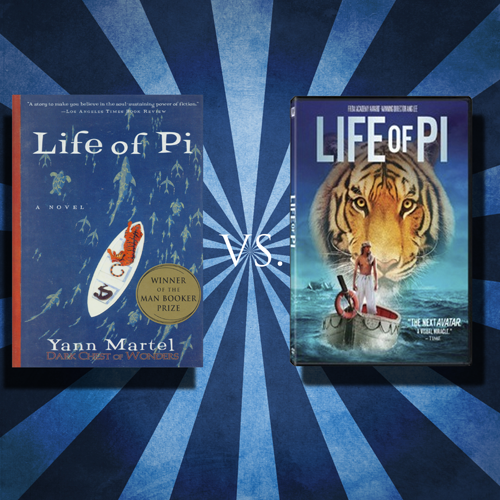
    Life of Pi vs. Life of Pi
    Life of Pi Book vs. Film Adaptation

    I know what you’re thinking. Ho-hum, another books vs. movies debate. But don’t stop reading yet! This is not a debate. I love books. And I live movies (no, that’s not a typo.) And I’m tired of people pitting the two against each other.

    Think about it. Both books and movies demand a significant amount of effort in bringing them to life. Both are mentally stimulating and emotionally engaging. I was only ten years old when I read Life of Pi. In case you haven’t heard of Life of Pi yet, it’s a story about a teenage boy who loses his family, loses his home and finds himself stranded at sea with only a ravenous tiger for company. But when I tried explaining the story with my best friend at the time, she scoffed and said “I can’t even imagine that.”

    But that’s exactly the point.

    So many of the world’s stories are about worlds and times that most people consider to be beyond the realm of human imagination. Books deemed “unfilmable” by book and movie lovers alike. The Hobbit. Harry Potter. Game of Thrones. The magic realism that characterizes Pi’s story – and Harry’s, and Frodo’s, and Tony Stark’s – sets them apart from stories closer to home. But it is the “unfilmable” and “unimaginable” nature of these stories that make them the stories most worthy of being imagined. Brought to life.

    And what better way to do that than through film?

    Book lovers insist that the movie can never be the same as the book, but does it have to be the same? If the movie was meant to be the same as the book, it wouldn’t be a movie. For me, the point of a movie adaptation is to re-imagine the story of the book without overwhelming it. I grew up with Harry Potter, and reading Life of Pi changed my life forever. And the film versions of those books didn’t match up with the little movies I’d already made in my had while reading them.

    But this little film I already made in my head while reading the book Life of Pi is one of those rare examples of a movie whose 3D visuals don’t overwhelm its storytelling but enhance it. It’s about that flawless balance between world and visual, capturing the complexities of a character’s world and the the viewer’s mental world.

    That said, even if the screenplay is amazing and the visuals are flawless, much of the audience’s decision about whether or not they like the film relies on their own emotions. Their own story. Having read the books for all the adaptations I’ve watched, I never walked into a movie thinking it would make me feel anything new. But each and every time, it did. And that’s what makes me believe in film as the book’s friend rather than its enemy. It’s the only medium that has the power to take an existing experience, reshape it and make it visceral in the way no other medium can.

  • 4 Quick Fixes: The DIY Filmmaker’s Cheat Sheet for a Quality Film on the Cheap

    Whoever said “time flies when you’re having fun” was absolutely right. And if you’re a filmmaker, you already know by now that having fun is part of your job.

    The best thing about creative work is that the sky’s the limit. If I wanted to, I could think up a world of gremlins and goblins and bring it to life. I could also make a hard-hitting documentary about world hunger. Or, if all of that doesn’t work out, I could set up a camera outside my lovely perch in Porter Square, leave it there all day, import my footage and still tell a story. (Hey, Andy Warhol did it…)

    All I need is my trusty DSLR, my lights, my sound kit, my tripod, my slate, my dolly…oh, wait, this is a problem.

    Or is it?

    It doesn’t have to be. Gone are the days of bombshell budgets and tedious technics. Times-are-a-changing and so is technology. Where once you had to worry about thousands of dollars and tons of extra baggage, you now only have to worry about the bare necessities. With a range of tools and technologies to our disposal, it’s becoming easier and easier to roll up your sleeves and start from scratch. Here’s how:

    Quick Fix #1: The Handheld Camcorder

    OK, OK. Before you scroll past this section altogether, let me remind you of a great moment from the pilot of Breaking Bad. You know, the one where Walter White leaves a video message for his wife and kid when he thought he was about to get caught. What’s interesting about that video message is that, even compared to the rest of the show’s already gritty visual style, the camcorder version was shockingly real. So if you’re on the run and you’re looking to capture the washed out realism of life pre-DSLR, this quick fix is for you.

    But if you’re going for a fancier feel, try…

    Quick Fix #2: The DIY Viewfinder

    Beautiful filmmaking is all about composition. And perfect composition is all about the little elements – aperture, ISO, white balance. But when you’re out and about, the sun can make it hard for you to get those elements just right, and a professional viewfinder will cost you a cool $100-$200 at the very least. But why shell out the cash when you have edit-room coffee runs and shiny new equipment to save up for? Believe it or not, you can make your own LCD viewfinder for under $20. And if you’ve got 5 minutes and an appreciation for dinosaurs, check out this video that shows you exactly how to do it:

    Make your own LCD viewfinder for your DSLR

    Now that you’ve got that viewfinder, you can focus on framing that perfect shot by getting all those little elements just right. But if you’re anything like me, that’s not enough. Getting everything right behind the camera is only a step towards making the magic happen in front of it. Which leads us to…

    Quick Fix #3: Get Creative With Lighting

    As a 5 foot nothing filmmaker without a bodybuilding certification, I was definitely not designed to haul around a light kit on long shoots. Paper lanterns and clamp lights are just two of the many options you have when it comes to quick, clean, low-maintenance light sources. Not only are these options totally affordable, they do just the trick if you’re lighting your subject outside or in a cramped space where you don’t have access to a lot of space or outlets. But if you do have some space and you’re looking for a conventional three-point lighting setup, here’s a video that will show you a low-cost way to achieve it:

    Make your own lights on less than $100

    A good lighting setup is really the cherry on top of the beautiful composition cake. But now that everything looks perfect, it has to feel perfect. And what better way to make it feel perfect than…

    Quick Fix #4: Create Movement with a DIY Dolly

    Think about it. What kind of world would this be if nothing never moved? A boring one. And what kind of film would you create if nothing ever moved? That’s right…a boring one. Camera movement is a foolproof way to inject your movie with feeling and dynamism, especially when used on what would normally be a static image. That said, the laborious task of carting around a full-size dolly is not something a small crew can afford to put up with. But that doesn’t mean your film can’t benefit from the wonders of movement. In fact, the solution for your static-shot problems can be easily found in none other than your local Home Depot. I’ll let YouTuber MediaUnlocked explain the details:

    Make your own DSLR slider dolly track

    And there you have it! With these four completely doable (and cheap!) fixes, you no longer have to let money or logistics stand in the way of telling your story. If you’re already imaginative with your storytelling, all you need to do is apply that great imagination to your technique.

  • The Power of Film Freedom

    I watched the 84th Academy Awards, like many professional and aspiring filmmakers did, only this time it seemed just a little more…unsure of itself. We had Billy Crystal up there reprising his host role having taken an 8-year hiatus. Though the intro was heartfelt, the jokes were cute, and it reminded me of how I’ve watched City Slickers II about 50 times with my grandfather chuckling the whole way through, it still was missing something.

    On the red carpet, which I was somehow forced to watch in my company, the commentators were as electrifying as ever: “What an outfit…Who are you wearing? Do I sound introspective and look as magnificent as you this year? Wait, before you go, I have one more shot for you. .” Like Crystal (don’t get me wrong, I will always love the guy), let me reiterate—the event was missing something. More than anything I heard the commentators talking about how classy, and old Hollywood it was this year, just like they claimed last year, the year before, and the year before. Hollywood seems to be fixated on retaining a time period when things made sense, and where the studios controlled everything from production to content, distribution to demographic. The movie industry is not about control anymore, it’s about fluidity, exposure and instant gratification. Whoever can get the most eyes on their product seems to be doing quite well for themselves.

    These are interesting times for filmmakers, independent or Hollywood, what with an evolving landscape changing every year for movies in the What, Where, Why, When, Who, How and How Much.

    What
    In Hollywood, the What is for the most part getting less intelligent and lazier. I swear, any day now we will get the prequel to Dumb and Dumbererer 5. We had some good movies this year, but were any of them really great movies? If it weren’t for the refreshing creation of The Artist (an homage to old Hollywood with some modern touch), I would say we’ve seen better years. The independent films I’m sure were great, but unless you go to festivals or subscribe to an independent on-demand channel, it is sometimes hard to find out about those films, much less see them.

    Where
    Movies out of Hollywood are being made more and more out of single locations, many able to claim that location as a post-production CGI house. The Where may be determined for tax reasons, logistics, convenience, but in the end the ultimate answer is money. Even though ticket prices are anywhere from $9 to $18 depending on how big the screen is and if the picture is in 3D, piracy has no doubt hit Hollywood hard, and the economy tanking hasn’t helped much either. Independent projects however are expanding outside their home base origins, with gear being less expensive and more portable than ever.

    Why
    Why Hollywood movies are being made (sorry if this is a shocker to anyone) is still about the money, as it always has been. You might have the best, most artistic, thought-provoking, culturally changing, life-altering script of all time, but if a producer can’t see it succeeding at the box office, good luck. That is perhaps the Oscars one redeeming quality. Out of all the junk the LA machine pumps out each year, it does make a few good artistic pieces worth recognition and worth seeing—movies that make us think. I wish there were more of them. Wait a minute, there are more of them! Only they aren’t Hollywood, they are independent, or even more so, they are really independent. Like the filmmakers going out themselves or with a small crew and uploading to Vimeo. Why are they doing it? Because they love it, because they care, and because they simply have to do it. They won’t feel complete unless they do it. Those are the movies you want to see.

    When
    Hollywood is making movies all the time, but not at the same volume or pace that the independent and online community is producing. Not even close. We have a democratizing revolution going on in the video industry now, where you can make a movie on an iPhone if you really want to. Whatever Hollywood movies come out that are worth seeing, you can usually expect them to release around fall or winter—right before the Oscars so it is hot and in folks’ minds. However, movies made on REDs, Alexas, and HDSLRs are being released all the time. There is no time like the present, and the sooner you can provide new content the happier your followers will be.

    Who
    Who is making movies is actually more of a question of who isn’t making movies? Hollywood of course makes movies, and filmmakers make movies, but it’s much broader than that. With a camera on every phone, the iPad, and HDSLRs, it is easier than ever to make a video, however short, low budget, or planned out. It is parents, business owners, students, doctors, salesmen, cooks—almost every industry there’s going to be someone who has zero training in videography, or even interest in filmmaking, and yet are still making films. It would be an interesting statistic to learn just how many people in the past year made at least one video clip, even if it was just a shot of their cat on their phone. Who is making good movies is another story.

    How
    The How I find the most exciting of all. Hollywood is making their films the same way they always have—big budgets, A list actors, huge crews, lavish locations, unparalleled cutting edge graphics, and the same formulaic scripts they’ve relied on for years with a couple diamonds in the rough. Independents are still looking for their moderate budgets, decent sized crews, and best locations possible for their scripts. But if you watch the content (particularly the short film content) coming in on sites like Vimeo, Blip.tv or occasionally YouTube once in a blue moon, you will find some incredible ratios of production value and resources to budget spent.

    How Much
    The trick is figuring out, in that last category of small online distribution, how to monetize it so you can both make a living and make more content, while not also selling your soul to the advertising devil. As of right now, I’m not certain how advertising dollars can’t be involved to make it work, though sites like Kickstarter and IndieGoGo may be on the right track. By crowdsourcing, and funding your projects with an audience that is already interested in your idea, it seems like everybody wins. I noticed the other day a project for a video game called Double Fine Adventure asking for $400,000. At the time of my writing this post they have secured 2.4 million dollars and have 5 days left. Wow. I think their success is not just due to what they are promising, but their attention to producing a professional looking video that allows fans a window into the behind the scenes, which helps sell their idea and convince people to donate. They decided to show (not just tell) what they doing, and it came back to them many fold.

    My point here is that the content you create matters. The story. With all the other noise out there online, in people’s ears and at the water coolers, you need some good content to help you stand out. This is true if you are trying to create the next LA Confidential, a corporate marketing video for your website, or an assembly of family home videos. You want it to not just inform, but entertain and engage. If you are thinking about budget, think about how much it might cost you later, when you’re forced to clean up a PR mess from a poorly produced video done in-house. If you’re thinking, “Well, only my family is going to see this,” consider your great great grandkids when they watch it. Wouldn’t it be ideal that they feel something, as opposed to just witness something? To achieve the emotional experience, to make it more than just the factual heritage connection, that takes some careful attention to timing and editorial decisions.

    The beautiful thing is, it’s true, anyone these days can make a movie. In fact, if you are outside the Hollywood machine, the filmmaking experience can actually be quite liberating creatively, since now you are the one in control. You may hear the followup, “Yes, but not everyone should make a movie / video.” If you love the process and ability to express yourself by making films, then I disagree with those pessimists; please make lots of movies to evolve your skills and your voice. Simply realize that when ready for a serious production, it can also be a very scary thing in the wrong hands, not just for you and the team but for your desired audience.

    What I am advocating is that after some experimentation and tests, once you get to a project you know matters to you, put some thought into how it will get accomplished the right way. Perhaps then we can look forward to increased interest in shows like the Vimeo Awards and Webby Awards, which stand to be much more in tune with viewers on an individual level. Everything is moving to the web whether we like it or not. I think the natural progression points to these more relatable, personalized shows thriving, while shows like the Academies focus on surviving. For non-filmmaker consumers, these new shows will only become more entertaining with age. From a filmmaker’s perspective, it is fun to watch these newer web-based award shows because the awards themselves seem so much more accessible and attainable. It still means you need to put care into your work; cats playing keyboards only gets you so far. Whether you are creating work for your friends and family, your peers and colleagues, or your customers and clients, think through your mission and make it cutting edge but still appropriately classy. And not swan dress classy; that is so 2001 old Hollywood.

    Focus of the Day:
    How do you make your content stand out?

    Film-tip: Learn the language. The more vocab you know on set, especially in the area that you are not a specialist in, the more you can communicate with the crew about what you want. It sounds simple and repetitious, but it really can take what should be a 4 hour shoot and make it an 8-10 hour shoot if you mess it up.

    Eco-tip: Help get support going for the coolest mode of transport out there yet. If you haven’t seen the Shweeb yet, you’re really missing out. Let’s get these into our cities and actually have fun getting to and from work.
  • The 9 Lives Rule For Humans

    Welcome to the first post of the new Green Lens Media blog. I’m going to kick off this blog by telling you our story.

    Why does Green Lens Media do what it does?

    I have always been drawn to activities that produce new emotions in people. As a young kid I put on puppet shows in the living room because it made the adults smile. In junior high I wrote plays for some History assignments because it brought what I thought could be old and dusty topics to life. In high school I made a lot of videos for fun and for class assignments because I loved to see people find humor, or sadness, or new meaning in an idea they hadn’t thought of before in the way I had. I captured the world on my trips, from high school through college and to today, because I want to share the experience with others, and see the reactions it stirs, which may be totally different than my own.

    Green Lens does what it does because when you affect someone at their core, emotional level, you have the ability to inspire new understandings, concepts, even purposes — those feelings make people feel confident, reflect, and grow. Let’s face it — it just feels plain good.

    Stories have a way of pulling in audiences, since we are naturally engineered to be curious and to enjoy learning about things we don’t know. This is especially true when we can relate in a variety of ways to the characters in stories; in some sense they can be extensions of ourselves in another world. Go to a party and find usually the big groups are congregating around the guy telling a good story. Storytelling, through spoken language, has been going on a very, very long time, dating back before the Epic of Gilgamesh, the Ancient Egyptians, the Neolithic period, all the way back to at least the Old Stone Age with its cave paintings. Did cave art come before or after oral storytelling? I don’t know, but I don’t think it matters for this discussion, because in either case, cave people heard stories by mouth (grunt?) or by looking at pictures others had drawn on walls with bloody bones. Basically, we are visual and auditory learning addicts.

    Nothing humanizes story more in the digital age than video, as you get your story told the exact way you want it told, over and over, and you use visuals and sound together to do it. I, and everybody here at Green Lens, affects people through this video medium. We are dreamers, and we make movies.

    What do we do specifically?

    We create high quality video production projects for clients and ourselves. We are also advocates for the environmental movement and industry, and promote good stewardship of the environment. We educate people through our films, as well as through our love for in-person filmmaking training, which is another aspect to our business. I will share more about these fronts in future posts, but I want to conclude this post by coming back around to the blog and the audiences it is written for.

    This blog is for storytellers, and those who strive through art to create positive progress in society and culture.
    This blog is for filmmakers who put hard effort into their films.
    This blog is for filmmakers who expect the best quality accessible (physically, financially) at the time for their film.
    This blog is for environmentalists, and those wanting to learn more about how we can live better.
    This blog is for the admins who run and build schools, the lifeblood of innovation in our society.
    This blog is for students: of filmmaking, writing, education, sustainable living, and without sounding too cliché, LIFE.

    My hope is in following this blog you will find facts, opinions, and great variety. I will do the best that a full time entrepreneur/film producer/editor/trainer can do to keep it fresh and frequent as well as keep my sanity. I am always one for collaboration and constructive criticism, so if you think I’m wrong about something or agree, or have a better tool or way to do something, please speak up! I only know what I know, not what I don’t, but I attend many tech, film, and business meetups for a reason — we are all still learning, all the time. We all are discovering each other’s stories. I have learned a great deal out in the real world post-college, and I anticipate that remaining a permanent condition of my being. If humanity were a cat, curiosity would not kill it; curiosity gives us something new, and new things are what living is all about.

    Focus of the day:
    Why do you do what you do?

    Eco-tip:
    CFL light bulbs are an important part of our energy solution in the home, but they do contain a small amount of mercury. Make sure to dispose of broken ones responsibly, same as you should do with batteries. Don’t be like this fellow: http://www.youtube.com/watch?v=jnm6AmaUzvs

    Film-tip: When purchasing SD, CF, or other types of media cards for tapeless cameras, invest in good brands, high speed rates (30 MB/s), and high class gradings (at least Class 5, 6 is better). A few dollars more for a reliable production is a safer and better shoot.