Tag: tv

  • Writer Cathryn Humphris of Mad Men, Under the Dome, and Supernatural, Speaks On The Realities of Working in TV

    Writer Cathryn Humphris of Mad Men, Under the Dome, and Supernatural, Speaks On The Realities of Working in TV

    I moved around a lot as a kid. First off, I started life all the way across the world in the little country of Bulgaria, before getting on a plane at the age of eight and heading to the big ol’ US of A. From there, I moved almost every year, spending brief periods in various towns and cities across New England as my parents bounced from job to job. At the time? Frankly, I hated it. I hated having to be reintroduced to a new area, having to make new friends, I hated all of it. But now, as I reflect on those years, I see just how valuable they were. How much I gained from every new experience, every new person I met.

    Television writers, for better or worse, often find themselves as the new kid in class. And Cathryn Humphris is no exception. Over the course of nearly a decade, she has worked on shows like Mad Men, V, Under the Dome, Mob Doctor, Elementary, Supernatural, and many more.

    Cathryn was kind enough to get on the phone with me and Adam, and spend some time talking about just what it’s like to be a working writer in today’s industry, and all of the positives and negatives that come with that.

    ———————————————————————————————————————————————

    VIKTOR HERRMANN: What I’d like to start off talking about first is your early days. The struggle years. Can you talk about the days before you could support yourself solely on writing. What was that like, and what was the transition like?
    Humphris 1

    CATHRYN HUMPHRIS: It was nice. It’s nice to be able to support yourself doing what you wanted to do. It took me about eight years. I came to Los Angeles right out of college. I was a Radio, Television, Film and Communications Major. I was lucky that I had some friends out here already who had paved the way for me and helped me find my first job. 

    There’s a lot of different routes to breaking in, and I went the assistant route. I got early jobs through friends and connections from my school—I went to Northwestern and they have a big alumni community out in Los Angeles. So I started just working low paying assistant jobs. 

    Originally I wasn’t sure if I wanted to write for movies or do something else, and I had a friend early on who said, “I think you should look at television, because I know you love writing, but I know you also want to be part of the overall process.” And also television is much more stable than just going from job to job in film.

    So, early on I got a job in television. Once and Again was the first TV show I worked on. I was a writer’s PA, which is kind of like the lowest position in the business. Literally getting lunches and coffees and running errands for people.

    I just kind of worked my way up through that. I worked for writers who had development deals, I worked for small development companies, I worked for a couple different shows, and just got as much experience as I could get, and also made as many connections as I could make. Which was another huge part of it.

    I know you interviewed Genny Hutchison a while back. Genny and I worked together a long, long time ago on X-Files. She worked for Vince Gilligan and John Shiban, and I worked for Gillian Anderson, and we got to know each other that way. And years, years later, when I was looking for another job, John Shiban was looking for an assistant, and Genny recommended me. And that’s part of how I got the job on Supernatural, which ultimately ended up being the show where I got my big break.

    Along with working different jobs, I was obviously writing on the side. The great thing about being a writers’ assistant is that you can actually be in the writers’ room. You’re seeing how the process works. You are getting to know the show better than almost anyone.

    You know the bosses, you know the dynamics, you know everything. Being in the writers’ room is great practice for learning what you’ll be doing as a TV writer and also for being able to try out your craft a little bit. 

    I had also done a program called the Warner Brothers Writing Program, which is a great program that helped people get their foot in the door. Sometimes you get staffed right out of that program. I didn’t get staffed right out of that program, but Eric Kripke [the Supernatural showrunner] certainly knew that I had done it, and people at Warner Brothers were supportive of me and pushing for me.

    Ultimately what ended up happening was in the first season of that show, John Shiban and I wrote a script together. John mentored me and shepherded me through the process, and everyone was very happy with the script. And then in the second season of that show, I came back again as a writers’ assistant, and by that point I had gotten an agent off of doing the Warner Brothers program. So, my agent was out trying to get me meetings, and John and other writers I had met were super, super supportive.

    I got a job offer on another show, and Supernatural basically was faced with the fact that they might lose me, and so literally overnight they made me an offer to go from being a writer’s assistant to a writer. And I ended up staying there for three years.

    VH: It’s pretty clear that you’ve had quite a varied resumé, which I think is indicative of a lot of TV writers. Could you talk about how hard it is to jump onto an existing show, and how you adapt to that show’s characters and writing style?

    CH: Yeah, that’s an interesting question. I think I have ended up jumping so many times that it’s kind of become secondhand nature for me. 

    I was on Supernatural for a total of four years, and so at that point, people would have known me as a genre writer. Which is funny, because I’m not someone who is particularly a big genre fan; I would consider myself more of a character writer. But there are genre shows that I love because they’re fancy packages for telling great character stories. 

    So, I’m always the person where, in my writers’ room, they’re talking Star Wars or Blade Runner, or the complicated mythology of some show, and I’m like, “What are you guys talking about again?” I just wasn’t into that world. But the great thing about having that background is that genre shows will always want to hire you.

    [But] when you’re a genre writer, particularly a woman who writes genre, you can get put in a box. And it’s great because they’ll offer you jobs on genre shows, but it can be harder for people to take you seriously outside of that world. 

    I had gotten the great piece of advice of, “Write a script that is the opposite of genre. That’s exactly what you want to do.” So, I wrote a very character driven script that my amazing agent ended up getting into Matt Weiner’s hands. I always say Mad Men was the easiest job I’ve ever gotten in my life. Matt read my script, Matt liked my script, he interviewed me and he hired me. It happened within a week or something.

    On Mad Men, the thing that was great about it was that because it’s a cable show and it’s only 13 episodes a year, we spent the first two or three months just getting to know each other, really talking about the characters and what you wanted to accomplish. There wasn’t a huge time pressure, [versus] network television [where] you start a job and six weeks later you’ve got to film an episode. 

    I think on Mad Men I just had a lot of time to ramp into the show. I watched all of the episodes from the first two seasons multiple times. Matt assigned a lot of reading, so I did a lot of reading, I watched a lot of movies of the time period, I spent a lot of time just getting to know my co-workers. 

    You just kind of ease into it that way. You’re spending eight to ten hours a day in a room with people just obsessively talking about the show, so you just kind of catch up. And then I guess going forward, I’ve jumped into a lot of second and third season shows, and I’ve never felt like it’s been that much of an issue for me. There’s something nice about already having a template already laid out. 

    I always go back to watching the episodes. Multiple times. And picking up on who the characters seem to be. I do this less now, but earlier in my career, before I would write a script, I would just obsessively read the other scripts. When I wrote my first Mad Men, I spent fifteen hours a day writing or reading the other scripts.

    ADAM GREENE: That’s a good transition to our next question: your habits. What would you say are some of the things that you do habitually to get you in the mood for writing? How do you overcome different writer’s block situations or difficult scenes to write?

    CH: This is a great question. I am totally a procrastinator as a writer. [laughs] So, television is great for me because you can’t procrastinate, you can’t have writer’s block for very long.

    I love being in the writers’ room. I love breaking story. I’m really social; I love working with other writers. I would be a terrible feature writer, sitting alone in a room writing. That’s kind of the part of the process that I like the least.

    For me, it all starts with the story and the structure. By the time I go off to write a script, I’m meticulous about making sure that I understand the story that I’m trying to tell. With character driven shows, with a show like Mad Men, the structure is a little less important because you’re really digging into the character work, but even then, if the structure doesn’t work, it’s going to be a lot harder to write. By the time I leave to go off and write a script, I want to understand what I’m writing. The work that should be left to be done is the character work.

    You’re always going to find stuff that doesn’t completely work, that you need to make adjustments to. I just make sure we do a really, really good break, that I understand what all of the characters’ motivations are, that I understand the story that I’m trying to tell. Anything that still needs to be fixed, I try to fix in the outline.

    In terms of pure habit, the thing about television—which is a blessing and a curse—is that you’re on a really tight timeframe. If you’re on a show like Mad Men, you might have two weeks to write a script. But a lot of the shows that I’m on, a week is a luxury.

    That was something I was nervous about early on in my career, and I used to take a full two weeks to write a script. And now, I’m on shows sometimes where, if I’m co-writing a script, we have two days to write it.

    I will always procrastinate as much as I can, and so sometimes that means I spend three days surfing the internet before I do much writing, and other times it means I spend thirty minutes surfing the internet. I procrastinate for as long as I can, and then I just dig in. I disappear into the world that I’m writing.

    I think for me the hardest thing is overcoming the fear of, “What if it’s not good this time?”

    AG: That’s a shared feeling for a lot of writers, I would think.

    CH: Yeah, I think so. And that’s been kind of a blessing of my career, of jumping around to so many shows. I’m definitely able to take it a lot less seriously than I used to take it. I’ve been on shows where by the time the show premieres, you wake up the next morning and you read the ratings and say, “Oh, well, this show is going to die soon.”

    That’s a horrible feeling, but I think it also helps you keep things in perspective. Which is that I’m exceptionally lucky to be doing the job that I do, and hopefully my career is going to be long and I’m going to work on a lot of different shows. Some of them are going to be easier than others and harder than others and more fun than others. That helps me now with the pressure.

    VH: That reminds me, we read an essay you wrote, “Why We Write.” In that, you talk a lot about the fear and dread that writing can cause in writers. Can you elaborate on that? Maybe talk about a time either career-wise or when you were working on a script where everything seemed to be going wrong? What kept you climbing back into the ring?

    CH: It’s funny thinking back to that essay, because when I wrote that, I had probably only been a TV writer for two years. The battle to get in was fresh. There were a lot of times as an assistant where I just felt like I’m never going to get my break, this is never going to happen for me. And I kind of just made the decision to keep going for as long as I felt the good outweighed the bad.

    This business can be really, really hard. There’s a lot of nastiness that happens. There’s a lot of times where you get close, and then it doesn’t work out. But I think I kept going for the same reason all young writers keep going.

    You feel like you have something to say. You feel like you’re pretty good at this, like it’s a lot more interesting of a job than most jobs that you could do. I’ve loved television and movies all of my life. The idea that I could be part of that was really, really fun.

    But the fear part was, for me, sitting down and facing that blank page. That’s when it’s all on you. It’s probably part of why I’m so meticulous about the story break, because the more that I can stack the odds in my favor, that’s a good thing.

    I think most of us feel like, “What if we fail this time?” I think that’s a huge fear for young writers. I think for some writers that’s probably the fear that drives them their entire life.

    It’s interesting, because now, having worked on so many different shows, there’s a lot less of that fear [for me]. There’s a lot more of, “You know what? I’m making television, and it’s awesome, and I wouldn’t trade this for any other job.” But it’s a television show, and some episodes are going to be better than other episodes.

    I hope most of my episodes are good, but I’ve written some crappy episodes of television. [laughs] Usually for things that are only partially in my control. There’s so many forces at work: the show that you’re working for, the boss that you’re working for, production realities, the studio and the network. There’s just so many different things.

    If you have two weeks, and a network and a studio and a boss that are fully supportive, you’re probably going to have a better script than if you have two days and a show that might not even make it to air because your ratings are so bad.

    I feel like more often than not, I’m able to be proud of what I do, but I keep it in context. One of my favorite experiences was being on the show Ringer, and that’s not a show that probably a lot of people saw or remember—it only lasted a season. I loved every second of that show, and I’m incredibly proud of the work I did on that. I’m incredibly proud of the work I did on Mob Doctor, even though that’s not a show that’s going to be remembered in history the way Mad Men is remembered, but I had a great experience on it.

    I just try now to enjoy the things you get to enjoy about [the business], and not take it quite so seriously as I think I did at the beginning.
    Humphris 2 - awards

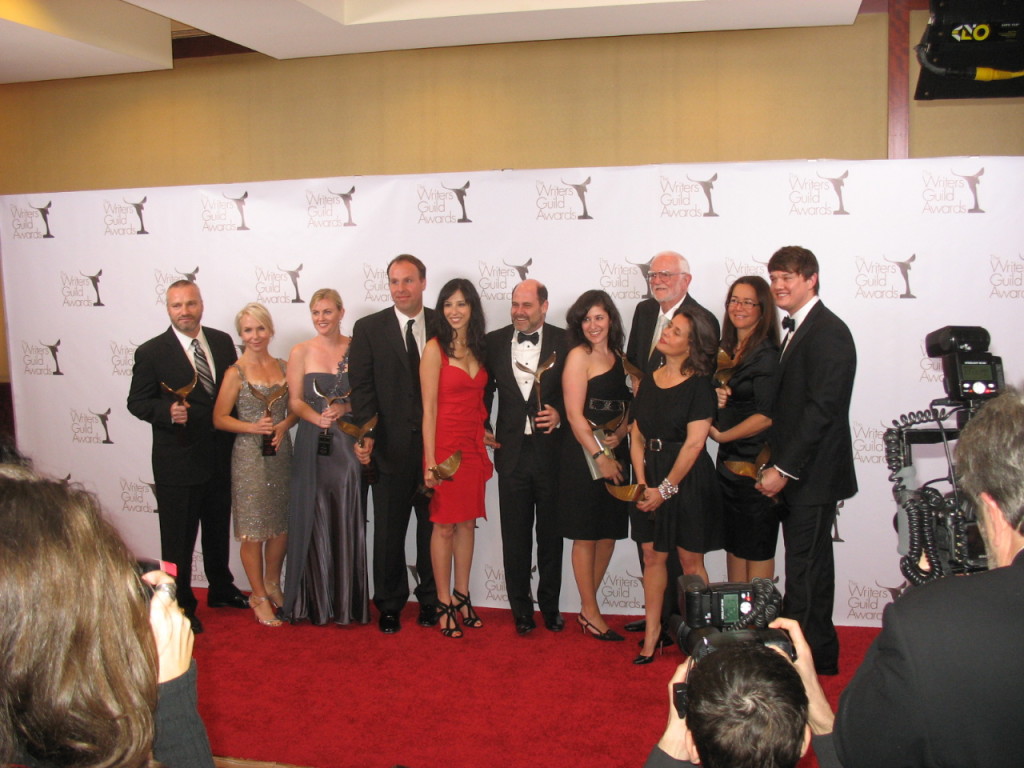
    AG: You worked on episodes 302 and 311 of Mad Men. Episode 311 especially was a pivotal episode. You have these strong female characters being able to voice their frustrations in Joan and in Betty, and Don being knocked down a peg and having to come to terms with who he really is. So, that’s a big episode. How did it come about that you were able to write for that episode, and what was it like working with Matthew Weiner?

    CH: I was really lucky. Matt is incredibly talented, and it was an incredible room filled with writing heroes of mine. I got to co-write episode 311 with Marti Noxon, who was a writing hero, and it was just a room filled with amazing writers; the majority being women, which is rare in Hollywood.

    It was an incredibly collaborative room. Matt gave you a ton of breathing room. He was wearing a lot of hats, and he was in and out of the room a lot, so you’d do a lot of the work collaboratively, breaking story with the other writers.

    One of the things I’ve always loved about Matt is that he was a very good showrunner in terms of being able to come in having twenty minutes to listen to a pitch, you’d pitch out what you came up with, and he was always clear on saying “I don’t like that, I don’t like that, I don’t like that, I like this—this is the heart of your story. Re-break it around this.”

    And I think that’s a gift from a showrunner, because you work for a lot of people that don’t have that clear vision, but also maybe other people [who do] that aren’t able to collaborate.

    Matt certainly has a reputation for doing a lot of on-the-page rewriting. He has a lot of ownership. But I have to say, at least my experience in the room was that he was very open to what other people brought to the table.

    I had a great experience on that show. I learned probably more—in the room, on set, and in the writing—than ever before.

    And the way it works with Matt, at least when I was there, is that he wouldn’t assign episodes ahead of time. A lot of shows, you know it’s your episode, and you take ownership of breaking that episode. But on Mad Men, we would just break all the episodes, and Matt would turn to you and say, “You’re writing this episode.”

    At the beginning of the season, for my first episode, I had two full weeks. And then he gave me a bunch of notes, and I did a second pass, and at that point he took it over and did a rewrite. As the season goes on, things get more crunched, and so for episode 311, that Marti and I wrote, I think we probably had four or five days to do it.

    I knew that episode was going to be a huge episode, but I had no idea that was going to be the one he assigned to me. I was quite grateful when I got assigned it, and I was thrilled to be writing with Marti. That was one of the greatest experiences of my career, to get to co-write an episode with Marti Noxon.

    I was a low level writer, and she was a showrunner. She was amazingly collaborative. She was so generous with me, she gave me amazing feedback. I just loved writing that episode, and I knew it was going to be a big episode. But I guess that’s another place where, even at that point in my career, I just don’t understand being too precious about that stuff. Any of the people on staff could have done a beautiful job writing that episode.

    If you’re coming into the TV business and you’re going to hold on to every word that you’ve written, this is not going to be a good business for you; you should probably think about writing a book instead. Your stuff is going to be gone over by your boss, by the studio, by your network, by your actors. There’s going to be a lot of changes.

    One of the things that I think Matt is good at is, we would go back into the room after we did a table read, and we’d go through the script. If there were lines that weren’t working, you would change them. That’s an important thing to learn. If a better line comes from your co-worker or from an actor suggesting something, you shouldn’t be afraid to be collaborative. This is a collaborative business we’re in.

    VH: What is your unwritten rule of screenwriting? Something that is perhaps ignored by a lot of teachers or by a lot of the so-called “guide books” on the craft, but is something you consider paramount to writing?

    CH: I guess, this is maybe less about writing in general but more about television writing, which is that perspective is huge. When we talk about these rules, or we talk about, “it has to be this way, it can’t be that way, this is good writing, this is bad writing.” Whoever you are working for or whoever is making the final decision is actually the person that’s in charge of deciding what they think is good or bad writing.

    Having gone back and forth between so many shows and so many showrunners, I will literally be on a show one day where a showrunner will say, “If you do X, I’m firing you, it’s the worst thing you could possibly do in your scripts,” and then you go to the next show and the showrunner says, “I LOVE it when people do X.”

    It took me a whole lot of years to understand that it’s all perspective. There are certain things that I personally think make for a good script or for good writing, and they can be totally opposite of what someone else thinks makes for a good script or good writing.

    There’s obviously honing your craft, and there’s obviously certain things that a lot of us can agree on that are better or worse to do. But I think anyone who watches the landscape of television, and the many varied things that are out there, in a certain sense, who’s to say what is wrong or right?

    AG: You’re working on Under the Dome. Where and when can people check that out?

    CH: It is going to be coming back to CBS for the third season this summer. We’re going to be on Thursday nights, which we’re very excited about. I believe it starts June 22nd with a two-hour premiere, and I’m writing episode 4 and then I’m slated to co-write the finale, so hopefully people will check that out this summer.

    ———————————————————————————————————————————————

    And we hope people check it out too! As with our previous interviews, I think there’s some invaluable advice and experience Cathryn shared with us in the above interview. Hopefully you will find it helpful. Ms. Humphris dropped some truth and science on us all, folks. So study up, and get writing, get filming, get creative.

    You can also check out her essay on the blog series Why We Write from Feb 5 2008—a time before she had the experience or resume she now enjoys.
  • Breaking Bad’s Tom Schnauz Talks Writing, Directing, and “Better Call Saul” – PART 2

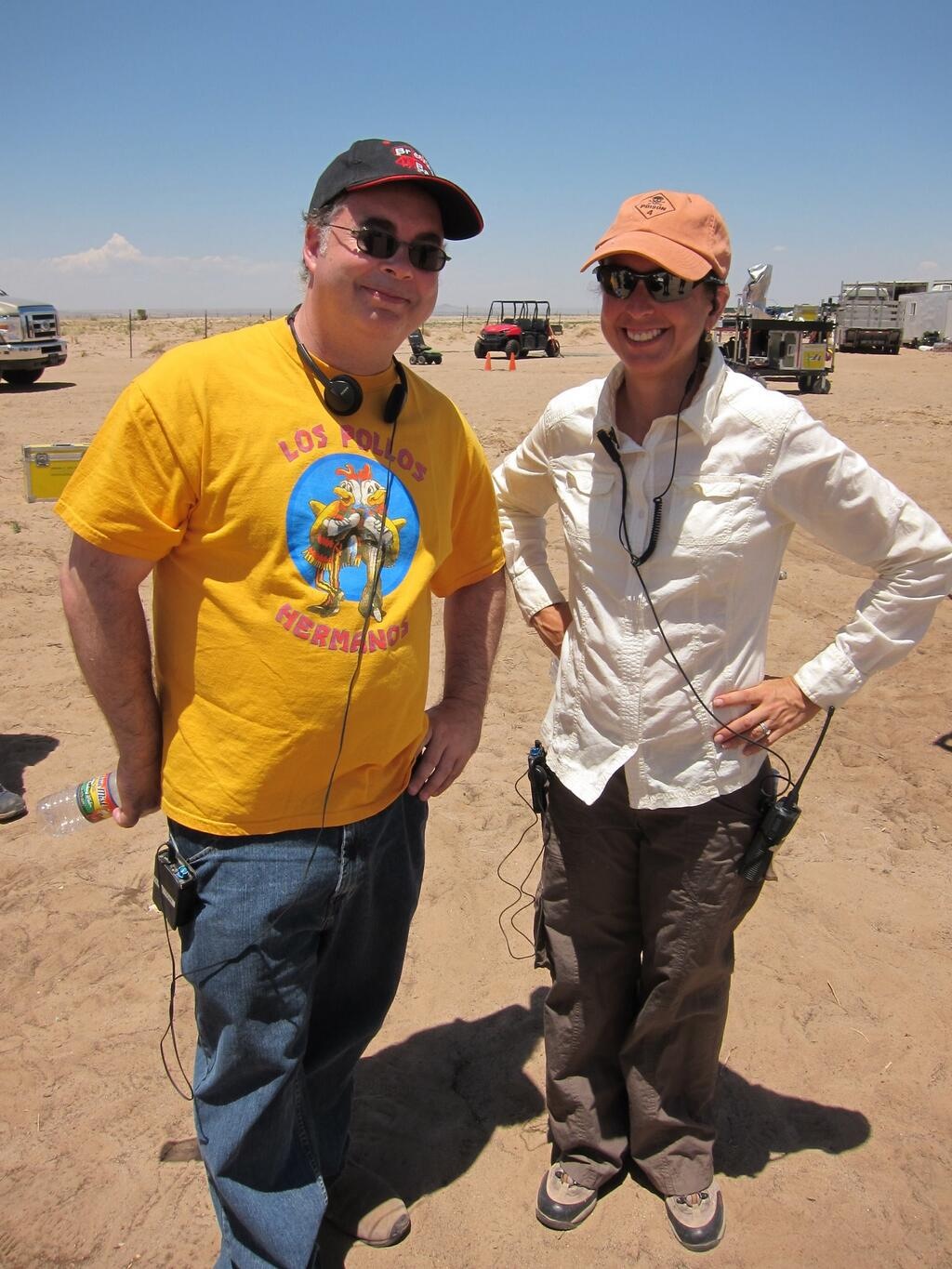
    image_04Alright, friends, let’s not waste any time here. Diving right back into the second half of my and Adam’s interview with Breaking Bad writer/director/producer Tom Schnauz!

    VIKTOR HERRMANN: About the end [of the series], this is just a little aside, but do you know whose idea it was to use “Baby Blue” as the outro song?

    TOM SCHNAUZ: I’ll say with 96% certainty that it was Vince. He used to come in a lot of times and say “Here, I heard this on the radio.” Certainly the… holy moly, I’m drawing a complete blank. The song we used in 508.

    VH:Crystal Blue Persuasion”?

    TS: Yeah, that was definitely a song Vince had been wanting to use for a long time. So I’m pretty sure “Baby Blue” was the same, too.

    VH: What did it feel like when you finished the “Buried” script and you realized this was the last Breaking Bad script you would ever write?

    TS: It was pretty depressing. [laughs] I gotta say, it was really, really tough. It was a very strange time for me. My own father passed away from cancer right in the middle of filming, and that episode is dedicated to him. There was a sadness to the Breaking Bad family breaking up, but I was going through my own thing with my own family, so maybe I would have been more emotionally torn by Breaking Bad ending if I didn’t have this other stuff going on in my life that was devastating.

    VH: I don’t think anyone could blame you for that. So, now, you are in a way, still writing the characters. Now that you’ve been in the Better Call Saul writers’ room for a while, how has the idea of what the show would be like changed from what you thought it would be like before you got into the room?

    TS: I don’t know if I had a clear idea. I think some part of me knew it was going to be, kind of carrying on the tradition of Breaking Bad, that same feeling. I think if you had asked me before we started, I may have said that this is going to be a more comedic version of the show. But part of me probably knew, inside, that it was going to have that same mix of drama.

    We are attacking this just like our Breaking Bad episodes. We wonder where the character’s head is at and go from there. We don’t try to think “What’s the big comedic set piece?” or “What’s the funny thing we’re going to do?”, we do it from an emotional “What does our character need” type of thing and go from there. If it’s funny, great. Bob Odenkirk is incredibly funny and I think even the serious scenes, he’s going to find, you know, the little flash of humor here and there.

    VH: So far, is Better Call Saul as serialized as Breaking Bad or is each episode more of its own thing?

    TS: I’ll say it’s just as serialized at this point. We’re only five episodes in, but I mean, we’re just doing the kind of writing we know how to do. Which is serialized, following the character and his development.

    The interesting thing is, you know, this is a prequel to Breaking Bad, of course, Mike Ehrmantraut’s coming back… so we’re in this really interesting situation where we know where the characters are going so instead of having this freedom of letting a character, you know, go off wherever it needs to go, we sort of know where we have to end up. So it’s like we’re fitting these puzzle pieces into this space.

    We’ve created the start point, and we know the end point. We’re really trying to maneuver within the reality and history that we already have.

    VH: Has that been challenging? Have you found something maybe you’d like to do but it would conflict with the Breaking Bad continuity?

    TS: I think so, I think there’s been a couple of times where we’ve been like, “Oh, this is good!” and then someone will say, “Well, you know what, in episode 208, when Saul’s introduced, he says this and that”, and we’re like, “Oh, shit.” [laughs]

    You know, we have what we’ve established with Mike and his granddaughter, Kaylee, and Kaylee’s mom, and what that situation is. We’re trying to explore why is mom there but not dad? We’re exploring that a little bit. I don’t want to say too much without spoiling things.

    VH: Of course. When we e-mailed, you mentioned you were working on your first Saul outline. I’m assuming I can answer this question myself based on what you said, but are the Saul outlines so far just as detailed as those legendary Breaking Bad outlines that none of the fans have ever gotten to see?

    TS: Yeah, they’re the same. I think the first outline we did, for the first episode, was 17 pages, [laughs] which is a good sized outline for us. My outline I tried to keep a little more conservative. Right now it’s a 12 page outline. We carded them exactly the same – actually that reminds me I should take pictures of these boards before they disappear – so eventually on Twitter, after they air, I can post them. We’re pretty detailed.

    ADAM GREENE: Tom, do you find it more preferable to write or to direct?

    TS: Oh, I love directing. I’ve only gotten to do it the one time, except for when I was back at college. Preferable? You know, I need to do it some more before I can give you a straight answer. I mean, I love writing and I think the hardest part is the writing, getting that right.

    I feel like when you’re directing you have a lot of people supporting you. A lot of departments and a lot of very skilled people doing things, contributing ideas. The writing is a little more solitary, even though we have our core group who we break the story with, it just feels harder to break a story and get it right. Certainly all the heavy lifting’s been done, so when it comes time to direct, I’m not going to say it’s easy… but I had fun directing, for sure.

    image_02

    AG: A question about Walt’s character: he has two sides, the everyday normal Walt, and the conniving, evil Walt. How do you effectively ride that line between his Jekyll and Hyde?

    TS: So much of that is credited to Bryan. We were lucky to have an actor who, you could write down the subtext of what we want to say as writers without having dialogue there, and he, through a squint of his eyes, we get what’s going on in his head. So when he’s saying one thing you know he means another.

    AG: Was there anything in particular that comes to mind that you learned working with the cast and crew? Whenever I get onto a new set, or start a new project, I always seem to gain from someone something that I didn’t have before, and I just wondered if something rubbed off on you that might influence your future projects?

    TS: Yeah, it’s just being open to everybody’s ideas. Like I said, I drew storyboards for everything, but I didn’t stick to them rigidly. They were more of a guide into going in and having a feeling of what I wanted to do, but a lot of times Michael Slovis would come in and say “Hey, look at this” and it would be much better than what I originally drew. And Bryan would have a thought about the way a line should be read.

    It’s just… always being open to everybody else’s ideas. I learned that in the writers’ room too. The most effective writers’ rooms are the ones where you feel completely safe. You get into a writers’ room where there’s one person who’s judgmental, it is completely damaging. It just shuts down creativity and people don’t want to say things because they think they’re going to get made fun of. That is something I luckily learned very early on, that you cannot, you cannot have that personality or be that personality in a writers’ room.

    You want to be free to say the worst idea ever and not be laughed out of the room, because you never know what good thing is going to come out of it.

    AG: My final question, and then I want to wrap up, because you’ve been so generous with your time. Do you have any advice for writers that are trying to get into the business while also trying to maintain their voice?

    TS: Yeah, I always hate giving this answer cause it sounds like… bullshit, a lot of the time. [laughs] So much of this business depends on luck and timing, and so what you have to do as a writer is to keep writing and keep generating products, keep churning out ideas, and creating scripts that make you happy. Make yourself happy, that is.

    I think early on, one of my first screenplays was, “Oh, what is the public going to love? What am I going to sell?” And it was just a disaster, it went nowhere. Finally, the script that I had optioned was one that I was just like, “Screw it, I’m gonna write a script for myself, I’m somehow going to get the money together, and I’m going to make this film myself.” And once I started writing to make myself happy, I think that’s when things gelled for me as a writer, and then, fortunately, it just fell into the right hands at the right time.

    This was back in 1995, I wrote, again, my first feature screenplay that was really for myself. The screenplay never got made, but it got me in the door with an agent and a producer, and it got the ball rolling for me when I started thinking “Yes, I can do this for a living” so I think what you have to do is keep trying to write things that make you happy, things that you are proud of. And then, the unfortunate thing is that you need to keep shooting those bullets out there until one lands in the right hands.

    Again, if it’s something you really want to do, and you keep trying and going for it, you gotta hope that your script lands in the person that is looking for that particular kind of thing at that moment. A lot of times you can have a really well written script, and it’s just gonna, you know, cross the desk of people who either A.) don’t have good taste, or B.) they’re just not looking for that thing at that moment. You know, you wrote a quiet little dramatic independent film, and they’re looking for an action comedy. But there is somebody out there looking for the thing you have written, so you gotta keep, you know, putting that arrow in the bow and keep shooting until it lands in the right spot. I think persistence is what it takes.

    If I can give any bit of advice, keep trying, if it’s something you really want to do, keep going for it until you get your script in the eyes of the person who is looking for it.

    VH: That’s great, I don’t think that was a bullshit answer at all.

    TS: [laughs] I hate using the word “luck”. It sounds like bullshit, but luck is… as a concept for right moment, right time, or needing the planets to align, or whatever that other bullshit stuff is. [laughs] I don’t believe in the mystical things but you just gotta wait for the right things to align.

  • The Top 13 Films of 2013

    movietheater01Movie lovers, rejoice. Great storytelling is still alive, well, and kicking like an over-caffeinated donkey. 2013 seemed like it was going to be a year film buffs would remember almost from the start. By the time it was over, there was no doubt about it.

    Before we start the list (arranged in descending order for the most dramatic umfh), I feel obligated to say that this is all only my opinion. Film is subjective, and what I found amazing, riveting and engaging, someone else might find boring, predictable and just plain stupid.

    That said: one of the best things about movies is the discussions they open up. So, if you strongly disagree about some of my choices (or would just like to share your opinion, whatever it may be), I urge you to leave a reply below and start a dialogue.

    Finally, I did not get a chance to see some of this year’s most acclaimed movies — namely 12 Years a Slave and Nebraska — so it’s very possible I missed out on some real gold.

    With all that out of the way, let’s get on to my picks for 2013’s best films.

    13. SPRING BREAKERS

    This was one of the first movies I saw this year, and boy, did it make an impression. Unrelenting, hypnotizing and unforgettable. Like many great works of art, Spring Breakers takes a decisive moral stand. It presents the world of spring break for everything that it is – a nightmare flimsily disguised as a fantasy.

    Also, say what you will about James Franco, but his performance here is one that absolutely glues your eyes to the screen and dares you to look away. It’s a peculiar role, and one many actors would be too afraid to tackle. But he does so with a fierceness that is incredible to watch.

    12. THE WAY, WAY BACK

    Movies about angsty teenagers are a dime a dozen, so it’s always a real treat when one comes along that manages to defy expectations. This certainly does that. Just as much about the adults as it is about the teens, The Way, Way Back is funny, heartbreaking and ultimately uplifting. It’s a feel-good movie the way feel-good movies should be done.

    Special props to Sam Rockwell (who is always a joy to watch) and Steve Carell, who branches off and plays someone unlike anyone else he’s ever played — a genuine jerk.

    11. MUD

    The fact that a movie this good didn’t even crack the top 10 tells you a whole lot about film in 2013. Like writer/director Jeff Nichols’ previous work Take Shelter, this is a deliberately paced character study with a unique down-on-the-bayou feel.

    As fantastic as Matthew McConaughey is (and boy, did he have a run of quality performances this year), the real star of the show is Tye Sheridan, the young actor who basically carries the movie on his shoulders. I can’t wait to see what he does next.

    10. AMERICAN HUSTLE

    Let me get this out of the way: This is a flawed film. HOWEVER — and this is a big however — if you gave me Blu-ray copies of every movie on this list, I’d probably pop in American Hustle more often than any of them.

    It’s a blast from start to finish, a treat for both your eyes and ears, and one of the most enjoyable movie going experiences I’ve had all year (twice). In particular, I want to point out the opening scene which is simply Christian Bale (who in my opinion gives the performance of the year here) putting on a hair piece. It’s so simple, yet so effective in telling you everything you need to know about the character. Brilliant storytelling, and a whole heap of fun, even if the entire package is slightly uneven.

    9. BLUE JASMINE

    Man, Cate Blanchett really killed it here. We all know she’s going to win the Oscar, and damn right, if you ask me. She’s impossible to take your eyes off of. I’ve heard a lot of people say this is a return to form for Woody Allen. I can’t speak to that, as I’ve only seen half a handful of his movies, but for a movie that is essentially people in rooms talking for an hour and a half, this is a blast.

    You’ll laugh, you’ll cry, you’ll thank your lucky stars your life isn’t as dysfunctional.

    8. THE HUNGER GAMES: CATCHING FIRE

    As great as so many movies were in 2013, one genre seemed to disappoint: the blockbuster. I’m sure many of you will disagree, but personally, I found practically every big-budget extravaganza disappointing. In particular, Thor: The Dark World, The Great Gatsby and especially Star Trek Into Darkness.

    So by the time The Hunger Games: Catching Fire rolled around, I had lost a lot of faith in big-budget/special effect pictures. And then I watched it. Holy crap.

    This is top-tier filmmaking from first frame to last. I won’t say much more about it, in case you haven’t seen it yet, except SEE IT. The first Hunger Games was a really solid teen action-drama, but this transcends the genre. It’s The Dark Knight of teen sci-fi/action movies. If you still can, definitely try to see it on the big screen.

    7. KILL YOUR DARLINGS

    This was yet another surprise. I saw this for one reason: Dane DeHaan. He is someone I consider to be amongst the finest actors working today, especially for his age. And while I certainly got a great DeHaan performance, I also got a whole lot more.

    This is a dark, engrossing film that pulls no punches and makes no apologies. If you enjoy films that deal with the darker side of youth, and explore interesting subcultures, this is for you. Check it out. Really great editing in this, too.

    6. DALLAS BUYERS CLUB

    Now we’re really talking. This is one of the finest character arcs I’ve seen in a very long time. Most great actors give an award worthy performance once every few years – this year alone, Matthew McConaughey gave three (we’ll get to the third). He’s unbelievable in this, as is Jared Leto, who transforms himself in the role of a pre-op transgender woman.

    Those two performance are worth the price of admission alone, but Dallas Buyers Club also has an incredibly tight, smart script that’s only made better by Jean-Marc Vallée’s confident direction.

    5. HER

    Romantic movies aren’t usually my thing. Sure, there’s plenty I do like, but for the most part, I find them to be very typical and not particularly interesting. Spike Jonez’s Her almost seems like a response to that complaint.

    The film follows genre tropes more closely than you might expect, but it does something utterly fresh and unique with them. Perhaps what I enjoyed most was the subtle sci-fi setting, which while a major part of the film, never overbears the characters, as it does in so many other sci-fi movies.

    Though a few moments might not land as well as intended, this film is really something special.

    4. MONSTERS UNIVERSITY

    Prequels are hard to get right. Actually, I take that back. Prequels are almost impossible to get right. After all, movies are all about change — characters going through arcs — and by definition, a prequel means we will be seeing characters that have yet to go through the change that drew us to them in the first place.

    The result is usually sloppy, unnecessary and most of all not nearly as interesting as the previous movies. But somehow, Pixar pulled it off.

    Monsters University has no right to be as good as it is. Yet, it is. It really, really is. It stands shoulder to shoulder with almost any of Pixar’s best, and like them, it is a spectacular achievement – made all the more so when you think about how much of a train wreck it could have been.

    3. INSIDE LLEWYN DAVIS

    Like Monsters University, Inside Llewyn Davis is a movie that shouldn’t work. It has no real plot, its protagonist doesn’t really change at all by the end, and yet… it is never once dull, never once pointless, and never for a moment not compelling. Indeed, it is the exact opposite.

    If Coen brothers’ humor is your thing, you’ll probably find this a melancholy, but hilarious movie. If it’s not, you’ll probably be depressed for days. Either way, you’ll likely find yourself sucked into the cold world of the early 60s New York folk scene.

    And if you wanna talk about Oscar snubs, few things fit the bill better than Oscar Isaac not getting nominated for his performance here.

    2. THE WOLF OF WALL STREET

    Once again, Martin Scorsese shows all the kids how it’s done. The legendary filmmaker may be 71 years old, but here he has crafted a film more full of unrelenting life and energy than anything even remotely comparable by his much younger peers. This is Goodfellas for the 21st century.

    The fast pace, almost constant voice over and subject matter certainly makes this a spiritual successor to both Goodfellas and Casino, but thanks to an entirely different cast, scriptwriter and cinematographer, it manages to stand on its own.

    Like in those films, Scorsese takes a strong moral stand while also presenting these characters with absolute honesty. The Wolf of Wall Street is not for the faint of heart, but if you can handle it, this is a movie that will entertain you like crazy, then make you hate yourself for being so entertained in the first place. It’s riveting stuff that will stay with you long after the credit rolls.

    PS: Though he’s only in the film for the first 20 or so minutes, Matthew McConaughey hits his third home run of the year here. Well done, Matthew. Now leave some work for the rest of Hollywood.

    1. THE PLACE BEYOND THE PINES

    I went to the theatre to see this movie early in 2013, knowing next to nothing about it. By the time the lights came up, I knew I had witnessed something really special. This isn’t just the best film of the year. This is the best film of the last several years. Walking out of the theatre, I knew there was hardly any chance I would see a movie this good by the time 2013 ended. While The Wolf of Wall Street made me doubt that, in the end, I had to give it up to Pines.

    To me, this is nothing short of a modern American masterpiece. It features career defining performances from all the leads — especially Eva Mendes and Bradley Cooper – and is the quickest 2 hours and 20 minutes you’ll have at the movies this side of The Dark Knight.

    It’s the kind of movie that won’t do the math for you. It forces you to think, to put the dots together in your head, and it refuses to succumb to your expectations. A lot of people will be turned off by some of the directions this movie goes in, but all that means is that this is a movie that takes real risks. And oh lord, is it refreshing to see that.

    From the acting, to the gorgeous cinematography, haunting score, and razor sharp editing, The Place Beyond the Pines is indeed a cinematic masterpiece.

    Also, although this is predominately an actor’s movie, I don’t consider it an overstatement to say it features the finest chase scene I have ever seen.

    If you haven’t checked this movie out yet… do it.

    The chances we’ll get a year so full to the brim with great movies is rare, but let’s just be grateful we got this one, eh?

    What were some of your favorites from 2013?