Tag: hollywood

  • “Better Call Saul” Writer Gennifer Hutchison Discusses Her Craft and Career

    “Better Call Saul” Writer Gennifer Hutchison Discusses Her Craft and Career

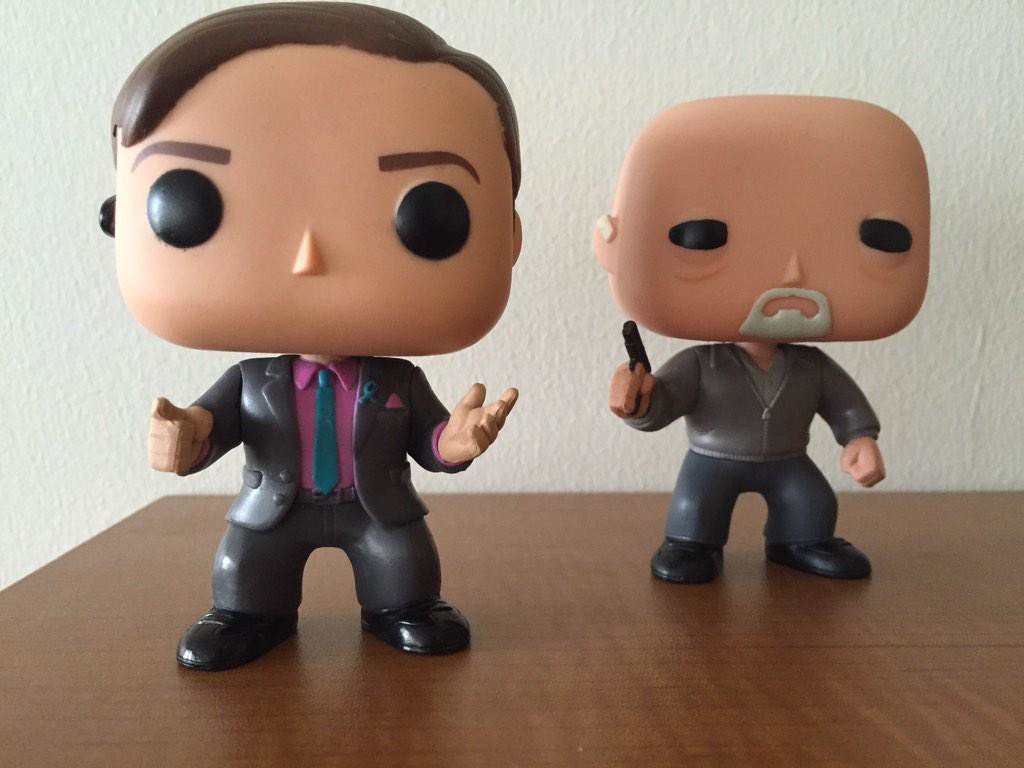
    IMG_20150315_124833 As of writing this, we are over halfway done with the first season of the Breaking Bad spinoff, Better Call Saul, and I think by this point, we can all breathe a sigh of relief.

    Not only does Better Call Saul avoid the pitfalls of most failed spinoffs, it rockets past them to become a truly great piece of fiction. In hindsight, we probably didn’t have anything to worry about anyway.

    Why? Well, because so many of the people that made Breaking Bad a masterpiece returned, and it’s not like they weren’t going to give the show their all.

    One of those Breaking Bad alums is writer/producer Gennifer Hutchison, who wrote some of that show’s finest episodes, including “Confessions” and “Cornered”, which gave us the now-famous “I am the one who knocks” line.

    So needless to say, when Adam and I sat down on spooky Friday the 13th to have a phone call with Gennifer Hutchison, we were both pretty jazzed.

    ———————————————

    VIKTOR HERRMANN: What were the early days of your career like? How difficult was it to get where you are now, and what kept you going through the years?

    GENNIFER HUTCHISON: That’s a good question. My first job in LA was as a PA in the writers’ office at the X-Files, which was a pretty awesome opportunity. I ended up becoming Vince Gilligan’s assistant in, I think, Season 8.

    That was sort of my start. And then from there I kept moving up and I eventually kept consistently getting jobs as either a writers’ assistant or a producers’ assistant. But every show I got on would either get cancelled, or my boss would leave, or I would have to leave, and so after X-Files, every show I was on I was only on for a season.

    This went on for quite a while. It was pretty difficult because I was never able to really get any traction, as far as an assistant who could then pitch possibly writing a freelance [episode]. I was writing my own stuff, but I definitely had some days where I was like, “what could I do instead?” [laughs]

    But I kept doing it, mostly because I just didn’t know what else I would do. It was the only thing I could think of that I wanted to do.

    Then I was working on Mad Men in Season 1, for Matthew Weiner. Season 1 was wrapping up, and one of the AMC producers said, “Oh, we’re working with your old boss, Vince Gilligan,” and I was like, “What is the show?” and they said, “It’s this thing called Breaking Bad.” And so I immediately contacted him and said, “Please hire me in any capacity.”

    So he brought me on as his assistant, and then it just kind of hit, where I managed to get on a show that was great and sustained. And since I had this prior relationship with Vince, he knew what my goals were, and he had always been really supportive. When I came back for Season 2, I had a conversation with him and said, “I want to write for the show. What do I need to do to show you that I’m ready?”

    And he said, “I need to read your stuff, any extra work there is on the show, webisodes, blogs, do those, and just show me.” So basically Season 2 was kind of my audition. [laughs]

    And by the end of that, I said, “So, what do you think?” And he was like, “Well, why don’t we give you a freelance in Season 3 and see how that goes?” And it went really well, and that’s when he ended up staffing me.
    IMG_20150315_124856
    VH: What was it like in those days, both as an assistant and when you first came on to the writing staff? How comfortable were you pitching ideas, versus how often you bit your tongue?

    GH: When you’re a writers’ assistant you tend to not pitch as much. It varies by room. Some rooms don’t really like writers’ assistants to pitch, some do. You basically wait until everybody else has talked. [laughs] And then, if you have a pitch, you’ll volunteer it.

    The difference of pitching as an assistant as opposed to pitching as a writer is you only want to pitch your best ideas. You want to make sure that it’s a great idea that you’re really confident in. When you’re on staff, your job is to keep the flow going, so a lot of times you pitch, “Oh, this is the bad version, but here’s what I’m trying to get to.”

    As an assistant, you’re never really pitching the bad version. You want to pitch your absolute best. So transitioning from that? My first season as a full writer, that was interesting. It’s like, “Oh, I don’t have to be 100% sure of every detail of my pitch. I can take a flier, and it’s going to be okay. I’m not disappointing them.”

    As a staff writer, you want to make sure that your pitches are great, but there’s definitely a little more freedom. You’re on staff. That’s your job. They believe in you, at least to a certain extent. [laughs] There’s more comfort.

    ADAM GREENE: As we know, in Hollywood and pro-filmmaking, it’s pretty male dominated. What advice would you give to female writers for how to get to where they want to go?

    GH: It’s tricky, and I think that there’s more attention being paid to it now. There’s definitely a huge disparity. I think it really comes down to, honestly, just being your best. There’s the idea that with women you have to be twice as good to be considered half as good. But it’s generally advice I would give to anybody who’s trying.

    Do your best job, no matter what job you’re in. So if you’ve got that writers’ assistant job, be the best writers’ assistant. But make sure, especially for women, that people understand that you have goals beyond that.

    Don’t be afraid to speak up; don’t be pushy, there’s a difference between being persistent and harassing people. But I think a lot of times, women tend to be quieter. They tend to not self-promote, just because of the culture we’re raised in.

    It took me a long time to speak up, and say, “Vince, this is what I want.” And I think if I had spoken up earlier he would have been just as open to it. So I think it’s mostly about having that confidence in yourself, and being able to self-promote.

    Whereas I think guys are told, “Go in there! Go in there! Do it!” And I think women need to start being told that as well, and people need to listen.
    IMG_20150313_172535

    VH: What are your writing habits like, and do you find that those habits change based on different projects you’re working on, or do you tend to stay consistent?

    GH: With this show, we break all the stories together. We do all of them on 3×5 cards and then you take those to write your outline, and from there you write your script.

    When I write on my own projects, I tend to do something similar. I like to break on cards, or I might skip the cards and go straight to outlining, but I definitely do the outlining.

    As far as my personal writing habits, I tend to write in bursts. I’ll write for 45 minutes, and then I’ll take a 20 minute break, and then I’ll write for 30 minutes, and take a 10 minute break. I’m very bad about procrastinating, so deadlines are very good for me.

    On my own projects, I tend to have to impose deadlines, or I tend to languish a bit more. That’s why TV is a really good place for me. It’s a world of deadlines. [laughs]

    VH: I don’t think you’re the only writer who struggles with procrastination.

    GH: [laughs] No, no, it’s something I always beat myself up about. And then once I started working, I was like, “Oh, everybody does this.”

    AG: When you are faced with no idea how to continue or resolve or even start a scene, what gets you in the zone, as a writer?

    GH: Other than fear?

    AG: Other than fear and coffee.

    GH: [laughs] You know, I actually don’t drink coffee. Mostly what I tend to do is I try to step away for a minute. I might sit and play a video game for half an hour, or go outside and take a walk. And then it just comes to a point where you have to force yourself to sit down.

    It also helps me to talk to other people. The TV shows I’ve worked on, and TV in general, is very collaborative. Talking out ideas helps get you past writers block in a lot of ways. Sometimes I’ll just go and talk to my husband and say, “I’m having a real problem.”

    He’s not a writer, and usually he won’t give me an answer. As I’m talking, I’ll figure out the answer. But just being able to say it out loud to someone helps get past the issue.

    VH: Your first episode, 308, “I See You,” I imagine was a tough episode to write. It’s very different than most Breaking Bad episodes. It’s much quieter. What was your process writing that, and what were the challenges? I’m sure there was a lot of pressure to get it right.
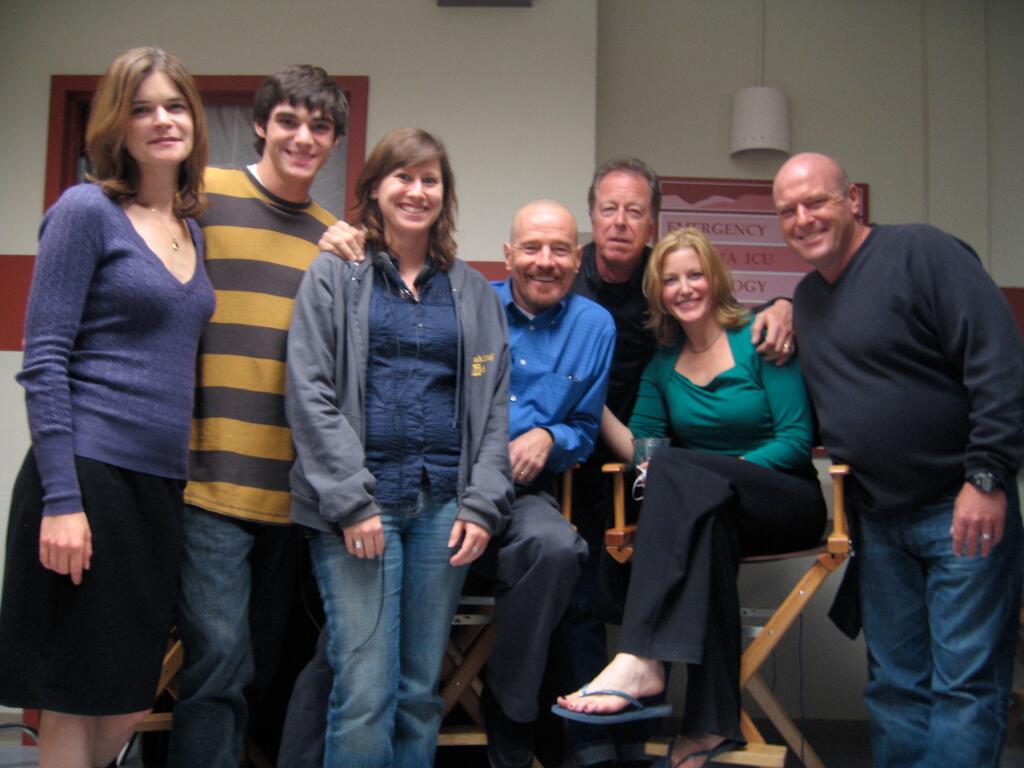
    IMG_20150315_124954

    GH: Yeah, there was. You don’t want to let your boss down, especially when they’ve taken a chance on you. Breaking that episode was tricky, and the big sequence with the Cousin crawling across the floor on his severed legs was a late addition.

    I remember when it got pitched in the room and Vince was really excited about it. I had this moment of panic, where I was like, “I have to do what?” Our most iconic scenes actually came from a pitch where we thought, “That’s completely insane, we can never do that.” And the more we talk about it, and refine it, we realize that it will totally work. That was sort of my first panic moment, and then, ultimately it ended up being great.

    The other thing that was interesting about that episode is that it was the first of my Walter White monologues; I tend to get monologues of his in my episodes. That was really fun for me write, but getting it right was a lot of pressure.

    I remember when Vince gave me notes. “This direction is good, but I think you need to do a little bit more of this. Why don’t you take another stab at it?” And I was able to refine it from there.

    Vince was really great through the whole process, and really allowed me to address my own notes, and find my way through the script.

    AG: What is your unwritten rule of screenwriting? What’s something that’s maybe overlooked by aspiring writers or teachers, but you consider crucial?

    GH: Honestly, I’m a character driven person, and I don’t think that’s necessarily overlooked, but I think there can be this idea that the idea should come from a concept instead of a character. I think you can have amazing concepts, but if you don’t have this great character driving your story, then it’s just not going to get where you want it to go. I think getting trapped in the plot as opposed to letting the character guide the plot can be a real problem.

    A lot of times when I’m working on my own stuff, I’ll find myself thinking, “Okay, and then I need a run-and-jump here,” and it’s like, “No, no, no. What would the character actually do here?” That’s where you’re going to get the best drama. How would a real person, your real person that you’ve created, react in this situation?

    AG: It might not even be something that you want to happen to the character.

    GH: Exactly. We found ourselves in that situation a lot on Breaking Bad, and we would always go, “Why isn’t this working? We need this, we need that,” and it’s like, “Okay, no, no, no. Where’s Walt’s head at? What would he do?” And that usually got us through.

    VH: Moving onto Saul. So far this first season feels to me very, very deliberate. Even more than Breaking Bad did. Sometimes things are set up very subtly, and they take several episodes to pay off. Can you talk about the process in the Better Call Saul writers’ room compared to Breaking Bad, and how broadly you might have planned things out this time around?

    GH: Sure. It’s funny, because I think Better Call Saul benefits from the fact that we did five seasons of Breaking Bad, and so many of us came from there. We really had that basis, and we really refined our process. Coming in [to Better Call Saul], it was more about figuring out what the show was, and not how do we get there. We know the best way to break stories for us as a group.

    And yeah, it is really serialized in a lot of ways. Which is funny because I think a lot of people expected it to be, you know, Saul deals with a whacky client every week. And that’s not at all what it ended up being.

    It was really a learning process for us when we started. It’s interesting that you say we placed so many things that don’t pay off until later. As we were going through, we really took it step-by-step. And there were definitely points where we had discoveries. So sometimes we went back to make sure we had laid the groundwork.

    It really was a brick-by-brick process with Season 1 on this show. Because [Jimmy] doesn’t have this thing of, “I’m learning how to be a drug dealer,” it really is about, “How does this Jimmy guy become Saul?”
    IMG_20150313_172530

    AG: Knowing that you have to be true to the Breaking Bad world, has that been a challenge or something that’s been good?

    GH: Both. [laughs] It’s good to have parameters when you’re writing, because if you can do anything, you often can’t decide on what’s best. We know that there are certain characters that just don’t exist in Albuquerque at this point, so that’s good.

    But there are other times where we’re like, “Oh, what if we did this?” But we can’t because we know that in Breaking Bad era, this character is not in jail, or isn’t here. So it really was a mix of feeling constrained, but then seeing opportunities, and wanting to pull as much of the Breaking Bad mythology as we could.

    VH: Do you have any nightmare stories? A scene that was particularly tough and memorable to write?

    GH: You know, it’s mostly in the breaks. When we’re putting an episode together on the board, that’s the hardest part. On both these shows, we tend to break in such detail that once you get to script, usually you have a really good idea of where you’re going.

    As far as being in the room, all the Tuco stuff was very tricky. We wanted Tuco to be not exactly where he was in Breaking Bad, and we needed to introduce this new character, Nacho, in an interesting way.

    As far as writing, the salon scene in “Hero,” when Kim and Jimmy are talking and she brings the cease and desist, was really interesting for me, because there’s a couple different things going on in that scene.

    It was a challenging scene, not in a bad way, but just making sure that you establish their rapport, you show that she doesn’t like that she has to give this thing to him, but she also thinks that he needs to stop what he’s doing. He’s kind of trying to let her know his feelings for her. There’s a lot of little things going on in that scene. That was definitely something I spent a lot of time on, but it ultimately ended up being a great scene.

    I just think Rhea and Bob did such an amazing job with it, and it was probably my favorite scene in the episode.

    VH: In the performances, but in the writing too, there’s such a humanity between those two characters and how they interact. It’s wonderful.

    GH: Yeah, those two have such great chemistry.

    AG: Who came up with the allergic to electricity psychosis condition that Chuck faces? And has that world been fun to play in?

    GH: That was pretty early. We knew that we wanted Chuck to have some sort of condition that kept him housebound. We liked the idea of it being something that was like, “Is this a real thing? Or is this a psychosomatic condition for him?”

    As far as the electricity thing, I don’t know who specifically came up with it; it may have been Vince. I remember it coming up pretty early. Refined from, “This guy is stuck in his house, what is it that’s keeping him there?”

    That’s been fun. Although, it causes problems, because a lot of stuff is like, “Okay, and then Chuck calls Jimmy,” and we’re like, “Chuck cannot call Jimmy.” [laughs] It’s fun, but it is very challenging.

    Chuck also maintains such a sense of dignity, so you want to keep that balance. You don’t want him to come off like this stereotypical crazy guy in his house. You want him to feel like a real person. That’s definitely a fine line to walk.
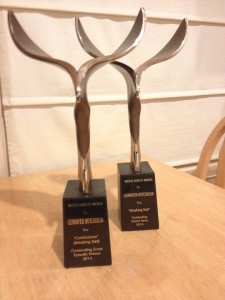
    IMG_20150315_124905

    VH: One last question: We already know that you’re a fantastic writer, but do you have any plans or aspirations to direct in the coming seasons?

    GH: It’s funny, when I was in college, I wanted to be a director. I think that’s what everybody knows. But I had always written, and so I was like, “Oh, you can do that too. Great!” And so I started heading down the writing path, and I didn’t really think about directing for a while, but it is something that I still have interest in.

    I would love to direct down the line, for sure. It’s something that I would hope to be able to do. It’s also a really tough job, and a specific skill set. So there’s definitely a lot of learning to be done. [laughs]

    —————————————-

    You hear that, kids? You can be one of the best writers working in television, and there will always still be learning to be done.

    I hope fans of the shows and of Gennifer’s work found this entertaining, but more than anything, I hope aspiring writers found it useful. Mrs. Hutchison gives out the kind of sage advice people usually charge multiple digits for, so study up, writers!

    PS: If you enjoyed this interview, check out our earlier conversation with another Breaking Bad/Better Call Saul writer, Tom Schnauz. Some of the hints he gave us as to what Saul would contain are only now becoming evident.
  • Breaking Bad’s Tom Schnauz Talks Writing, Directing, and “Better Call Saul” – PART 2

    image_04Alright, friends, let’s not waste any time here. Diving right back into the second half of my and Adam’s interview with Breaking Bad writer/director/producer Tom Schnauz!

    VIKTOR HERRMANN: About the end [of the series], this is just a little aside, but do you know whose idea it was to use “Baby Blue” as the outro song?

    TOM SCHNAUZ: I’ll say with 96% certainty that it was Vince. He used to come in a lot of times and say “Here, I heard this on the radio.” Certainly the… holy moly, I’m drawing a complete blank. The song we used in 508.

    VH:Crystal Blue Persuasion”?

    TS: Yeah, that was definitely a song Vince had been wanting to use for a long time. So I’m pretty sure “Baby Blue” was the same, too.

    VH: What did it feel like when you finished the “Buried” script and you realized this was the last Breaking Bad script you would ever write?

    TS: It was pretty depressing. [laughs] I gotta say, it was really, really tough. It was a very strange time for me. My own father passed away from cancer right in the middle of filming, and that episode is dedicated to him. There was a sadness to the Breaking Bad family breaking up, but I was going through my own thing with my own family, so maybe I would have been more emotionally torn by Breaking Bad ending if I didn’t have this other stuff going on in my life that was devastating.

    VH: I don’t think anyone could blame you for that. So, now, you are in a way, still writing the characters. Now that you’ve been in the Better Call Saul writers’ room for a while, how has the idea of what the show would be like changed from what you thought it would be like before you got into the room?

    TS: I don’t know if I had a clear idea. I think some part of me knew it was going to be, kind of carrying on the tradition of Breaking Bad, that same feeling. I think if you had asked me before we started, I may have said that this is going to be a more comedic version of the show. But part of me probably knew, inside, that it was going to have that same mix of drama.

    We are attacking this just like our Breaking Bad episodes. We wonder where the character’s head is at and go from there. We don’t try to think “What’s the big comedic set piece?” or “What’s the funny thing we’re going to do?”, we do it from an emotional “What does our character need” type of thing and go from there. If it’s funny, great. Bob Odenkirk is incredibly funny and I think even the serious scenes, he’s going to find, you know, the little flash of humor here and there.

    VH: So far, is Better Call Saul as serialized as Breaking Bad or is each episode more of its own thing?

    TS: I’ll say it’s just as serialized at this point. We’re only five episodes in, but I mean, we’re just doing the kind of writing we know how to do. Which is serialized, following the character and his development.

    The interesting thing is, you know, this is a prequel to Breaking Bad, of course, Mike Ehrmantraut’s coming back… so we’re in this really interesting situation where we know where the characters are going so instead of having this freedom of letting a character, you know, go off wherever it needs to go, we sort of know where we have to end up. So it’s like we’re fitting these puzzle pieces into this space.

    We’ve created the start point, and we know the end point. We’re really trying to maneuver within the reality and history that we already have.

    VH: Has that been challenging? Have you found something maybe you’d like to do but it would conflict with the Breaking Bad continuity?

    TS: I think so, I think there’s been a couple of times where we’ve been like, “Oh, this is good!” and then someone will say, “Well, you know what, in episode 208, when Saul’s introduced, he says this and that”, and we’re like, “Oh, shit.” [laughs]

    You know, we have what we’ve established with Mike and his granddaughter, Kaylee, and Kaylee’s mom, and what that situation is. We’re trying to explore why is mom there but not dad? We’re exploring that a little bit. I don’t want to say too much without spoiling things.

    VH: Of course. When we e-mailed, you mentioned you were working on your first Saul outline. I’m assuming I can answer this question myself based on what you said, but are the Saul outlines so far just as detailed as those legendary Breaking Bad outlines that none of the fans have ever gotten to see?

    TS: Yeah, they’re the same. I think the first outline we did, for the first episode, was 17 pages, [laughs] which is a good sized outline for us. My outline I tried to keep a little more conservative. Right now it’s a 12 page outline. We carded them exactly the same – actually that reminds me I should take pictures of these boards before they disappear – so eventually on Twitter, after they air, I can post them. We’re pretty detailed.

    ADAM GREENE: Tom, do you find it more preferable to write or to direct?

    TS: Oh, I love directing. I’ve only gotten to do it the one time, except for when I was back at college. Preferable? You know, I need to do it some more before I can give you a straight answer. I mean, I love writing and I think the hardest part is the writing, getting that right.

    I feel like when you’re directing you have a lot of people supporting you. A lot of departments and a lot of very skilled people doing things, contributing ideas. The writing is a little more solitary, even though we have our core group who we break the story with, it just feels harder to break a story and get it right. Certainly all the heavy lifting’s been done, so when it comes time to direct, I’m not going to say it’s easy… but I had fun directing, for sure.

    image_02

    AG: A question about Walt’s character: he has two sides, the everyday normal Walt, and the conniving, evil Walt. How do you effectively ride that line between his Jekyll and Hyde?

    TS: So much of that is credited to Bryan. We were lucky to have an actor who, you could write down the subtext of what we want to say as writers without having dialogue there, and he, through a squint of his eyes, we get what’s going on in his head. So when he’s saying one thing you know he means another.

    AG: Was there anything in particular that comes to mind that you learned working with the cast and crew? Whenever I get onto a new set, or start a new project, I always seem to gain from someone something that I didn’t have before, and I just wondered if something rubbed off on you that might influence your future projects?

    TS: Yeah, it’s just being open to everybody’s ideas. Like I said, I drew storyboards for everything, but I didn’t stick to them rigidly. They were more of a guide into going in and having a feeling of what I wanted to do, but a lot of times Michael Slovis would come in and say “Hey, look at this” and it would be much better than what I originally drew. And Bryan would have a thought about the way a line should be read.

    It’s just… always being open to everybody else’s ideas. I learned that in the writers’ room too. The most effective writers’ rooms are the ones where you feel completely safe. You get into a writers’ room where there’s one person who’s judgmental, it is completely damaging. It just shuts down creativity and people don’t want to say things because they think they’re going to get made fun of. That is something I luckily learned very early on, that you cannot, you cannot have that personality or be that personality in a writers’ room.

    You want to be free to say the worst idea ever and not be laughed out of the room, because you never know what good thing is going to come out of it.

    AG: My final question, and then I want to wrap up, because you’ve been so generous with your time. Do you have any advice for writers that are trying to get into the business while also trying to maintain their voice?

    TS: Yeah, I always hate giving this answer cause it sounds like… bullshit, a lot of the time. [laughs] So much of this business depends on luck and timing, and so what you have to do as a writer is to keep writing and keep generating products, keep churning out ideas, and creating scripts that make you happy. Make yourself happy, that is.

    I think early on, one of my first screenplays was, “Oh, what is the public going to love? What am I going to sell?” And it was just a disaster, it went nowhere. Finally, the script that I had optioned was one that I was just like, “Screw it, I’m gonna write a script for myself, I’m somehow going to get the money together, and I’m going to make this film myself.” And once I started writing to make myself happy, I think that’s when things gelled for me as a writer, and then, fortunately, it just fell into the right hands at the right time.

    This was back in 1995, I wrote, again, my first feature screenplay that was really for myself. The screenplay never got made, but it got me in the door with an agent and a producer, and it got the ball rolling for me when I started thinking “Yes, I can do this for a living” so I think what you have to do is keep trying to write things that make you happy, things that you are proud of. And then, the unfortunate thing is that you need to keep shooting those bullets out there until one lands in the right hands.

    Again, if it’s something you really want to do, and you keep trying and going for it, you gotta hope that your script lands in the person that is looking for that particular kind of thing at that moment. A lot of times you can have a really well written script, and it’s just gonna, you know, cross the desk of people who either A.) don’t have good taste, or B.) they’re just not looking for that thing at that moment. You know, you wrote a quiet little dramatic independent film, and they’re looking for an action comedy. But there is somebody out there looking for the thing you have written, so you gotta keep, you know, putting that arrow in the bow and keep shooting until it lands in the right spot. I think persistence is what it takes.

    If I can give any bit of advice, keep trying, if it’s something you really want to do, keep going for it until you get your script in the eyes of the person who is looking for it.

    VH: That’s great, I don’t think that was a bullshit answer at all.

    TS: [laughs] I hate using the word “luck”. It sounds like bullshit, but luck is… as a concept for right moment, right time, or needing the planets to align, or whatever that other bullshit stuff is. [laughs] I don’t believe in the mystical things but you just gotta wait for the right things to align.

  • Harold Ramis Shares Some Words of Wisdom About Film’s Future

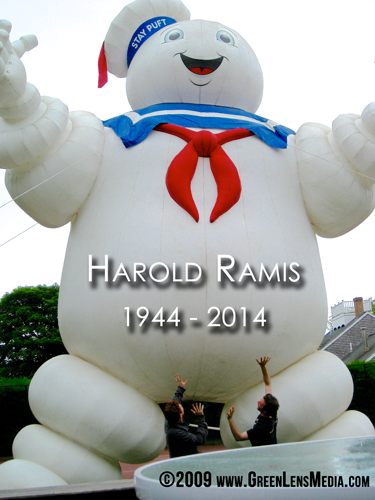
    Mr. Stay Puft lives again during the 25th Anniversary screening of Ghostbusters at the 2009 Nantucket Film Festival
    Mr. Stay Puft lives again during the 25th Anniversary screening of Ghostbusters at the 2009 Nantucket Film Festival
    What a blow. By now you’ve probably heard Harold Ramis, the force behind such movies as Caddyshack, Ghostbusters, Groundhog Day, and Analyze This, has passed at the age of 69. In honor of his legacy, I thought I would skip the circumstances of his death and the array of films he gave us, which you undoubtedly already know by now, and instead tell you an inspirational story of my brief interaction with him at the Nantucket Film Festival in 2009.

    The highlight of the festival that year had to have been Ramis himself, who was in attendance for three main reasons: to receive the Screenwriter’s Tribute, to premiere his new film Year One, and to celebrate the 25th anniversary of Ghostbusters. As someone who grew up with Ghostbusters, was completely transfixed by the multilayered themes and messages of one of my all time favorites Groundhog Day, and depended on Analyze This for more than one DVD date night, it was a particularly meaningful few days for me.

    First of all, I was tasked to be on the team blowing up the actual 25 foot Stay Puft Marshmallow Man that was used to market Ghostbusters when it premiered in 1984. Come on—does it get any cooler than that? This float dominated the skies, and stared out at the Atlantic from Siasconset’s Casino theater on the south side of the island. Getting Mr. Stay Puft to cooperate was a challenge, but somehow the group was able to cross the streams and get him into his new 2009 role as Mr. Stay Put. As guests arrived for a special screening of a brand new 35mm print of the film, he greeted them to their awe and delight.

    I met Ramis during the screening of Year One, while I was in the front entryway waiting for the film to end. With everyone seated in the theater watching the movie, Ramis stepped out some point near the middle to have some time to himself. Year One turned out to be not one his better movies (4.9 on IMDB, a 14% on Rotten Tomatoes), so perhaps the typical “director in the back gauging the audience reaction” wasn’t necessary in his mind. Factor in how many times he must have seen the film while editing, and perhaps it’s easy to understand why he would be stepping out. Whatever the reason, Ramis chose a wooden bench by the ticket booth, and got involved with some game or texting activity on his phone—I can’t recall which, though if I had to guess I’d say some kind of game.

    After a few minutes of this he took a brief nap, but must have had some internal clock wake him about 10 minutes before the end of the film. As he looked around, no phone in hand, I thought “if I’m ever going to talk to him this would be the chance,” so I did.

    It’s amazing how cool and collected you can head into a conversation with someone of his stature, and then completely out of character get all tongue twisted once you started speaking. That was me, but fortunately I found my steady voice before we got to a level of embarrassment. He smiled as I sputtered, knowing we both knew he was being very gracious to let me occupy some of his time, something no doubt countless fans and filmmakers had done before. I think he was amused not by the fact that I was trying to tell him how much I respected his work, but more by the direction I took our talk, which he seemed surprisingly engaged by.

    After the pleasantries and unnecessary gushing, I finally got to what I thought would be the most relevant and purposeful discussion I could come up with on the spot. I asked him if he thought film as we knew it would survive. Did he feel the access digital video gave filmmakers, with its ease, price, and increasing quality, would implode the professional market, and ultimately for those reasons overcome “Hollywood” looking content? Would the storytelling suffer? Would the good stuff be able to compete with quality gear getting so cheap, and the potential noisy flood of bad content springing up online more every day? And more so, would there even be a career in film by the time I “made it,” if that time ever came?

    He thought for a moment, and after reflecting on this told me that while the technology had changed in the past few decades, the core of filmmaking, the very root of motion pictures, was in capturing and telling a good story. “We can’t stop the way society is changing this profession,” he said, “so while it may become harder to get your work in front of large audiences, or into traditional theaters, or to get your film backed by a big studio so you can make the big bucks, in the end whoever can adapt and embrace the circumstances best will come out okay. If you love making films, just keep making films.”

    He asked me what I had done to advance my career, so I told him about starting Green Lens Media, and about making my first feature in high school years ago under a SAG student contract. He reiterated that while film as a format and industry would change, there would always be room for new stories and new filmmakers, who yes, could make careers of it if they worked hard enough for it. It was a sobering thing to hear that the industry I’d been pursuing for nearly a decade at the time was, according to this Hollywood insider, bound to be different, but also refreshing that he was so optimistic about its future considering.

    I was fortunate to get to hear this insight from Ramis, and it stuck with me despite the many other speaking events I saw him at throughout the festival. Most people wanted answers to things like “what was it like working with Bill Murray,” and “what’s the funniest thing that happened behind the scenes on such-and-such movie?” It’s sometimes easy to forget while starstruck that these are just people after all; people who, of course, are talented, but are also hard-working and even a little lucky. They might be able to point to a particular instance where they were in the right place at the right time to catch some opportune “break,” but isn’t that just something that would have happened eventually another way anyway, if not that way? In other words, if you work hard enough, if you “just keep making films,” eventually that lucky break will find you.

    Thanks, Harold, for all of your comedic genius for the time you were here. Thank you for your reassurances about the film business, and for believing in film’s future, as murky as it seems sometimes. I’d like to think that when we see an Egon hard at work inventing something, or a Dr. Sobel trying to figure out how to not die this time, or a Phil Connors making humor when there was none despite a desperate situation, there is in each instance an inevitable and eventual hope that evolves at some moment into something we have been looking forward to. It’s a great message, one that I and other filmmakers are inspired to see and be reminded of. You will be greatly missed, and I wish you all the best on your journey as I continue down mine, and continue making films.

    On a side note, if you ever care to haunt GLM (especially our scriptwriting software), that would be just fine; I promise you would be given Slimer status (the endeared, free-to-roam friend Slimer, not streamed-into-the-Trap Slimer).

    All the best,
    Adam

    Leave a comment! What are some of your favorite Harold Ramis movie moments, and what is your opinion on the future of the film industry?

  • Books are Books, Movies are Movies, and Now the Twain Shall Meet

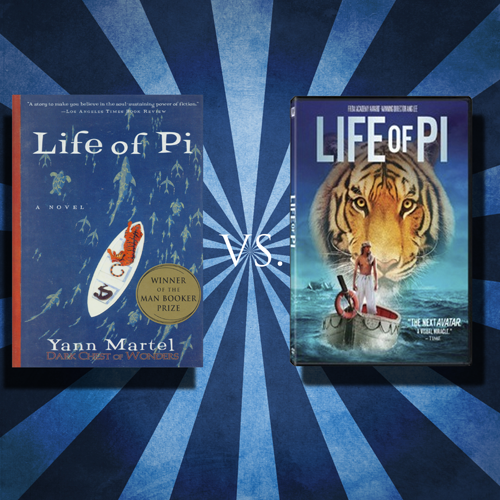
    Life of Pi vs. Life of Pi
    Life of Pi Book vs. Film Adaptation

    I know what you’re thinking. Ho-hum, another books vs. movies debate. But don’t stop reading yet! This is not a debate. I love books. And I live movies (no, that’s not a typo.) And I’m tired of people pitting the two against each other.

    Think about it. Both books and movies demand a significant amount of effort in bringing them to life. Both are mentally stimulating and emotionally engaging. I was only ten years old when I read Life of Pi. In case you haven’t heard of Life of Pi yet, it’s a story about a teenage boy who loses his family, loses his home and finds himself stranded at sea with only a ravenous tiger for company. But when I tried explaining the story with my best friend at the time, she scoffed and said “I can’t even imagine that.”

    But that’s exactly the point.

    So many of the world’s stories are about worlds and times that most people consider to be beyond the realm of human imagination. Books deemed “unfilmable” by book and movie lovers alike. The Hobbit. Harry Potter. Game of Thrones. The magic realism that characterizes Pi’s story – and Harry’s, and Frodo’s, and Tony Stark’s – sets them apart from stories closer to home. But it is the “unfilmable” and “unimaginable” nature of these stories that make them the stories most worthy of being imagined. Brought to life.

    And what better way to do that than through film?

    Book lovers insist that the movie can never be the same as the book, but does it have to be the same? If the movie was meant to be the same as the book, it wouldn’t be a movie. For me, the point of a movie adaptation is to re-imagine the story of the book without overwhelming it. I grew up with Harry Potter, and reading Life of Pi changed my life forever. And the film versions of those books didn’t match up with the little movies I’d already made in my had while reading them.

    But this little film I already made in my head while reading the book Life of Pi is one of those rare examples of a movie whose 3D visuals don’t overwhelm its storytelling but enhance it. It’s about that flawless balance between world and visual, capturing the complexities of a character’s world and the the viewer’s mental world.

    That said, even if the screenplay is amazing and the visuals are flawless, much of the audience’s decision about whether or not they like the film relies on their own emotions. Their own story. Having read the books for all the adaptations I’ve watched, I never walked into a movie thinking it would make me feel anything new. But each and every time, it did. And that’s what makes me believe in film as the book’s friend rather than its enemy. It’s the only medium that has the power to take an existing experience, reshape it and make it visceral in the way no other medium can.

  • Coalition of the Willing: Inspired Work, Inspiring Work

    I have a complicated relationship with film.

    For the most part, I love it. I love that it can inspire, empower and liberate people. As a medium, it is limitless – it can tell stories previously untold, tap emotions previously untapped and explore parts of the world previously unexplored.

    But here’s my problem: commercial film rarely ever does.

    Yes, Ryan Gosling is stunning. And so is Emma Stone. Alright, I get it.

    But why are we making a movie about it? That part, I don’t get.

    With all the fandoms, poster boys, Jennifer, and plotless excuses for movies popping up everywhere, I can’t help but feel disillusioned by film. But every once in a while, a movie comes along to remind me that Ryan Gosling and Emma Stone haven’t completely taken over. On one of my many afternoons spent idly browsing Vimeo for inspiration, I stumbled upon a film by Knife Party that reinstated my faith in the wonders of the medium.

    Coalition of the Willing, is, as the title suggests, the collective brainchild of a brilliant coalition. The film addresses an issue burning with actuality (pun intended!) – the issue of global warming. And yet…there are no pie charts, bar graphs or visuals of receding ice caps viewed from outer space.

    That’s the beautiful thing about this film. It succeeds not despite but because of the lack of statistics and infographics in its storytelling. Because when you really think about it, global warming isn’t an issue that’s as far away and distant as the statistics and satellite images often used to represent it.

    It’s personal. It’s a choice.

    Throughout the film, the visuals follow man and mankind. Our evolution, our changing times, our history, our politics, our sociology. Visually, it is absolutely stunning. I felt myself being increasingly drawn into the world of the film – our world – and it wasn’t difficult to understand why the movie walked away with the Best Short Award at the 2012 San Francisco Green Film Festival.

    The stunning animation and smooth flow of the film transports the viewer back in time, employing the memorable image of a ’50s businessman turning into a hippie to chronicle the radical individualism of the ’60s. As the colours get brighter and the backdrops increasingly complex, the individualism fades into consumerism and the whole movement eventually culminates in a lack of regard for the world around us. The status quo.

    Although humanity took a turn for the worse, the film isn’t pessimistic about it. Not in the least. There is a palpable vibrance in its visuals, a quirky hopefulness in its scoring and an awareness of the power of individual efforts. It connects the past with the present, muses about the many changes that humanity has undergone, and, above all, provides hope for the future. Its look, feel and message work together to do what film fundamentally ought to do: awaken and stimulate the minds absorbing it. The film brings the concept of coalition to life and itself stands a testament to the wonders achievable through creative minds coming together.

  • The Power of Film Freedom

    I watched the 84th Academy Awards, like many professional and aspiring filmmakers did, only this time it seemed just a little more…unsure of itself. We had Billy Crystal up there reprising his host role having taken an 8-year hiatus. Though the intro was heartfelt, the jokes were cute, and it reminded me of how I’ve watched City Slickers II about 50 times with my grandfather chuckling the whole way through, it still was missing something.

    On the red carpet, which I was somehow forced to watch in my company, the commentators were as electrifying as ever: “What an outfit…Who are you wearing? Do I sound introspective and look as magnificent as you this year? Wait, before you go, I have one more shot for you. .” Like Crystal (don’t get me wrong, I will always love the guy), let me reiterate—the event was missing something. More than anything I heard the commentators talking about how classy, and old Hollywood it was this year, just like they claimed last year, the year before, and the year before. Hollywood seems to be fixated on retaining a time period when things made sense, and where the studios controlled everything from production to content, distribution to demographic. The movie industry is not about control anymore, it’s about fluidity, exposure and instant gratification. Whoever can get the most eyes on their product seems to be doing quite well for themselves.

    These are interesting times for filmmakers, independent or Hollywood, what with an evolving landscape changing every year for movies in the What, Where, Why, When, Who, How and How Much.

    What
    In Hollywood, the What is for the most part getting less intelligent and lazier. I swear, any day now we will get the prequel to Dumb and Dumbererer 5. We had some good movies this year, but were any of them really great movies? If it weren’t for the refreshing creation of The Artist (an homage to old Hollywood with some modern touch), I would say we’ve seen better years. The independent films I’m sure were great, but unless you go to festivals or subscribe to an independent on-demand channel, it is sometimes hard to find out about those films, much less see them.

    Where
    Movies out of Hollywood are being made more and more out of single locations, many able to claim that location as a post-production CGI house. The Where may be determined for tax reasons, logistics, convenience, but in the end the ultimate answer is money. Even though ticket prices are anywhere from $9 to $18 depending on how big the screen is and if the picture is in 3D, piracy has no doubt hit Hollywood hard, and the economy tanking hasn’t helped much either. Independent projects however are expanding outside their home base origins, with gear being less expensive and more portable than ever.

    Why
    Why Hollywood movies are being made (sorry if this is a shocker to anyone) is still about the money, as it always has been. You might have the best, most artistic, thought-provoking, culturally changing, life-altering script of all time, but if a producer can’t see it succeeding at the box office, good luck. That is perhaps the Oscars one redeeming quality. Out of all the junk the LA machine pumps out each year, it does make a few good artistic pieces worth recognition and worth seeing—movies that make us think. I wish there were more of them. Wait a minute, there are more of them! Only they aren’t Hollywood, they are independent, or even more so, they are really independent. Like the filmmakers going out themselves or with a small crew and uploading to Vimeo. Why are they doing it? Because they love it, because they care, and because they simply have to do it. They won’t feel complete unless they do it. Those are the movies you want to see.

    When
    Hollywood is making movies all the time, but not at the same volume or pace that the independent and online community is producing. Not even close. We have a democratizing revolution going on in the video industry now, where you can make a movie on an iPhone if you really want to. Whatever Hollywood movies come out that are worth seeing, you can usually expect them to release around fall or winter—right before the Oscars so it is hot and in folks’ minds. However, movies made on REDs, Alexas, and HDSLRs are being released all the time. There is no time like the present, and the sooner you can provide new content the happier your followers will be.

    Who
    Who is making movies is actually more of a question of who isn’t making movies? Hollywood of course makes movies, and filmmakers make movies, but it’s much broader than that. With a camera on every phone, the iPad, and HDSLRs, it is easier than ever to make a video, however short, low budget, or planned out. It is parents, business owners, students, doctors, salesmen, cooks—almost every industry there’s going to be someone who has zero training in videography, or even interest in filmmaking, and yet are still making films. It would be an interesting statistic to learn just how many people in the past year made at least one video clip, even if it was just a shot of their cat on their phone. Who is making good movies is another story.

    How
    The How I find the most exciting of all. Hollywood is making their films the same way they always have—big budgets, A list actors, huge crews, lavish locations, unparalleled cutting edge graphics, and the same formulaic scripts they’ve relied on for years with a couple diamonds in the rough. Independents are still looking for their moderate budgets, decent sized crews, and best locations possible for their scripts. But if you watch the content (particularly the short film content) coming in on sites like Vimeo, Blip.tv or occasionally YouTube once in a blue moon, you will find some incredible ratios of production value and resources to budget spent.

    How Much
    The trick is figuring out, in that last category of small online distribution, how to monetize it so you can both make a living and make more content, while not also selling your soul to the advertising devil. As of right now, I’m not certain how advertising dollars can’t be involved to make it work, though sites like Kickstarter and IndieGoGo may be on the right track. By crowdsourcing, and funding your projects with an audience that is already interested in your idea, it seems like everybody wins. I noticed the other day a project for a video game called Double Fine Adventure asking for $400,000. At the time of my writing this post they have secured 2.4 million dollars and have 5 days left. Wow. I think their success is not just due to what they are promising, but their attention to producing a professional looking video that allows fans a window into the behind the scenes, which helps sell their idea and convince people to donate. They decided to show (not just tell) what they doing, and it came back to them many fold.

    My point here is that the content you create matters. The story. With all the other noise out there online, in people’s ears and at the water coolers, you need some good content to help you stand out. This is true if you are trying to create the next LA Confidential, a corporate marketing video for your website, or an assembly of family home videos. You want it to not just inform, but entertain and engage. If you are thinking about budget, think about how much it might cost you later, when you’re forced to clean up a PR mess from a poorly produced video done in-house. If you’re thinking, “Well, only my family is going to see this,” consider your great great grandkids when they watch it. Wouldn’t it be ideal that they feel something, as opposed to just witness something? To achieve the emotional experience, to make it more than just the factual heritage connection, that takes some careful attention to timing and editorial decisions.

    The beautiful thing is, it’s true, anyone these days can make a movie. In fact, if you are outside the Hollywood machine, the filmmaking experience can actually be quite liberating creatively, since now you are the one in control. You may hear the followup, “Yes, but not everyone should make a movie / video.” If you love the process and ability to express yourself by making films, then I disagree with those pessimists; please make lots of movies to evolve your skills and your voice. Simply realize that when ready for a serious production, it can also be a very scary thing in the wrong hands, not just for you and the team but for your desired audience.

    What I am advocating is that after some experimentation and tests, once you get to a project you know matters to you, put some thought into how it will get accomplished the right way. Perhaps then we can look forward to increased interest in shows like the Vimeo Awards and Webby Awards, which stand to be much more in tune with viewers on an individual level. Everything is moving to the web whether we like it or not. I think the natural progression points to these more relatable, personalized shows thriving, while shows like the Academies focus on surviving. For non-filmmaker consumers, these new shows will only become more entertaining with age. From a filmmaker’s perspective, it is fun to watch these newer web-based award shows because the awards themselves seem so much more accessible and attainable. It still means you need to put care into your work; cats playing keyboards only gets you so far. Whether you are creating work for your friends and family, your peers and colleagues, or your customers and clients, think through your mission and make it cutting edge but still appropriately classy. And not swan dress classy; that is so 2001 old Hollywood.

    Focus of the Day:
    How do you make your content stand out?

    Film-tip: Learn the language. The more vocab you know on set, especially in the area that you are not a specialist in, the more you can communicate with the crew about what you want. It sounds simple and repetitious, but it really can take what should be a 4 hour shoot and make it an 8-10 hour shoot if you mess it up.

    Eco-tip: Help get support going for the coolest mode of transport out there yet. If you haven’t seen the Shweeb yet, you’re really missing out. Let’s get these into our cities and actually have fun getting to and from work.