Tag: film

  • Writer Cathryn Humphris of Mad Men, Under the Dome, and Supernatural, Speaks On The Realities of Working in TV

    Writer Cathryn Humphris of Mad Men, Under the Dome, and Supernatural, Speaks On The Realities of Working in TV

    I moved around a lot as a kid. First off, I started life all the way across the world in the little country of Bulgaria, before getting on a plane at the age of eight and heading to the big ol’ US of A. From there, I moved almost every year, spending brief periods in various towns and cities across New England as my parents bounced from job to job. At the time? Frankly, I hated it. I hated having to be reintroduced to a new area, having to make new friends, I hated all of it. But now, as I reflect on those years, I see just how valuable they were. How much I gained from every new experience, every new person I met.

    Television writers, for better or worse, often find themselves as the new kid in class. And Cathryn Humphris is no exception. Over the course of nearly a decade, she has worked on shows like Mad Men, V, Under the Dome, Mob Doctor, Elementary, Supernatural, and many more.

    Cathryn was kind enough to get on the phone with me and Adam, and spend some time talking about just what it’s like to be a working writer in today’s industry, and all of the positives and negatives that come with that.

    ———————————————————————————————————————————————

    VIKTOR HERRMANN: What I’d like to start off talking about first is your early days. The struggle years. Can you talk about the days before you could support yourself solely on writing. What was that like, and what was the transition like?
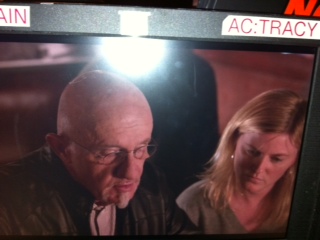
    Humphris 1

    CATHRYN HUMPHRIS: It was nice. It’s nice to be able to support yourself doing what you wanted to do. It took me about eight years. I came to Los Angeles right out of college. I was a Radio, Television, Film and Communications Major. I was lucky that I had some friends out here already who had paved the way for me and helped me find my first job. 

    There’s a lot of different routes to breaking in, and I went the assistant route. I got early jobs through friends and connections from my school—I went to Northwestern and they have a big alumni community out in Los Angeles. So I started just working low paying assistant jobs. 

    Originally I wasn’t sure if I wanted to write for movies or do something else, and I had a friend early on who said, “I think you should look at television, because I know you love writing, but I know you also want to be part of the overall process.” And also television is much more stable than just going from job to job in film.

    So, early on I got a job in television. Once and Again was the first TV show I worked on. I was a writer’s PA, which is kind of like the lowest position in the business. Literally getting lunches and coffees and running errands for people.

    I just kind of worked my way up through that. I worked for writers who had development deals, I worked for small development companies, I worked for a couple different shows, and just got as much experience as I could get, and also made as many connections as I could make. Which was another huge part of it.

    I know you interviewed Genny Hutchison a while back. Genny and I worked together a long, long time ago on X-Files. She worked for Vince Gilligan and John Shiban, and I worked for Gillian Anderson, and we got to know each other that way. And years, years later, when I was looking for another job, John Shiban was looking for an assistant, and Genny recommended me. And that’s part of how I got the job on Supernatural, which ultimately ended up being the show where I got my big break.

    Along with working different jobs, I was obviously writing on the side. The great thing about being a writers’ assistant is that you can actually be in the writers’ room. You’re seeing how the process works. You are getting to know the show better than almost anyone.

    You know the bosses, you know the dynamics, you know everything. Being in the writers’ room is great practice for learning what you’ll be doing as a TV writer and also for being able to try out your craft a little bit. 

    I had also done a program called the Warner Brothers Writing Program, which is a great program that helped people get their foot in the door. Sometimes you get staffed right out of that program. I didn’t get staffed right out of that program, but Eric Kripke [the Supernatural showrunner] certainly knew that I had done it, and people at Warner Brothers were supportive of me and pushing for me.

    Ultimately what ended up happening was in the first season of that show, John Shiban and I wrote a script together. John mentored me and shepherded me through the process, and everyone was very happy with the script. And then in the second season of that show, I came back again as a writers’ assistant, and by that point I had gotten an agent off of doing the Warner Brothers program. So, my agent was out trying to get me meetings, and John and other writers I had met were super, super supportive.

    I got a job offer on another show, and Supernatural basically was faced with the fact that they might lose me, and so literally overnight they made me an offer to go from being a writer’s assistant to a writer. And I ended up staying there for three years.

    VH: It’s pretty clear that you’ve had quite a varied resumé, which I think is indicative of a lot of TV writers. Could you talk about how hard it is to jump onto an existing show, and how you adapt to that show’s characters and writing style?

    CH: Yeah, that’s an interesting question. I think I have ended up jumping so many times that it’s kind of become secondhand nature for me. 

    I was on Supernatural for a total of four years, and so at that point, people would have known me as a genre writer. Which is funny, because I’m not someone who is particularly a big genre fan; I would consider myself more of a character writer. But there are genre shows that I love because they’re fancy packages for telling great character stories. 

    So, I’m always the person where, in my writers’ room, they’re talking Star Wars or Blade Runner, or the complicated mythology of some show, and I’m like, “What are you guys talking about again?” I just wasn’t into that world. But the great thing about having that background is that genre shows will always want to hire you.

    [But] when you’re a genre writer, particularly a woman who writes genre, you can get put in a box. And it’s great because they’ll offer you jobs on genre shows, but it can be harder for people to take you seriously outside of that world. 

    I had gotten the great piece of advice of, “Write a script that is the opposite of genre. That’s exactly what you want to do.” So, I wrote a very character driven script that my amazing agent ended up getting into Matt Weiner’s hands. I always say Mad Men was the easiest job I’ve ever gotten in my life. Matt read my script, Matt liked my script, he interviewed me and he hired me. It happened within a week or something.

    On Mad Men, the thing that was great about it was that because it’s a cable show and it’s only 13 episodes a year, we spent the first two or three months just getting to know each other, really talking about the characters and what you wanted to accomplish. There wasn’t a huge time pressure, [versus] network television [where] you start a job and six weeks later you’ve got to film an episode. 

    I think on Mad Men I just had a lot of time to ramp into the show. I watched all of the episodes from the first two seasons multiple times. Matt assigned a lot of reading, so I did a lot of reading, I watched a lot of movies of the time period, I spent a lot of time just getting to know my co-workers. 

    You just kind of ease into it that way. You’re spending eight to ten hours a day in a room with people just obsessively talking about the show, so you just kind of catch up. And then I guess going forward, I’ve jumped into a lot of second and third season shows, and I’ve never felt like it’s been that much of an issue for me. There’s something nice about already having a template already laid out. 

    I always go back to watching the episodes. Multiple times. And picking up on who the characters seem to be. I do this less now, but earlier in my career, before I would write a script, I would just obsessively read the other scripts. When I wrote my first Mad Men, I spent fifteen hours a day writing or reading the other scripts.

    ADAM GREENE: That’s a good transition to our next question: your habits. What would you say are some of the things that you do habitually to get you in the mood for writing? How do you overcome different writer’s block situations or difficult scenes to write?

    CH: This is a great question. I am totally a procrastinator as a writer. [laughs] So, television is great for me because you can’t procrastinate, you can’t have writer’s block for very long.

    I love being in the writers’ room. I love breaking story. I’m really social; I love working with other writers. I would be a terrible feature writer, sitting alone in a room writing. That’s kind of the part of the process that I like the least.

    For me, it all starts with the story and the structure. By the time I go off to write a script, I’m meticulous about making sure that I understand the story that I’m trying to tell. With character driven shows, with a show like Mad Men, the structure is a little less important because you’re really digging into the character work, but even then, if the structure doesn’t work, it’s going to be a lot harder to write. By the time I leave to go off and write a script, I want to understand what I’m writing. The work that should be left to be done is the character work.

    You’re always going to find stuff that doesn’t completely work, that you need to make adjustments to. I just make sure we do a really, really good break, that I understand what all of the characters’ motivations are, that I understand the story that I’m trying to tell. Anything that still needs to be fixed, I try to fix in the outline.

    In terms of pure habit, the thing about television—which is a blessing and a curse—is that you’re on a really tight timeframe. If you’re on a show like Mad Men, you might have two weeks to write a script. But a lot of the shows that I’m on, a week is a luxury.

    That was something I was nervous about early on in my career, and I used to take a full two weeks to write a script. And now, I’m on shows sometimes where, if I’m co-writing a script, we have two days to write it.

    I will always procrastinate as much as I can, and so sometimes that means I spend three days surfing the internet before I do much writing, and other times it means I spend thirty minutes surfing the internet. I procrastinate for as long as I can, and then I just dig in. I disappear into the world that I’m writing.

    I think for me the hardest thing is overcoming the fear of, “What if it’s not good this time?”

    AG: That’s a shared feeling for a lot of writers, I would think.

    CH: Yeah, I think so. And that’s been kind of a blessing of my career, of jumping around to so many shows. I’m definitely able to take it a lot less seriously than I used to take it. I’ve been on shows where by the time the show premieres, you wake up the next morning and you read the ratings and say, “Oh, well, this show is going to die soon.”

    That’s a horrible feeling, but I think it also helps you keep things in perspective. Which is that I’m exceptionally lucky to be doing the job that I do, and hopefully my career is going to be long and I’m going to work on a lot of different shows. Some of them are going to be easier than others and harder than others and more fun than others. That helps me now with the pressure.

    VH: That reminds me, we read an essay you wrote, “Why We Write.” In that, you talk a lot about the fear and dread that writing can cause in writers. Can you elaborate on that? Maybe talk about a time either career-wise or when you were working on a script where everything seemed to be going wrong? What kept you climbing back into the ring?

    CH: It’s funny thinking back to that essay, because when I wrote that, I had probably only been a TV writer for two years. The battle to get in was fresh. There were a lot of times as an assistant where I just felt like I’m never going to get my break, this is never going to happen for me. And I kind of just made the decision to keep going for as long as I felt the good outweighed the bad.

    This business can be really, really hard. There’s a lot of nastiness that happens. There’s a lot of times where you get close, and then it doesn’t work out. But I think I kept going for the same reason all young writers keep going.

    You feel like you have something to say. You feel like you’re pretty good at this, like it’s a lot more interesting of a job than most jobs that you could do. I’ve loved television and movies all of my life. The idea that I could be part of that was really, really fun.

    But the fear part was, for me, sitting down and facing that blank page. That’s when it’s all on you. It’s probably part of why I’m so meticulous about the story break, because the more that I can stack the odds in my favor, that’s a good thing.

    I think most of us feel like, “What if we fail this time?” I think that’s a huge fear for young writers. I think for some writers that’s probably the fear that drives them their entire life.

    It’s interesting, because now, having worked on so many different shows, there’s a lot less of that fear [for me]. There’s a lot more of, “You know what? I’m making television, and it’s awesome, and I wouldn’t trade this for any other job.” But it’s a television show, and some episodes are going to be better than other episodes.

    I hope most of my episodes are good, but I’ve written some crappy episodes of television. [laughs] Usually for things that are only partially in my control. There’s so many forces at work: the show that you’re working for, the boss that you’re working for, production realities, the studio and the network. There’s just so many different things.

    If you have two weeks, and a network and a studio and a boss that are fully supportive, you’re probably going to have a better script than if you have two days and a show that might not even make it to air because your ratings are so bad.

    I feel like more often than not, I’m able to be proud of what I do, but I keep it in context. One of my favorite experiences was being on the show Ringer, and that’s not a show that probably a lot of people saw or remember—it only lasted a season. I loved every second of that show, and I’m incredibly proud of the work I did on that. I’m incredibly proud of the work I did on Mob Doctor, even though that’s not a show that’s going to be remembered in history the way Mad Men is remembered, but I had a great experience on it.

    I just try now to enjoy the things you get to enjoy about [the business], and not take it quite so seriously as I think I did at the beginning.
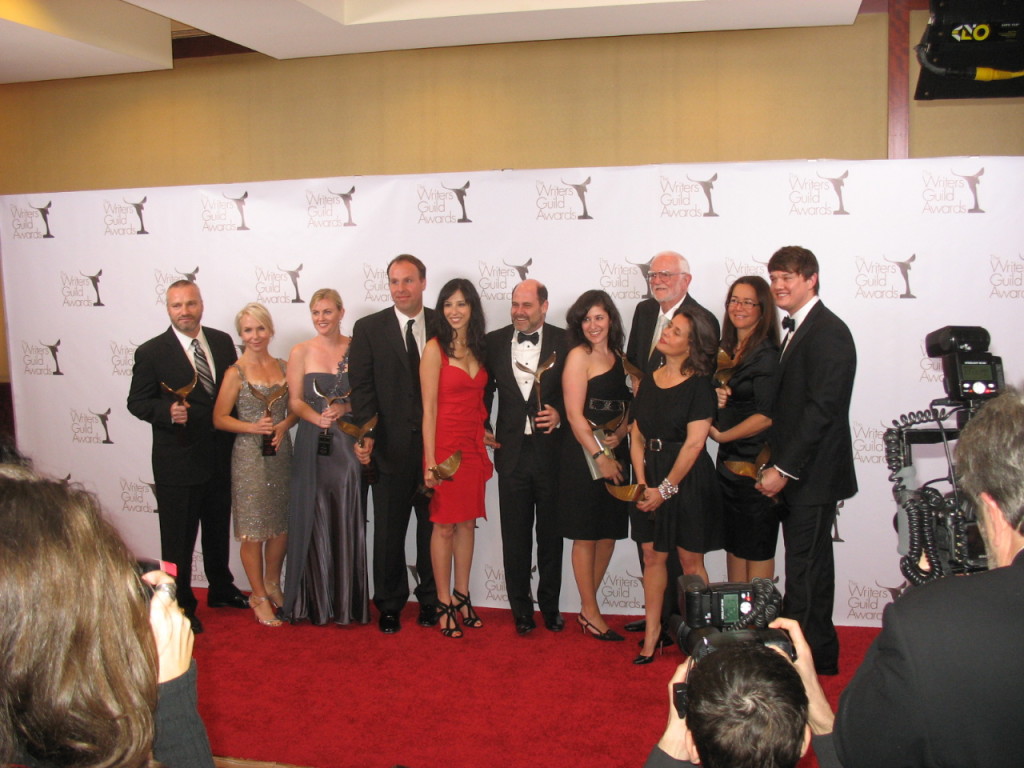
    Humphris 2 - awards

    AG: You worked on episodes 302 and 311 of Mad Men. Episode 311 especially was a pivotal episode. You have these strong female characters being able to voice their frustrations in Joan and in Betty, and Don being knocked down a peg and having to come to terms with who he really is. So, that’s a big episode. How did it come about that you were able to write for that episode, and what was it like working with Matthew Weiner?

    CH: I was really lucky. Matt is incredibly talented, and it was an incredible room filled with writing heroes of mine. I got to co-write episode 311 with Marti Noxon, who was a writing hero, and it was just a room filled with amazing writers; the majority being women, which is rare in Hollywood.

    It was an incredibly collaborative room. Matt gave you a ton of breathing room. He was wearing a lot of hats, and he was in and out of the room a lot, so you’d do a lot of the work collaboratively, breaking story with the other writers.

    One of the things I’ve always loved about Matt is that he was a very good showrunner in terms of being able to come in having twenty minutes to listen to a pitch, you’d pitch out what you came up with, and he was always clear on saying “I don’t like that, I don’t like that, I don’t like that, I like this—this is the heart of your story. Re-break it around this.”

    And I think that’s a gift from a showrunner, because you work for a lot of people that don’t have that clear vision, but also maybe other people [who do] that aren’t able to collaborate.

    Matt certainly has a reputation for doing a lot of on-the-page rewriting. He has a lot of ownership. But I have to say, at least my experience in the room was that he was very open to what other people brought to the table.

    I had a great experience on that show. I learned probably more—in the room, on set, and in the writing—than ever before.

    And the way it works with Matt, at least when I was there, is that he wouldn’t assign episodes ahead of time. A lot of shows, you know it’s your episode, and you take ownership of breaking that episode. But on Mad Men, we would just break all the episodes, and Matt would turn to you and say, “You’re writing this episode.”

    At the beginning of the season, for my first episode, I had two full weeks. And then he gave me a bunch of notes, and I did a second pass, and at that point he took it over and did a rewrite. As the season goes on, things get more crunched, and so for episode 311, that Marti and I wrote, I think we probably had four or five days to do it.

    I knew that episode was going to be a huge episode, but I had no idea that was going to be the one he assigned to me. I was quite grateful when I got assigned it, and I was thrilled to be writing with Marti. That was one of the greatest experiences of my career, to get to co-write an episode with Marti Noxon.

    I was a low level writer, and she was a showrunner. She was amazingly collaborative. She was so generous with me, she gave me amazing feedback. I just loved writing that episode, and I knew it was going to be a big episode. But I guess that’s another place where, even at that point in my career, I just don’t understand being too precious about that stuff. Any of the people on staff could have done a beautiful job writing that episode.

    If you’re coming into the TV business and you’re going to hold on to every word that you’ve written, this is not going to be a good business for you; you should probably think about writing a book instead. Your stuff is going to be gone over by your boss, by the studio, by your network, by your actors. There’s going to be a lot of changes.

    One of the things that I think Matt is good at is, we would go back into the room after we did a table read, and we’d go through the script. If there were lines that weren’t working, you would change them. That’s an important thing to learn. If a better line comes from your co-worker or from an actor suggesting something, you shouldn’t be afraid to be collaborative. This is a collaborative business we’re in.

    VH: What is your unwritten rule of screenwriting? Something that is perhaps ignored by a lot of teachers or by a lot of the so-called “guide books” on the craft, but is something you consider paramount to writing?

    CH: I guess, this is maybe less about writing in general but more about television writing, which is that perspective is huge. When we talk about these rules, or we talk about, “it has to be this way, it can’t be that way, this is good writing, this is bad writing.” Whoever you are working for or whoever is making the final decision is actually the person that’s in charge of deciding what they think is good or bad writing.

    Having gone back and forth between so many shows and so many showrunners, I will literally be on a show one day where a showrunner will say, “If you do X, I’m firing you, it’s the worst thing you could possibly do in your scripts,” and then you go to the next show and the showrunner says, “I LOVE it when people do X.”

    It took me a whole lot of years to understand that it’s all perspective. There are certain things that I personally think make for a good script or for good writing, and they can be totally opposite of what someone else thinks makes for a good script or good writing.

    There’s obviously honing your craft, and there’s obviously certain things that a lot of us can agree on that are better or worse to do. But I think anyone who watches the landscape of television, and the many varied things that are out there, in a certain sense, who’s to say what is wrong or right?

    AG: You’re working on Under the Dome. Where and when can people check that out?

    CH: It is going to be coming back to CBS for the third season this summer. We’re going to be on Thursday nights, which we’re very excited about. I believe it starts June 22nd with a two-hour premiere, and I’m writing episode 4 and then I’m slated to co-write the finale, so hopefully people will check that out this summer.

    ———————————————————————————————————————————————

    And we hope people check it out too! As with our previous interviews, I think there’s some invaluable advice and experience Cathryn shared with us in the above interview. Hopefully you will find it helpful. Ms. Humphris dropped some truth and science on us all, folks. So study up, and get writing, get filming, get creative.

    You can also check out her essay on the blog series Why We Write from Feb 5 2008—a time before she had the experience or resume she now enjoys.
  • Filmmaker Matthew Nash Talks About His Work, Influences and Style

    Filmmaker Matthew Nash Talks About His Work, Influences and Style

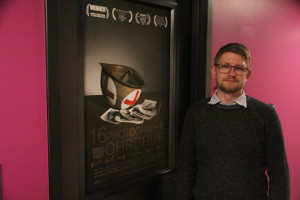
    IMG_8242Hello again, friends and compatriots! We’re jumping right back into our conversation with the head of Lesley’s Film and Animation department, Matthew Nash. Apart from his academic duties, Matt is an accomplished, award-winning filmmaker, most well-known for his powerful documentary film entitled 16 Photographs at Ohrdruf.

    If you missed last week’s post, be sure to give it a look-see here!

    ———————————————————————————————————————————————-

    ADAM GREENE: How did you decide to become a filmmaker?

    MATTHEW NASH: Totally by accident. I’ve never been an artist who’s particularly wedded to a medium. It’s fine to be wedded to a medium, I’ve just found that for myself, I don’t like having to channel all of my ideas through a tool. I like to find the tool for my idea.

    My creative partner, Jason, and I, had done a lot of videos. Experimental, weirdo goofy stuff. And then, super long story super short, we decided to make a mock version of Ross McElwee’s Sherman’s March, that actually turned into a serious project.

    It was supposed to be a week-long gag, and we ended up doing it for two years. That’s a film that you should never watch. [laughs]

    But, I learned a lot. I had moved into that mindset. We did an experimental, semi-narrative piece where the concept was basically two people, who are nowhere, talking using just a microphone and a speaker. [Jason] and I, over the course of several months, recorded all of our phone conversations, transcribed them, edited them, and then turned that into a script.

    On its face, this could be a profoundly boring 15 minute short film. The solution that we came up with was that we wanted to take the production level to 11.

    We rented 18 foot cranes, 20 feet of dolly track, really good microphones, really good production team, the whole nine yards. It was that experience that got me hooked on production, on process.

    When [16 Photographs at] Ohrdruf fell into my lap, I didn’t even know what to do with it.

    7DA20202

    The backstory is that my grandfather died in 1991, and after he died, we found this packet of photos that he had taken at the liberation of a concentration camp called Ohrdruf.

    In 2008, when Barrack Obama was campaigning for the presidency, on the campaign trail, he says something like, “My uncle liberated Auschwitz.” And of course, big scandal, because America didn’t liberate Auschwitz, the Russians did.

    They found his uncle, and they interviewed him, and it turns out that he was at the Ohrdruf camp. So all of a sudden, I’ve got the uncle of the future president of the United States and my grandfather, and I can put them in the same place.

    I dug out the photos, and honest to God, I didn’t know what I was going to do. Having just done the project inspired by Ross McElwee, his very personal narrative process, I thought, “That might be my approach to this. As I try to figure out these pictures, I’ll just bring a camera along, and see what happens.”

    Initially it was just going to be some YouTube shorts, but a really close friend of mine is a high-end editor in New York, and he said, “I’ll edit this for you.” And my partner and producer in New York said, “I’ll produce this for you.” And he also wanted to do the soundtrack.

    Once everything came together, and I started doing the research into the photographs, it followed its own course. If you watch the film, it more or less is chronological to what I did.

    AG: How has your experience working on documentary filmmaking influenced your narrative filmmaking?

    MN: I think I’m still getting my feet under my knee as a narrative filmmaker. I really enjoyed the sci-fi film, but when I watch it now, there’s some stilted dialogue or, you know, I could have given more direction at a certain point, things like that. These are the things you learn.

    The big difference that I have found is that when you’re working in a doc mode, you lay out an outline, or sort of a trajectory that you want to take your viewer on. Then you set out to find people to interview, or find footage to meet the needs of each stage of the process. And as you find people, they tell you things that you hadn’t expected, so you’re constantly tweaking your script or your outline.

    7DA20189

    Whereas with narrative, the script is everything. You’ve made or broken your project before you’ve ever done a casting day. If you don’t have a good script, everything after that is wasted effort.

    There are areas where editing, acting, rewrites can save you, but if you’ve set yourself out on a bad course, you’re stuck on that.

    I have learned, as I look toward doing narrative work, to be much more upfront about flaws in scripts, whether they’re things I’m helping my friends on, or students are sending me, or my own scripts.

    One of the big lessons from last summer was just making sure that you are on the right track, that you really understand what you are doing. You know how it is on set, your camera guy has a great shot, or your lighting guy can’t light the space that you want, and you have to be adaptable and you have to be flexible.

    VIKTOR HERRMANN: Do you think your documentary background gives you an advantage in being flexible?

    MN: I hope so. My own self criticism of when we did the sci-fi film is, I think, [that] I was too flexible. I think the project really would have benefited from a director, me, taking a much harder line about some compromises that were made. I think we would have made a stronger project if we had taken the extra two minutes to move that light or to reposition that tripod or whatever it is.

    The thing that you can do with documentaries is you can go, “I’ll live with that.” I think the thing you can’t do with narrative is say, “I’ll live with that.”

    AG: What advice would you give to students or filmmakers in general that are wading into the corporate sphere? A lot of corporate places don’t have time to help write scripts with you. They might say, “Well, just bring your camera and start unfolding the story, you’ll figure it out.”

    MN: One of the things that I would advise people in that circumstance is to have your own script, air quotes here, ready to go. Have your default model firmly established. So if you’re hired in a corporate situation to do an on-the-fly thing, walk in the door knowing, “Here’s how I tell a story. It begins here, it goes here, it climbs to here, it falls to here, rises back up and ends.”

    If you’re going to have to work on-the-fly, how do you assess which elements in front of you meet the needs of basic storytelling 101?

    It takes skill, it takes practice, it takes an eye. It takes being able to recognize when the world is giving you the thing [that you’re looking for], and getting a camera on it.

    If you’re just pointing your camera at things because somebody gave you a paycheck, you’re not going to make a good product.

    One thing I say to my students is all of the thinking and understanding and planning and research and immersion into your medium, all of that happens before you ever take the lens cap off.

    If you haven’t done that work, if you don’t understand your medium or how you speak with it, you’re just making footage.

    AG: Why is video important as a teaching or marketing tool?

    7DA20117_modified

    MN: I think where we have gotten with our video tools is that it democratizes things. It makes it fast. It makes it accessible. When I was a student, if you wanted to make a film, the process was arduous. But today, I could grab a video camera, and tell a story really quickly.

    Nowadays folks who are working in video have to incorporate a vocabulary of cinema, of narrative. It doesn’t matter if you’re going into a corporate environment, an academic environment. You’re bringing to the tool all of its history and all of its vocabulary.

    Partially because we are so media saturated, I think people are bringing a lot of that stuff intuitively now.

    VH: Would you say there are benefits, even if you’re not pursuing film or video as a career, to having video skills?

    MN: Oh, I think so. It’s one of the major and rising vocabularies that we have. Your phone shoots video now. Your phone shoots photos too, but more and more as I scroll through Facebook, I notice: It’s video. And frankly, there’s a lot of bad video out there.

    One of the things that I know we’re going to face when we launch the digital filmmaking program, because we already face this in the photography program, is, “Oh, hey, I shot some cool pictures with my phone. I’m a photographer.”

    This is not to devalue our students; anywhere a student develops a love for photography is totally valuable. But the ease of use and the ease of access [has made it so] amateurs can very quickly think that they’re professionals.

    I think the same is going to hold true for filmmaking. “I shot a great short video on my phone.” Awesome! You know what? You can do professional quality work with your phone. But it has nothing to do with the phone. [laughs]

    It has to do with whether you can use a cinematic vocabulary.

    VH: Is there something that has influenced your filmmaking that perhaps doesn’t come from film, that perhaps would surprise people?

    MN: Sure. So many things. One of the things that I talk about with my students is that inspiration comes from everywhere. You can go to the library and get the art history books, but you might be sitting at home watching an episode of The Simpsons, and it just clicks.

    What goes in eventually comes out. I consume as much as I can get my hands on. I love 1950s horror comics. In fact, film students are all going to be required to read at least one volume of something from Tales from the Crypt, The Vault of Horror, Weird Science, the classic EC 1950-1955 Golden Age.

    I think filmmakers should fall in love with this stuff, because it’s formulaic storytelling 101. By the time you’ve read 5 or 6 Tales from the Crypt stories, you’re like, “Oh, this is just formula.”

    If you can take your brain to the next step, you can be like, “You know what? It’s a formula that I should probably learn.” If you go back to the 80s, HBO did what, 9 or 10 seasons of Tales from the Crypt episodes.

    These comics are the script, the formula that allows you to do a successful 9 or 10 season series. Every episode is standalone. Think about The Twilight Zone.

    It’s very formulaic. It begins in a certain way, it unfolds in a certain way, it reveals in a certain way, it climaxes in a certain way, it concludes in a certain way. Every time.

    7DA20121

    VH: And yet it’s still one of the greatest pieces of television ever.

    MN: Exactly. Because you know what you’re going to get. And even though it’s different actors, different characters, different stories, you know.

    And on one hand, it’s boring television watching. If you’re an educated viewer, you’re like, “Yawn.” But if you’re going to make this stuff? The thing I always tell my students is, “You can’t break the rules until you know the rules.”

    To a certain extent, these are our rules.

    AG: Can you talk about collaboration and the importance of developing good working relationships?

    MN: Sure. I have lots of friends doing cool stuff, but it’s not like I picked my friends because they were going to be film producers or anything. I met some these guys when I was 16. I always tell my students, “If you surround yourself with cool and interesting and motivated people, they’re going to grow up to be cool, interesting, motivated people who do cool stuff.”

    AG: I would say that applies to crews, too. I’d much rather work with somebody that I really click with, that I think is a really smart, reliable person, rather than just somebody who knows how to operate a camera really well. Because that first person will be able to learn how to use the camera really well with time. You can teach people, and you can teach skills, but it’s much harder to teach people skills.

    MN: Yeah! On my sci-fi film last summer, we were a small crew so everybody wore multiple hats. Our associate producer, Rob, was also our lighting guy. And he brought this guy that he had been working with and liked, and the guy just flaked. He worked for half the morning, checked his phone, was like, “Oh, I’m bored,” and left.

    This was a volunteer gig, whatever. But Rob cut him loose. This was his number one guy, and he dropped to the bottom of the list. Meanwhile, the boyfriend of somebody on my crew, his name was Joe, shows up, does an amazing job, and ends up getting hired.

    Rule number one is just don’t be a dick.

    AG: [laughs] That’s a great rule.

    VH: Just for life in general.

    MN: Yeah! It’s a people based business. You hire who you trust. I got offered a job in Hawaii a couple of years ago, and one of the things that absolutely terrified me was leaving behind this whole network of people that were beer-and-pizza friends, and I know if I called them up and was like, “Hey, I want to do a short film,” – I actually did this recently, I said, “Hey, Rob, I’m interesting in doing a short film,” and he said yes before I even told him the title or when it was or anything.

    Having that network of people who trust each other… that’s how it works.

    7DA20145

    ———————————————————————————————————————————————-

    16 Photographs at Ohdruf can be found on Hulu, Vimeo, or Amazon Prime. Be sure to check out Matt’s, http://www.mr-nash.com, to find out even more about the man and stay current on what he’s cooking up next.

  • Nursing the Bruised Ego — Why Tough Feedback is the Best Feedback

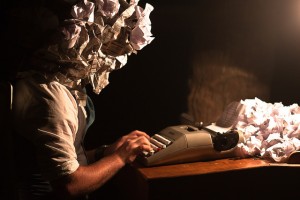
    Image: CC-BY Writer’s Block I by Drew Coffman @ Flickr flic.kr/p/8kvbSL
    Image: CC-BY Writer’s Block I by Drew Coffman @ Flickr flic.kr/p/8kvbSL

    It takes a lot to be a successful writer. For starters, it takes persistence and hard work. It takes imagination. Passion. Love for what you’re doing. But it also takes a whooole lot of objectivity.

    I don’t care if you’re Quentin Tarantino or Ernest Hemingway—if you’re not objective about your own work, you will never reach your full potential. Still, easier said than done. Objectivity can be a tough thing to grasp as a writer. So what do we do? We turn to feedback.

    Feedback is one of the most important tools in a writer’s arsenal, and good feedback (along with a writer smart enough to incorporate it) can be the difference between a mediocre first draft and a spectacular final draft. But brutally honest feedback (which is of course, the best feedback), can be a tough pill to swallow.

    I’m sure the majority of writers reading this know exactly what I’m talking about. You’ve finished that first draft. You’re in love with the kick-ass protagonist, the thrilling plot, and the pitch perfect comic relief. You send it out to some peers for review, and wait for your gold star and firm pat on the back. Then… the feedback arrives.

    Turns out that kick-ass protagonist is a wimp. That thrilling plot is a boredom factory. And as for that pitch perfect comic relief? About as funny as a funeral. At this point, most of us go through one of two phases.

    A: We fall into a deep depression, convinced we are hacks who aren’t worthy of writing Twilight fan fiction.
    B: We reach the logical conclusion that the reviewers are the real hacks; a bunch of amateurs who clearly can’t grasp our brilliance.

    Sometimes, if the work is really important to us or we’re particularly proud of it, we’ll go through both. But as with any grief, eventually there must come acceptance. Okay, so maybe we haven’t written our masterpiece, but that doesn’t mean we might not further on down the road. And that road is paved by rewriting.

    We toughen up. We go through the feedback again, side by side with our story, and we assess every note with absolute honesty. Yes. Maybe that witty dialogue we thought was the funniest part of the story really does nothing but bring it to a complete halt. Maybe that plot convenience we thought was perfectly legitimate does make life far too easy for the protagonist. Maybe the entire second half of the story is boring and doesn’t make a lick of sense. Whatever the case, we keep working.

    Having said all this, I do think it’s important to remember that not all feedback is valid. Sometimes a reader really won’t get your story, even if it’s an awesome one. In that situation it can be wise to discard some (though perhaps not all) of their feedback. However, if the number of people who aren’t getting your story keeps pilling on high, then maybe they aren’t the problem.

    Avoiding bad feedback becomes much easier if we seek out the opinions of people we respect. Whether they are fellow writers, teachers, or just friends who have good taste, people who have similar storytelling sensibilities to ours and who aren’t afraid to bruise our egos are invaluable resources. We owe them a great debt. Without them, our stories might never reach their full potential. Though perhaps we shouldn’t let them know, or they might start charging.

    When we’re watching a movie, especially one by a creative team whose work we aren’t familiar with, we have no problem being objective. If it’s garbage, we will say it’s garbage without so much as a whimper. If it’s amazing, we will praise its name from the rooftops of the tallest skyscrapers. To be an accomplished writer, we have to treat our own work with that same kind of objectivity. We have to take pride in our work, but we also have to be the first to point out when it’s not up to snuff. It’s as simple as that.

    PS: You’ll probably notice the similarity between this and the post on rewriting. We might be exploring familiar ground, but that’s only because this ground is so important. I’m a big believer in the theory of “first draft, worst draft”, and that if you want to really bring your work to the next level, you’ve got to be willing to keep rewriting and keep rewriting.

    So if you haven’t checked out the post on rewriting—which you can do so here—and you found this one useful, give it a look through, as these topics go very much hand in hand.

  • The Oscars – An Exercise in Predictability

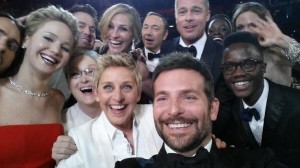
    ellenoscarsgroupselfieAs I’m sure you’re aware, last night was another extravagant Oscar night in that little city known as L.A. Celebrities walked the red carpet. Entertainment reporters provided riveting commentary on dresses, dresses and more dresses. Jennifer Lawrence once again proved that she’s high in the running for “Most Down to Earth A-Lister”. All of it: standard, predictable Academy Awards fare. And if you followed along with Oscar predictions in the slightest over the last few weeks—the predictability did not end there.
    Nearly every major award went exactly to whom most of the world predicted. Matthew McConaughey and Jared Leto both won for their work on Dallas Buyer’s Club, of course. Cate Blanchett took it home for Blue Jasmine, of course. Lupita Nyong’o did the same for 12 Years a Slave, which as anticipated ended up snagging the big prize —Best Picture—as well as Best Adapted Screenplay for John Ridley.

    Though it didn’t take the coveted Best Picture prize, the night’s big winner was the sci-fi thrill-ride Gravity, which accumulated 7 statues when it was all said and done, including Best Director for Alfonso Cuarón. Yet, even that was no big surprise—indeed, most prediction lists had Cuarón as front runner. By the time midnight rolled around and the show had reached its finale, there was not a gasp to be heard. No outrage over the best picture winner. No crying that a director got robbed. There was just… nothing. The Oscars came, they went, and that was that.

    To be clear, I’m not demanding that the Oscars suddenly start being scandalous for the sake of scandal. I certainly wouldn’t want it to become an LA-themed episode of “The Jersey Shore”. But most years there is at least something to keep tensions high. Something to keep anticipation flowing. People at the edge of their seats. This year, it was all by the numbers.

    And though I think all of the winners deserve their prizes, it’s a shame that such an extraordinary year in movies had such a dull ceremony to celebrate it.

    Unlike some previous Oscar nights, the blame does not lie in the hands of the host. From her opening monologue right up till the end, Ellen was easily a highlight of the show. Her lively, wit-drenched attitude helped keep the audience entertained while we went from one needless, overdrawn musical performance to another. Seriously. This was ridiculous. I didn’t watch the Grammy’s, but after last night, I might as well have.

    There were a grand total of six musical performances last night. Six! For a ceremony that’s supposed to be about movies, that’s about five too many. Even the beautiful memorial for Hollywood’s deceased (which I was very happy to see included Roger Ebert) was tagged on by a totally unnecessary 4 minutes of Bette Midler singing “Wind Beneath My Wings”.

    Stuff like this really made the show drag on way past its welcome—much more than usual, anyway. I ask you: Do we really need to see U2 perform at the Oscars?

    This apparent need to draw things out was a running theme throughout the ceremony, with even some of the night’s best moments—such as Ellen buying pizza for the guests—staying just a little bit longer than they should have.

    As much as I might sound like a grumpy old man, it wasn’t all bad. No, there were definitely moments that reminded me of why watching the Oscars has been a part of my life since I can recall.

    There were some beautiful acceptance speeches, especially by Cate Blanchett and Jared Leto. Though my personal favorite was the wife/husband duo of Kristen Anderson-Lopez and Robert Lopez accepting their award for Best Original Song via rhyme. If you missed it, go watch the clip on YouTube right now. Though I’m sure even if you missed the broadcast, you probably heard the cumulative “Aaaaawwwwwww” that emerged from living rooms worldwide.

    But what was the ultimate highlight? It would have to be Bill Murray’s brief and impromptu tribute to his deceased collaborator, Harold Ramis. Murray threw in Ramis’s name while presenting the nominations for Best Cinematography, garnering much deserved applause for the late, great filmmaker. Bill even had the respect to apologize afterwards for going off-prompter. What a class act that guy is.

    Oh, and although just a few paragraphs ago I complained about the needless musical performance, I thoroughly enjoy both Karen O singing “The Moon Song” and Pink’s rendition of “Somewhere Over the Rainbow” as a tribute to one of my all time favorite films, The Wizard of Oz.

    So, yes, last night’s Oscars had its moments. Some beautiful, some hilarious, some heartbreaking. But overall? I can’t imagine anyone will remember the ceremony in a month or two. There was just nothing exciting about it. It just was a thing, and now that thing is over. All of the winners deserved their trophies, yes (I was particularly happy to see Spike Jonze win Best Original Screenplay for Her), and Ellen did a great job as the host. But if the Oscars want to stay relevant a decade from now? They’re certainly going to have to spice things up.

    My suggestion? Simple. Stop dragging the damn thing out.

    I’m not a sports guy, so the Oscars are about as close as I get to having a Super Bowl, and yet I still think they’re way too long. In a world that moves as fast as ours, with dwindling attention spans and a gazillian distractions at every turn, there is simply no need for the Oscars to be a 3-and-a-half hour event. Cut out all the fluff (cough, six musical performances, cough) and make it a quick two hour show that doesn’t waste our time.

    Maybe that sounds blasphemous coming from a movie buff, but it is precisely my love of movies that leads me to take this stand. A year full of such incredible film deserves a celebration that measures up. All writers known the idiom “kill your darlings”, and nowhere will you find more darlings in need of a quick and painless death than at the Oscars.

    What are your thoughts? Did any of the winners surprise or downright outrage you? Are the Oscars really needlessly long, or am I just a grumpy old man trapped in a younger man’s body?

  • The Right Song, The Right Movie

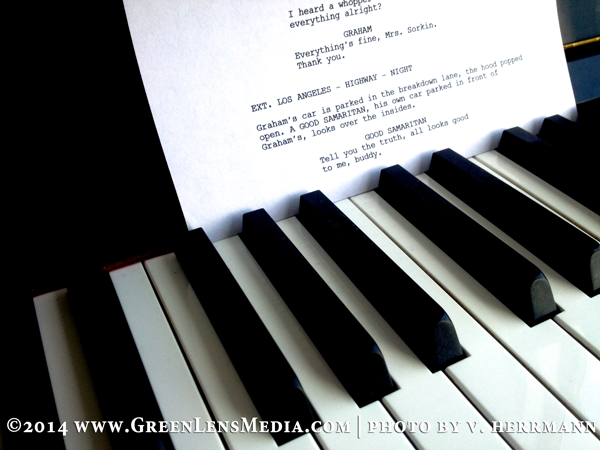
    piano&script06_fixed_v1.1I love all forms of art: visual art, music, performance, storytelling, etc. Movies are great because they combine so many of them. Among the best examples of this is the use of the perfect song in a film—the right song coming together with the right image. The combination creates moments that resonate with us. They make us think about the images the movie showed us anytime we hear the song. In fact, a very strong argument could be made that these are the most cinematic moments in movies.

    There’s far too many to choose from, but let’s break down just a few memorable moments, and attempt to examine closely why it is they work so well.

    GOODFELLAS – “Atlantis” by Donovan

    Here, I could just write “the entire movie” and move on. Martin Scorsese’s always been a director famous for the brilliant use of soundtracks in his movies. Goodfellas is perhaps the finest example of that. From Tony Bennett’s “Rags to Riches” launching us into the world of the gangster, the famous dead-body montage set to the outro of “Layla”, to the schizophrenic medley of classic rock and blues hits that take us through the paranoid, unbelievably fast moving life of a coked-out Henry Hill. The music reflects the emotional and mental state of the characters throughout all these sections of the story, and that’s why it’s so effective.

    Goodfellas is filled to the brim with amazing uses of popular songs, but perhaps my favorite is the scene in which Billy Batts is brutally beaten within an inch of his life, set to Donovan’s peaceful, beautiful hippie anthem “Atlantis”.

    At first, the song is very much in the background, almost unnoticeable on a first viewing. Donovan’s poetry (no singing here) over mellow chords comes in as Billy Batts and Jimmy (Robert DeNiro) are having a seemingly friendly chat at a bar. Tommy (Joe Pesci) enters the bar, the look on his face (and the fact that he was just insulted by Batts in the previous scene) telling us that some heavy stuff is about to go down.

    The calm, gentle music makes this quick rise in tension even more unbearable. Then… as Batts notices Pesci behind him, and DeNiro grabs a hold of his neck, a powerful drum fill takes us into the chorus. The music then gets bumped up in the mix, and the combination of its serene, catchy melody with the brutal beating we’re witnessing is shocking and horrifying—as the director intends it to be. Above all, though, it’s unforgettable.

    The cherry on top comes towards the end of the scene. The music dips down a little as Pesci looks over to Ray Liotta and says “I didn’t wanna get blood on your floor,” then it picks up again as we cut from his reaction—stunned and made all the more powerful by the music’s increase in volume.

    SPIDER-MAN 2 – “Raindrops Keep Fallin’ On My Head” by B.J. Thompson

    You rarely hear pop songs in superhero movies, and if this scene is any indication of how well the combo can work, it’s a shame. To set the scene up for those of you who might not be familiar with Spider-Man 2 (and if you’re not, shame on you!), the film is all about Peter Parker’s struggle to balance his personal life (his desires) with his job as Spider-Man (his responsibility). About halfway though the movie, he gets fed up and decides he’s not going to be Spider-Man anymore. So much so that he throws his costume in the trash! Gasp! Fade to black.

    From the darkness… the most beautiful ukulele chords, followed by the sun shining brightly at us. Then, right as the vocals come in, Peter walks into frame. Smiling. Blissful. Relaxed. The first time we’ve seen him be this way in the entire film. I really do consider this to be an almost magical sequence in the film. “Raindrops Keep Fallin” has been used in a number of movies (Forrest Gump, Clerks II), but never so perfectly as it’s used here.

    The lyrics, all about a person who has decided to be happy, even if raindrops keep falling on his head, fit so well with Peter’s state of mind during this portion of the movie, it’s scary. I almost feel like I don’t need to explain any further. Just watch the scene, and you’ll see exactly what I’m talking about.

    This is true movie magic. It’s as if the song was recorded specifically to be used over this scene. I honestly can’t even begin to think of another song that would have fit better.

    DJANGO UNCHAINED – “Freedom” by Anthony Hamilton and Elayna Boynton

    Like Scorsese, Quentin Tarantino is a filmmaker known for the exceptional use of popular music in his films. Pulp Fiction practically invites the audience to dance at certain points. Even though his last two movies have been period pieces (this and Inglourious Basterds), Tarantino doesn’t let that be a boundary. While neither Django nor Basterds are filled with pop music the way Pulp Fiction, Reservoir Dogs and Jackie Brown are, he still does use it, and to shockingly effective degrees.

    Take this scene: Django asks a slave on a plantation if she’s seen the Brittle brothers—his former owners, and the men he is looking for. She points one of them out to Django, he takes out one of those old-style retractable telescopes, and observes. As he spots him, the song’s rhythmic drums and tribal-style background vocals kick in.

    We cut to a flashback. The Brittle brothers. Tying Django’s wife, ready to whip her. Django pleads to spare her. The music is quite loud here, but the focus remains on Django’s desperate begging, and Broomhilda’s resilient face, getting ready for what she knows is coming.

    The song continues, loud and powerful, as we cut from Django and Broomhilda getting ready to escape, to Broomhilda about to be punished and Django pleading. Then… the whip cracks. Broomhilda’s gut wrenching scream fades into the chorus, now louder and more booming than ever.

    It’s horrifying. It literally sends goosebumps up my arm every time I watch the movie. This is a hard, hard scene to watch. The music’s loud, unrelenting bass line underlines the horror of this, and is one of the main reasons why this scene is not only so tough to watch, but also so gripping.

    As I said at the beginning of this post, there are COUNTLESS other examples of great songs used to great effects in great movies. What are some of your favorites?

  • 8 Movies That Prove Digital Can Look (Practically) as Good as Film

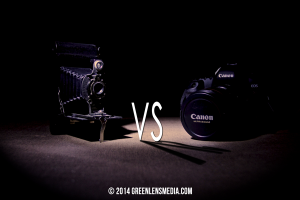
    Digital-vs-Film_v1.0Oh, this here, folks, is a fun one. Film vs. Digital is one of those debates that movie fans just cannot seem to stop having. If you’re not familiar with the difference, basically it boils down to this. Film means literally shooting footage on rolls of film (traditionally 35mm), and it’s the way movies have been shot for decades. It provides a beautiful, warm image that many consider to be cinema. But it also has its drawbacks.
    Digital, on the other hand, is usually more cost effective, allows you to shoot to your heart’s content, and, unlike film, isn’t vulnerable to physical damage. Unless you smash your camera with a hammer, I guess.

    For many, film’s inconveniences are plenty worth putting up with for the finished product. They swear that digital can never look as beautiful as film, or (if they’re of the more radical nature) that it’s ruining cinema all together. Personally, I happen to lean more on the film side of the argument. I think well shot film is stunning and I love the alive feeling it gives an image, with its grain and little imperfections.

    BUT. There are also plenty of movies shot on digital that I think look miles better than the majority of “film films” out there. In the hands of a talented cinematographer, digital filmmaking can look absolutely glorious—and achieve effects that film can’t.

    So, in the spirit of playing devil’s advocate, I decided to create a list (in no particular order) of movies shot on digital that do just that. If you’re a die hard fanatic of “film films” and think anything else is just a rip-off, hopefully this can make you see the enemy in a kinder light.

    Hugo – This really could be the start and end of the argument. If digital is good enough for Martin Scorsese, then it’s damn well good enough for you. Hugo looks like a storybook brought to life. Crisp, vivid and breathtaking. I haven’t gotten a chance to see it in 3D, and though I don’t usually like 3D, I have a feeling in this case, it might really add to the experience.

    Sin City – With Sin City, Robert Rodriguez managed to bring a comic book world to life like no one ever had, or has since. A perfect example of using digital filmmaking together with stellar visual effects to create a unique style that is unlike anything else out there.

    Gravity – If you didn’t get to experience this movie in theaters, then I’m sorry. As pretty much any review will tell you, Gravity is a visceral experience that ties the audience into the seat of a roller coaster and refuses to slow down. The beautiful imagery, combined with basically flawless CGI, creates a thrill ride that is one of the quickest 90 minutes I’ve ever had in a movie theater.

    Red State – Okay, so I know you’re thinking that all of the previous movies were special effects driven pictures which would of course work better with digital. Well, calm down, cowboy. Cause here’s Red State. Kevin Smith’s $4 million horror flick creeps up on you and forces your eyes wide open. The sharp, almost clinical look of the digital photography gives the movie an unsettling feel that resonates in the audience’s mind from first frame to last. To put it simply: film would have been too pretty for Red State.

    Collateral – Michael Mann can do amazing things with very little. It’d be hard to find a better example of that then Collateral . What’s essentially a basic, almost clichéd, noir story is made into a thrilling, personal narrative about people and the city of Los Angeles. Mann’s digital filmmaking gives the movie an extremely realistic, almost documentary-like look; a major reason why it works so well.

    The Girl With the Dragon Tattoo – I could have just easily put The Social Network or Zodiac here, but there’s something magical about The Girl With the Dragon Tattoo’s bleakness. From the pitch black apartments to the paper white Swedish snow, there’s intensity and suspense almost every frame. It’s hard to describe, but it’s immediately sensed while watching the movie. It’s an effect digital filmmaking helps achieve.

    Drive – Drive feels like a dream. A strange, violent dream with pulsating dance beats and lush, absorbing colors. It’s a testament to the power of visual storytelling, and the beautiful cinematography has a lot to do with that. When I found out that Drive was shot digitally, I was shocked. I couldn’t believe colors that deep, that rich, could be achieved with anything short of the highest quality film camera. Drive is proof that they can.

    Skyfall – Roger Deakins is one of the most talented people to ever hold a camera. That’s about all that needs to be said. Legendary filmmakers from the Coen brothers to Sam Mendes have called on him time and time again to give their movies that exquisite visual touch. Deakins’s work on Skyfall doesn’t reestablish, it only confirms his well deserved reputation as the master of the camera. Every single shot in the movie is a gorgeous painting, worthy of hanging in a museum. And you need look no further to find as compelling an argument for digital filmmaking.

  • The Top 13 Films of 2013

    movietheater01Movie lovers, rejoice. Great storytelling is still alive, well, and kicking like an over-caffeinated donkey. 2013 seemed like it was going to be a year film buffs would remember almost from the start. By the time it was over, there was no doubt about it.
    Before we start the list (arranged in descending order for the most dramatic umfh), I feel obligated to say that this is all only my opinion. Film is subjective, and what I found amazing, riveting and engaging, someone else might find boring, predictable and just plain stupid.

    That said: one of the best things about movies is the discussions they open up. So, if you strongly disagree about some of my choices (or would just like to share your opinion, whatever it may be), I urge you to leave a reply below and start a dialogue.

    Finally, I did not get a chance to see some of this year’s most acclaimed movies — namely 12 Years a Slave and Nebraska — so it’s very possible I missed out on some real gold.

    With all that out of the way, let’s get on to my picks for 2013’s best films.

    13. SPRING BREAKERS

    This was one of the first movies I saw this year, and boy, did it make an impression. Unrelenting, hypnotizing and unforgettable. Like many great works of art, Spring Breakers takes a decisive moral stand. It presents the world of spring break for everything that it is – a nightmare flimsily disguised as a fantasy.

    Also, say what you will about James Franco, but his performance here is one that absolutely glues your eyes to the screen and dares you to look away. It’s a peculiar role, and one many actors would be too afraid to tackle. But he does so with a fierceness that is incredible to watch.

    12. THE WAY, WAY BACK

    Movies about angsty teenagers are a dime a dozen, so it’s always a real treat when one comes along that manages to defy expectations. This certainly does that. Just as much about the adults as it is about the teens, The Way, Way Back is funny, heartbreaking and ultimately uplifting. It’s a feel-good movie the way feel-good movies should be done.

    Special props to Sam Rockwell (who is always a joy to watch) and Steve Carell, who branches off and plays someone unlike anyone else he’s ever played — a genuine jerk.

    11. MUD

    The fact that a movie this good didn’t even crack the top 10 tells you a whole lot about film in 2013. Like writer/director Jeff Nichols’ previous work Take Shelter, this is a deliberately paced character study with a unique down-on-the-bayou feel.

    As fantastic as Matthew McConaughey is (and boy, did he have a run of quality performances this year), the real star of the show is Tye Sheridan, the young actor who basically carries the movie on his shoulders. I can’t wait to see what he does next.

    10. AMERICAN HUSTLE

    Let me get this out of the way: This is a flawed film. HOWEVER — and this is a big however — if you gave me Blu-ray copies of every movie on this list, I’d probably pop in American Hustle more often than any of them.

    It’s a blast from start to finish, a treat for both your eyes and ears, and one of the most enjoyable movie going experiences I’ve had all year (twice). In particular, I want to point out the opening scene which is simply Christian Bale (who in my opinion gives the performance of the year here) putting on a hair piece. It’s so simple, yet so effective in telling you everything you need to know about the character. Brilliant storytelling, and a whole heap of fun, even if the entire package is slightly uneven.

    9. BLUE JASMINE

    Man, Cate Blanchett really killed it here. We all know she’s going to win the Oscar, and damn right, if you ask me. She’s impossible to take your eyes off of. I’ve heard a lot of people say this is a return to form for Woody Allen. I can’t speak to that, as I’ve only seen half a handful of his movies, but for a movie that is essentially people in rooms talking for an hour and a half, this is a blast.

    You’ll laugh, you’ll cry, you’ll thank your lucky stars your life isn’t as dysfunctional.

    8. THE HUNGER GAMES: CATCHING FIRE

    As great as so many movies were in 2013, one genre seemed to disappoint: the blockbuster. I’m sure many of you will disagree, but personally, I found practically every big-budget extravaganza disappointing. In particular, Thor: The Dark World, The Great Gatsby and especially Star Trek Into Darkness.

    So by the time The Hunger Games: Catching Fire rolled around, I had lost a lot of faith in big-budget/special effect pictures. And then I watched it. Holy crap.

    This is top-tier filmmaking from first frame to last. I won’t say much more about it, in case you haven’t seen it yet, except SEE IT. The first Hunger Games was a really solid teen action-drama, but this transcends the genre. It’s The Dark Knight of teen sci-fi/action movies. If you still can, definitely try to see it on the big screen.

    7. KILL YOUR DARLINGS

    This was yet another surprise. I saw this for one reason: Dane DeHaan. He is someone I consider to be amongst the finest actors working today, especially for his age. And while I certainly got a great DeHaan performance, I also got a whole lot more.

    This is a dark, engrossing film that pulls no punches and makes no apologies. If you enjoy films that deal with the darker side of youth, and explore interesting subcultures, this is for you. Check it out. Really great editing in this, too.

    6. DALLAS BUYERS CLUB

    Now we’re really talking. This is one of the finest character arcs I’ve seen in a very long time. Most great actors give an award worthy performance once every few years – this year alone, Matthew McConaughey gave three (we’ll get to the third). He’s unbelievable in this, as is Jared Leto, who transforms himself in the role of a pre-op transgender woman.

    Those two performance are worth the price of admission alone, but Dallas Buyers Club also has an incredibly tight, smart script that’s only made better by Jean-Marc Vallée’s confident direction.

    5. HER

    Romantic movies aren’t usually my thing. Sure, there’s plenty I do like, but for the most part, I find them to be very typical and not particularly interesting. Spike Jonez’s Her almost seems like a response to that complaint.

    The film follows genre tropes more closely than you might expect, but it does something utterly fresh and unique with them. Perhaps what I enjoyed most was the subtle sci-fi setting, which while a major part of the film, never overbears the characters, as it does in so many other sci-fi movies.

    Though a few moments might not land as well as intended, this film is really something special.

    4. MONSTERS UNIVERSITY

    Prequels are hard to get right. Actually, I take that back. Prequels are almost impossible to get right. After all, movies are all about change — characters going through arcs — and by definition, a prequel means we will be seeing characters that have yet to go through the change that drew us to them in the first place.

    The result is usually sloppy, unnecessary and most of all not nearly as interesting as the previous movies. But somehow, Pixar pulled it off.

    Monsters University has no right to be as good as it is. Yet, it is. It really, really is. It stands shoulder to shoulder with almost any of Pixar’s best, and like them, it is a spectacular achievement – made all the more so when you think about how much of a train wreck it could have been.

    3. INSIDE LLEWYN DAVIS

    Like Monsters University, Inside Llewyn Davis is a movie that shouldn’t work. It has no real plot, its protagonist doesn’t really change at all by the end, and yet… it is never once dull, never once pointless, and never for a moment not compelling. Indeed, it is the exact opposite.

    If Coen brothers’ humor is your thing, you’ll probably find this a melancholy, but hilarious movie. If it’s not, you’ll probably be depressed for days. Either way, you’ll likely find yourself sucked into the cold world of the early 60s New York folk scene.

    And if you wanna talk about Oscar snubs, few things fit the bill better than Oscar Isaac not getting nominated for his performance here.

    2. THE WOLF OF WALL STREET

    Once again, Martin Scorsese shows all the kids how it’s done. The legendary filmmaker may be 71 years old, but here he has crafted a film more full of unrelenting life and energy than anything even remotely comparable by his much younger peers. This is Goodfellas for the 21st century.

    The fast pace, almost constant voice over and subject matter certainly makes this a spiritual successor to both Goodfellas and Casino, but thanks to an entirely different cast, scriptwriter and cinematographer, it manages to stand on its own.

    Like in those films, Scorsese takes a strong moral stand while also presenting these characters with absolute honesty. The Wolf of Wall Street is not for the faint of heart, but if you can handle it, this is a movie that will entertain you like crazy, then make you hate yourself for being so entertained in the first place. It’s riveting stuff that will stay with you long after the credit rolls.

    PS: Though he’s only in the film for the first 20 or so minutes, Matthew McConaughey hits his third home run of the year here. Well done, Matthew. Now leave some work for the rest of Hollywood.

    1. THE PLACE BEYOND THE PINES

    I went to the theatre to see this movie early in 2013, knowing next to nothing about it. By the time the lights came up, I knew I had witnessed something really special. This isn’t just the best film of the year. This is the best film of the last several years. Walking out of the theatre, I knew there was hardly any chance I would see a movie this good by the time 2013 ended. While The Wolf of Wall Street made me doubt that, in the end, I had to give it up to Pines.

    To me, this is nothing short of a modern American masterpiece. It features career defining performances from all the leads — especially Eva Mendes and Bradley Cooper – and is the quickest 2 hours and 20 minutes you’ll have at the movies this side of The Dark Knight.

    It’s the kind of movie that won’t do the math for you. It forces you to think, to put the dots together in your head, and it refuses to succumb to your expectations. A lot of people will be turned off by some of the directions this movie goes in, but all that means is that this is a movie that takes real risks. And oh lord, is it refreshing to see that.

    From the acting, to the gorgeous cinematography, haunting score, and razor sharp editing, The Place Beyond the Pines is indeed a cinematic masterpiece.

    Also, although this is predominately an actor’s movie, I don’t consider it an overstatement to say it features the finest chase scene I have ever seen.

    If you haven’t checked this movie out yet… do it.

    The chances we’ll get a year so full to the brim with great movies is rare, but let’s just be grateful we got this one, eh?

    What were some of your favorites from 2013?

  • To Film or Not to Film? That Is The Question

    Being in film school makes you feel like you’ve aged 50 years in the span of two. Don’t get me wrong. It’s not a bad thing.

    I grew up in India, a country with brilliant minds and bold hearts. A country where your average young person is capable – and driven – enough to be exactly what they want to be, and be successful at it. But for the young Indian, being successful isn’t even the difficult part. The difficult part is self-knowledge. Knowing what you want to do. Finding the power to know, in a country where your future is determined as soon as you’re born: doctor, lawyer, engineer, business executive.

    When I applied to college, I applied as a journalism major. Far enough from the Indian career mold to be creative, but not so far that I can’t bank on the degree to get me a job when I graduate. The perfect balance.

    But coming to college changed everything.

    The idea of getting involved with filmmaking emerged from the experience of moving to the United States. I was in a new city, a new country, a new world. I was given a chance to rewrite my story, make new memories and, most importantly, get to know the person I would become. Suddenly, I was exposed to people from all over the world – my roommate was Korean, my best friend was Mexican, my study partner was half-Polish. Being surrounded by interesting people and interesting stories makes you fall into storytelling, even if you didn’t set out to do it.

    I’d always been interested in film, but it had never occurred to me that it was something I could do forever. There was something so exhilarating about the concept of creating something from nothing: of engaging in a craft founded in emotion and unpredictability; an outlier in the textbook-and-problem-set world of conventional knowledge.

    Think about the great directors of the world, for example. Alfred Hitchcock, Quentin Tarantino, Stanley Kubrick, Martin Scorsese (to name a few.)

    Now try separating film from filmmaker. You can’t.

    Every storyteller is unique. They vary in so many ways, but are great storytellers nonetheless. There are no formulas and numbers involved in storytelling. No right answers. No wrong answers. Just instinct and imagination.

    Terrifying, isn’t it? Having no rules? I can’t say it isn’t.

    But I wouldn’t be able to call my life a full life without stories. My life has been characterized by change. I’ve lived in Mumbai, Boston, Paris and London – I’ve been challenged, pushed out of my comfort zone and made to build up from scratch. By being exposed to stories and the storytellers that tell them, I’ve grown beyond the 20 years I’ve spent on this planet, because none of the places I lived in ever came with rules. But they came with faces, places and stories that are such an important part of my life. And that’s why I could never be a doctor, lawyer, engineer or business person.

    It might be human nature to fear the unknown, but it’s a filmmaker’s instinct to embrace it.

    Is it terrifying? Yes. Is it worth it? Absolutely.

  • Back to the Basics: Failure to Film

    Whenever people ask me what I do at work, I tell them I help out with making films. And whenever I say that, they’re intrigued: films? how glamorous!

    Except…not really.

    The reason the word film is so frequently associated with glamour is because most people are exposed exclusively to the final product. What they don’t see is all the mishaps, errors and edits that went into creating that glamourous product. What they don’t see is that everything that can possibly go wrong usually does.

    And the sad part is, I’m not even being dramatic.

    Take today, for example. I had the tripod set up. I had the camera mounted, the battery in, the SD card in. I even managed to plug the furry little mic into the correct jack (hey, when you’re a student, it’s the small victories that count…) I had a beautiful frame set up, my subject looked great and the light was co-operating. For once, everything was falling into place.

    So I went ahead and pressed the record button.

    One stimulating interview and exactly sixty minutes later, I felt great. The shoot went extremely well, we finished on schedule and I had some great sound bytes. I couldn’t wait to get started on the edit.

    And so the pack-up process began. I ejected the battery and the CF card, took the camera off the tripod. Folded it up. Unplugged the mic, opened it up to take out the – oh, wait. There was no battery.

    I stared wordlessly at the space where the battery should have been. Putting in a battery is probably the most elementary part of this whole process. There was no reason not to do it. I now have an hour of footage of my subject awkwardly moving his lips as no sound comes out and gesturing excitedly with no context.

    I’ve been on the Dean’s List at BU for three straight years, but I don’t know that I have to put in a battery.

    Now if you were in my place at this point in time, you would have two logical options:
    a) Cry.
    b) Cry.

    But both of those options render themselves useless when you ask yourself the dreaded question: now what?

    And then face the dreaded answer: Nothing.The footage is absolutely useless.

    While my complete lack of grey matter may make it seem like the moral of the story is don’t be an idiot, it really is simpler than that – be prepared. Make sure all your equipment is ready to work, and don’t rush the setup. Go in with a checklist and include even the most basic steps, down to the pack-up.

    It’s when you mess up the basics that you mess with the final product. It’s when you compromise on things like batteries and cards that you taint the perfection that people associate with your craft. I, for one, am not ready for my friends and family to think that my job is anything but clappers, bright lights and Matt Damon. And if all it takes to maintain that perception is being attentive and being prepared…then failure is not an option.

  • Books are Books, Movies are Movies, and Now the Twain Shall Meet

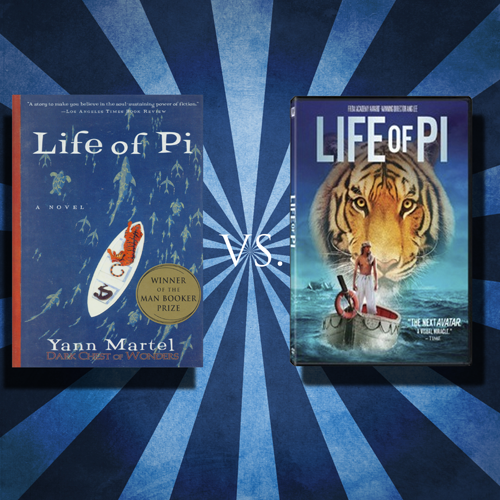
    Life of Pi vs. Life of Pi
    Life of Pi Book vs. Film Adaptation

    I know what you’re thinking. Ho-hum, another books vs. movies debate. But don’t stop reading yet! This is not a debate. I love books. And I live movies (no, that’s not a typo.) And I’m tired of people pitting the two against each other.

    Think about it. Both books and movies demand a significant amount of effort in bringing them to life. Both are mentally stimulating and emotionally engaging. I was only ten years old when I read Life of Pi. In case you haven’t heard of Life of Pi yet, it’s a story about a teenage boy who loses his family, loses his home and finds himself stranded at sea with only a ravenous tiger for company. But when I tried explaining the story with my best friend at the time, she scoffed and said “I can’t even imagine that.”

    But that’s exactly the point.

    So many of the world’s stories are about worlds and times that most people consider to be beyond the realm of human imagination. Books deemed “unfilmable” by book and movie lovers alike. The Hobbit. Harry Potter. Game of Thrones. The magic realism that characterizes Pi’s story – and Harry’s, and Frodo’s, and Tony Stark’s – sets them apart from stories closer to home. But it is the “unfilmable” and “unimaginable” nature of these stories that make them the stories most worthy of being imagined. Brought to life.

    And what better way to do that than through film?

    Book lovers insist that the movie can never be the same as the book, but does it have to be the same? If the movie was meant to be the same as the book, it wouldn’t be a movie. For me, the point of a movie adaptation is to re-imagine the story of the book without overwhelming it. I grew up with Harry Potter, and reading Life of Pi changed my life forever. And the film versions of those books didn’t match up with the little movies I’d already made in my had while reading them.

    But this little film I already made in my head while reading the book Life of Pi is one of those rare examples of a movie whose 3D visuals don’t overwhelm its storytelling but enhance it. It’s about that flawless balance between world and visual, capturing the complexities of a character’s world and the the viewer’s mental world.

    That said, even if the screenplay is amazing and the visuals are flawless, much of the audience’s decision about whether or not they like the film relies on their own emotions. Their own story. Having read the books for all the adaptations I’ve watched, I never walked into a movie thinking it would make me feel anything new. But each and every time, it did. And that’s what makes me believe in film as the book’s friend rather than its enemy. It’s the only medium that has the power to take an existing experience, reshape it and make it visceral in the way no other medium can.