Tag: effective

  • Nursing the Bruised Ego — Why Tough Feedback is the Best Feedback

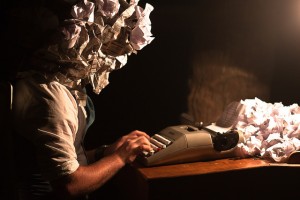
    Image: CC-BY Writer’s Block I by Drew Coffman @ Flickr flic.kr/p/8kvbSL
    Image: CC-BY Writer’s Block I by Drew Coffman @ Flickr flic.kr/p/8kvbSL

    It takes a lot to be a successful writer. For starters, it takes persistence and hard work. It takes imagination. Passion. Love for what you’re doing. But it also takes a whooole lot of objectivity.

    I don’t care if you’re Quentin Tarantino or Ernest Hemingway—if you’re not objective about your own work, you will never reach your full potential. Still, easier said than done. Objectivity can be a tough thing to grasp as a writer. So what do we do? We turn to feedback.

    Feedback is one of the most important tools in a writer’s arsenal, and good feedback (along with a writer smart enough to incorporate it) can be the difference between a mediocre first draft and a spectacular final draft. But brutally honest feedback (which is of course, the best feedback), can be a tough pill to swallow.

    I’m sure the majority of writers reading this know exactly what I’m talking about. You’ve finished that first draft. You’re in love with the kick-ass protagonist, the thrilling plot, and the pitch perfect comic relief. You send it out to some peers for review, and wait for your gold star and firm pat on the back. Then… the feedback arrives.

    Turns out that kick-ass protagonist is a wimp. That thrilling plot is a boredom factory. And as for that pitch perfect comic relief? About as funny as a funeral. At this point, most of us go through one of two phases.

    A: We fall into a deep depression, convinced we are hacks who aren’t worthy of writing Twilight fan fiction.
    B: We reach the logical conclusion that the reviewers are the real hacks; a bunch of amateurs who clearly can’t grasp our brilliance.

    Sometimes, if the work is really important to us or we’re particularly proud of it, we’ll go through both. But as with any grief, eventually there must come acceptance. Okay, so maybe we haven’t written our masterpiece, but that doesn’t mean we might not further on down the road. And that road is paved by rewriting.

    We toughen up. We go through the feedback again, side by side with our story, and we assess every note with absolute honesty. Yes. Maybe that witty dialogue we thought was the funniest part of the story really does nothing but bring it to a complete halt. Maybe that plot convenience we thought was perfectly legitimate does make life far too easy for the protagonist. Maybe the entire second half of the story is boring and doesn’t make a lick of sense. Whatever the case, we keep working.

    Having said all this, I do think it’s important to remember that not all feedback is valid. Sometimes a reader really won’t get your story, even if it’s an awesome one. In that situation it can be wise to discard some (though perhaps not all) of their feedback. However, if the number of people who aren’t getting your story keeps pilling on high, then maybe they aren’t the problem.

    Avoiding bad feedback becomes much easier if we seek out the opinions of people we respect. Whether they are fellow writers, teachers, or just friends who have good taste, people who have similar storytelling sensibilities to ours and who aren’t afraid to bruise our egos are invaluable resources. We owe them a great debt. Without them, our stories might never reach their full potential. Though perhaps we shouldn’t let them know, or they might start charging.

    When we’re watching a movie, especially one by a creative team whose work we aren’t familiar with, we have no problem being objective. If it’s garbage, we will say it’s garbage without so much as a whimper. If it’s amazing, we will praise its name from the rooftops of the tallest skyscrapers. To be an accomplished writer, we have to treat our own work with that same kind of objectivity. We have to take pride in our work, but we also have to be the first to point out when it’s not up to snuff. It’s as simple as that.

    PS: You’ll probably notice the similarity between this and the post on rewriting. We might be exploring familiar ground, but that’s only because this ground is so important. I’m a big believer in the theory of “first draft, worst draft”, and that if you want to really bring your work to the next level, you’ve got to be willing to keep rewriting and keep rewriting.

    So if you haven’t checked out the post on rewriting—which you can do so here—and you found this one useful, give it a look through, as these topics go very much hand in hand.
  • The Right Song, The Right Movie

    piano&script06_fixed_v1.1I love all forms of art: visual art, music, performance, storytelling, etc. Movies are great because they combine so many of them. Among the best examples of this is the use of the perfect song in a film—the right song coming together with the right image. The combination creates moments that resonate with us. They make us think about the images the movie showed us anytime we hear the song. In fact, a very strong argument could be made that these are the most cinematic moments in movies.

    There’s far too many to choose from, but let’s break down just a few memorable moments, and attempt to examine closely why it is they work so well.

    GOODFELLAS – “Atlantis” by Donovan

    Here, I could just write “the entire movie” and move on. Martin Scorsese’s always been a director famous for the brilliant use of soundtracks in his movies. Goodfellas is perhaps the finest example of that. From Tony Bennett’s “Rags to Riches” launching us into the world of the gangster, the famous dead-body montage set to the outro of “Layla”, to the schizophrenic medley of classic rock and blues hits that take us through the paranoid, unbelievably fast moving life of a coked-out Henry Hill. The music reflects the emotional and mental state of the characters throughout all these sections of the story, and that’s why it’s so effective.

    Goodfellas is filled to the brim with amazing uses of popular songs, but perhaps my favorite is the scene in which Billy Batts is brutally beaten within an inch of his life, set to Donovan’s peaceful, beautiful hippie anthem “Atlantis”.

    At first, the song is very much in the background, almost unnoticeable on a first viewing. Donovan’s poetry (no singing here) over mellow chords comes in as Billy Batts and Jimmy (Robert DeNiro) are having a seemingly friendly chat at a bar. Tommy (Joe Pesci) enters the bar, the look on his face (and the fact that he was just insulted by Batts in the previous scene) telling us that some heavy stuff is about to go down.

    The calm, gentle music makes this quick rise in tension even more unbearable. Then… as Batts notices Pesci behind him, and DeNiro grabs a hold of his neck, a powerful drum fill takes us into the chorus. The music then gets bumped up in the mix, and the combination of its serene, catchy melody with the brutal beating we’re witnessing is shocking and horrifying—as the director intends it to be. Above all, though, it’s unforgettable.

    The cherry on top comes towards the end of the scene. The music dips down a little as Pesci looks over to Ray Liotta and says “I didn’t wanna get blood on your floor,” then it picks up again as we cut from his reaction—stunned and made all the more powerful by the music’s increase in volume.

    SPIDER-MAN 2 – “Raindrops Keep Fallin’ On My Head” by B.J. Thompson

    You rarely hear pop songs in superhero movies, and if this scene is any indication of how well the combo can work, it’s a shame. To set the scene up for those of you who might not be familiar with Spider-Man 2 (and if you’re not, shame on you!), the film is all about Peter Parker’s struggle to balance his personal life (his desires) with his job as Spider-Man (his responsibility). About halfway though the movie, he gets fed up and decides he’s not going to be Spider-Man anymore. So much so that he throws his costume in the trash! Gasp! Fade to black.

    From the darkness… the most beautiful ukulele chords, followed by the sun shining brightly at us. Then, right as the vocals come in, Peter walks into frame. Smiling. Blissful. Relaxed. The first time we’ve seen him be this way in the entire film. I really do consider this to be an almost magical sequence in the film. “Raindrops Keep Fallin” has been used in a number of movies (Forrest Gump, Clerks II), but never so perfectly as it’s used here.

    The lyrics, all about a person who has decided to be happy, even if raindrops keep falling on his head, fit so well with Peter’s state of mind during this portion of the movie, it’s scary. I almost feel like I don’t need to explain any further. Just watch the scene, and you’ll see exactly what I’m talking about.

    This is true movie magic. It’s as if the song was recorded specifically to be used over this scene. I honestly can’t even begin to think of another song that would have fit better.

    DJANGO UNCHAINED – “Freedom” by Anthony Hamilton and Elayna Boynton

    Like Scorsese, Quentin Tarantino is a filmmaker known for the exceptional use of popular music in his films. Pulp Fiction practically invites the audience to dance at certain points. Even though his last two movies have been period pieces (this and Inglourious Basterds), Tarantino doesn’t let that be a boundary. While neither Django nor Basterds are filled with pop music the way Pulp Fiction, Reservoir Dogs and Jackie Brown are, he still does use it, and to shockingly effective degrees.

    Take this scene: Django asks a slave on a plantation if she’s seen the Brittle brothers—his former owners, and the men he is looking for. She points one of them out to Django, he takes out one of those old-style retractable telescopes, and observes. As he spots him, the song’s rhythmic drums and tribal-style background vocals kick in.

    We cut to a flashback. The Brittle brothers. Tying Django’s wife, ready to whip her. Django pleads to spare her. The music is quite loud here, but the focus remains on Django’s desperate begging, and Broomhilda’s resilient face, getting ready for what she knows is coming.

    The song continues, loud and powerful, as we cut from Django and Broomhilda getting ready to escape, to Broomhilda about to be punished and Django pleading. Then… the whip cracks. Broomhilda’s gut wrenching scream fades into the chorus, now louder and more booming than ever.

    It’s horrifying. It literally sends goosebumps up my arm every time I watch the movie. This is a hard, hard scene to watch. The music’s loud, unrelenting bass line underlines the horror of this, and is one of the main reasons why this scene is not only so tough to watch, but also so gripping.

    As I said at the beginning of this post, there are COUNTLESS other examples of great songs used to great effects in great movies. What are some of your favorites?