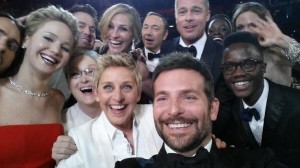
 As I’m sure you’re aware, last night was another extravagant Oscar night in that little city known as L.A. Celebrities walked the red carpet. Entertainment reporters provided riveting commentary on dresses, dresses and more dresses. Jennifer Lawrence once again proved that she’s high in the running for “Most Down to Earth A-Lister”. All of it: standard, predictable Academy Awards fare. And if you followed along with Oscar predictions in the slightest over the last few weeks—the predictability did not end there.
Nearly every major award went exactly to whom most of the world predicted. Matthew McConaughey and Jared Leto both won for their work on Dallas Buyer’s Club, of course. Cate Blanchett took it home for Blue Jasmine, of course. Lupita Nyong’o did the same for 12 Years a Slave, which as anticipated ended up snagging the big prize —Best Picture—as well as Best Adapted Screenplay for John Ridley.
Though it didn’t take the coveted Best Picture prize, the night’s big winner was the sci-fi thrill-ride Gravity, which accumulated 7 statues when it was all said and done, including Best Director for Alfonso Cuarón. Yet, even that was no big surprise—indeed, most prediction lists had Cuarón as front runner. By the time midnight rolled around and the show had reached its finale, there was not a gasp to be heard. No outrage over the best picture winner. No crying that a director got robbed. There was just… nothing. The Oscars came, they went, and that was that.
To be clear, I’m not demanding that the Oscars suddenly start being scandalous for the sake of scandal. I certainly wouldn’t want it to become an LA-themed episode of “The Jersey Shore”. But most years there is at least something to keep tensions high. Something to keep anticipation flowing. People at the edge of their seats. This year, it was all by the numbers.
And though I think all of the winners deserve their prizes, it’s a shame that such an extraordinary year in movies had such a dull ceremony to celebrate it.
Unlike some previous Oscar nights, the blame does not lie in the hands of the host. From her opening monologue right up till the end, Ellen was easily a highlight of the show. Her lively, wit-drenched attitude helped keep the audience entertained while we went from one needless, overdrawn musical performance to another. Seriously. This was ridiculous. I didn’t watch the Grammy’s, but after last night, I might as well have.
There were a grand total of six musical performances last night. Six! For a ceremony that’s supposed to be about movies, that’s about five too many. Even the beautiful memorial for Hollywood’s deceased (which I was very happy to see included Roger Ebert) was tagged on by a totally unnecessary 4 minutes of Bette Midler singing “Wind Beneath My Wings”.
Stuff like this really made the show drag on way past its welcome—much more than usual, anyway. I ask you: Do we really need to see U2 perform at the Oscars?
This apparent need to draw things out was a running theme throughout the ceremony, with even some of the night’s best moments—such as Ellen buying pizza for the guests—staying just a little bit longer than they should have.
As much as I might sound like a grumpy old man, it wasn’t all bad. No, there were definitely moments that reminded me of why watching the Oscars has been a part of my life since I can recall.
There were some beautiful acceptance speeches, especially by Cate Blanchett and Jared Leto. Though my personal favorite was the wife/husband duo of Kristen Anderson-Lopez and Robert Lopez accepting their award for Best Original Song via rhyme. If you missed it, go watch the clip on YouTube right now. Though I’m sure even if you missed the broadcast, you probably heard the cumulative “Aaaaawwwwwww” that emerged from living rooms worldwide.
But what was the ultimate highlight? It would have to be Bill Murray’s brief and impromptu tribute to his deceased collaborator, Harold Ramis. Murray threw in Ramis’s name while presenting the nominations for Best Cinematography, garnering much deserved applause for the late, great filmmaker. Bill even had the respect to apologize afterwards for going off-prompter. What a class act that guy is.
Oh, and although just a few paragraphs ago I complained about the needless musical performance, I thoroughly enjoy both Karen O singing “The Moon Song” and Pink’s rendition of “Somewhere Over the Rainbow” as a tribute to one of my all time favorite films, The Wizard of Oz.
So, yes, last night’s Oscars had its moments. Some beautiful, some hilarious, some heartbreaking. But overall? I can’t imagine anyone will remember the ceremony in a month or two. There was just nothing exciting about it. It just was a thing, and now that thing is over. All of the winners deserved their trophies, yes (I was particularly happy to see Spike Jonze win Best Original Screenplay for Her), and Ellen did a great job as the host. But if the Oscars want to stay relevant a decade from now? They’re certainly going to have to spice things up.
My suggestion? Simple. Stop dragging the damn thing out.
I’m not a sports guy, so the Oscars are about as close as I get to having a Super Bowl, and yet I still think they’re way too long. In a world that moves as fast as ours, with dwindling attention spans and a gazillian distractions at every turn, there is simply no need for the Oscars to be a 3-and-a-half hour event. Cut out all the fluff (cough, six musical performances, cough) and make it a quick two hour show that doesn’t waste our time.
Maybe that sounds blasphemous coming from a movie buff, but it is precisely my love of movies that leads me to take this stand. A year full of such incredible film deserves a celebration that measures up. All writers known the idiom “kill your darlings”, and nowhere will you find more darlings in need of a quick and painless death than at the Oscars.
What are your thoughts? Did any of the winners surprise or downright outrage you? Are the Oscars really needlessly long, or am I just a grumpy old man trapped in a younger man’s body?
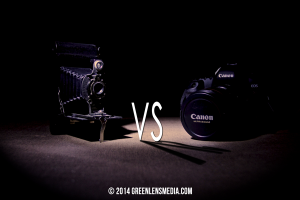 Oh, this here, folks, is a fun one. Film vs. Digital is one of those debates that movie fans just cannot seem to stop having. If you’re not familiar with the difference, basically it boils down to this. Film means literally shooting footage on rolls of film (traditionally 35mm), and it’s the way movies have been shot for decades. It provides a beautiful, warm image that many consider to be cinema. But it also has its drawbacks.