Tag: 3d

  • 8 Movies That Prove Digital Can Look (Practically) as Good as Film

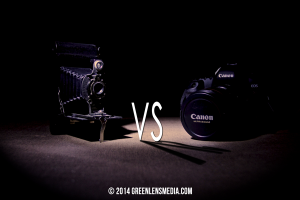
    Digital-vs-Film_v1.0Oh, this here, folks, is a fun one. Film vs. Digital is one of those debates that movie fans just cannot seem to stop having. If you’re not familiar with the difference, basically it boils down to this. Film means literally shooting footage on rolls of film (traditionally 35mm), and it’s the way movies have been shot for decades. It provides a beautiful, warm image that many consider to be cinema. But it also has its drawbacks.

    Digital, on the other hand, is usually more cost effective, allows you to shoot to your heart’s content, and, unlike film, isn’t vulnerable to physical damage. Unless you smash your camera with a hammer, I guess.

    For many, film’s inconveniences are plenty worth putting up with for the finished product. They swear that digital can never look as beautiful as film, or (if they’re of the more radical nature) that it’s ruining cinema all together. Personally, I happen to lean more on the film side of the argument. I think well shot film is stunning and I love the alive feeling it gives an image, with its grain and little imperfections.

    BUT. There are also plenty of movies shot on digital that I think look miles better than the majority of “film films” out there. In the hands of a talented cinematographer, digital filmmaking can look absolutely glorious—and achieve effects that film can’t.

    So, in the spirit of playing devil’s advocate, I decided to create a list (in no particular order) of movies shot on digital that do just that. If you’re a die hard fanatic of “film films” and think anything else is just a rip-off, hopefully this can make you see the enemy in a kinder light.

    Hugo – This really could be the start and end of the argument. If digital is good enough for Martin Scorsese, then it’s damn well good enough for you. Hugo looks like a storybook brought to life. Crisp, vivid and breathtaking. I haven’t gotten a chance to see it in 3D, and though I don’t usually like 3D, I have a feeling in this case, it might really add to the experience.

    Sin City – With Sin City, Robert Rodriguez managed to bring a comic book world to life like no one ever had, or has since. A perfect example of using digital filmmaking together with stellar visual effects to create a unique style that is unlike anything else out there.

    Gravity – If you didn’t get to experience this movie in theaters, then I’m sorry. As pretty much any review will tell you, Gravity is a visceral experience that ties the audience into the seat of a roller coaster and refuses to slow down. The beautiful imagery, combined with basically flawless CGI, creates a thrill ride that is one of the quickest 90 minutes I’ve ever had in a movie theater.

    Red State – Okay, so I know you’re thinking that all of the previous movies were special effects driven pictures which would of course work better with digital. Well, calm down, cowboy. Cause here’s Red State. Kevin Smith’s $4 million horror flick creeps up on you and forces your eyes wide open. The sharp, almost clinical look of the digital photography gives the movie an unsettling feel that resonates in the audience’s mind from first frame to last. To put it simply: film would have been too pretty for Red State.

    Collateral – Michael Mann can do amazing things with very little. It’d be hard to find a better example of that then Collateral . What’s essentially a basic, almost clichéd, noir story is made into a thrilling, personal narrative about people and the city of Los Angeles. Mann’s digital filmmaking gives the movie an extremely realistic, almost documentary-like look; a major reason why it works so well.

    The Girl With the Dragon Tattoo – I could have just easily put The Social Network or Zodiac here, but there’s something magical about The Girl With the Dragon Tattoo’s bleakness. From the pitch black apartments to the paper white Swedish snow, there’s intensity and suspense almost every frame. It’s hard to describe, but it’s immediately sensed while watching the movie. It’s an effect digital filmmaking helps achieve.

    Drive – Drive feels like a dream. A strange, violent dream with pulsating dance beats and lush, absorbing colors. It’s a testament to the power of visual storytelling, and the beautiful cinematography has a lot to do with that. When I found out that Drive was shot digitally, I was shocked. I couldn’t believe colors that deep, that rich, could be achieved with anything short of the highest quality film camera. Drive is proof that they can.

    Skyfall – Roger Deakins is one of the most talented people to ever hold a camera. That’s about all that needs to be said. Legendary filmmakers from the Coen brothers to Sam Mendes have called on him time and time again to give their movies that exquisite visual touch. Deakins’s work on Skyfall doesn’t reestablish, it only confirms his well deserved reputation as the master of the camera. Every single shot in the movie is a gorgeous painting, worthy of hanging in a museum. And you need look no further to find as compelling an argument for digital filmmaking.

  • The Hobbit: An Expected Review

    When I was a little kid, my father collected me, my little brother and sister, and a huge silver Casio tape-playing boom box, and set us all down around the fireplace. He turned the overhead light out and an orange glow from the fire cast itself onto the carpet, illuminating the tape deck.

    “What we’re about to listen to is a very special story,” he said. “I read this story a long time ago, and I enjoyed it so much I want to share it with you kids. If it gets too scary we’ll turn it off.” We all looked at each other and he hit the play button.

    Listening to The Hobbit in the dark around this light is one of my favorite memories. The recording was produced by The Mind’s Eye, and was a full production, complete with multiple talented voices, an extensive sound effects library, and an impressively orchestrated score. The recording originally aired in 1979 on NPR Radio, and it had finally made its way to three children listening by a hearth, the dog asleep in the corner.

    I loved this story, specifically this telling of it, so much so that in middle school I stole it out of my father’s closet and would play each tape to put me to sleep, every night. When the series ended I just started the 6 hour adventure from the beginning again. This continued for an embarrassingly long time, to the point that even today I can anticipate most lines and recite many of them. You must understand: for some reason, maybe the fact of how my journey with Bilbo started in our family room, I was a little obsessed with Tolkien and his world of Middle-Earth

    In 2000, I went to a movie. I don’t remember what movie–it doesn’t matter. What mattered was the trailer. It was a teaser, and it opened with a New Zealand hill top covered in dry grass, black rock, and mountains in the background. Epically adventurous music began, and up over the hill came a tall bearded man in a pointed grey hat and cloak carrying a wooden staff. At this point I was too excited to sit still, because I thought, oh wow, the next thing to come over the hill is going to be 13 dwarves and a hobbit and I’m going to go nuts. When the pointy eared elf walk over next I thought, that dwarf looks unusually high. Then came a character who could ONLY be a dwarf, followed by some obvious hobbits, and then some other tall people I couldn’t place. If you can’t tell, I had not read Lord of the Rings, but I knew of it. Though I was looking forward to the film no doubt, I was crushed it wasn’t The Hobbit.

    Fast forward through movies of Fellowship and Two Towers, and I’m a true LOTR fan. When the release day for Return of the King arrived I thought it was the end of the age of Middle-Earth, a three year movie-viewing journey. I waited in line with other enthusiast friends opening day and took it in, taking a mental picture in my mind. It was a special day, a great day, and a sad day all at once. It was worth the wait, heck, the wait enhanced it, but knowing it was over was tough to stomach.

    After its successes, we learned Hobbit was being talked about, and that was a giddy feeling. Then I caught wind of Peter Jackson’s awful relationship with New Line Cinema, and how it might jeopardize him directing, which sounded sacrilegious and a big blow to a well-defined series. Then there was the notion it might not have the same actors, or even be done at all. Years went by with nothing but rumors and hope (whispers of a nameless fear?). When it was evident Jackson was back on board, and when casting finally started, and when filming actually began, each stage brought this feeling of relief. I was there, and now would go back again.

    Only this time I would go back to an unknown sight. 48 frames per second. Twice the frames for double the clarity. You see, 3D is an issue for some. Fortunately I don’t get 3D sick, but I do heavily notice, with the fields being arranged the way they need to be for stereoscopic filmmaking, the picture taking a big hit in crispness and brightness. It is the nature of the beast, and the price for 3D. Jackson announced his belief that 48fps would be a better way to view the film. With this high frame rate (look for “HFR” in the marquee at the theater) we were going to break from that ever traditional and cinematic 24fps we’ve come to know, love, and get used to. The reaction from Comic-Con couldn’t be more deafening. I read in the news the crowd was nervous, hyper, then outraged at the clip they were shown, and how it looked more like a soap opera on TV than a throwback to the Shire.

    Whatever. At least they’re making it, I thought.

    I tried to avoid the screenshots, the behind-the-scenes clips online, and the eventually released trailers, but I failed miserably and was unable to help myself. All the while knowing this story I have waited 9, no 12, no 22 years for, was going to be told in a revolutionary new format. Pioneering new territory is thrilling, and as a filmmaker, I am always grateful to ride the wave of the new, scary as it may be. With the release of digital video, then DSLRs, then FCPX, the end of manufactured film cameras and the slow decay of celluloid overall, I’ve been privy to some fascinating, industry-changing events. I must be honest, though: as we got closer and closer to December 14th, I legitimately became nervous about this new frame rate, and worried it would spoil something near and dear. All I had to go on was that its Peter Jackson we’re talking about. Middle-Earth is his baby after J.R.R., and I just need to trust he wants to do the film justice.

    This evening, I again found myself in a line for another adventure. Joined by my brother Sam, who picked up tickets the day before, we arrive an hour early to already find a line of 50 people. When we got through we had to wait in another line outside the theater doors. When finally we were loosed, we found some seats in the exact middle, and settled in immovably.

    This was indeed the experience I wanted. The HFR version is different, and will look slightly strange to those not expecting it, but it truly does fade away. I plan on seeing it again in the other formats to compare, but as far as content I couldn’t be happier. I won’t spoil anything for those who haven’t seen it or who don’t know the story (what are you waiting for?), but take it from a very critical filmmaker and an even more critical fan that this movie is definitely worth seeing.

    My advice is to know what version you are walking into. There are a least 5 different versions: IMAX 3D, RealD 3D (RealD is a different 3D technology than IMAX), RealD 3D HFR (48fps), IMAX 3D HFR (48fps), and 2D Digital. For the most familiar cinematic look, your best bet is probably the 2D digital, but I want to verify this before committing to that claim.

    I’ve heard multiple complaints about too much CGI, but we all saw that coming. Personally, I too prefer great robotics and puppetry done right (Jurassic Park anyone?), but to get here at all was an elating experience in itself. I give the movie an A, mostly because I felt the Goblin King needed some major advice and reconsideration in the 3D modeling department, but moreover because I don’t think anything can really top what’s in the mind.

    It is absolutely a must-see this winter, though, and I hope you enjoy An Unexpected Journey as much as I did. It has rekindled the same magic I felt at the beginning of the LOTR run, where you had to wait a whole year before you could continue the quest, but the pay off was practically tactile. That feeling that I thought was a one-time occurrence is now present again, and it is this weird sensation of reliving the greatness of the LOTR span, but with a new, unseen yet equally epic set of films. And while it brought me back to all these memories, it mostly put me right back where I started, right next to that fire so many years ago. It was warm, and invited me right in.