Category: Editing

  • Green Lens Media Produces Videos for ELM’s 2020 Commonwealth Environmental Leadership Awards

    Green Lens Media Produces Videos for ELM’s 2020 Commonwealth Environmental Leadership Awards

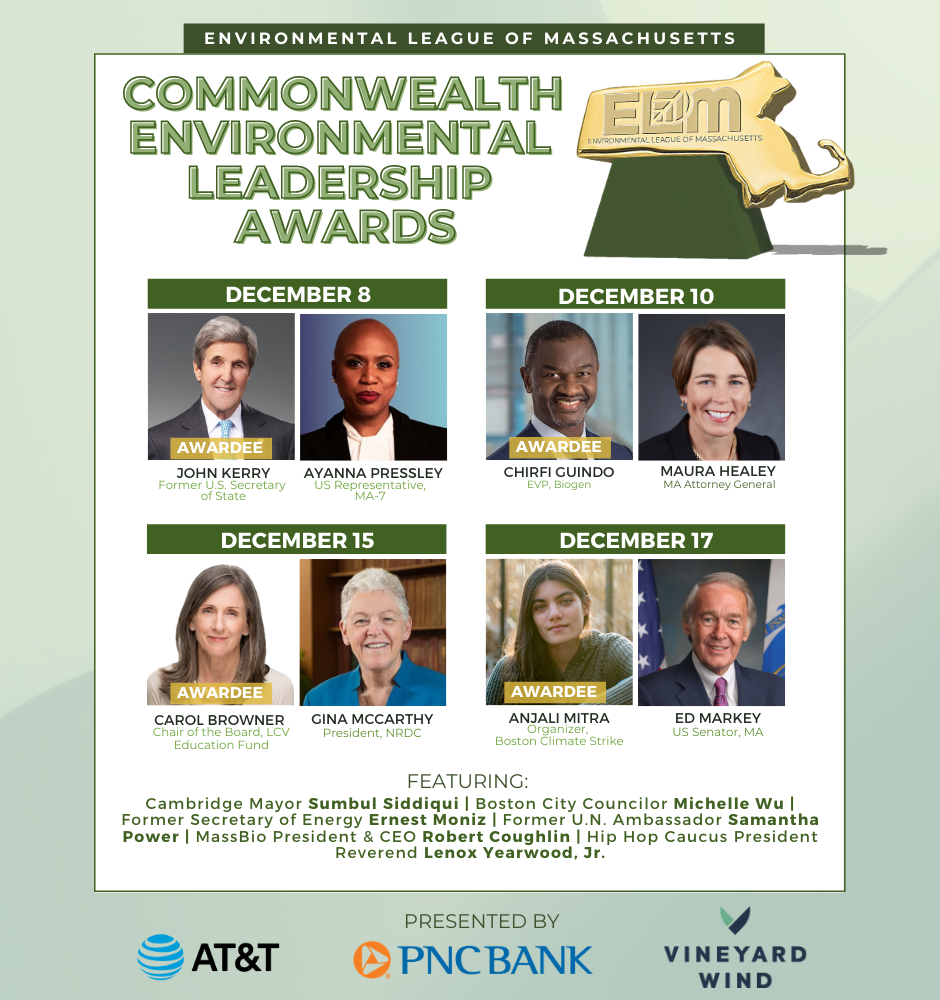
    The Environmental League of Massachusetts (ELM) signed Green Lens Media onboard to create videos for their 2020 Commonwealth Environmental Leadership Awards. This year’s awards go to Secretary John Kerry (Dec. 8), Biogen (Dec. 10), the League of Conservation Voters (Dec. 15), and the organizers of the Boston Climate Strike (Dec. 17).

    You can read more about the upcoming CELA event below, and register for all four presentations (free) here: http://bit.ly/CELAS2020
    But first, some history about our projects with this terrific organization…

    Our history with ELM…

    GLM was proud to first begin working with ELM in 2017 during their efforts to increase public awareness and support for funding state park projects. As a company founded on the mission of providing top shelf video production services to green and eco-conscious organizations, businesses, institutions and advocates, ELM is exactly the type of client for which we aspire to fill our production schedules.
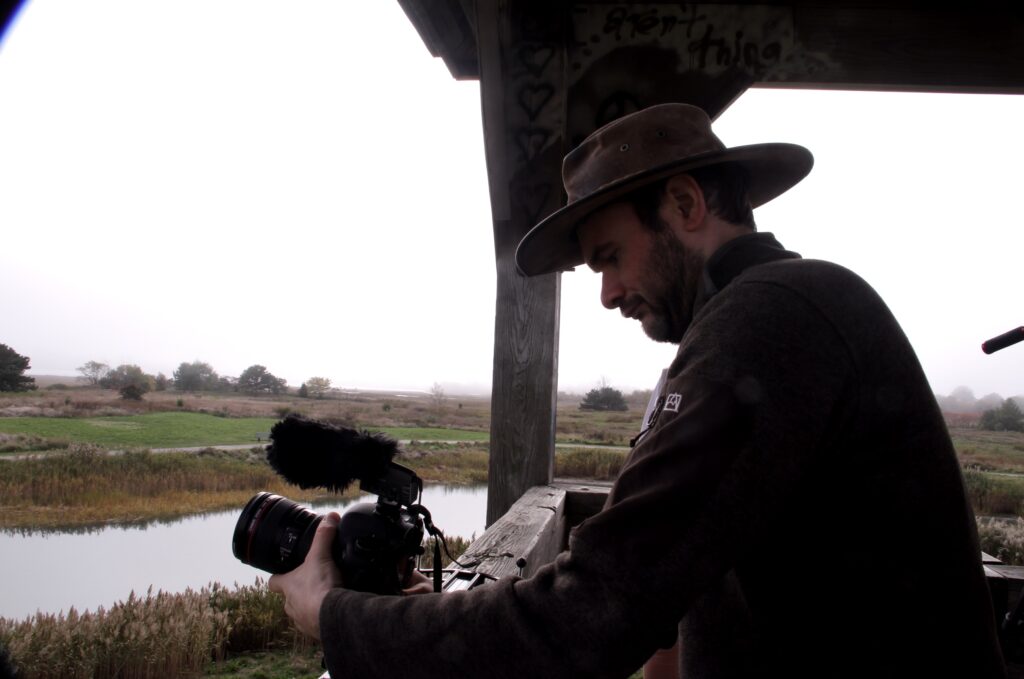
    Green Lens Media founder Adam Greene captures a foggy scene at Belle Isle Marsh Reservation in Boston, MA.
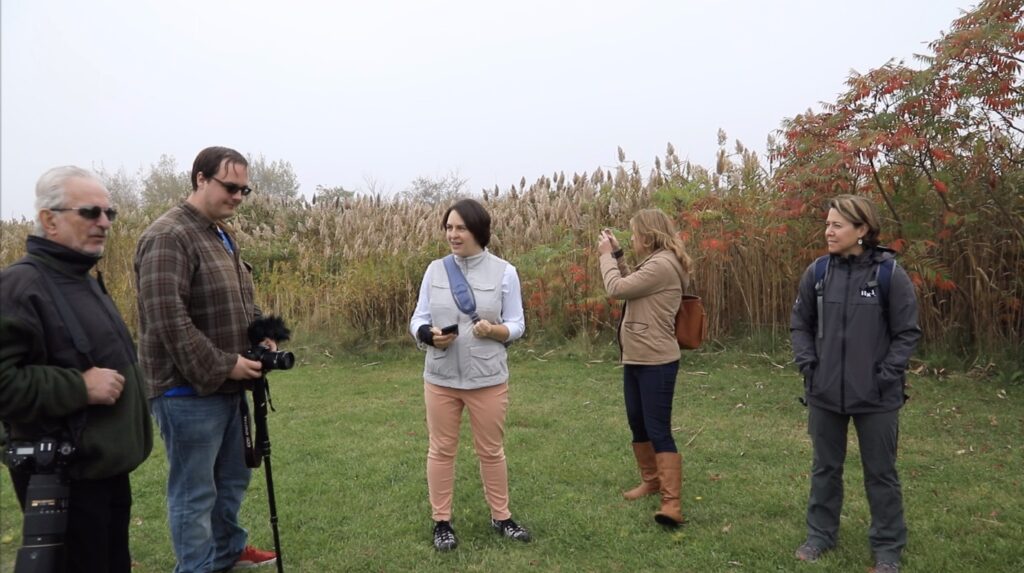
    GLM Script Supervisor and Camera Assistant Viktor Herrmann discusses shoot agenda with ELM’s Legislative Director Erica Mattison and the rest of the on-camera talent.

    Our film shoots for that first project took us to the hidden gem of Belle Isle Marsh right near Logan Airport, which the Executive Office of Energy and Environmental Affairs refers to as a Reservation that “includes the last remnant within Boston of the salt marshes that were once prevalent along the Massachusetts Bay shoreline.” If you haven’t been, put it on your list–it’s an incredible to have in the backyard of Boston. You can check out that production here: 

    ELM also had GLM produce in that campaign a video drawing awareness to the importance of Lobby Day(s), since potential environmental policies are more likely to get attention and become law and real projects the more the public is in favor of those measures. Our Lobby Day video can be viewed here:

    Events: From In-Person to Online

    Since this year’s CELA event is occurring during the pandemic we’ve all been dealing with, ELM was faced with the same predicament many organizations and businesses have been challenged with: how do you create a completely online experience for a normally in-person event? 

    The process of creating such a presentation began with ELM sending GLM photos, zoom interviews they conducted, some graphic layers they’d been using in their marketing and wanted either animated or replicated for brand consistency, and a foundational outline for suggested spoken content that would help drive the narrative. After using that as a guide and putting our own filmmaker-touch on the editing, we then supplemented this with video media of several variations.

    First and foremost, we turned to the archival media from our previous project with ELM 3 years prior. By working with us again, ELM was able to tap the benefits of all the production work done with GLM before, using previously unseen footage, recycling a project with no new cost implication, allowing us to move faster in editing due to our prior organization and familiarity with the footage, and the added benefit of it being customized content for ELM in the first place.

    Next, we turned to select other environmental clientele we felt may have footage in their archives befitting of the project, and after gaining their blessing we were able to showcase some of those clips as well throughout the storytelling.

    We then turned to the GLM archive. We’ve accumulated hundreds of hours of original and personal projects over the years. We combed through our library, picking out moments that could work well for the CELA videos, with the added benefit of not needing to obtain any further releases. Lastly, we looked to round out some of the more global and “climate change in-the-flesh” moments from world events and the news by sourcing from licensable clip vendors. We always turn to this last in order to keep videos as fresh and original as possible. 

    We are greatly looking forward to the Commonwealth Environmental Leadership Awards being shown over the next 2 weeks on Tuesdays and Thursdays, and do hope you can check out the event, whether your looking for information on who’s doing what on climate change in our communities, the state of environmental goals and policy in MA and America, or you’d simply like to see what does one approach to adapting an in-person event to a virtual experience look like. These local leaders are inspiring, and we hope it contributes to even more attention to the most important issue of our time. When it comes to the video work, our philosophy on this is the same regarding any video content shown online—it should be as engaging and entertaining as possible, should feel authentic and memorable, should be designed as much as possible for a specific audience, and should touch viewers on an emotional level.

    Keep up the great work ELM!

    ELM’s Original Post

    ELM has written on their site the following about Tuesday’s Awardee, Secretary John Kerry:
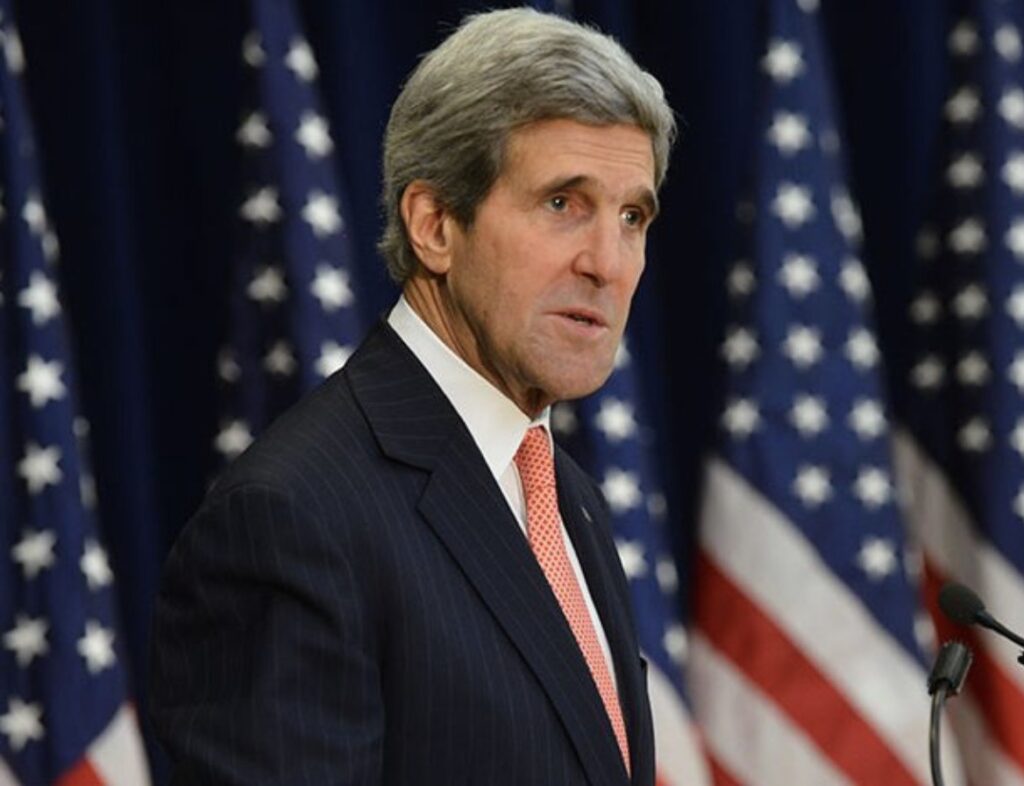
    Secretary John Kerry has dedicated his life to public service. He served the Commonwealth in a number of roles – as District Attorney for Middlesex County, Lieutenant Governor of Massachusetts, U.S. Senator for Massachusetts, and U.S. Secretary of State. Throughout his tenure, he tackled issues like combating acid rain as Lieutenant Governor, bringing attention to the warming planet to the U.N. as a Senator, and working with foreign governments to spearhead numerous efforts to combat climate change as Secretary of State. Notably, Secretary Kerry was a key architect of the Paris Climate Accord, signing the historic agreement to reduce carbon emissions in 2016.

    In 2019, Secretary Kerry launched World War Zero, a coalition of unlikely allies joining a global mobilization against the climate crisis. This group includes scientists, CEOs, military leaders, activists, artists, entertainers, political leaders from both sides of the aisle, business and industry leaders, and many more want to tackle this crisis. The coalition focuses on public education and community engagement to activate climate action at the massive and urgent scale necessary to win this war. Bringing together influencers like celebrities and politicians will help this message reach a broad, global audience. Messengers will make connections between climate change and the economy, jobs, and national security.

    ELM is pleased to award Secretary John Kerry a Commonwealth Environmental Leadership Award in recognition of his exemplary work in our community.

    For original post, please visit: https://www.environmentalleague.org/event/cela-2020/
  • The Right Song, The Right Movie

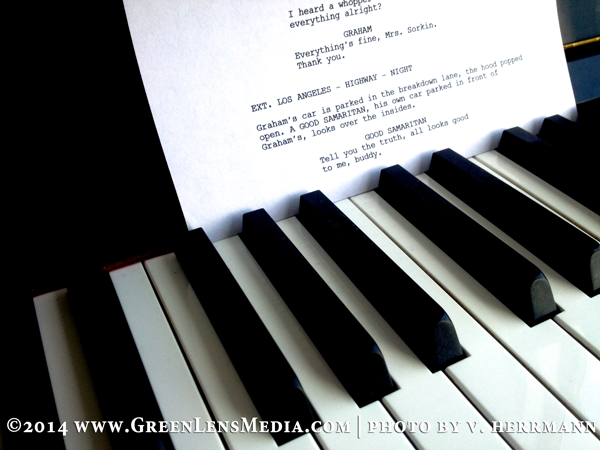
    piano&script06_fixed_v1.1I love all forms of art: visual art, music, performance, storytelling, etc. Movies are great because they combine so many of them. Among the best examples of this is the use of the perfect song in a film—the right song coming together with the right image. The combination creates moments that resonate with us. They make us think about the images the movie showed us anytime we hear the song. In fact, a very strong argument could be made that these are the most cinematic moments in movies.

    There’s far too many to choose from, but let’s break down just a few memorable moments, and attempt to examine closely why it is they work so well.

    GOODFELLAS – “Atlantis” by Donovan

    Here, I could just write “the entire movie” and move on. Martin Scorsese’s always been a director famous for the brilliant use of soundtracks in his movies. Goodfellas is perhaps the finest example of that. From Tony Bennett’s “Rags to Riches” launching us into the world of the gangster, the famous dead-body montage set to the outro of “Layla”, to the schizophrenic medley of classic rock and blues hits that take us through the paranoid, unbelievably fast moving life of a coked-out Henry Hill. The music reflects the emotional and mental state of the characters throughout all these sections of the story, and that’s why it’s so effective.

    Goodfellas is filled to the brim with amazing uses of popular songs, but perhaps my favorite is the scene in which Billy Batts is brutally beaten within an inch of his life, set to Donovan’s peaceful, beautiful hippie anthem “Atlantis”.

    At first, the song is very much in the background, almost unnoticeable on a first viewing. Donovan’s poetry (no singing here) over mellow chords comes in as Billy Batts and Jimmy (Robert DeNiro) are having a seemingly friendly chat at a bar. Tommy (Joe Pesci) enters the bar, the look on his face (and the fact that he was just insulted by Batts in the previous scene) telling us that some heavy stuff is about to go down.

    The calm, gentle music makes this quick rise in tension even more unbearable. Then… as Batts notices Pesci behind him, and DeNiro grabs a hold of his neck, a powerful drum fill takes us into the chorus. The music then gets bumped up in the mix, and the combination of its serene, catchy melody with the brutal beating we’re witnessing is shocking and horrifying—as the director intends it to be. Above all, though, it’s unforgettable.

    The cherry on top comes towards the end of the scene. The music dips down a little as Pesci looks over to Ray Liotta and says “I didn’t wanna get blood on your floor,” then it picks up again as we cut from his reaction—stunned and made all the more powerful by the music’s increase in volume.

    SPIDER-MAN 2 – “Raindrops Keep Fallin’ On My Head” by B.J. Thompson

    You rarely hear pop songs in superhero movies, and if this scene is any indication of how well the combo can work, it’s a shame. To set the scene up for those of you who might not be familiar with Spider-Man 2 (and if you’re not, shame on you!), the film is all about Peter Parker’s struggle to balance his personal life (his desires) with his job as Spider-Man (his responsibility). About halfway though the movie, he gets fed up and decides he’s not going to be Spider-Man anymore. So much so that he throws his costume in the trash! Gasp! Fade to black.

    From the darkness… the most beautiful ukulele chords, followed by the sun shining brightly at us. Then, right as the vocals come in, Peter walks into frame. Smiling. Blissful. Relaxed. The first time we’ve seen him be this way in the entire film. I really do consider this to be an almost magical sequence in the film. “Raindrops Keep Fallin” has been used in a number of movies (Forrest Gump, Clerks II), but never so perfectly as it’s used here.

    The lyrics, all about a person who has decided to be happy, even if raindrops keep falling on his head, fit so well with Peter’s state of mind during this portion of the movie, it’s scary. I almost feel like I don’t need to explain any further. Just watch the scene, and you’ll see exactly what I’m talking about.

    This is true movie magic. It’s as if the song was recorded specifically to be used over this scene. I honestly can’t even begin to think of another song that would have fit better.

    DJANGO UNCHAINED – “Freedom” by Anthony Hamilton and Elayna Boynton

    Like Scorsese, Quentin Tarantino is a filmmaker known for the exceptional use of popular music in his films. Pulp Fiction practically invites the audience to dance at certain points. Even though his last two movies have been period pieces (this and Inglourious Basterds), Tarantino doesn’t let that be a boundary. While neither Django nor Basterds are filled with pop music the way Pulp Fiction, Reservoir Dogs and Jackie Brown are, he still does use it, and to shockingly effective degrees.

    Take this scene: Django asks a slave on a plantation if she’s seen the Brittle brothers—his former owners, and the men he is looking for. She points one of them out to Django, he takes out one of those old-style retractable telescopes, and observes. As he spots him, the song’s rhythmic drums and tribal-style background vocals kick in.

    We cut to a flashback. The Brittle brothers. Tying Django’s wife, ready to whip her. Django pleads to spare her. The music is quite loud here, but the focus remains on Django’s desperate begging, and Broomhilda’s resilient face, getting ready for what she knows is coming.

    The song continues, loud and powerful, as we cut from Django and Broomhilda getting ready to escape, to Broomhilda about to be punished and Django pleading. Then… the whip cracks. Broomhilda’s gut wrenching scream fades into the chorus, now louder and more booming than ever.

    It’s horrifying. It literally sends goosebumps up my arm every time I watch the movie. This is a hard, hard scene to watch. The music’s loud, unrelenting bass line underlines the horror of this, and is one of the main reasons why this scene is not only so tough to watch, but also so gripping.

    As I said at the beginning of this post, there are COUNTLESS other examples of great songs used to great effects in great movies. What are some of your favorites?

  • The Hobbit: An Expected Review

    When I was a little kid, my father collected me, my little brother and sister, and a huge silver Casio tape-playing boom box, and set us all down around the fireplace. He turned the overhead light out and an orange glow from the fire cast itself onto the carpet, illuminating the tape deck.

    “What we’re about to listen to is a very special story,” he said. “I read this story a long time ago, and I enjoyed it so much I want to share it with you kids. If it gets too scary we’ll turn it off.” We all looked at each other and he hit the play button.

    Listening to The Hobbit in the dark around this light is one of my favorite memories. The recording was produced by The Mind’s Eye, and was a full production, complete with multiple talented voices, an extensive sound effects library, and an impressively orchestrated score. The recording originally aired in 1979 on NPR Radio, and it had finally made its way to three children listening by a hearth, the dog asleep in the corner.

    I loved this story, specifically this telling of it, so much so that in middle school I stole it out of my father’s closet and would play each tape to put me to sleep, every night. When the series ended I just started the 6 hour adventure from the beginning again. This continued for an embarrassingly long time, to the point that even today I can anticipate most lines and recite many of them. You must understand: for some reason, maybe the fact of how my journey with Bilbo started in our family room, I was a little obsessed with Tolkien and his world of Middle-Earth

    In 2000, I went to a movie. I don’t remember what movie–it doesn’t matter. What mattered was the trailer. It was a teaser, and it opened with a New Zealand hill top covered in dry grass, black rock, and mountains in the background. Epically adventurous music began, and up over the hill came a tall bearded man in a pointed grey hat and cloak carrying a wooden staff. At this point I was too excited to sit still, because I thought, oh wow, the next thing to come over the hill is going to be 13 dwarves and a hobbit and I’m going to go nuts. When the pointy eared elf walk over next I thought, that dwarf looks unusually high. Then came a character who could ONLY be a dwarf, followed by some obvious hobbits, and then some other tall people I couldn’t place. If you can’t tell, I had not read Lord of the Rings, but I knew of it. Though I was looking forward to the film no doubt, I was crushed it wasn’t The Hobbit.

    Fast forward through movies of Fellowship and Two Towers, and I’m a true LOTR fan. When the release day for Return of the King arrived I thought it was the end of the age of Middle-Earth, a three year movie-viewing journey. I waited in line with other enthusiast friends opening day and took it in, taking a mental picture in my mind. It was a special day, a great day, and a sad day all at once. It was worth the wait, heck, the wait enhanced it, but knowing it was over was tough to stomach.

    After its successes, we learned Hobbit was being talked about, and that was a giddy feeling. Then I caught wind of Peter Jackson’s awful relationship with New Line Cinema, and how it might jeopardize him directing, which sounded sacrilegious and a big blow to a well-defined series. Then there was the notion it might not have the same actors, or even be done at all. Years went by with nothing but rumors and hope (whispers of a nameless fear?). When it was evident Jackson was back on board, and when casting finally started, and when filming actually began, each stage brought this feeling of relief. I was there, and now would go back again.

    Only this time I would go back to an unknown sight. 48 frames per second. Twice the frames for double the clarity. You see, 3D is an issue for some. Fortunately I don’t get 3D sick, but I do heavily notice, with the fields being arranged the way they need to be for stereoscopic filmmaking, the picture taking a big hit in crispness and brightness. It is the nature of the beast, and the price for 3D. Jackson announced his belief that 48fps would be a better way to view the film. With this high frame rate (look for “HFR” in the marquee at the theater) we were going to break from that ever traditional and cinematic 24fps we’ve come to know, love, and get used to. The reaction from Comic-Con couldn’t be more deafening. I read in the news the crowd was nervous, hyper, then outraged at the clip they were shown, and how it looked more like a soap opera on TV than a throwback to the Shire.

    Whatever. At least they’re making it, I thought.

    I tried to avoid the screenshots, the behind-the-scenes clips online, and the eventually released trailers, but I failed miserably and was unable to help myself. All the while knowing this story I have waited 9, no 12, no 22 years for, was going to be told in a revolutionary new format. Pioneering new territory is thrilling, and as a filmmaker, I am always grateful to ride the wave of the new, scary as it may be. With the release of digital video, then DSLRs, then FCPX, the end of manufactured film cameras and the slow decay of celluloid overall, I’ve been privy to some fascinating, industry-changing events. I must be honest, though: as we got closer and closer to December 14th, I legitimately became nervous about this new frame rate, and worried it would spoil something near and dear. All I had to go on was that its Peter Jackson we’re talking about. Middle-Earth is his baby after J.R.R., and I just need to trust he wants to do the film justice.

    This evening, I again found myself in a line for another adventure. Joined by my brother Sam, who picked up tickets the day before, we arrive an hour early to already find a line of 50 people. When we got through we had to wait in another line outside the theater doors. When finally we were loosed, we found some seats in the exact middle, and settled in immovably.

    This was indeed the experience I wanted. The HFR version is different, and will look slightly strange to those not expecting it, but it truly does fade away. I plan on seeing it again in the other formats to compare, but as far as content I couldn’t be happier. I won’t spoil anything for those who haven’t seen it or who don’t know the story (what are you waiting for?), but take it from a very critical filmmaker and an even more critical fan that this movie is definitely worth seeing.

    My advice is to know what version you are walking into. There are a least 5 different versions: IMAX 3D, RealD 3D (RealD is a different 3D technology than IMAX), RealD 3D HFR (48fps), IMAX 3D HFR (48fps), and 2D Digital. For the most familiar cinematic look, your best bet is probably the 2D digital, but I want to verify this before committing to that claim.

    I’ve heard multiple complaints about too much CGI, but we all saw that coming. Personally, I too prefer great robotics and puppetry done right (Jurassic Park anyone?), but to get here at all was an elating experience in itself. I give the movie an A, mostly because I felt the Goblin King needed some major advice and reconsideration in the 3D modeling department, but moreover because I don’t think anything can really top what’s in the mind.

    It is absolutely a must-see this winter, though, and I hope you enjoy An Unexpected Journey as much as I did. It has rekindled the same magic I felt at the beginning of the LOTR run, where you had to wait a whole year before you could continue the quest, but the pay off was practically tactile. That feeling that I thought was a one-time occurrence is now present again, and it is this weird sensation of reliving the greatness of the LOTR span, but with a new, unseen yet equally epic set of films. And while it brought me back to all these memories, it mostly put me right back where I started, right next to that fire so many years ago. It was warm, and invited me right in.

  • Moving Forward: How to Do What You Love for a Long Time

    As a filmmaker, to say you will be on your feet quite a bit is somewhat of an under statement. Part of me liked the idea of a filmmaking career because it wouldn’t be just a fun, challenging, creative job that exposes you to lots of different industries, varieties of life and culture, but it would be an active one. You have to get out of your chair if you want to make a film. If your reply is “I’m an animator; like the click-click kind, not the claymation or green screen shoot kind,” why not go out and take some photos of textures? Making your own textures is painless and much more rewarding, but the contents on this site is essentially what I’m talking about. If your excuse is “I’m just an editor,” well, I’m an editor too, and there are plenty of organic ways to edit. Just ask Oscar-Winning Hollywood editor Walter Murch (Apocalypse Now, The English Patient) how he edits. (For those who are looking for some balance, have a ball, or a kneeling chair). If your excuse is, “I don’t want to exercise—it’s hard,” there’s nothing I can do for you. You need this guy to help you.

    Proper ergonomics and health is a concern for everyone, filmmaker or not. As I mentioned, you have to get up to make a film. I know I’ll have to lug a bag or two or three, sometimes make a few trips or bring extra people just to set up a shot. At the end of a day of production it’s a good workout, and workouts give you energy to keep going during the day. But how many days really are you in production? As the guy running Green Lens can testify, productions are actually a small percentage of each project. There might be many weeks of pre-production planning, phone calls, emails, and meetings before getting on set. And once off set, now you are headed for that editing bay—sigh…more sitting.

    I founded GLM as a very green conscious entity, pulling from my own beliefs on environmental issues, so the encouragement of physical activity also fits nicely in with our business model. I try to promote this by biking to places when possible, taking public transport, and walking, all in an effort to support the reality that movement is a key ingredient to living and feeling well. Unfortunately, this for many has become an inconvenient, undesirable reality (wow, that was close—almost said an inconvenient you-know-what. Go see the film if you haven’t by the way; 7 years later it’s still an important piece of political, environmental, and film history).

    Apparently, we—Americans—aren’t walking a lot anymore.

    In fact, we are so comfortable taking our cars, and avoiding old-fashioned legwork, that reporter Franz Strasser of BBC World News America decided to do a story on it. According to his article, it seems the good Samaritans of Raleigh, North Carolina have been taking matters out of City Hall’s hands and into their own, posting signs telling pedestrians how far it is to walk from place to place. Where no city official has taken action or filed a permitting charge against the movement, it would appear the city approves of the initiative.

    The more reasons we have to be active, the greener, healthier, and happier we stand to be. With barely any Boston snow to speak of this past year, I think I‘ve seen more joggers outside this winter than the past 4 winters combined, so why not take advantage of the weather and treat yourself to a warm February stroll to the insert-your-nearby-store-here? (The ecological significance of the weather, or lack thereof, surely warrants its own post; we’ll save that one for later).

    Currently, I don’t have Murch’s upright editing station setup. However, I do have a small swiveling laptop stand that sits up on my desk at times throughout the day to give my seated self a healthy dose of stand. The takeaway here is whatever your industry is, see if there is a way to work in more exercise into the daily routine, whether it means a new chair, periodically standing while working, taking the elevator more, or walking to offices to give messages rather than emailing. It doesn’t need to be strenuous; just enough to give our bodies what they need to live a long, satisfying life. Don’t wind up like the humans in WALL-E with tiny bones swimming around in their bodies…somewhere…

    Focus of the Day:
    What do you do to keep moving?

    Film-tip: It’s tax time. iPad / iPhone users, if you haven’t already, check out Mint.com. It is a secure accounting management site you can use for free (there are paid upgrades), and there are some great apps to go along with. Mint is created by Intuit, the same guys responsible for Quickbooks. Credit to ColinReidDesign.com for telling us about this one way back when.

    Eco-tip: You remember to bring your reusable bags to the supermarket, but how many times do you say “yes” to the “do you want your chicken wrapped in plastic” question? If you are wary of raw meats coming into contact with the apples for you and your little ones, consider designating one small reusable bag as “the raw meats” bag. One more step to getting off the plastic bag bandwagon.

  • Software For Final Cut Pro Translates FCP7 to FCPX? Pardon?

    Today was high-five day for editors in the Final Cut Pro world. There was a much needed upgrade in FCPX which includes multicamera editing capability, manual media relinking, photoshop file layer support, and more robust XML handling (among other features and fixes). I will certainly have some comments on these once I have had an opportunity to use it, but that is not why I am excited.

    The exciting news is for the editors with old Final Cut Pro 7 projects. If you are an FCP7 editor you are well aware by now that FCP7 files do not open with FCPX. This has to do with the software code itself, and the processor’s bit size. If you are trying to develop a solution in your editing workflow with the new FCPX on the scene, and are miffed about FCP7’s non-64-bit architecture meaning you can’t open old projects in FCPX, have hope today. The plug-in/third party software gods have been kind to us.

    I am pleased to relay that Philip Hodgetts and Intelligent Assistance have today announced a translation program for going from FCP7 to FCPX. Guess what it’s called: 7toX for Final Cut Pro.

    I had the good fortune of hearing Philip speak at a few Boston Final Cut Pro User Group meetings (BOSFCPUG, now renamed the Boston Creative Pro User Group, or BOSCPUG). If the software is as helpful as Philip’s discussions or resources, this is one you will want to go get (only $9.99 on App Store). I will be playing with its functionality as soon as I can catch a break from some current projects.

    Feel free to make some comments about how both the FCPX 10.0.3 update and the 7toX software are working for you – I am quite curious.

    Focus of the day:
    What is your favorite editing app / plugin?

    Film-tip: MPEG-Streamclip is one of the best tools in the editing and DI’s toolbox. This video encoder is free, and a must-have if you are ingesting, transcoding, encoding, or even delivering. Get this encoder.

    Eco-tip: It’s winter in New England. Whatever sunlight there is, remember to use it! Save money by letting the blinds open; you’ll warm the room a little, allowing you to turn the heat down a bit, and will need less electrical lights.