Author: Akanksha Aurora

  • To Film or Not to Film? That Is The Question

    Being in film school makes you feel like you’ve aged 50 years in the span of two. Don’t get me wrong. It’s not a bad thing.

    I grew up in India, a country with brilliant minds and bold hearts. A country where your average young person is capable – and driven – enough to be exactly what they want to be, and be successful at it. But for the young Indian, being successful isn’t even the difficult part. The difficult part is self-knowledge. Knowing what you want to do. Finding the power to know, in a country where your future is determined as soon as you’re born: doctor, lawyer, engineer, business executive.

    When I applied to college, I applied as a journalism major. Far enough from the Indian career mold to be creative, but not so far that I can’t bank on the degree to get me a job when I graduate. The perfect balance.

    But coming to college changed everything.

    The idea of getting involved with filmmaking emerged from the experience of moving to the United States. I was in a new city, a new country, a new world. I was given a chance to rewrite my story, make new memories and, most importantly, get to know the person I would become. Suddenly, I was exposed to people from all over the world – my roommate was Korean, my best friend was Mexican, my study partner was half-Polish. Being surrounded by interesting people and interesting stories makes you fall into storytelling, even if you didn’t set out to do it.

    I’d always been interested in film, but it had never occurred to me that it was something I could do forever. There was something so exhilarating about the concept of creating something from nothing: of engaging in a craft founded in emotion and unpredictability; an outlier in the textbook-and-problem-set world of conventional knowledge.

    Think about the great directors of the world, for example. Alfred Hitchcock, Quentin Tarantino, Stanley Kubrick, Martin Scorsese (to name a few.)

    Now try separating film from filmmaker. You can’t.

    Every storyteller is unique. They vary in so many ways, but are great storytellers nonetheless. There are no formulas and numbers involved in storytelling. No right answers. No wrong answers. Just instinct and imagination.

    Terrifying, isn’t it? Having no rules? I can’t say it isn’t.

    But I wouldn’t be able to call my life a full life without stories. My life has been characterized by change. I’ve lived in Mumbai, Boston, Paris and London – I’ve been challenged, pushed out of my comfort zone and made to build up from scratch. By being exposed to stories and the storytellers that tell them, I’ve grown beyond the 20 years I’ve spent on this planet, because none of the places I lived in ever came with rules. But they came with faces, places and stories that are such an important part of my life. And that’s why I could never be a doctor, lawyer, engineer or business person.

    It might be human nature to fear the unknown, but it’s a filmmaker’s instinct to embrace it.

    Is it terrifying? Yes. Is it worth it? Absolutely.
  • Back to the Basics: Failure to Film

    Whenever people ask me what I do at work, I tell them I help out with making films. And whenever I say that, they’re intrigued: films? how glamorous!

    Except…not really.

    The reason the word film is so frequently associated with glamour is because most people are exposed exclusively to the final product. What they don’t see is all the mishaps, errors and edits that went into creating that glamourous product. What they don’t see is that everything that can possibly go wrong usually does.

    And the sad part is, I’m not even being dramatic.

    Take today, for example. I had the tripod set up. I had the camera mounted, the battery in, the SD card in. I even managed to plug the furry little mic into the correct jack (hey, when you’re a student, it’s the small victories that count…) I had a beautiful frame set up, my subject looked great and the light was co-operating. For once, everything was falling into place.

    So I went ahead and pressed the record button.

    One stimulating interview and exactly sixty minutes later, I felt great. The shoot went extremely well, we finished on schedule and I had some great sound bytes. I couldn’t wait to get started on the edit.

    And so the pack-up process began. I ejected the battery and the CF card, took the camera off the tripod. Folded it up. Unplugged the mic, opened it up to take out the – oh, wait. There was no battery.

    I stared wordlessly at the space where the battery should have been. Putting in a battery is probably the most elementary part of this whole process. There was no reason not to do it. I now have an hour of footage of my subject awkwardly moving his lips as no sound comes out and gesturing excitedly with no context.

    I’ve been on the Dean’s List at BU for three straight years, but I don’t know that I have to put in a battery.

    Now if you were in my place at this point in time, you would have two logical options:
    a) Cry.
    b) Cry.

    But both of those options render themselves useless when you ask yourself the dreaded question: now what?

    And then face the dreaded answer: Nothing.The footage is absolutely useless.

    While my complete lack of grey matter may make it seem like the moral of the story is don’t be an idiot, it really is simpler than that – be prepared. Make sure all your equipment is ready to work, and don’t rush the setup. Go in with a checklist and include even the most basic steps, down to the pack-up.

    It’s when you mess up the basics that you mess with the final product. It’s when you compromise on things like batteries and cards that you taint the perfection that people associate with your craft. I, for one, am not ready for my friends and family to think that my job is anything but clappers, bright lights and Matt Damon. And if all it takes to maintain that perception is being attentive and being prepared…then failure is not an option.

  • Books are Books, Movies are Movies, and Now the Twain Shall Meet

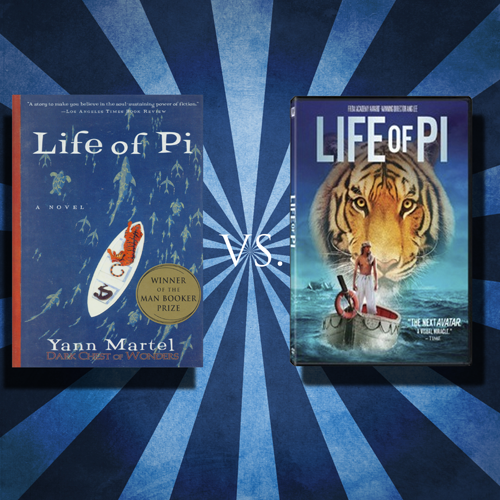
    Life of Pi vs. Life of Pi
    Life of Pi Book vs. Film Adaptation

    I know what you’re thinking. Ho-hum, another books vs. movies debate. But don’t stop reading yet! This is not a debate. I love books. And I live movies (no, that’s not a typo.) And I’m tired of people pitting the two against each other.

    Think about it. Both books and movies demand a significant amount of effort in bringing them to life. Both are mentally stimulating and emotionally engaging. I was only ten years old when I read Life of Pi. In case you haven’t heard of Life of Pi yet, it’s a story about a teenage boy who loses his family, loses his home and finds himself stranded at sea with only a ravenous tiger for company. But when I tried explaining the story with my best friend at the time, she scoffed and said “I can’t even imagine that.”

    But that’s exactly the point.

    So many of the world’s stories are about worlds and times that most people consider to be beyond the realm of human imagination. Books deemed “unfilmable” by book and movie lovers alike. The Hobbit. Harry Potter. Game of Thrones. The magic realism that characterizes Pi’s story – and Harry’s, and Frodo’s, and Tony Stark’s – sets them apart from stories closer to home. But it is the “unfilmable” and “unimaginable” nature of these stories that make them the stories most worthy of being imagined. Brought to life.

    And what better way to do that than through film?

    Book lovers insist that the movie can never be the same as the book, but does it have to be the same? If the movie was meant to be the same as the book, it wouldn’t be a movie. For me, the point of a movie adaptation is to re-imagine the story of the book without overwhelming it. I grew up with Harry Potter, and reading Life of Pi changed my life forever. And the film versions of those books didn’t match up with the little movies I’d already made in my had while reading them.

    But this little film I already made in my head while reading the book Life of Pi is one of those rare examples of a movie whose 3D visuals don’t overwhelm its storytelling but enhance it. It’s about that flawless balance between world and visual, capturing the complexities of a character’s world and the the viewer’s mental world.

    That said, even if the screenplay is amazing and the visuals are flawless, much of the audience’s decision about whether or not they like the film relies on their own emotions. Their own story. Having read the books for all the adaptations I’ve watched, I never walked into a movie thinking it would make me feel anything new. But each and every time, it did. And that’s what makes me believe in film as the book’s friend rather than its enemy. It’s the only medium that has the power to take an existing experience, reshape it and make it visceral in the way no other medium can.

  • Lean, Mean, Green Machine: Support the Cause for Tesla Motors

    As much as possible, I use public transport to get around.

    But the thing about Massachusetts is that, a lot of the time, there just aren’t enough trains and buses that go where I want to go. And that’s when I just have to bite the bullet, hail a taxi or get in a car to get somewhere. But it’s hard to enjoy the ride when all I can think about is the criminal waste of energy I’m participating in, not to mention the air pollution. Given a choice, I’d rather deal with the sweaty armpits and rambunctious Sox fans on the T than the looming prospect of a depleted ozone layer or energy scarcity.

    Enter Tesla Motors.

    In 2010, we worked with Renew America Roadtrip and its Tesla Roadster at the Northeast Sustainable Energy Association (NESEA) BuildingEnergy conference. We spoke with Michael Craner, co-founder of Renew America Roadtrip, about the ways in which the electrically powered Tesla Roadster helps people save energy, cut costs and enjoy a guilt-free ride. Not only does a Tesla car afford its driver the opportunity to save the environment and a large amount of money, it’s sleek, sporty design makes it a good-looking car worth bragging about.

    Amazed? We were too. Check out our video below:

    This is a great effort, and it will obviously make a difference for the environment.

    So what’s the catch?

    A new technology as well-researched and effective as Tesla’s stands as a threat to the outdated auto dealership model currently in place in most of the United States.

    According to Tesla’s website, they have a few galleries scattered across the United States but none of these galleries are authorized to initiate a sales transaction unless the customer goes through a substantial pile of paperwork and contacts their California office for sales and delivery.

    It seems unfair that the red tape and political buzz surrounding Tesla’s sales should restrict access to clean transportation for environmentally conscious consumers all over the country. There are in fact thousands of EV charging stations all over the country, and MSNBC predicts millions by 2020. A few of such charge stops recently sprouted up in our neighborhood of Porter Square in the parking lot by the Porter T Station. Basically, there’s no reason to allow an obsolete auto sales model to be an impediment in the path to a cleaner, greener America.

    There’s no reason to be stuck in the past when technology is rushing towards the future.

    You can change the status quo, and you can change it as soon as Friday. All you have to do is add your name to this petition. Deadline is Friday, June 5th, 2013, and 100,000 signatures are needed. Help us reach the tipping point—it’s so close!

  • Coalition of the Willing: Inspired Work, Inspiring Work

    I have a complicated relationship with film.

    For the most part, I love it. I love that it can inspire, empower and liberate people. As a medium, it is limitless – it can tell stories previously untold, tap emotions previously untapped and explore parts of the world previously unexplored.

    But here’s my problem: commercial film rarely ever does.

    Yes, Ryan Gosling is stunning. And so is Emma Stone. Alright, I get it.

    But why are we making a movie about it? That part, I don’t get.

    With all the fandoms, poster boys, Jennifer, and plotless excuses for movies popping up everywhere, I can’t help but feel disillusioned by film. But every once in a while, a movie comes along to remind me that Ryan Gosling and Emma Stone haven’t completely taken over. On one of my many afternoons spent idly browsing Vimeo for inspiration, I stumbled upon a film by Knife Party that reinstated my faith in the wonders of the medium.

    Coalition of the Willing, is, as the title suggests, the collective brainchild of a brilliant coalition. The film addresses an issue burning with actuality (pun intended!) – the issue of global warming. And yet…there are no pie charts, bar graphs or visuals of receding ice caps viewed from outer space.

    That’s the beautiful thing about this film. It succeeds not despite but because of the lack of statistics and infographics in its storytelling. Because when you really think about it, global warming isn’t an issue that’s as far away and distant as the statistics and satellite images often used to represent it.

    It’s personal. It’s a choice.

    Throughout the film, the visuals follow man and mankind. Our evolution, our changing times, our history, our politics, our sociology. Visually, it is absolutely stunning. I felt myself being increasingly drawn into the world of the film – our world – and it wasn’t difficult to understand why the movie walked away with the Best Short Award at the 2012 San Francisco Green Film Festival.

    The stunning animation and smooth flow of the film transports the viewer back in time, employing the memorable image of a ’50s businessman turning into a hippie to chronicle the radical individualism of the ’60s. As the colours get brighter and the backdrops increasingly complex, the individualism fades into consumerism and the whole movement eventually culminates in a lack of regard for the world around us. The status quo.

    Although humanity took a turn for the worse, the film isn’t pessimistic about it. Not in the least. There is a palpable vibrance in its visuals, a quirky hopefulness in its scoring and an awareness of the power of individual efforts. It connects the past with the present, muses about the many changes that humanity has undergone, and, above all, provides hope for the future. Its look, feel and message work together to do what film fundamentally ought to do: awaken and stimulate the minds absorbing it. The film brings the concept of coalition to life and itself stands a testament to the wonders achievable through creative minds coming together.

  • 4 Quick Fixes: The DIY Filmmaker’s Cheat Sheet for a Quality Film on the Cheap

    Whoever said “time flies when you’re having fun” was absolutely right. And if you’re a filmmaker, you already know by now that having fun is part of your job.

    The best thing about creative work is that the sky’s the limit. If I wanted to, I could think up a world of gremlins and goblins and bring it to life. I could also make a hard-hitting documentary about world hunger. Or, if all of that doesn’t work out, I could set up a camera outside my lovely perch in Porter Square, leave it there all day, import my footage and still tell a story. (Hey, Andy Warhol did it…)

    All I need is my trusty DSLR, my lights, my sound kit, my tripod, my slate, my dolly…oh, wait, this is a problem.

    Or is it?

    It doesn’t have to be. Gone are the days of bombshell budgets and tedious technics. Times-are-a-changing and so is technology. Where once you had to worry about thousands of dollars and tons of extra baggage, you now only have to worry about the bare necessities. With a range of tools and technologies to our disposal, it’s becoming easier and easier to roll up your sleeves and start from scratch. Here’s how:

    Quick Fix #1: The Handheld Camcorder

    OK, OK. Before you scroll past this section altogether, let me remind you of a great moment from the pilot of Breaking Bad. You know, the one where Walter White leaves a video message for his wife and kid when he thought he was about to get caught. What’s interesting about that video message is that, even compared to the rest of the show’s already gritty visual style, the camcorder version was shockingly real. So if you’re on the run and you’re looking to capture the washed out realism of life pre-DSLR, this quick fix is for you.

    But if you’re going for a fancier feel, try…

    Quick Fix #2: The DIY Viewfinder

    Beautiful filmmaking is all about composition. And perfect composition is all about the little elements – aperture, ISO, white balance. But when you’re out and about, the sun can make it hard for you to get those elements just right, and a professional viewfinder will cost you a cool $100-$200 at the very least. But why shell out the cash when you have edit-room coffee runs and shiny new equipment to save up for? Believe it or not, you can make your own LCD viewfinder for under $20. And if you’ve got 5 minutes and an appreciation for dinosaurs, check out this video that shows you exactly how to do it:

    Make your own LCD viewfinder for your DSLR

    Now that you’ve got that viewfinder, you can focus on framing that perfect shot by getting all those little elements just right. But if you’re anything like me, that’s not enough. Getting everything right behind the camera is only a step towards making the magic happen in front of it. Which leads us to…

    Quick Fix #3: Get Creative With Lighting

    As a 5 foot nothing filmmaker without a bodybuilding certification, I was definitely not designed to haul around a light kit on long shoots. Paper lanterns and clamp lights are just two of the many options you have when it comes to quick, clean, low-maintenance light sources. Not only are these options totally affordable, they do just the trick if you’re lighting your subject outside or in a cramped space where you don’t have access to a lot of space or outlets. But if you do have some space and you’re looking for a conventional three-point lighting setup, here’s a video that will show you a low-cost way to achieve it:

    Make your own lights on less than $100

    A good lighting setup is really the cherry on top of the beautiful composition cake. But now that everything looks perfect, it has to feel perfect. And what better way to make it feel perfect than…

    Quick Fix #4: Create Movement with a DIY Dolly

    Think about it. What kind of world would this be if nothing never moved? A boring one. And what kind of film would you create if nothing ever moved? That’s right…a boring one. Camera movement is a foolproof way to inject your movie with feeling and dynamism, especially when used on what would normally be a static image. That said, the laborious task of carting around a full-size dolly is not something a small crew can afford to put up with. But that doesn’t mean your film can’t benefit from the wonders of movement. In fact, the solution for your static-shot problems can be easily found in none other than your local Home Depot. I’ll let YouTuber MediaUnlocked explain the details:

    Make your own DSLR slider dolly track

    And there you have it! With these four completely doable (and cheap!) fixes, you no longer have to let money or logistics stand in the way of telling your story. If you’re already imaginative with your storytelling, all you need to do is apply that great imagination to your technique.

  • One Small Step for Man, One Giant Leap for Mankind: Boston Walk for Hunger

    If you look at an early map of the world, you’ll see a sphere. In that sphere is land – two large chunks of it – and water. If you look at a map of the world today, you’ll still see land and water. But they don’t exist within a sphere, nor do they exist in big large chunks. They’re divided. The creators of these divisions divided the large chunks of land into all kinds of odd shapes, colour coded them by money, population, economic power. Even the vast expanse of blue within which they all float is divided – this ocean, that plate, this channel.

    With these divisions so deeply ingrained within our cognitive understanding of the world, it is sometimes difficult to remember that these lines that divide up the world aren’t much more than what they appear to be: ink on paper. The interesting part about this ink on paper is that the ink was probably made in a completely different place than the paper; and the cartographer using the ink and paper sits on a wooden chair made in another chunk of land altogether. What the ink, paper and wood ultimately represent, then, is the people of the world whose needs brought them into existence: people, who, despite the divisions that separate them, partook in the shared experience of living on this planet and subsisting on its resources.

    Because the world gradually became bigger and more divided than it once was, it became easy for people to lose sight of the bigger picture. While words like “pollution,” “climate change” and “fossil fuels” began to pop up in the world’s vocabulary, they were written off as far-fetched, too conceptual to truly materialize. When they did begin to materialize, the first instinct was to worry. After all, the world is so much bigger than the people who consume its resources.

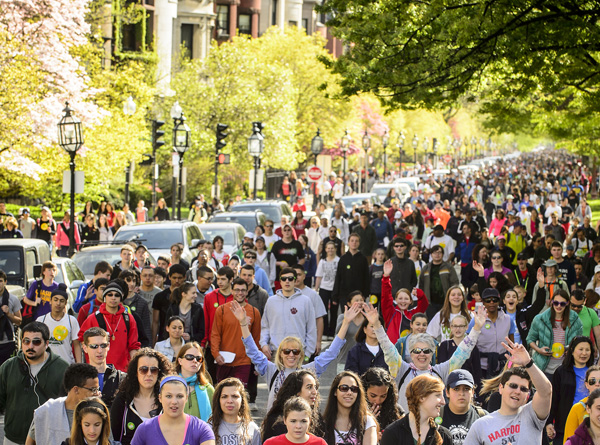
    The good thing about all this worrying, though, is that it has given rise to awareness. There is a desire to change things, and the citizens of the world are beginning to take things into their own hands. In the coffee shop down the road, a teenager is doing her part by getting her morning coffee in a reusable mug. On the other side of the world, someone is picking up an abandoned newspaper from a London Underground train and putting it in a recycling bin. Somewhere else in the world, a mother is picking up a candy wrapper from the sidewalk and admonishing her little boy for failing to throw it in a trash can. And this past Sunday, thousands of volunteers walked for Project Bread’s Walk for Hunger, raising thousands of dollars towards hunger in Massachusetts.

    According to Project Bread’s website, this annual walk has made ending hunger in Massachusetts a goal within reach. The simple gesture of walking has, year after year, had far-reaching consequences for schools and communities in Massachusetts. And if walking can spread the message and make a difference, so can the reusable mug, the recycle bin, the moralizing mom. Big change is ultimately a culmination of little steps towards it. Little steps that dare to shake the conviction that the world can’t be saved, or is too divided to be saved. The reason little gestures translate to big change is because the magnitude of the gesture transcends the action itself. All it takes is the simple recognition of the power that we have to bring about change, the ability to recall that first simple image of the world – as one big mass of land, with resources to be shared and maintained by all its citizens.